KARACHI: Pakistan needs money for exactly the things climate change is making urgent — water storage, flood protection, clean power, forests, resilient transport — and it needs that money in a form its own savers will buy. The green sukuk is the instrument built for that meeting point: a Shariah-compliant, government-issued certificate whose proceeds are ring-fenced for eligible environmental projects, sold by auction, tradable afterwards, and open — through the same channels as other government sukuk — to the ordinary investor. Pakistan approved a dedicated Sustainable Investment Sukuk Framework at cabinet level in April 2025 and issued its first sovereign green sukuk through the Pakistan Stock Exchange auction system in May 2025, an inaugural three-year issue that drew bids several times its announced size. The label is new. The machinery underneath it, and the questions a careful saver should ask, are worth understanding properly.
First, the sukuk underneath the green
A sukuk is not a conventional bond with Arabic vocabulary. A bond is a loan: you lend money, the borrower pays interest, and your claim is on the borrower. A sukuk represents ownership in, or rights over, an underlying asset or project, and the return paid to holders is structured as a share of the income that asset generates — in the government's Ijarah structure, rent on assets leased for public use. Pakistan's domestic government sukuk are issued through a dedicated state-owned vehicle, the Pakistan Domestic Sukuk Company, under the Ijarah model, with the State Bank's Shariah governance framework and appointed Shariah advisers certifying the structure. Returns take the form of periodic rental payments rather than interest, and at maturity the certificates are redeemed as the underlying arrangement unwinds.
For the saver, the practical similarities to a bond are real — a sovereign issuer, a stated tenor, regular payments, a return of principal at maturity — while the legal and religious architecture differs, which is precisely the point for the large pool of Pakistani savings that will not touch interest-bearing instruments. Our general guide to sukuk and government securities on the PSX walks through the wider government sukuk market, including how these instruments came to be auctioned and traded through the exchange from late 2023 onwards — the platform on which the green variant now also lives.
What makes it green: the framework
Any government can call a borrowing green; the credibility lies in the rulebook published before the money is raised. Pakistan's Sustainable Investment Sukuk Framework — developed with the Ministry of Finance and its Debt Management Office, working with the SECP, the PSX and Shariah and financial advisers — sets out the standard architecture of credible green issuance, aligned with the international green bond principles that global investors use as a reference and integrated, in Pakistan's case, with the UN Sustainable Development Goals and Shariah objectives. Its moving parts are the four questions every green instrument must answer in advance.
First, use of proceeds: which categories of spending are eligible — renewable energy, clean transport, sustainable water and flood management, pollution prevention, green buildings and similar classes — and which are excluded. Second, project evaluation and selection: a designated committee process that tests proposed projects against those categories before money is allocated. Third, management of proceeds: how the funds are tracked inside government accounting so that green money is demonstrably spent on green projects, rather than dissolving untraceably into general expenditure. Fourth, reporting: commitments to report, after issuance, on where allocations went and, where measurable, on environmental impact. A framework that answers all four, reviewed externally before issuance, is what separates a green sukuk from a green press release.
The first issue, and what its reception did and did not prove
The inaugural sovereign green sukuk was auctioned through the PSX system in May 2025 as a three-year, variable-rental-rate Ijarah instrument with a face value accessible in small multiples, traded afterwards on the exchange under the government securities arrangements, with clearing through the NCCPL and custody at the CDC. Contemporary reporting put the announced size around Rs30 billion and the bids received at several times that figure, with the accepted amount modestly upsized — demand the government and the exchange understandably celebrated as a milestone for sustainable finance in Pakistan.
A careful reader adds two qualifications. Oversubscription at auction proves appetite for sovereign paper at the offered return at least as much as appetite for greenness specifically; Pakistan's government sukuk auctions of all colours have regularly drawn heavy bidding, because banks and funds need Shariah-compliant sovereign assets. And a successful first issue proves a channel, not an outcome: the climate value of the programme will be established over years, in the allocation and impact reports the framework promises, as proceeds are matched to actual dams, solar parks, transmission upgrades or flood defences. The instrument's design is genuinely significant — a labelled, framework-governed, exchange-traded sovereign sukuk was new for Pakistan — but its green credentials are a claim to be verified in the reporting, not a fact established at the auction.
Why a flood-prone country borrows this way
The strategy behind the label is worth seeing clearly. Pakistan's climate exposure is not an abstraction: the catastrophic floods of 2022, recurring heatwaves, glacial melt and chronic water stress impose economic costs that dwarf the size of any single sukuk issue, and adaptation spending — embankments, drainage, resilient infrastructure, water storage — competes inside a budget already dominated by debt service and defence. Labelled instruments help in three ways. They open a distinct investor pool: Islamic funds and institutions with ESG mandates, development-minded foreign buyers and domestic Shariah-compliant portfolios that are structurally short of suitable sovereign assets. They lengthen the conversation with international climate finance, where frameworks, reporting standards and labelled issuance are the entry ticket. And they create a public commitment device: money raised as green must be reported as green, which disciplines project selection in a way ordinary borrowing does not.
There is precedent on the external side, too: Pakistan's state-owned water authority, WAPDA, issued a green bond in international markets in 2021 to fund hydropower projects, demonstrating that Pakistani issuers could meet international green documentation standards. The sovereign green sukuk brings the same idea home — domestic currency, domestic law, exchange-traded, and denominated small enough for domestic savers rather than only for offshore funds. Our guide to climate risk and Pakistan's economy sets out the physical and fiscal scale of the problem this borrowing is meant to chip away at.
How a saver actually joins in
Access follows the government sukuk rails rather than a separate green doorway. Government Ijarah sukuk, including the green issues, are auctioned through the PSX auction system; participation runs through the market's clearing members and brokers, with investors mapped in the system, cash assigned and bids placed on auction day, and the resulting securities held in CDC custody and tradable in the secondary market afterwards under the government securities trading arrangements. Retail-sized face values on the inaugural green issue were a deliberate design feature: this is sovereign paper meant to be reachable beyond bank treasuries. Savers who prefer the bank channel should also know the adjacent route explained in our guide to the IPS account, through which T-bills, PIBs and government sukuk bought in the State Bank's auctions are held in an investor's own name — the two channels differ, and which instruments are available through each at a given time is a matter of the current issuance calendar, so check before assuming.
Before bidding, do the ordinary fixed-income homework, green label notwithstanding. Note whether the rental rate is fixed or variable, and if variable, what benchmark resets it and how often — a variable-rate certificate's income will move as benchmarks move. Note the tenor against your own horizon: a three-year certificate sold early in the secondary market fetches the market price of the day, not par. Compare the return with ordinary government sukuk and with National Savings alternatives of similar tenor, after tax and after any intermediary charges, because the sovereign credit behind them is the same — the green ring-fence governs the use of proceeds, not the identity of the borrower standing behind your payments.
The questions that keep green honest
Greenwashing is the standing risk of all labelled finance, and the defences are documents, not sentiments. Ask, of any green sukuk: Is the framework public, and was it externally reviewed before issuance? Which specific projects or categories received allocations, and does an allocation report exist with amounts? Is there impact reporting — megawatts added, emissions avoided, hectares protected — or only spending totals? Are the projects additional, meaning genuinely enabled or prioritised by this financing, or pre-existing budget lines relabelled for the occasion? And is the same project's spending being claimed under more than one labelled programme? Pakistan's framework commits the machinery — eligibility categories, a selection committee, allocation and impact reporting — and the programme's reputation will be made by the follow-through being published, on time, in usable detail.
Finally, hold the instrument's risks in their ordinary proportions. As sovereign paper, the green sukuk carries the Government of Pakistan's credit, the strongest available in rupees but not a risk-free abstraction, and its market price before maturity moves with interest rates like any fixed-income security. Its Shariah structure is certified through the established government sukuk process, whose details a Shariah-conscious investor should read for the specific issue. And its greenness, however well governed, does not change the saver's personal maths on tenor, liquidity and return. This article is educational content, not financial advice. Bought with open eyes — as climate funding you can trace, in a structure you understand, from an issuer whose reporting you intend to actually read — the green sukuk is a genuinely new way for Pakistani savers to stand, in a small and documented way, behind the country's defences against the weather.
Where Pakistan's climate projects queue for this money
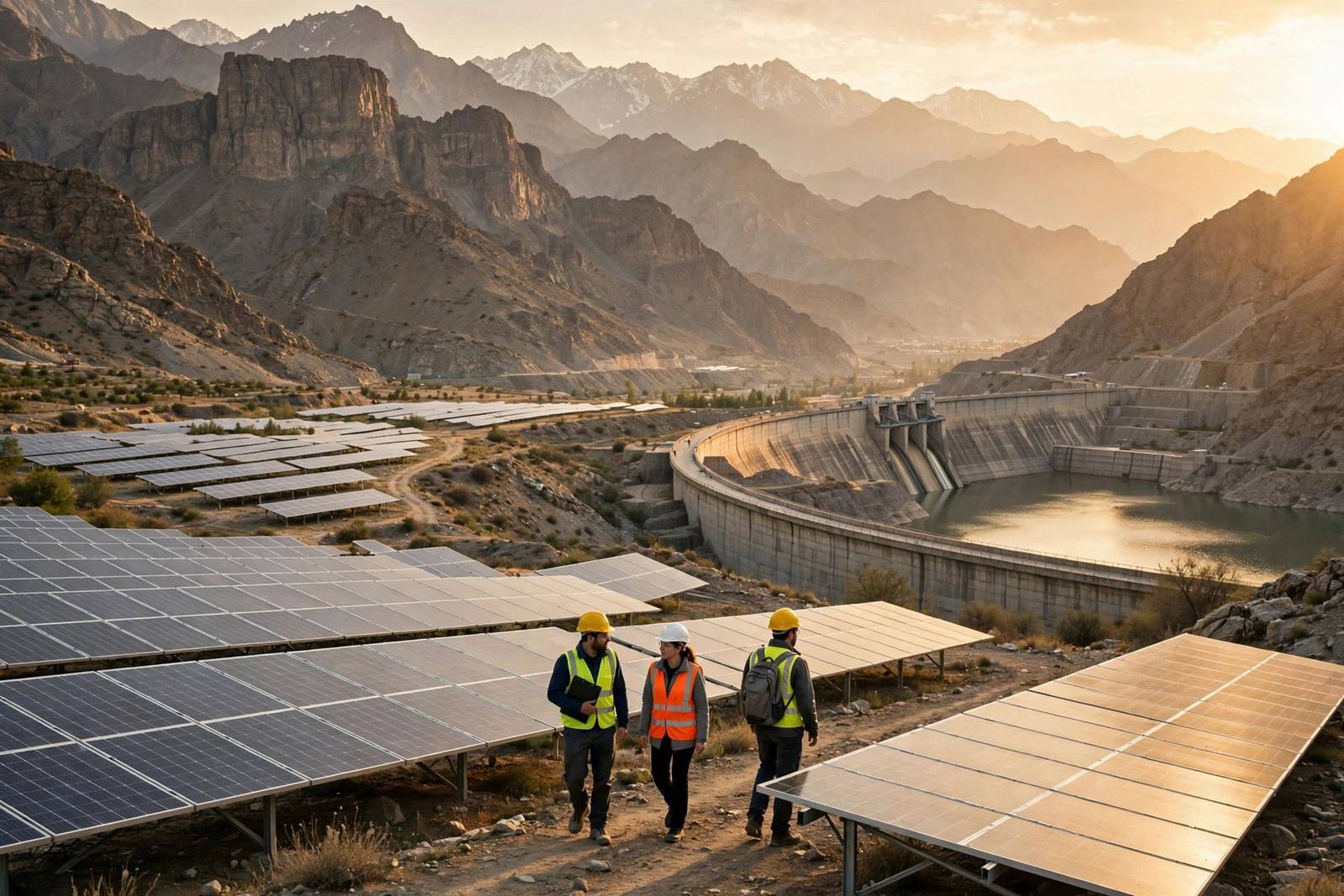
The eligible categories in the framework are not abstractions in a country with Pakistan's project pipeline. Water sits near the top of the list: storage, irrigation efficiency and flood-management works of the kind administered by the water authorities, whose own earlier green borrowing abroad showed the documentation such projects must carry. Energy follows: solar and wind generation, the transmission upgrades without which renewable power cannot reach load centres, and efficiency programmes that cut the demand the grid must serve. Transport and resilient infrastructure — drainage, embankments, climate-proofed roads — translate adaptation, the least glamorous and most Pakistani of climate needs, into financeable projects. Each category carries its own measurement problem, which the framework's reporting commitments exist to answer: a megawatt of solar is countable, a flood that did not destroy a harvest is an estimate, and honest green reporting says which is which. Investors reading future allocation reports should expect that mixture and judge the programme by whether it discloses it plainly.
Key takeaway: A green sukuk is sovereign Ijarah borrowing with a published rulebook: proceeds ring-fenced for eligible climate projects, selection and reporting governed by the Sustainable Investment Sukuk Framework — so judge it on the framework's follow-through as much as on its return.