KARACHI: Hold a Pakistani-made shirt up to the light and there is a fair chance some of it began life not in a cotton field but in a chemical plant near Faisalabad. Ibrahim Fibres Limited — IBFL on the Pakistan Stock Exchange — is the country's defining maker of polyester staple fibre, the man-made fluff that spinners blend with cotton to give yarn strength, consistency and a lower price. It is also a substantial spinner in its own right, and the industrial heart of the Ibrahim Group, the Mukhtar family enterprise best known nationally as the controlling sponsor of Allied Bank. IBFL rarely makes headlines, but the textile chain it supplies is Pakistan's largest source of export earnings, which makes this quiet fibre producer a useful window into how that chain really works.
Roots: a family business becomes a group
The Ibrahim story starts earlier than the listed company. According to accounts of the group's history, Sheikh Mohammad Ibrahim founded Ibrahim Agency (Private) Limited in August 1968 together with his sons Sheikh Mukhtar Ahmed and Sheikh Sardar Ahmed, a venture that became instrumental in establishing the Ibrahim Group as one of Pakistan's significant textile businesses. Textiles were the family's trade for decades before polyester entered the picture.
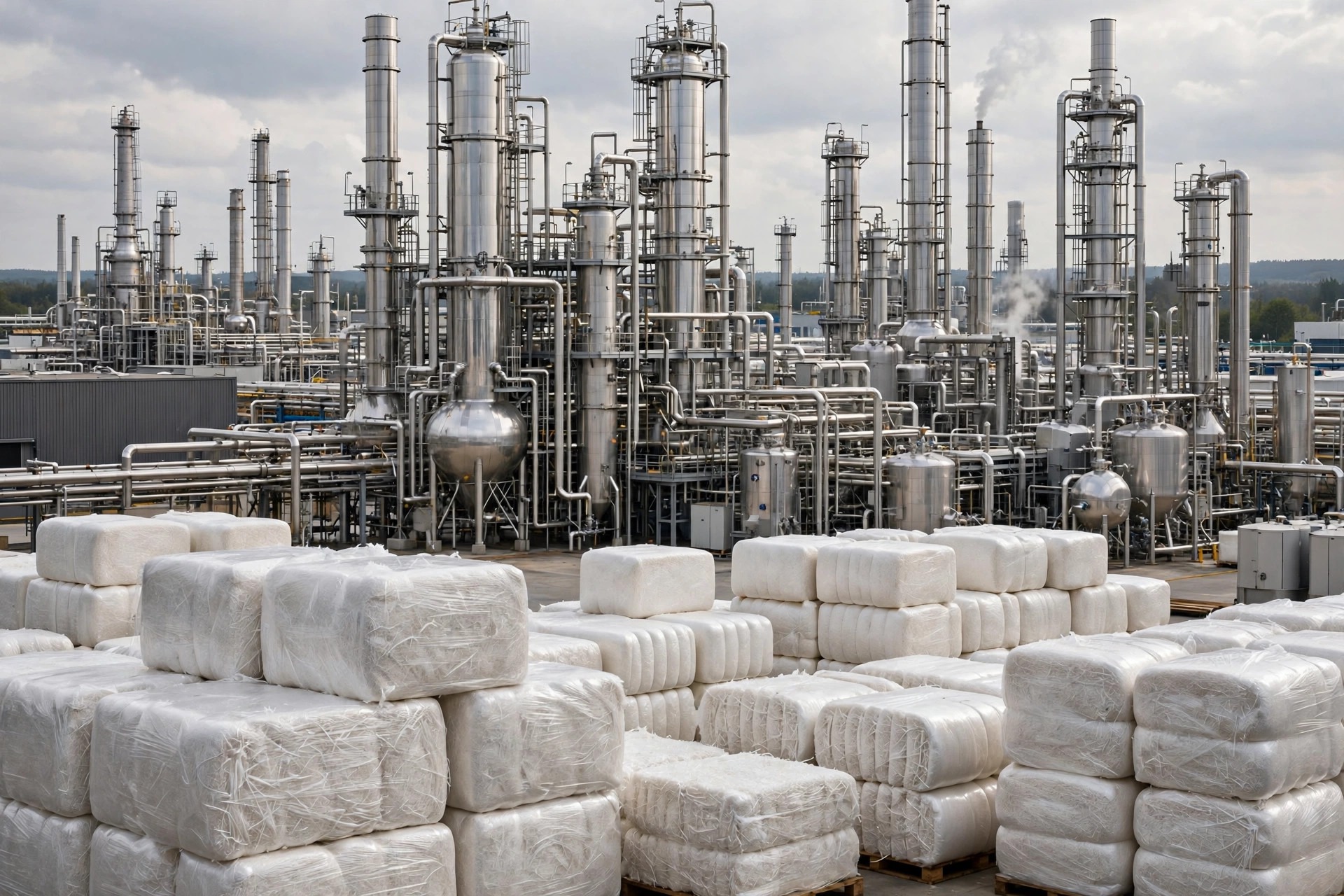
Ibrahim Fibres Limited itself was incorporated as a public limited company in 1986. The choice of product was forward-looking. Pakistan's textile industry was built on cotton — grown domestically, ginned, spun and woven in a chain stretching back generations. Polyester staple fibre, by contrast, is a petrochemical product: it is manufactured from purified terephthalic acid (PTA) and monoethylene glycol (MEG), themselves derived from crude oil. Building a PSF plant meant betting that Pakistan's spinners would blend more man-made fibre into their yarns — for durability, for uniformity, and to hedge the violent swings of the cotton crop. That bet became the company's reason to exist, and its manufacturing site at Shahkot, near Faisalabad on the Faisalabad–Sheikhupura Road, became one of the country's major fibre complexes.
2000: one company out of several
The modern IBFL took shape at the turn of the century. The group had expanded over the years by establishing additional spinning mills and a power generation company alongside the fibre business. Under a scheme of arrangement approved by the Lahore High Court, the assets and businesses of Ibrahim Textile Mills, A.A. Textiles, Zainab Textile Mills and Ibrahim Energy were merged into Ibrahim Fibres Limited with effect from 1 October 2000. The result was a single listed entity combining fibre production, textile spinning and its own power generation — vertical integration of a classic Pakistani kind, in which a manufacturer secures its energy supply rather than depending entirely on the grid.
Ownership was later tidied in the same spirit. For years the Mukhtar family's holding was held directly by individuals; in October 2018 the sponsors transferred their shares to Ibrahim Holdings (Private) Limited, the group holding company established in December 2015 for succession planning and to manage the group's investments. Rating agency reports describe the Ibrahim Group as retaining a majority stake of roughly eighty-eight per cent in IBFL — an unusually concentrated register that leaves a small free float for public investors, a point that matters when considering how the shares trade. The group's other crown jewel is its majority ownership of Allied Bank, one of Pakistan's large commercial banks, which makes the Ibrahim Group a rare Pakistani house with heavyweight positions in both industry and finance.
What Ibrahim Fibres actually makes
The company reports two broad activities: polyester and textile spinning. The polyester side produces polyester staple fibre in a wide catalogue of varieties. Rating and company materials describe semi-dull, bright and optical-bright fibres, trilobal and dope-dyed types, hollow fibres in siliconised and non-siliconised forms, and speciality grades such as anti-pilling, flame-retardant, high-tenacity and micro fibres. To a non-textile reader that list sounds like marketing; to a spinner it is a toolbox. Different end uses — a soft T-shirt blend, a hard-wearing uniform fabric, a pillow filling, a sewing thread — demand fibres with different shine, cross-section, colour and strength, and the fibre maker that can supply them all becomes a one-stop supplier to the spinning industry.
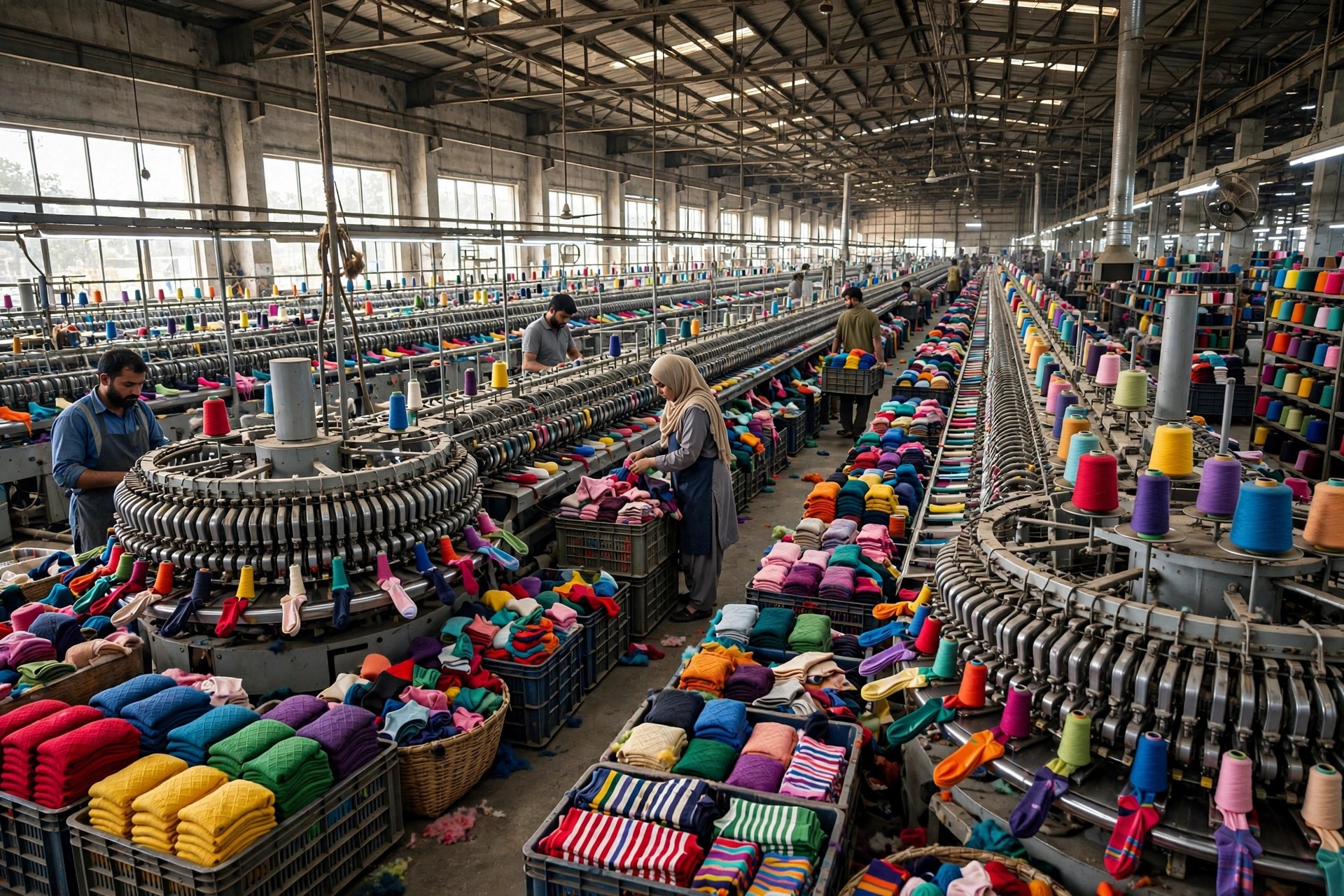
The spinning side turns fibre — its own PSF blended with cotton and viscose — into yarn. IBFL's yarn range includes polyester-cotton combed blends and polyester-viscose blends across a span of counts, sold to weavers and knitters who turn them into fabric for domestic use and export. The company describes its customers as quality-conscious fabric manufacturers and exporters, with its main focus on the local market: it supplies the chain rather than competing at its finished end. Its production footprint has historically been described as the largest PSF capacity in Pakistan, with spinning capacity well above one hundred thousand spindles — figures that underline why IBFL's utilisation and pricing are watched as a barometer for the whole blended-yarn trade.
How a fibre maker makes money
IBFL's economics are a margin story told in two currencies and one oil price. Its raw materials, PTA and MEG, are petrochemicals whose prices track crude oil and global chemical markets, and they are substantially imported or priced at import parity. Its selling price — the rupee price of a kilogram of PSF in the domestic market — is heavily influenced by the landed cost of imported fibre, because spinners can always choose imports if local prices drift too high, subject to any duties and anti-dumping measures in force. Between those two anchors sits IBFL's margin: sell fibre for more than the chemical inputs, energy and conversion cost consumed in making it, and the plant earns; let input costs spike or import prices fall, and the spread is squeezed from both sides.
The spinning business adds a second spread — between fibre and cotton input costs on one side and yarn prices on the other — and gives the company a partial natural hedge: when PSF margins are thin, captive consumption of its own fibre into yarn can still capture value downstream. Energy is the third variable. Fibre production runs continuously and is power-hungry, which is why captive generation was folded into the company in 2000 and why gas and electricity tariffs are a recurring theme in its disclosures, as they are across PSX textile stocks.
Volume matters as much as margin. A fibre plant has high fixed costs, so utilisation is destiny: a plant running near capacity spreads its overheads thinly, while a demand slump in the textile chain quickly turns into under-absorbed costs. Demand, in turn, is set by the health of spinning, weaving and garment exports — orders placed in New York and Hamburg eventually decide how much fibre Shahkot produces. The chemical inputs link IBFL to the sector covered in our guide to PSX chemical stocks, and students of the polyester chain often read IBFL alongside the PTA producers upstream of it.
IBFL in Pakistan's textile chain
Textiles are Pakistan's export backbone, and the chain has a geography: cotton from Punjab and Sindh, spinning concentrated around Faisalabad and Karachi, weaving and processing in industrial clusters, and garments shipped worldwide. IBFL sits near the chain's start but on its industrial, man-made branch. Every bale of its fibre that substitutes for imported fibre saves foreign exchange; every blend it enables helps a spinner offer fabrics that pure cotton cannot deliver at the same price. In a country periodically anxious about its cotton crop — floods, pests and shrinking acreage have all taken turns — the man-made fibre industry is also a form of insurance for the entire export sector.
Its KSE-100 membership gives that industrial role a market dimension. Index inclusion follows the free-float and liquidity rules explained in how the KSE-100 is calculated; with a sponsor holding as concentrated as IBFL's, the free float is small relative to the company's industrial size — a good, concrete example of why market capitalisation and free-float market capitalisation are different numbers with different meanings.
Energy, the silent partner in every bale
No account of Ibrahim Fibres is complete without energy, because fibre-making never sleeps. A polyester plant polymerises and spins continuously; stopping and restarting lines is costly and wasteful, so the economics depend on uninterrupted, competitively priced power and gas. That is why the 2000 merger's inclusion of the group's power company inside IBFL was structural rather than incidental, and why the company's disclosures over the years have returned repeatedly to its energy mix, including investment in additional captive generation. In Pakistan's textile belt, where mills have variously endured gas curtailments, tariff surcharges and regionally differentiated energy pricing for exporters, a manufacturer's energy strategy can move its costs as much as its commercial strategy does. IBFL's integration — fibre, spinning and power under one listed roof — is the group's answer: not immunity from national energy problems, but a measure of control over them.
The human geography matters too. The Shahkot–Faisalabad corridor is one of Pakistan's great industrial landscapes, where generations of families have moved between farms, ginning factories, spinning mills and power looms. A plant of IBFL's scale anchors that ecosystem directly through its workforce and indirectly through the hundreds of spinning and weaving customers whose own payrolls depend on fibre supply. When the textile cycle turns down — as it does with global recessions, cotton shocks or domestic demand slumps — the effects are felt first in exactly these clusters, which is why the utilisation of a handful of large fibre and spinning plants is watched in Faisalabad much as car sales are watched in Detroit.
Set against its group sibling, the comparison is instructive. Allied Bank earns from the spread between deposits and lending in a regulated, service economy; Ibrahim Fibres earns from chemical spreads in a cyclical, industrial one. The same family sponsors stand behind both, and the group's history of supporting the industrial arm through difficult periods — noted by rating agencies in past reviews — reflects a sponsor's long view: fibre capacity built in one decade becomes the irreplaceable asset of the next, provided it is carried through the downturns in between.
The group's banking connection cuts the other way as well. A sponsor family that controls one of Pakistan's larger banks understands credit cycles from the lender's chair, and IBFL's financial management — conservative gearing through most cycles, in the pattern rating agencies have described — reflects that literacy. Industrial groups attached to banks are sometimes viewed with suspicion by regulators alert to connected lending; in the Ibrahim case, the two flagships have generally been run as separately governed, separately rated institutions, and IBFL's disclosures are those of a manufacturer that must persuade public shareholders and creditors in its own right. The fibre plant, not the bank, is what an IBFL shareholder owns — the group connection is context, not collateral.
What investors typically watch in Ibrahim Fibres
This profile is educational content, not financial advice. The observation points that recur in coverage of IBFL are:
- PSF margins — the spread between domestic fibre prices and PTA/MEG input costs, both tied to global petrochemical markets.
- Capacity utilisation — whether the fibre and spinning plants are running full, which depends on textile demand at home and abroad.
- Import competition and duties — the pricing umbrella set by landed import costs and any trade-remedy measures.
- Energy costs — gas and power tariffs and the performance of captive generation.
- Cotton and yarn economics — which drive the spinning segment and the blending choices of its customers.
Ibrahim Fibres is, in the end, a study in Pakistani industrial structure: a family group founded in the late 1960s, a fibre plant incorporated in 1986, a merger in 2000 that folded spinning and power into one listed company, and a holding-company reorganisation a generation later. It does not sell to consumers and it does not chase fashion. It makes the invisible ingredient inside a large share of the clothes Pakistan sells to the world — and its fortunes rise and fall with oil prices, chemical spreads and the health of the textile chain it feeds. Readers building their foundations can find the underlying concepts in the Aktzien learning library.
Key takeaway: Ibrahim Fibres, the Ibrahim Group's industrial flagship alongside Allied Bank, turns oil-derived chemicals into polyester staple fibre and blended yarn near Faisalabad — a margin-and-utilisation business at the very start of Pakistan's textile export chain.