KARACHI: Pakistani insurance has a small top table, and one seat at it has carried the same name, in changing forms, since 1953. Jubilee General Insurance Company Limited — ticker JGICL on the Pakistan Stock Exchange — began life as New Jubilee Insurance, founded by the Fancy family, listed on the Karachi exchange within two years of its birth, and today stands as one of the country's largest private general insurers, majority-held by institutions of the Aga Khan Development Network. Fire, motor, marine, health, engineering: the company writes the everyday cover that lets Pakistan's factories run, its cargo move and its cars stay legal. This profile traces the road from a family insurer of the 1950s to an Aga Khan fund-backed institution, and explains the underwriting machine underneath.
1953: a family founds an insurer in a young country
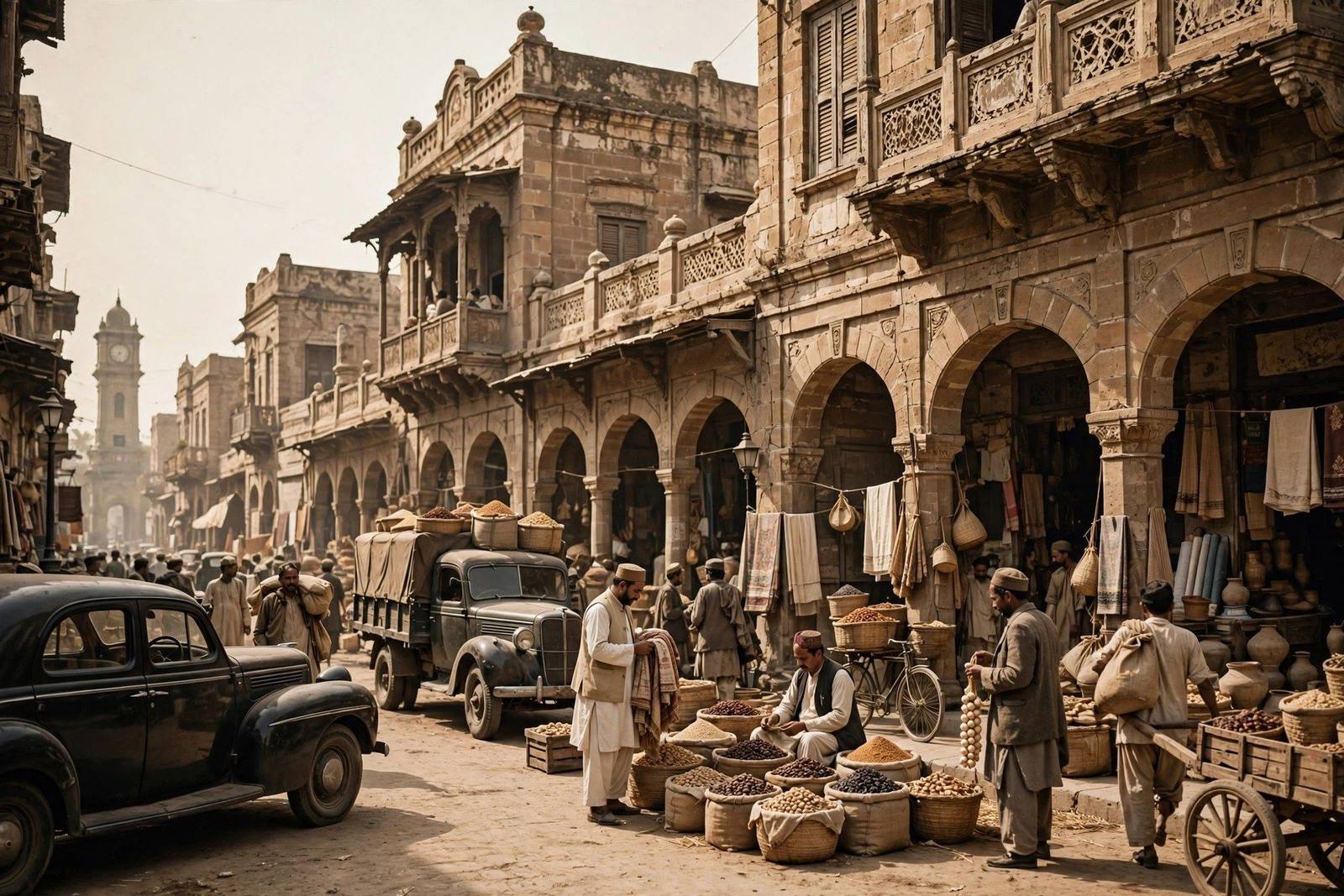
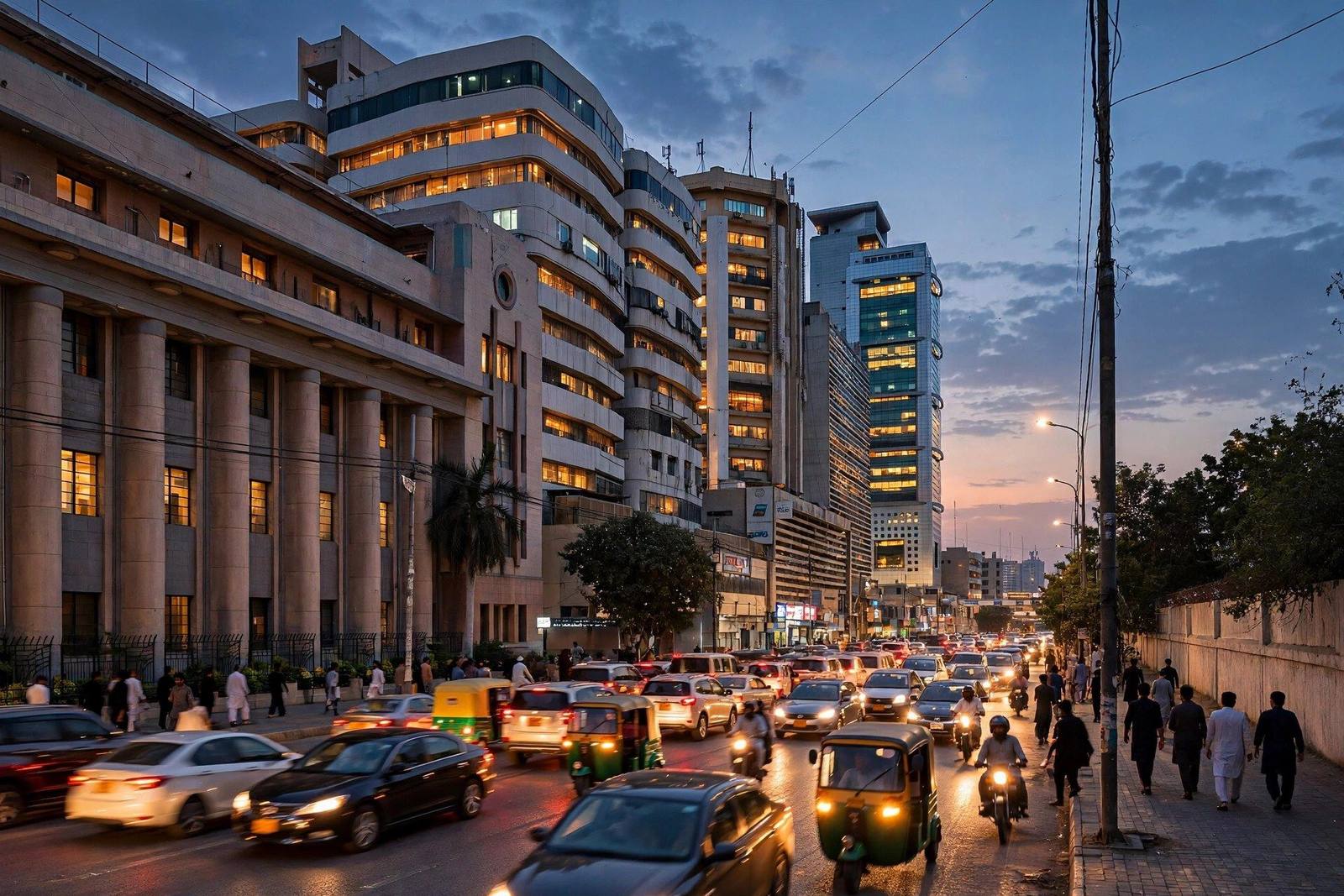
Pakistan was six years old when New Jubilee Insurance Company Limited was incorporated in May 1953 by the Fancy family, part of the wave of Muslim business houses building the new country's financial institutions from Karachi. Insurance then was still a thin trade: a handful of local companies competed with the branches of foreign insurers, corporate buyers were few, and the industry's centre of gravity sat in the port city's trading houses. Listing on the Karachi Stock Exchange followed quickly, in 1955 — early evidence that the founders intended a public institution rather than a private family till. The company's head office settled on I. I. Chundrigar Road, Karachi's financial artery, where the Jubilee name remains attached to the streetscape today.
The first great rupture was national. In 1972 the government nationalised life insurance across Pakistan, and like every composite insurer of the era, the company lost its life book to the state and continued as a general insurer only. Ownership also evolved over the decades: the founding family in time sold its interest, and the Hashwani family's Hashoo Group became a significant shareholder — a stake it retains in the modern register. Through these changes the general company did what durable insurers do: it kept writing, kept paying claims, and compounded a claims-paying reputation that is the only real currency of its trade.
The CGU acquisition and the Aga Khan era
The modern company was reshaped at the start of the 2000s, in a pair of transactions that rating-agency histories recount together. In 2002 the Aga Khan Fund for Economic Development — AKFED, the development agency of the Aga Khan Development Network that holds commercial investments across banking, insurance, hotels and industry — acquired the Pakistani operations of CGU International Insurance, the British group. In the same period, the company — together with AKFED interests — took majority control of the Pakistan life business that CGU had founded in 1995, the seed of today's Jubilee Life. The general company thus gained both scale and a powerful sponsor constellation, and in 2011 the group simplified its identity: New Jubilee Insurance was renamed Jubilee Insurance, shedding the "New" that had marked its 1953 incorporation, with the general company trading as Jubilee General Insurance.
The sponsorship deserves unpacking, because it is JGICL's defining structural fact. Recent rating reports describe the Aga Khan network's combined holding at a majority level when its related institutions are counted together: the Aga Khan Hospital and Medical College Foundation, AKFED itself, Habib Bank Limited — the country's largest private bank, itself an AKFED-associated institution — alongside the Hashoo Group and Pakistan Services Limited. A broker reading that register sees two things at once: sponsors with deep pockets, long horizons and their own demand for insurance across hospitals, hotels, schools and banks; and a governance culture imported from a network that runs institutions on professional, audited lines. Our profile of the sister company, Jubilee Life Insurance, tells the life side of the same house.
What Jubilee General actually writes
The product shelf is the classic general-insurance set, organised in the segments its accounts report. Fire and property is the commercial core: factories, warehouses, offices and homes against fire and allied perils, increasingly including flood and other weather risks that Pakistan's climate is repricing. Marine covers cargo by sea, air and land, and the vessels and liabilities attached to it — the cover that underwrites the country's import-dependent trade. Motor spans commercial fleets and private cars, from third-party liability to comprehensive cover, and has been a retail growth engine as vehicle ownership widened. Around those pillars sits the miscellaneous book: health and personal accident, engineering and contractors' all-risks, burglary, cash in transit and in safe, travel, crop and livestock, and liability covers of many kinds.
Since 2015 the company has also operated a window takaful business — Jubilee General's Window Takaful Operations joined the group's 2015 entry into Shariah-compliant cover — running a segregated participants' fund under the Securities and Exchange Commission of Pakistan's takaful rules beside its conventional book. The mechanics of that model, in which participants pool contributions in a waqf fund and the operator earns a management fee, are set out in our guide to takaful in Pakistan. Distribution runs through a branch network across Pakistan's major cities and towns, through brokers and agents, and increasingly through digital channels and partnerships — the company has publicised tie-ups from motor manufacturers to its own policy-and-claims app — because general insurance is sold at the moment of another transaction: the car purchase, the loan signing, the shipment.
How a general insurer makes money
The engine is the same one explained across our insurance profiles, and JGICL's scale makes it a clean example. Premiums are collected upfront and earned over the policy period; claims and the expenses of branches, surveyors and commissions are set against them, producing the underwriting result, summarised in the combined ratio professionals watch. Between premium and claim, the float — technical reserves and capital — is invested, predominantly in government securities, deposits and equities, and in Pakistan's high-rate environment that investment income is a second profit engine of real size. Reinsurance caps the tail: slices of the largest property and catastrophe exposures are ceded to international and local reinsurers, at the cost of premium, so that a single industrial fire or a severe flood season wounds a year rather than breaking the company. Our guide to insurance stocks on the PSX lays this model across the listed sector, and our profile of the market's founder-generation name, EFU General Insurance, shows the same machinery in its oldest Pakistani form.
Two operational habits decide whether that machinery produces profit or merely premium. The first is claims handling. A general insurer's marketing is, in the end, its settled claims file: corporate clients renew with the company that surveyed their fire quickly and paid without theatre, and motor customers tell their experience to everyone they know. Jubilee General's repeated emphasis in its own materials on service quality, digital issuance and faster claims settlement is a commercial statement about where retention is won. The second habit is portfolio balance. Fire and engineering books are profitable but lumpy — one large industrial loss can bend a quarter — while motor and health books are granular and frequent, smoothing the year but exposing the company to theft trends, parts inflation and hospital costs. A big-three insurer is really a portfolio manager of these different claims weathers, adjusting prices line by line at each renewal. This is why two insurers with identical premium can report utterly different results, and why the segment tables in JGICL's annual report matter more than the headline premium growth.
There is also a quieter reason the company's history matters to its present. Insurance is bought on trust horizons longer than most products: a factory insured in the 1970s by New Jubilee, renewed through the CGU-era transactions, and serviced today by Jubilee General represents a relationship older than most of the people now managing it. Institutional memory — of how a client's plant burned, flooded or was rebuilt — is underwriting data no rival can copy, and branch networks in the major cities exist partly to keep that memory local. Reading JGICL, a beginner should therefore resist treating it as a generic financial stock: it is closer to a long-running risk partnership with Pakistan's industrial economy, whose results rise and fall with that economy's factories, ports, roads and weather.
Ratings, reputation and the "big three" claim
Company and rating-agency materials have long placed Jubilee General among the "big three" of Pakistan's private general insurance by premium and financial base, and its insurer financial strength ratings sit at the top of the local scale — reported in recent rating actions in the highest double-A category from Pakistan's agencies, with an international rating from AM Best also on record. Treat such rankings as a characterisation rather than a league table: the sector's top tier also includes older names such as EFU General and Adamjee, and shares shift with each renewal season. What the ratings do establish is the market's formal judgement on the things a corporate buyer cannot easily test — capital adequacy, reinsurance quality, reserving discipline and governance. For an insurer, those judgements are commercial assets: risk managers at large companies place cover where the rating lets them defend the choice to their own boards.
Strengths, risks and honest caveats
The strengths are structural. Sponsorship by the Aga Khan network brings capital patience, institutional demand and governance expectations beyond the local norm. Scale in fire and commercial lines, a nationwide branch network, established reinsurance relationships with highly rated global reinsurers, and a takaful window riding Islamic finance's growth give the franchise breadth. The brand has traded since 1953, and in insurance, survival itself is a sales argument.
The risks are the sector's physics, felt by JGICL as by every rival. Pakistan's catastrophe exposure is rising — flood seasons have repriced property, engineering and crop covers and pushed reinsurance renewal costs up across the market. Health-claims inflation pressures the miscellaneous book. Soft-market price competition can buy premium at the cost of tomorrow's claims, and the discipline to refuse underpriced business is tested exactly when growth targets bite. Investment income, the faithful second engine, reverses when equity markets fall or policy rates decline. Finally, a sponsor-heavy register is a double-edged comfort: strategy is set with the network's long view, which minority holders must take as they find it.
The name on the PSX
JGICL is one of the exchange's seasoned insurance listings, its public history reaching back to the 1955 Karachi listing of New Jubilee — among the earliest listings of Pakistan's corporate era still trading in recognisable form. It sits in the insurance sector with a December year-end, reports its window takaful operation alongside the conventional segments, and its free float is shaped by the sponsor institutions' large, stable holdings: the register is institutional in character, and trading interest tends to concentrate around results and dividend announcements. Its dividend character, in evergreen terms, is that of a large, capitalised general insurer — a payer in normal years, with distributions ultimately set by underwriting outcomes, investment markets and the capital its premium growth consumes. Readers new to the mechanics of declarations and book closures will find them in our guide to how PSX dividends work.
What kind of investor studies JGICL
The natural student of JGICL is reading Pakistan's commercial risk economy: premium growth against the market, the combined ratio's trend through flood and quiet years, reinsurance costs at renewal, the health book's claims behaviour, and the investment portfolio's contribution to reported profit. They also keep the group in view — the sister life company's fortunes, the sponsors' other financial holdings, and the takaful window's share of the mix — because this share is, in part, a way of owning the Aga Khan network's Pakistani insurance platform through a single listed door. This article is educational content, not financial advice, and it takes no view on the share's price at any time.
Key takeaway: Jubilee General, founded in 1953 as New Jubilee Insurance and today backed by Aga Khan network institutions and the Hashoo Group, earns from general-insurance underwriting and invested float — a top-tier franchise whose results move with pricing discipline, claims weather and reinsurance costs.