KARACHI: Kohinoor Textile Mills — KTML on the Pakistan Stock Exchange — is two stories wearing one ticker. The first is a textile story: a mill founded by the Saigol family in the early 1950s, among the first industrial ventures of the new Pakistan, grown over seventy years into a vertically integrated maker of yarn, fabric and finished home textiles for export markets on four continents. The second is a cement story: KTML is the holding company of Maple Leaf Cement, one of Pakistan's largest cement producers, acquired under the 1990s privatisation programme. Anyone reading KTML's accounts is therefore reading a textile exporter and a cement shareholder at once — and the company's history explains how those two halves came to sit in the same listed shell.
The Saigols, from rubber shoes to spinning mills
The family's business story starts before Pakistan. The Saigols came from Khotian in Chakwal district — a town later renamed Saigolabad after them — and Ameen Saigol founded the family's enterprise in the 1930s from a small shop that grew into the Kohinoor Rubber Works. His son Sayeed Saigol moved to Calcutta in the 1930s, opened a shoe business and a rubber shoe factory, and supplied rubber shoes and raincoats to the Allied forces during the Second World War. Anticipating the division of British India, Sayeed moved the family's assets to Lahore in the early 1940s. After independence in 1947 he and his brothers — Yousaf, Gull and Bashir — set up the family's first textile spinning mill at Lyallpur, now Faisalabad, in 1949 under the name Kohinoor Industries: the founding generation of Pakistani industry, building mills in a country that had inherited almost none.
Kohinoor Textile Mills itself was established in 1953 near Rawalpindi, set up as a spinning and weaving project with about 25,000 spindles and 600 looms — respectable scale for the era. It began as a private company and became a public limited company in 1968. Through the 1950s and 1960s the Saigols expanded across textiles and far beyond: more mills around Rawalpindi and Gujjar Khan, a sugar mill bought from the Pakistan Industrial Development Corporation, and, in 1958–59, a founding role in United Bank. By the late 1960s the group touched textiles, banking, cement, power, chemicals and electronics, and ranked among the country's great industrial houses.
Nationalisation, loss, and rebuilding
That breadth made the group a prime target of the 1970s nationalisation drive. Between 1972 and 1976 most of the Saigol businesses were taken into state ownership; by the end of the process only the textile and sugar interests remained in family hands. The episode is essential context for KTML's modern shape: a group that had once owned a bank and heavy industry rebuilt itself, from the late 1970s onward as reprivatisation began, around the business it had kept — textiles — and then used the 1990s privatisation programme to buy back into heavy industry from the other side of the table.
The rebuilding of the textile core was a decades-long programme of expansion and modernisation at and beyond the Rawalpindi base. Spinning capacity grew, weaving was expanded, and — the decisive shift — the company moved down the value chain into processing: dyeing, printing and stitching. A mill that once sold yarn and grey (unfinished) cloth became a maker of finished home textiles: bed linen, quilts, embroidered goods and curtains, sold to retailers and importers in the United States, Europe, Canada, Australia and across Asia and Africa. Each step down that chain captures more of the final product's value inside Pakistan and inside the company, at the cost of more working capital, more fashion and quality risk, and more exposure to the tastes of foreign home-textile buyers. Our guide to textile stocks on the PSX places KTML among the composite mills that followed the same yarn-to-bedlinen path.
The trifurcation and the Maple Leaf acquisition
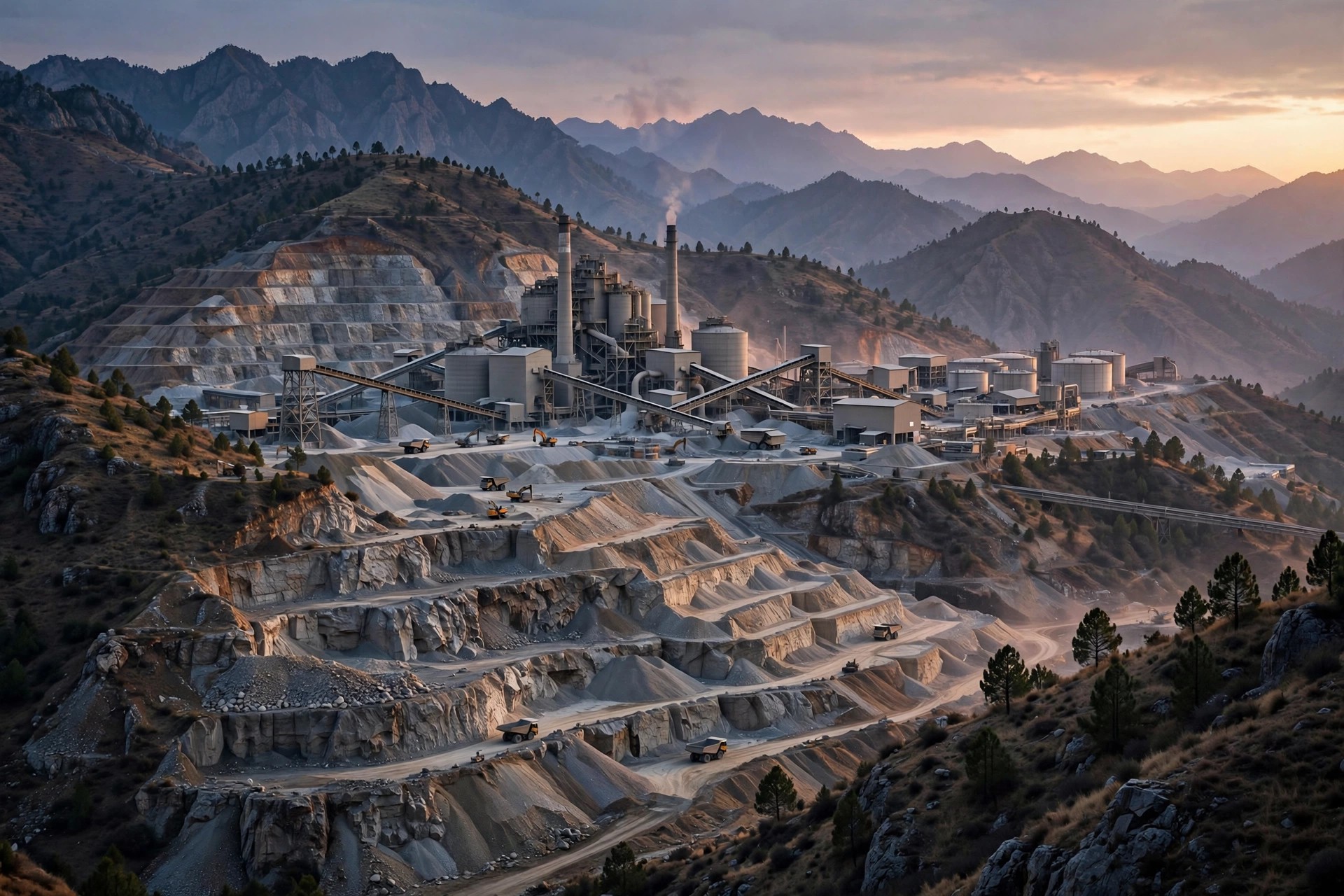
Two corporate events define the modern KTML. The first is the division of the old Saigol group between its branches of the family — described in the group's own history as a trifurcation — from which emerged the Kohinoor Maple Leaf Group, the branch led by Tariq Sayeed Saigol's side of the family, combining the Kohinoor textile businesses with Maple Leaf. The second is the 1992 privatisation of Maple Leaf Cement. Maple Leaf's plant at Daudkhel in Mianwali district had been set up in 1956 as a collaboration between the West Pakistan Industrial Development Corporation and the government of Canada, sitting in a district rich in limestone. When the state sold it under the privatisation programme in 1992, Kohinoor acquired ownership and management — a textile family buying a state cement plant in the same reform wave that reshaped Kohat and other SCCP assets.
The structural result is unusual and worth spelling out for new readers. KTML today is the holding company for Maple Leaf Cement Factory Limited (MLCF), which remains separately listed on the PSX with its own public shareholders. KTML's consolidated accounts therefore combine textile operations with its cement subsidiary's results, and its segment reporting reflects that span — spinning, weaving, processing and home textiles, power and investment segments alongside cement. A shareholder in KTML owns the textile mills directly and a controlling interest in a cement major indirectly; a shareholder in MLCF owns the cement pure-play. The sibling profile of Maple Leaf Cement in this series tells the Daudkhel plant's story on its own terms. Structures like this — a listed parent atop a listed subsidiary — are a common Pakistani pattern, and they are one reason the market capitalisation of a holding company can sit at a discount to the summed value of its parts, a point new investors often meet first in groups exactly like this one.
How the textile business makes money
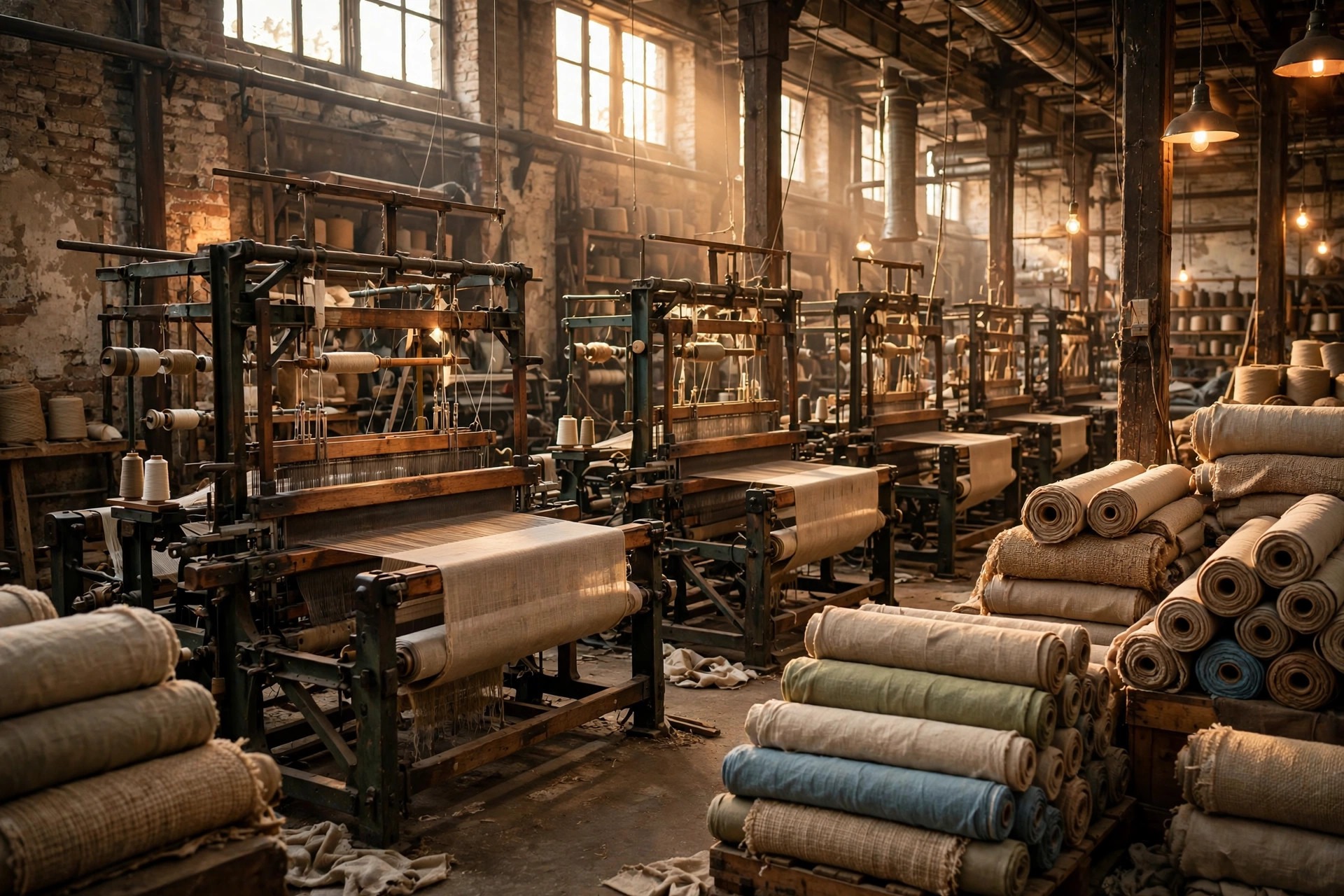
Strip away the cement holding and KTML's core economics are those of a composite textile exporter. The chain begins with raw cotton — Pakistani and, for finer counts, imported American and Egyptian cotton — plus polyester and other fibres for blended yarns. Spinning turns fibre into yarn; weaving turns yarn into grey fabric; processing dyes, prints and finishes it; stitching converts finished fabric into bed sets and home products. At each stage the company can sell the intermediate product or carry it further: yarn to other mills, grey cloth to processors, finished goods to foreign retailers. The flexibility is itself a strategy — when export demand for made-ups is strong, capacity flows to finished goods; when yarn prices spike, selling yarn can be the better margin.
The profit arithmetic of that chain is exposed to four big variables. Cotton prices, set by harvests at home and abroad, determine the raw-material line. Energy costs — spinning and processing are power-hungry — determine conversion margins, and like many large mills KTML generates part of its own power. The rupee's exchange rate works in the exporter's favour when it weakens, lifting the rupee value of dollar-denominated export orders faster than it lifts largely local wage costs, though imported cotton and machinery blunt the gain. And foreign demand, especially the inventory cycles of American and European home-textile retailers, decides volumes: the post-pandemic years taught every Pakistani mill how violently those order books can swing. Financing costs thread through all of it, because textiles is a working-capital business — cotton is bought in season, held as inventory, and converted to receivables from buyers abroad — although exporters have historically had access to concessional export-refinance schemes that soften the interest line.
KTML in Pakistan's textile landscape
Textiles are Pakistan's defining industry — the largest manufacturing employer and the backbone of merchandise exports — and KTML sits in its established, integrated tier: not the largest of the composite exporters, but among the oldest continuously family-run names in the trade. Its Rawalpindi base also sets it slightly apart in an industry concentrated in Faisalabad, Lahore and Karachi: a northern mill drawing on generations of local labour, exporting through Karachi's ports. The home-textile focus matters too. Pakistan's exports skew towards bedwear and towels rather than fashion garments, and KTML's product mix — bed linen, quilting, embroidery, curtains — sits squarely in the categories where Pakistan competes globally on scale and cost against India, China and Bangladesh.
For the index-minded reader, KTML's KSE-100 seat follows the standard mechanics: the index is built from free-float market value under the selection rules explained in how the KSE-100 is calculated, and the periodic reviews covered in our rebalancing guide weigh its combined textile-and-cement value, not either business alone.
Inside the mills today
The modern KTML is best understood as a set of linked factories sharing one balance sheet. The spinning division turns cotton and blended fibres into yarns across a wide count range, including the finer counts that imported long-staple cotton makes possible and the speciality blends — polyester-cotton, and yarns incorporating fibres such as lyocell — that premium home-textile buyers specify. The weaving division converts yarn into grey fabric on modern looms. The processing and home-textile division is where the transformation completes: dyeing and printing lines finish the fabric, and stitching units cut and sew it into bed linen sets, quilts, embroidered lines and curtains, packed to the specifications of foreign retail programmes. That last division is the strategic heart of the group, because it is where a commodity becomes a consumer product — where design, compliance with buyers' social and chemical standards, and delivery reliability decide orders as much as price does. Supporting all three is the group's own power generation, a necessity in a country where grid reliability and industrial tariffs have long made captive plants — gas, and increasingly solar and other sources — part of a mill's standard anatomy.
The customer geography deserves emphasis, because it explains the company's resilience and its shocks alike. KTML sells into the local market and exports to Asia, Europe, the United States, Canada, Australia and Africa, with home textiles for Western retail and hospitality buyers the characteristic trade. Those buyers order in programmes, audit factories, and consolidate suppliers over time — relationships measured in years, which reward the integrated supplier who can take a bed-linen programme from raw cotton to packed carton under one roof. The same relationships transmit foreign retail cycles straight into Rawalpindi: a destocking year in American home goods is a volume year lost in the processing division, whatever the spinning division's yarn prices are doing. Managing the mix between divisions, markets and product stages is, in substance, the management job at KTML — and the reason its segment reporting, which separates spinning, weaving and processing results, is the first place a careful reader looks.
What investors typically watch
Readers of KTML learn to split their attention. On the textile side: export volumes and order commentary, the cotton crop and lint prices, energy tariffs for industry, the exchange rate, and the utilisation of the processing and stitching divisions, where value addition concentrates. On the cement side, through the MLCF holding: northern cement dispatches, coal costs and the subsidiary's own expansion and dividend decisions, since dividends upstreamed from Maple Leaf are one channel through which cement cash reaches KTML's shareholders. At group level, watchers follow the balance between the two engines — years when foreign home-textile demand slumps are often years when domestic cement carries the consolidated result, and vice versa. That built-in diversification is the honest core of the KTML story: a Saigol textile mill that hedged its country's oldest industry with a privatised cement plant, and ended up as both.
This article is educational content, not financial advice. Aktzien, the investing app being built for Pakistan, plans to offer group-structure explainers like this alongside its market tools; the learning library already carries the textile, cement and index guides linked above.
Key takeaway: KTML, founded by the Saigol family in 1953, grew from a Rawalpindi spinning and weaving mill into a vertically integrated home-textiles exporter — and, through the Kohinoor Maple Leaf Group, became the holding company of Maple Leaf Cement, so one ticker carries both an export textile business and a cement major.