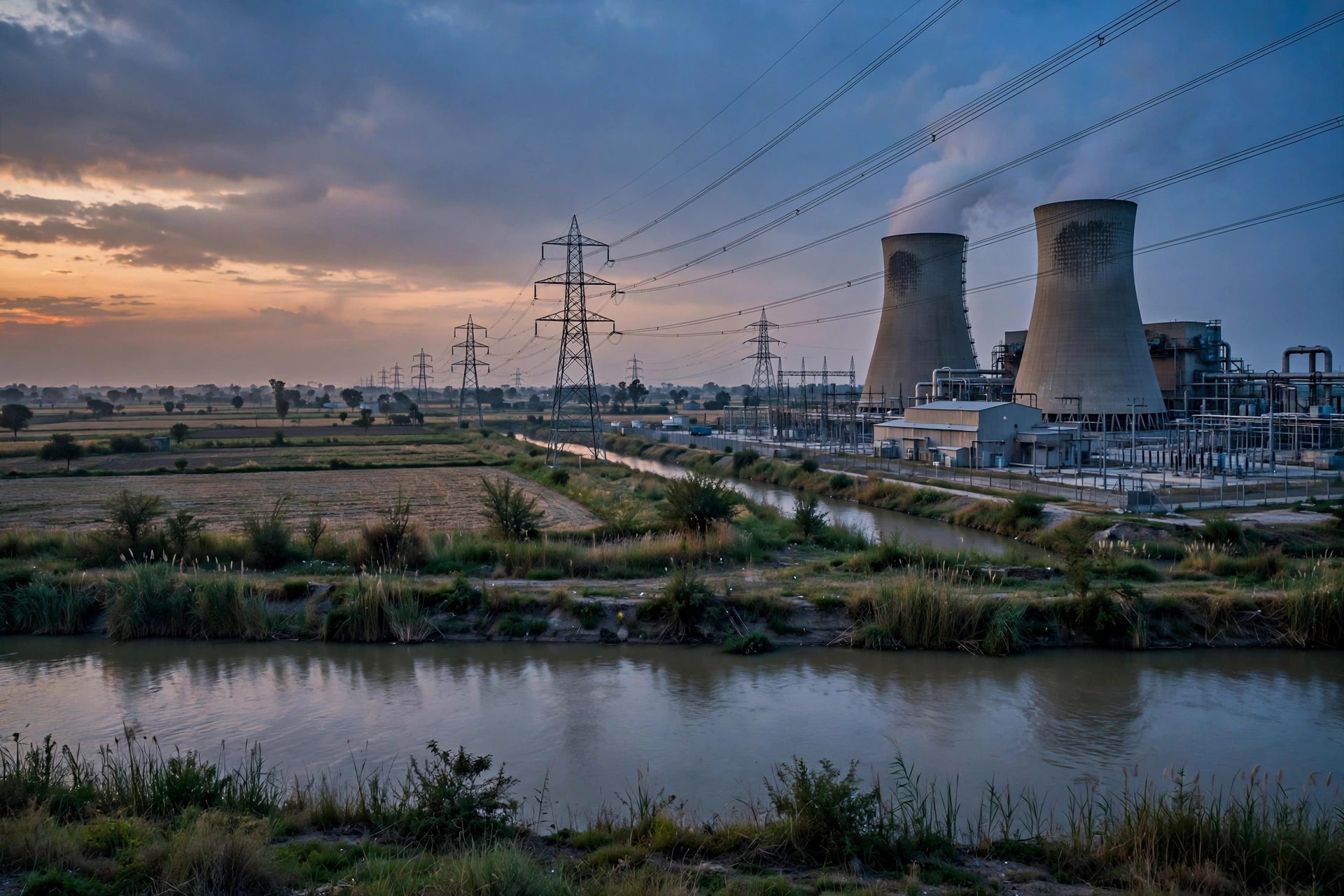
KARACHI: Nishat Power Limited is what happens when a textile empire decides to sell electricity. It is a subsidiary of Nishat Mills Limited, the 1951 composite mill at the root of Mian Muhammad Mansha's Nishat Group, and it was incorporated on 23 February 2007 — the same date, as it happens, as its near-namesake Nishat Chunian Power, sponsored by the family's Chunian branch. Both companies built fuel-fired plants of 200 megawatts gross capacity at Jamber Kalan, in Tehsil Pattoki, District Kasur. Nishat Power's plant began its 25-year Power Purchase Agreement on 9 June 2010, a few weeks ahead of its cousin's. Since then its business has had the elegant simplicity and the chronic frustration of every Pakistani independent power producer: generate electricity, sell every unit to a single state buyer under a long contract, and then wait — sometimes patiently, sometimes publicly — inside the payment chain known as circular debt. NPL's profile is therefore two stories at once: a Nishat Group diversification story, and a chapter of Pakistan's unfinished power-sector reform.
Why a mill owns a power station
The Nishat Group's core businesses, as its own histories describe them, are textiles, cement, banking and power. The power leg was built in the 2000s, when Pakistan's electricity shortages were becoming a national emergency and the state, unable to finance generation itself, offered private sponsors long-term, contract-backed terms under its power policies to build plants quickly. For a group like Nishat — with banking relationships through MCB, industrial land and operations in Punjab, engineering management depth and a sponsor balance sheet lenders trusted — an independent power project was a logical extension: heavy, capital-intensive, contract-based industry, of the kind the group already understood from cement and textiles.
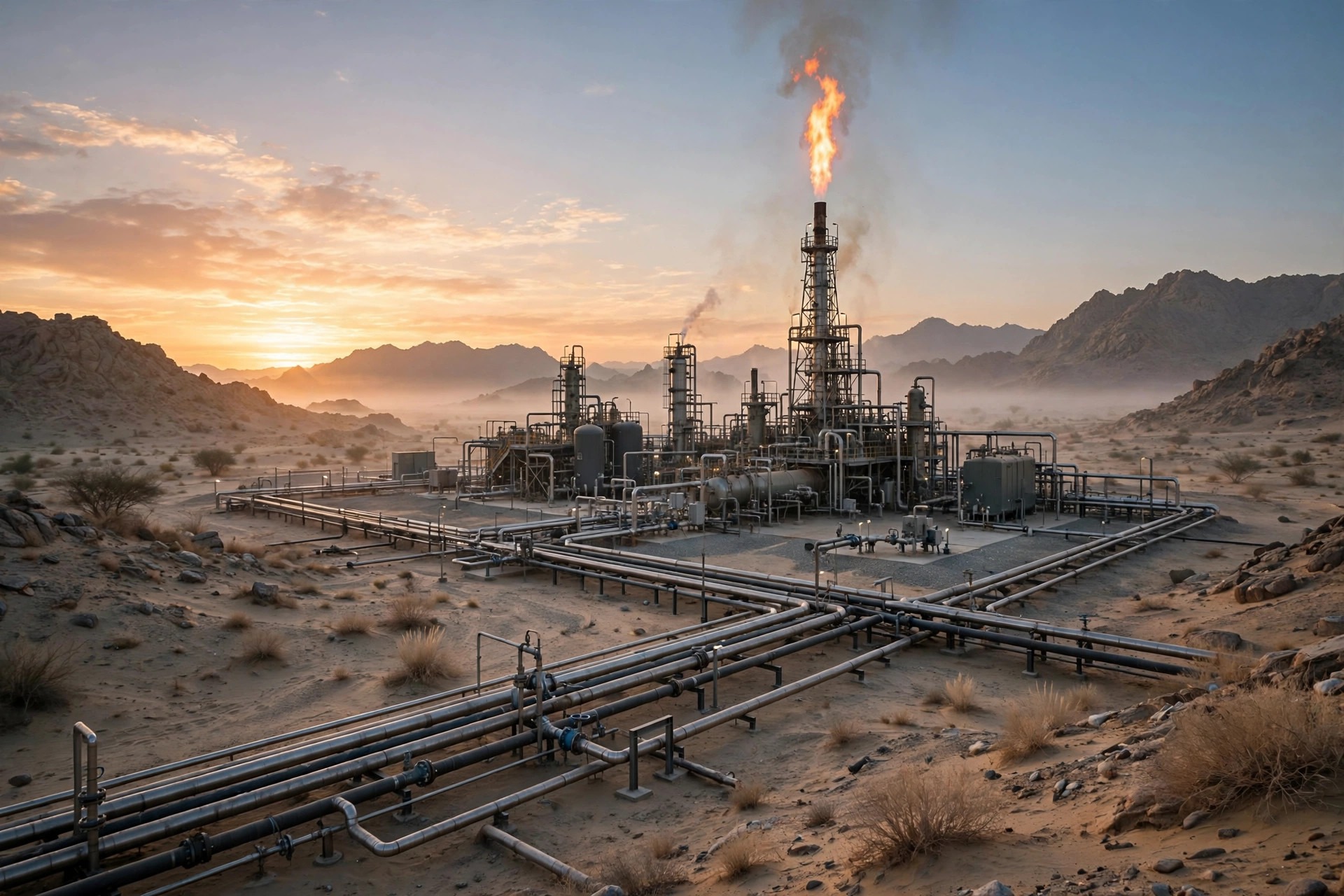
Nishat Power was formed under the Power Policy 2002 as an independent power producer, with Nishat Mills as its parent. The registered office is on Lawrence Road in Lahore, with head office functions in Gulberg; the plant itself stands at Jamber Kalan near the group's Punjab industrial geography. The choice of a fuel-fired plant of reciprocating-engine type — a configuration associated with the technology suppliers named in project descriptions of the era — suited the policy framework and the grid's need for dependable mid-merit capacity in Punjab, close to load rather than at a distant fuel source.
Listing followed construction, as with most IPPs of the vintage: the public was offered a share in a contracted cash-flow business, and the sponsor retained control through Nishat Mills. The company later added a small subsidiary, Lalpir Solar (Private) Limited, incorporated in November 2015 — a footnote in scale beside the main plant, but a sign of the group's awareness that the next generation of power investment would not burn fuel at all.
The contract is the company
NPL's principal activity, in its own statutory words, is to build, own, operate and maintain its fuel-fired power station. Its sole customer under the Power Purchase Agreement was originally the National Transmission and Despatch Company. The PPA term of 25 years commenced from 9 June 2010. On 12 February 2021 — a day after its cousin NCPL signed parallel documents — NPL entered a novation agreement transferring the buyer's role from NTDC to the Central Power Purchasing Agency (Guarantee) Limited, CPPA-G, and a PPA amendment agreement under which the agreement year then running was extended by 68 days, taking the term's end to 15 August 2035.
Economically, the tariff structure does the work. The plant is paid for capacity — being available, maintained and ready — and for energy actually generated, with the energy component designed around the cost of the fuel it consumes. That design separates the generator's skills from the merchant risks a power trader would carry: NPL does not choose its customers, set its prices in a market or guess demand. It must be available, efficient within its contracted parameters, and disciplined about maintenance, because availability is what the capacity payment rewards. What it cannot control is the buyer's payment behaviour — and that, in Pakistan, is the rub.
The 2021 agreements were part of a sector-wide renegotiation in which producers accepted amended terms in exchange for settlement of outstanding amounts — the state attempting to lower the power system's cost while clearing some of its arrears. NPL's more recent reporting records a further chapter: after the Prime Minister constituted a task force in 2024 to amend power contracts and revise tariffs as part of structural reform, the company held discussions and consented to amend its agreements. Twice in four years, then, the 'fixed' contract has been reopened — the practical reality behind every Pakistani IPP's paperwork.
Circular debt: profit on paper, patience in cash
No profile of NPL is honest without a plain account of circular debt, because it is the medium the company swims in. Pakistan's distribution companies have chronically collected less from electricity consumers — through losses, theft and under-recovery of tariffs — than the system's generation and network costs. The gap is papered over with delayed payments and intermittent government support, and the arrears accumulate at the centre, where the power purchaser owes generators for electricity already delivered. A plant like NPL therefore lives a double life in its accounts: revenue recognised as it generates, and a receivables balance that rises and falls with the state's payment discipline.
For shareholders, the consequences are concrete. Dividends are paid from cash, not from receivables, so NPL's payout history tracks collections and settlements more than it tracks accounting profit. Working-capital financing — borrowing to bridge the gap between generating and being paid — carries a cost that lands in the finance line. And periodic government settlements, when arrears are cleared through cash or instruments, can transform the company's liquidity in a single quarter without a single extra unit being generated. This is why seasoned readers of IPP accounts in Pakistan read the receivables note before the income statement. Our guide to power generation stocks generalises the point across the listed fleet.
It is equally important to state what circular debt is not. It is not evidence that the electricity was not needed or not delivered, nor that the plant failed commercially in the ordinary sense. It is a system-financing failure transmitted to the balance sheets of the companies that financed the system's expansion. Whether the original contract terms were too generous — a live and legitimate public argument — is a question about policy design in the 1990s and 2000s; the receivables on NPL's books in the 2020s are that argument's inheritance.
NPL and NCPL: telling the cousins apart
Because confusion between the two Nishat generators is endemic among new market participants, the distinctions deserve one explicit paragraph. NPL, Nishat Power Limited, is the subsidiary of Nishat Mills, the flagship of Mian Muhammad Mansha's group; its PPA commenced 9 June 2010 and, as amended, runs to 15 August 2035. NCPL, Nishat Chunian Power Limited, is the subsidiary of Nishat Chunian, the textile company founded by Shahzad Saleem; its PPA commenced 21 July 2010 and runs, as amended, to 4 October 2035. Same district, same fuel-fired concept, same incorporation date, different parents, different accounts, different shares. The market's shorthand — 'the Nishat powers' — is fine for conversation and dangerous for order placement; check the ticker.
What investors typically watch
The watch-list mirrors the business. Receivables and collections first: the trend in amounts owed by CPPA-G and any settlement news. Despatch second: how much the grid asked the plant to run, which follows system demand, fuel economics and the merit order among generators. Contract proceedings third: task-force outcomes, tariff determinations and amendment terms, since each renegotiation resets the earnings path to 2035. Fuel fourth: price and supply of its fuel and the efficiency with which the plant converts it, within the tariff's pass-through design. Cash deployment fifth: debt reduction, dividends, and any move to grow the small solar subsidiary into something material. And always the clock: a contracted asset with a 2035 horizon is a wasting asset unless renewed, replaced or repurposed, and long-horizon holders price that explicitly.
NPL is, in short, an unusually legible company: its operations can be summarised in a sentence, and all of its complexity lives in its contract and its counterparty. That makes it an excellent second case study — after the simpler operating companies — for anyone learning the PSX on our Learn page, and a standing lesson in why, in Pakistan's power sector, the state is always in the room. There is a broader lesson in that quietness for anyone learning the exchange. Pakistani power companies rarely surprise through operations; they surprise through policy — a settlement announced in a budget speech, a task-force agreement signed after months of silence, a tariff decision that rewrites five years of cash flows in an afternoon. Following NPL therefore means following ministries and regulators as faithfully as company announcements, and reading the notes to the accounts — where contract amendments, contingencies and receivables ageing actually live — with more care than the headline profit figure. Investors who built that habit on a simple, single-plant company like this one find the whole power sector, from the largest multi-plant groups to the smallest listed generator, suddenly legible: same contract logic, same payment chain, same policy weather, differing only in scale. This profile is educational content, not financial advice.
Engines, a steam turbine and an O&M contractor
NPL's plant shares the Jamber Kalan template described in rating-agency and company accounts, and the details explain how a single-site generator actually runs. The station was established on a build, own and operate basis as a combined-cycle plant consisting of eleven residual fuel oil fired reciprocating engines, together with heat-recovery equipment feeding a steam turbine — so exhaust heat from the engines produces additional power rather than being discarded. Rating commentary from the plant's early operating years noted that its operations and maintenance were handled by Wärtsilä Pakistan, the local arm of the Finnish engine maker whose technology the plant uses, under an O&M arrangement — a common IPP structure in which the sponsor owns the asset while a specialist contractor runs the machines to the performance parameters the power purchaser requires. That division of labour is part of the business model: availability is a contracted output, and the O&M contractor's track record is one of the things lenders and rating agencies examine.
The solar subsidiary shows the other side of that model — a project that has moved far more slowly than the main plant did. Lalpir Solar, wholly owned by NPL and incorporated in November 2015, was formed to build, own, operate or invest in a solar project of up to about 20 megawatts peak at Mehmood Kot, in Muzaffargarh district. Company reporting records that the subsidiary obtained approval for a grid interconnection study, but that its path depended on securing a power acquisition request and consent from the central purchaser, after the upfront solar tariff previously announced by the regulator had expired. In other words, the technology was ready before the buying framework was — a neat illustration, inside one small subsidiary, of why Pakistan's newer generation investment has so often waited on policy rather than on engineering.
Life inside the Nishat portfolio
NPL also illustrates how the Nishat Group allocates roles among its listed companies. Nishat Mills keeps the textile core and holds the power investment. MCB carries the group's financial weight. The cement arm carries construction exposure. NPL's job in that architecture is narrow and deliberate: convert a long state contract into dividends and balance-sheet strength for its parent, without demanding the management attention that a growth business would. That is why the company's announcements are mostly operational and financial rather than strategic — maintenance completed, results declared, amendments signed — and why dramatic change at NPL usually signals something happening to Pakistan's power policy, not to the Nishat Group's ambitions. It also explains the market's habit of valuing the company primarily as a claim on contract cash flows to 2035, with the receivables position and any settlement news moving that valuation more than a single quarter's generation figures. A quiet company, in other words, whose silence is itself information: the contract is running, the machines are available, and the argument — as always in this sector — is about payment and price, conducted in Islamabad rather than at the plant gate in Jamber Kalan. This profile is educational content, not financial advice.
Key takeaway: Nishat Power, a Nishat Mills subsidiary incorporated on 23 February 2007, has run a 200 MW fuel-fired plant at Jamber Kalan since June 2010 under a long PPA now ending in August 2035 — a contracted business whose profits are steady on paper and whose cash depends on the circular-debt payment chain.