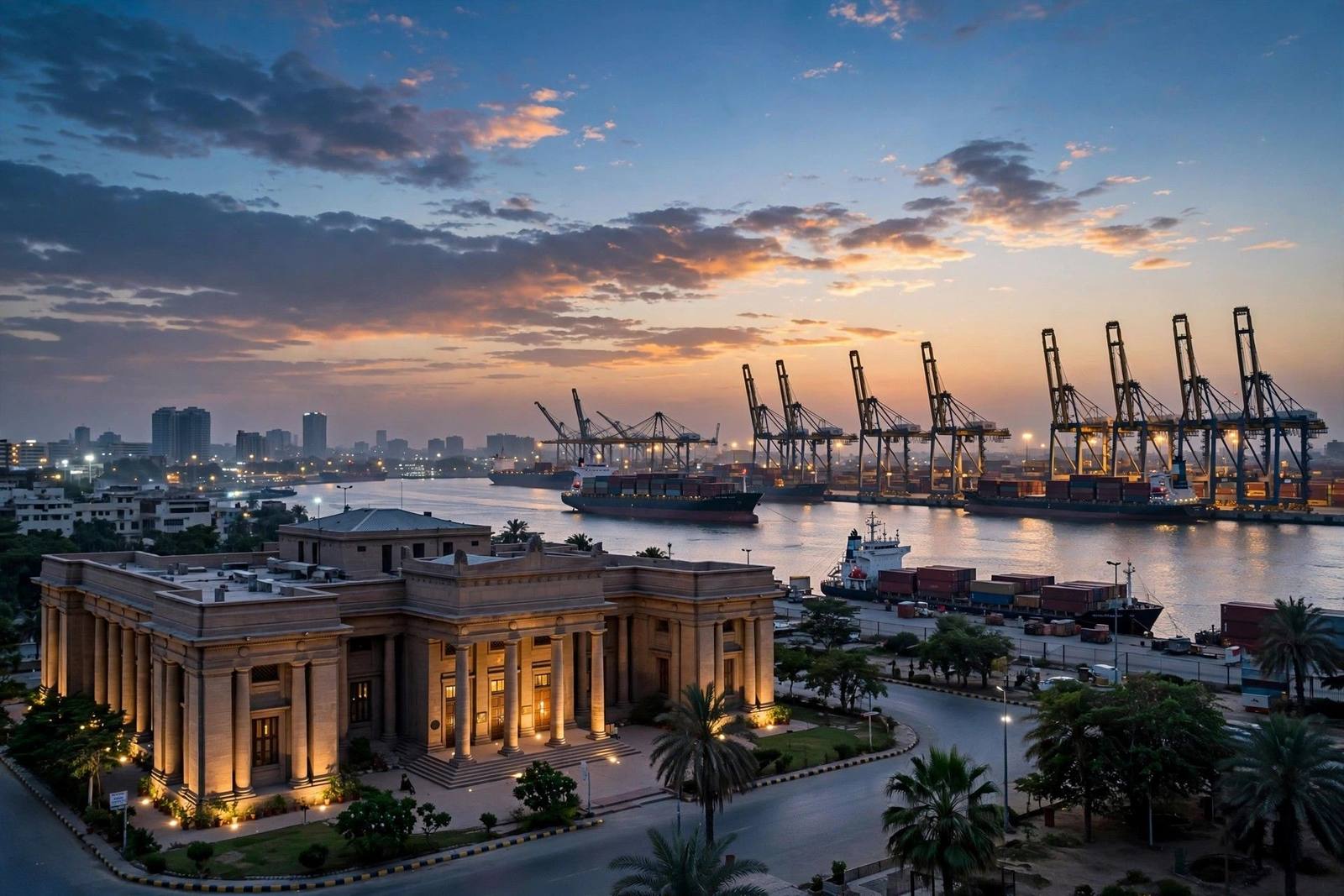
KARACHI: Every week, the State Bank of Pakistan publishes a figure that moves markets, headlines and ministerial blood pressure: the country's foreign exchange reserves. When the number rises, officials relax; when it slides, talk of default fills the airwaves. Reserves are simply the stock of foreign currency — mostly US dollars, with some euros, yuan, yen and gold — held by the central bank (and, in the wider total, by commercial banks) to pay for imports, service foreign debt and steady the currency.
Understanding reserves means understanding Pakistan's recurring economic drama, because nearly every crisis of the past decades has been, at bottom, a reserves crisis. This guide explains what the stock consists of, where the dollars come from, why they leak away, and how to read the weekly number like an analyst rather than a spectator. The natural companions are our guides to the current account and the rupee's exchange rate. A short history sharpens the point. Pakistan has approached the reserves cliff repeatedly — in the late 1990s under sanctions, in 2008, in 2013, in 2018 and again in 2022–23, when SBP reserves fell to levels covering only a few weeks of imports and the country queued dollars for essential cargoes. Each episode followed the same script: an import-fed growth spurt, a widening current account gap, borrowed reserves masking the deterioration, then a sudden stop, an IMF programme and a compression of imports and growth. The recurrence is the lesson: the problem is not any single government's arithmetic but a structure that earns too few dollars between crises.
Two numbers, one headline: SBP reserves and total reserves
The published data always contains two figures. The first is reserves held by the State Bank — the true national cushion, which the central bank can deploy. The second adds foreign-currency deposits held by commercial banks, which belong in large part to those banks' own customers: exporters' retained earnings, foreign currency accounts and the like. Journalists often quote the larger total; analysts watch the SBP figure, because the government cannot spend depositors' money.
A second distinction matters just as much: gross versus net. Part of the SBP's stock is, in economic substance, borrowed — deposits placed by friendly governments, swaps, and commercial borrowing. Headline gross reserves can therefore look comfortable while the forward-looking position is far thinner, which is why IMF programmes set targets not just on gross reserves but on the central bank's net international reserves, adjusting for such liabilities. When officials and the IMF appear to disagree about how healthy reserves are, they are usually quoting different definitions of the same vault.
Gold deserves its footnote in the vault. The State Bank holds a significant gold stock, accumulated over decades and periodically revalued as prices rise — paper gains that flatter the headline total without adding a single spendable dollar unless metal is sold, which central banks are reluctant to do. Analysts therefore watch the liquid, non-gold portion for operational purposes. Similarly, the reserves include balances in several currencies and the IMF's own reserve position and SDR holdings; converting all of it into instant import-paying capacity is approximately right in normal times and generously wrong in a true panic, when liquidity haircuts appear everywhere.
Import cover: the ratio that turns dollars into time
Reserves are made meaningful by a ratio: months of import cover — the stock divided by the average monthly import bill. Three months is the traditional rule-of-thumb minimum for comfort; below it, markets start pricing accident risk, because a single oil-price spike or a delayed loan can push a country from tight to unable to pay. Pakistan has repeatedly operated near or below that line, which is why its reserves are discussed in weeks of imports rather than in the abstract billions other countries quote.
Import cover also explains policy panics. When cover thins, the authorities squeeze imports — through letters-of-credit restrictions, prior approvals and plain administrative delay — because every container stopped is dollars saved. The squeeze works arithmetically and damages everything else: factories idle for want of parts, exporters cannot import inputs, and growth collapses. Reading reserves is therefore also reading future industrial policy: a thin cushion today is a controlled factory gate tomorrow.
Friendly deposits are the most Pakistani feature of the modern reserves story. Saudi Arabia, the UAE and China have at various points placed billions of dollars with the State Bank — deposits that count in gross reserves, carry maturities that must be rolled, and are renewed through diplomacy as much as finance. Their rollover has become a scheduled event in IMF programmes, which now routinely assume friendly deposits stay. This is stabilising while relations hold and a concentration risk when they shift: a cushion whose largest pillows belong to three foreign treasuries is a foreign-policy fact as much as an economic one.
Where the dollars come in
Four taps fill the tank. Exports of goods and services — textiles, rice, IT — earn the most honest dollars, analysed in our guide to Pakistan's exports. Workers' remittances, sent by the diaspora, are the second great inflow and often the most stable, flowing through banks and money-transfer companies into families' accounts. Borrowing is the third: Eurobonds and sukuk, commercial bank loans, multilateral programme loans from the IMF, World Bank and Asian Development Bank, and bilateral deposits from Gulf states and China. Foreign investment — direct investment in factories and portfolios buying PSX shares and treasury bills — is the fourth and, historically, the smallest relative to need.
Notice the quality difference. Export and remittance dollars are earned; they arrive without a repayment schedule. Borrowed dollars arrive with one, and deposits from friendly governments arrive with diplomatic terms attached. A reserves build-up funded by borrowing is a cushion rented, not owned — which is precisely the story of several of Pakistan's recent 'recoveries' that reversed within a couple of years.
Portfolio flows are the fair-weather tap. When Pakistani treasury-bill yields are high and the rupee looks stable, foreign funds buy local debt — the 'hot money' episodes that filled reserves quickly in 2019–20 and drained them just as quickly at the first global shock. The State Bank's special convertible rupee accounts channel such investment into the PSX and government paper, and the data on them is the market's thermometer for foreign risk appetite. The policy lesson absorbed, painfully, is that reserves built on portfolio flows are a tide, not a lake: enjoy the inflow, never budget the stock.
Where the dollars leak out
The outflows mirror the inflows. The import bill — dominated by petroleum products, crude, LNG, machinery, edible oil and chemicals — is the largest and least postponable drain; our guide to the oil import bill shows why a single commodity complex dominates it. Debt service is the second: interest and principal on external loans and maturing bonds must be paid on schedule or the word 'default' stops being metaphor. Add profit and dividend repatriation by foreign companies, airline and shipping payments, and residents' demand for dollars in panics — through informal channels when official ones are squeezed — and the tank's leaks explain themselves.
The current account deficit is simply the net of these flows in a given year, and the reserves are the accumulated consequence. A country can run a deficit while reserves rise, if borrowing exceeds the gap — Pakistan has done exactly that — but it is borrowing time in the literal sense. Sooner or later the lenders ask whether the earning taps are growing fast enough to service the rented cushion, and that question is the plot of every IMF review.
The grey channels matter at the margin that decides crises. When official and open-market dollar rates diverge — as they did sharply in 2022–23 — remittances leak toward the informal hundi and hawala networks, exports get under-invoiced, and dollars go into lockers and real estate instead of the banking system. The crackdowns and reforms that followed each episode narrowed the gap by making the formal channel competitive again: rate alignment is a reserves policy in itself. Every percentage point of premium on the street rate is a tax the central bank pays in invisible outflows, collected by networks the state cannot audit.
The IMF's role: lender, referee and reserves target-setter
Pakistan's relationship with the International Monetary Fund — traced in our guide to IMF programmes in Pakistan — is substantially a reserves relationship. Programmes lend dollars (and unlock other lenders' dollars) on conditions designed to rebuild the cushion durably: a market-based exchange rate so the central bank stops selling reserves cheaply to defend an overvalued rupee, interest rates high enough to make rupee assets attractive, fiscal tightening to cut the state's own dollar demand, and targets for net reserves that the State Bank must hit quarter by quarter.
Programme reviews then become reserves events: each successful review releases a tranche and reassures other creditors, visibly lifting the stock; each delay drains confidence before it drains a single dollar. Investors who wonder why an IMF headline moves the PSX within minutes have their answer — the Fund's verdict is, in effect, a credit opinion on the national dollar cushion, and the market prices it instantly.
Roshan Digital Accounts were the constructive version of the same insight: give the diaspora a fully digital, repatriable, high-convenience route — bank accounts, Naya Pakistan Certificates, PSX and property investment from a phone in Dubai or Toronto — and billions of dollars chose the formal door. The RDA experiment is now cited in every discussion of diaspora bonds and external financing innovation, because it demonstrated that Pakistan's external constraint is partly a product-design problem. The diaspora was never unwilling to fund Pakistan; it was unwilling to queue at a consulate to do it.
Defending the rupee: how reserves get spent in plain sight
A central bank holding reserves holds options, and the most visible is intervention: selling dollars into the market to slow the rupee's fall or to supply an import payment the market cannot fund. Used sparingly, intervention smooths disorderly moves. Used to defend a level the fundamentals do not support, it simply transfers the national cushion to whoever is buying cheap dollars — importers, travellers, speculators — until the stock runs low and the eventual adjustment is larger. Pakistan's history contains long chapters of exactly that pattern, which is why the IMF insists on exchange-rate flexibility as the shock absorber of first resort.
The exchange-rate guide linked earlier explains the mechanics; the reserves lesson is about reading the weekly data. Reserves falling while the rupee is suspiciously stable usually means the stability is being purchased. Reserves rising alongside a flexible rate usually means genuine inflows. The pair of series, read together, tells you more about external health than either headline alone — a small analytical habit that separates signal from press release.
What would actually thicken the cushion is unglamorous and slow: export sectors that grow faster than imports across a full cycle, energy import substitution — Thar coal, hydro, solar — that shrinks the oil bill structurally, remittance channels kept cheaper than the grey market, and investment regimes stable enough that factories, not treasury bills, attract the foreign money. None fits a single budget speech. Until two or three of them compound for a decade, the weekly reserves print will remain what it has been for a generation: the scoreboard of a match Pakistan plays well in patches and has not yet learned to win outright.
What kind of investor studies reserves
Reserves are the master variable of Pakistani asset prices. They drive the rupee, which drives inflation and interest rates, which drive bank earnings, cement demand, consumer sales and the KSE-100's level — a chain that makes the State Bank's Thursday data release the most consequential weekly number in the market. The reserves-literate investor tracks gross SBP reserves, import cover, the forward book where it is disclosed, upcoming bond maturities, and the IMF review calendar, and treats friendly-government deposit renewals as the diplomatic events they are. This article is educational content, not financial advice. Pakistan's cushion keeps thinning for structural reasons — too few earned dollars, too many borrowed ones — and until the earning taps grow, every investor in the country is, whether they know it or not, a reserves analyst.
Key takeaway: Pakistan's reserves are a rented cushion over a structural leak: exports and remittances earn dollars too slowly, imports and debt service drain them too fast, and the weekly SBP figure records the difference.