KARACHI: At independence, Pakistan was a water-wealthy country: the Indus system delivered several thousand cubic metres of renewable water per person per year. Today the commonly used estimates put availability near or below the thousand-cubic-metre line that hydrologists use to mark absolute scarcity. Almost nothing about the river changed — what changed is the divisor. The population multiplied several-fold, cities and industry claimed new shares, and the same flows now spread across far more people, farms and factories.
That arithmetic is why 'water crisis' in Pakistan is not a metaphor, and why it belongs in an economics library. Water is the binding input of the farm sector described in our guide to the farm economy, a cost line for industry, a determinant of urban land values and a recurring item in disaster budgets. A country can import oil, grain and machinery; it cannot import a river system. Everything in this guide follows from that constraint. Start the history a century earlier and the crisis reads differently: the Indus basin works are among the great engineering achievements of the colonial state, which converted a flood-and-famine river into the world's largest irrigation command through weirs, barrages and canal colonies that settled Punjab's map. Independence inherited the machine and the mindset — water as a resource to be commanded and distributed by engineering — and the post-1960 treaty works, Mangla and Tarbela, completed the system. The crisis is not that the machine was badly built; it is that the machine was built for a population a fraction of today's, and governed as if nothing since has changed.
Where the water goes: farming takes almost all of it
Roughly nine-tenths or more of Pakistan's water withdrawals go to agriculture. The Indus basin irrigation system — dams at Tarbela and Mangla, a web of barrages and canals — delivers surface water by rotation, and farmers supplement it with well over a million tube wells pumping groundwater, many of them diesel or electric and effectively unmetered. Cropping patterns lock the demand in: sugarcane and rice, two of the thirstiest crops, are grown extensively, including in areas where the aquifer, not the sky, pays the difference.
Pricing explains much of the behaviour. Canal water is charged as a small flat fee per acre, unrelated to how much is used, and groundwater pumping costs the farmer the energy bill but nothing for the water itself. No farmer facing those prices receives a signal to save water, line a channel or level a field — and so, rationally, few do. Economists call this an incentive problem wearing a hydrological costume: the scarcity is real, but it is administered as if it were abundance.
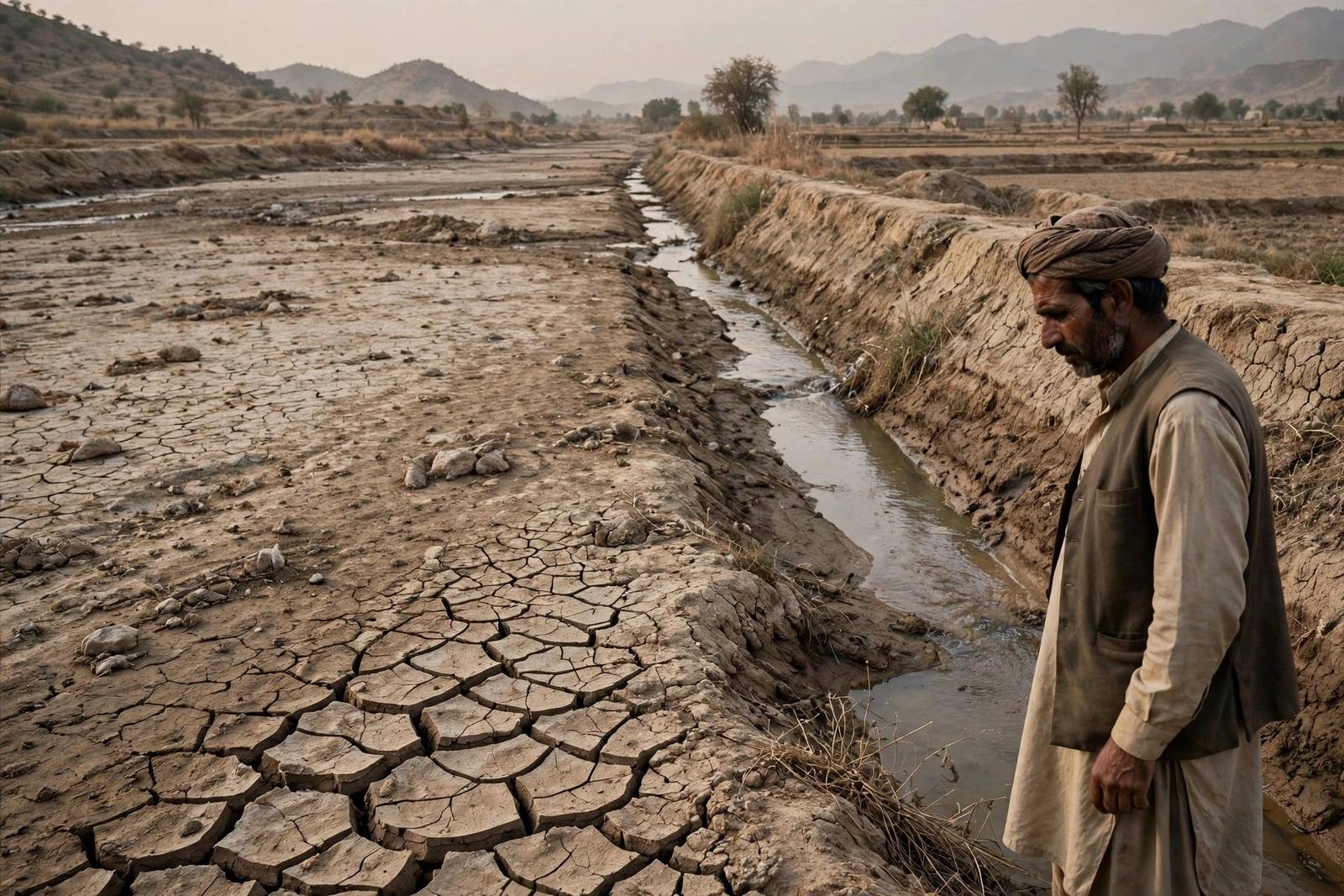
Measurement is the reform nobody can oppose, which is why it is so revealing that it barely happens. Telemetry on canals exists in pilots; flows at farm outlets are estimated rather than measured; groundwater extraction is not metered at all outside a few urban utilities. A system that does not measure cannot price, allocate fairly or detect theft — and a great deal of what is called a water shortage at the tail of a canal is, upstream, a water allocation that someone with a larger outlet or a better connection has taken. Tail-end farmers' protests are a standing feature of Sindh's politics for exactly this reason: scarcity is experienced as injustice before it is experienced as drought.
The groundwater emergency under Punjab
The quiet half of the crisis is underground. Across much of Punjab, tube-well pumping exceeds natural recharge, and water tables fall year by year — slowly in most districts, alarmingly around the big cities. Falling tables mean deeper wells, bigger pumps and higher energy costs, a private tax that rises annually and falls hardest on small farmers who cannot afford to chase the water down. Around Lahore and other cities, urban pumping cones depress levels further, while industrial and municipal waste degrades the quality of what remains.
Groundwater in Pakistan is governed by a legal vacuum inherited from colonial law: the landowner effectively owns what lies beneath, and extraction is essentially unlicensed. Every serious reform proposal — metering, licensing, aquifer management — runs into the politics of millions of pump owners. Until that changes, the aquifer functions as an unpriced national savings account being drawn down without a statement ever being issued, and the bill will arrive as a step-change in pumping costs and failed wells rather than as a gradual warning.
The quality crisis runs parallel to the quantity one, and in the cities it may bite first. Pakistan's rivers receive untreated municipal sewage and industrial effluent at a scale that has turned stretches of the Ravi and other rivers into drains; groundwater in industrial districts carries industrial contaminants; and arsenic and salinity afflict districts across the Indus plain. Treatment rates for urban wastewater are a small fraction of generation. The economic accounting here is health: diarrhoeal disease, stunting and lost working days are water statistics before they are hospital statistics, and they tax exactly the households least able to pay for the bottled and tanker alternatives.
Cities: tankers, katchi abadis and the price of a litre
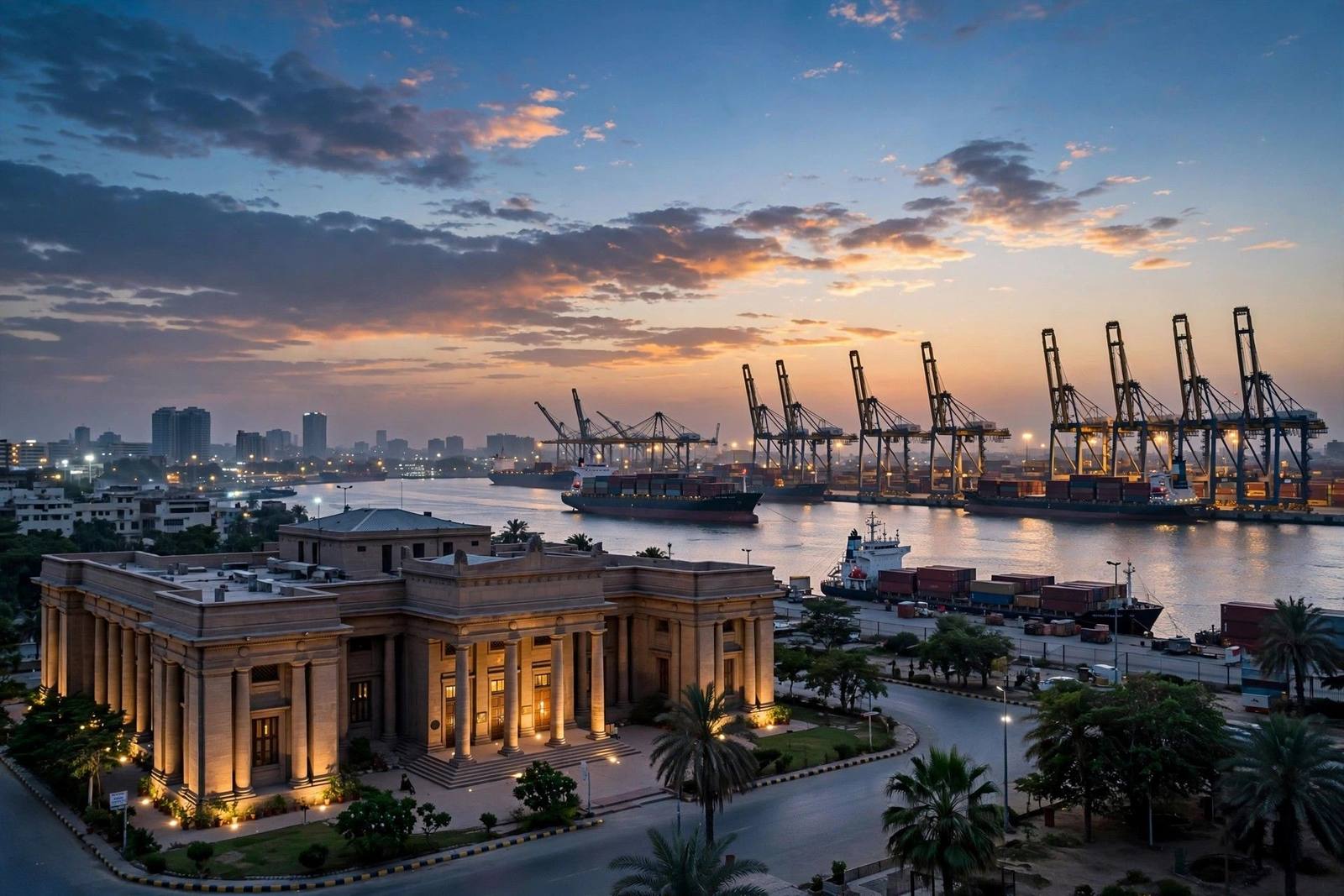
Urban Pakistan already lives the crisis daily. Karachi's supply, drawn from the Indus via the Hub and Keenjhar system and supplemented by the long-delayed K-IV scheme, falls well short of demand; the gap is filled by boreholes, private tankers and a distribution system in which a large share of water is lost, stolen or unbilled. In tanker-served neighbourhoods, poor households pay many times the utility tariff per litre — the classic scarcity outcome in which the poor pay the highest price for the worst water.
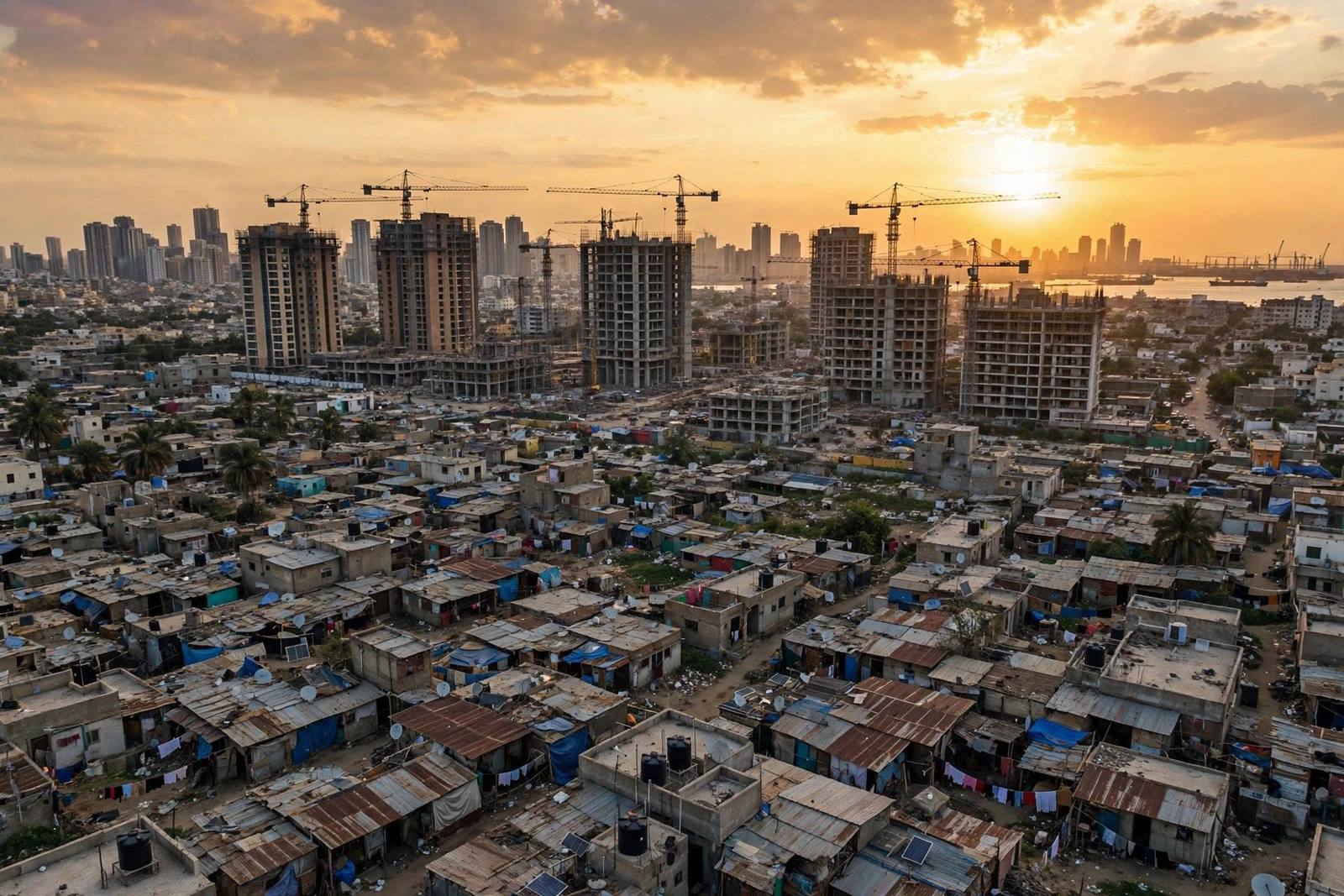
Housing and water are the same story told twice, as our guide to urbanisation and housing shows: informal settlements grow precisely where formal water networks do not reach, and municipal utilities, starved of revenue by low tariffs and low collection, cannot extend them. Waterborne disease — from contaminated supplies and from the sewage that returns untreated to rivers and aquifers — converts the infrastructure failure into a health bill carried by households and public hospitals alike.
Climate change rewrites the supply side of every calculation in this guide. The Indus depends heavily on glacial melt and snowpack from the Karakoram, Hindu Kush and Himalaya — a cryosphere now warming, with glacier behaviour varying by range in ways scientists summarise as the Karakoram anomaly for its slower retreat. The near-term effect can be more water and more flood peaks; the long-term effect, after peak meltwater passes, is less reliable flow into the same canal system. Planning storage and cropping for a river whose seasonal pattern is shifting under the gauges is the defining technical problem of Pakistani water policy this century.
Dams: the storage argument that never ends
Pakistan stores only a small fraction of its annual river flows — a matter of weeks of supply, against the many months or years of carryover storage held by comparable river economies. Sediment is steadily eating the live storage of Tarbela and Mangla, and every major flood year sends a season's surplus to the sea while the following dry season rations canals. That is the engineering case for new storage, and it has driven the Diamer-Basha and Mohmand dams, both under construction after decades of argument, alongside a long list of smaller projects.
The counter-arguments are political and ecological as much as financial: upstream and downstream provinces distrust each other's claims on stored water — the Kalabagh dam remains unbuilt largely for this reason — and the delta below Kotri, starved of freshwater flows, has suffered seawater intrusion that has destroyed farmland and mangroves in coastal Sindh. A dam is thus never just a dam in Pakistan; it is a renegotiation of the federation's most sensitive resource, which is why storage grows slowly even as scarcity grows fast.
Solar tube wells deserve their own warning, because they are the reform that makes things worse while feeling like progress. Replacing diesel and grid electricity with solar pumping cuts the farmer's energy bill to near zero at the margin — and removes the last cost signal restraining extraction. In overdrawn aquifers, solar pumping without extraction limits accelerates the decline it was meant to make affordable. Other dry countries have paired solarisation with buy-back schemes — paying farmers for surplus solar power sent to the grid instead of surplus water pumped from the ground — turning the incentive around. That design detail, boring as it sounds, is worth more than another dam announcement.
Industry, energy and the commercial bill
Water stress reaches the listed economy through several doors. Textile dyeing and processing — the wet heart of Pakistan's biggest export industry — is water-intensive and increasingly exposed to groundwater restrictions and effluent rules in Punjab's industrial districts. Beverage, food and paper companies site plants around aquifer quality. Thermal and hydro power both depend on flows; the energy system mapped in our guide to Pakistan's energy mix is, upstream, a water system, and reservoir levels are generation forecasts.
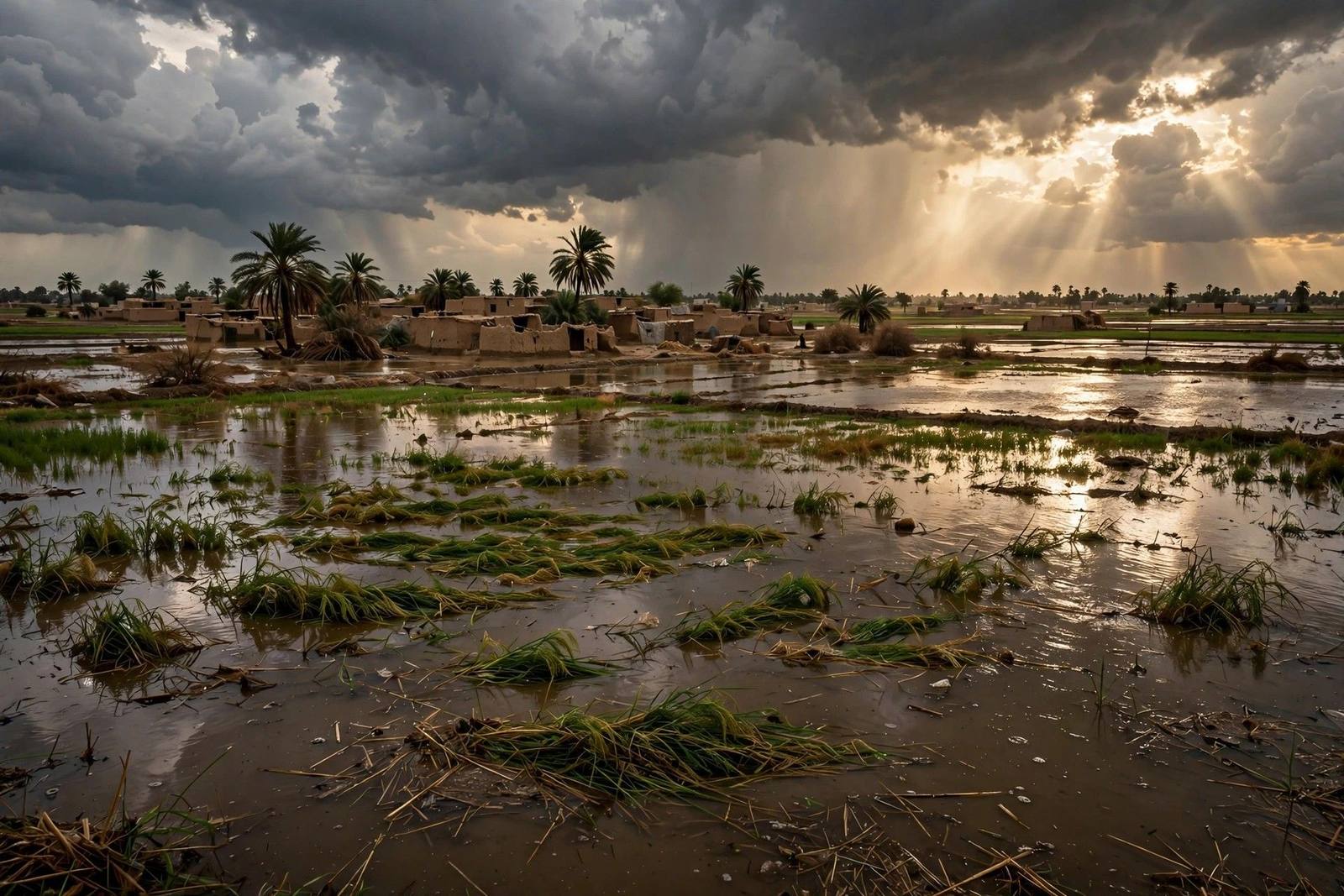
Then there is the disaster ledger. The 2022 floods — analysed in our guide to climate risk — were a water crisis of the opposite sign, and the same weak infrastructure handles both extremes badly: too little storage to bank the flood, too little drainage to clear it, too little pricing or insurance to spread the cost. Adaptation spending — embankments, drainage, watershed management, early-warning systems — competes in the budget against every other claim, and usually loses until the year it catastrophically wins.
The federation's downstream conscience is the Indus delta, where the sea has advanced into districts that once grew rice and red chillies, salinising land and driving fishing and farming communities toward the cities. Environmental-flow requirements below Kotri barrage are written into policy discussions and honoured inconsistently in dry years, when every province's claim outranks the delta's. The delta is what an unpriced resource looks like at the end of the line: the user with no lobby, no vote bank in the allocation room and no alternative supply absorbs the entire system's shortage, permanently.
What reform would actually look like
The technical menu is well known and has been for decades: price water closer to its delivery cost with protection for small users; measure flows at canal and farm level so the 1991 inter-provincial accord operates on data rather than suspicion; license and manage groundwater in critical aquifers; shift cropping incentives away from the thirstiest crops in the driest places; treat and reuse urban wastewater instead of poisoning rivers with it; and maintain the canal system, whose deferred maintenance silently shrinks its capacity every year.
The obstacle is not knowledge but coalition-building. Every reform creates a visible loser — a province, a crop lobby, a city's tanker interests — while the winners are diffuse and future. Reform therefore tends to arrive disguised: as solar tube wells (which solve energy cost while worsening extraction), as donor-funded pilots, as court orders. Investors should read water policy the way they read tax policy: the announcements matter less than which line actually changes in the provincial budget.
None of this requires despair; it requires sequencing. The cheapest water in Pakistan is the water currently lost — canal conveyance losses, unlined watercourses, urban distribution leakage that in Karachi's case rivals entire cities' supply. Loss reduction buys supply without a single inter-provincial fight, which is why engineers rank it first and politicians rank it last: it produces no inauguration. The investor's heuristic follows directly — in Pakistani water, maintenance is the growth story, and any budget that funds new concrete while starving operations and measurement is buying tomorrow's crisis at today's prices.
What kind of investor studies water
Water will not appear as a line in any company's accounts, yet it prices Pakistani assets everywhere: in the earnings stability of food and beverage franchises, the regulatory risk of textile processors, the project pipeline of construction and cement firms when dam spending flows, and the sovereign risk premium of a country whose farm output rides on a stressed river. This article is educational content, not financial advice. The durable habit is to add three numbers to your Pakistan dashboard: reservoir storage at Tarbela and Mangla, the Indus River System Authority's seasonal flow forecasts, and the groundwater trend in Punjab's districts — because the economy you are investing in is, at bottom, a way of dividing a river.
Key takeaway: Pakistan's water crisis is an economic crisis in slow motion: an unpriced, over-drawn river and aquifer system quietly taxing farms, cities, industry and the budget, year after year.