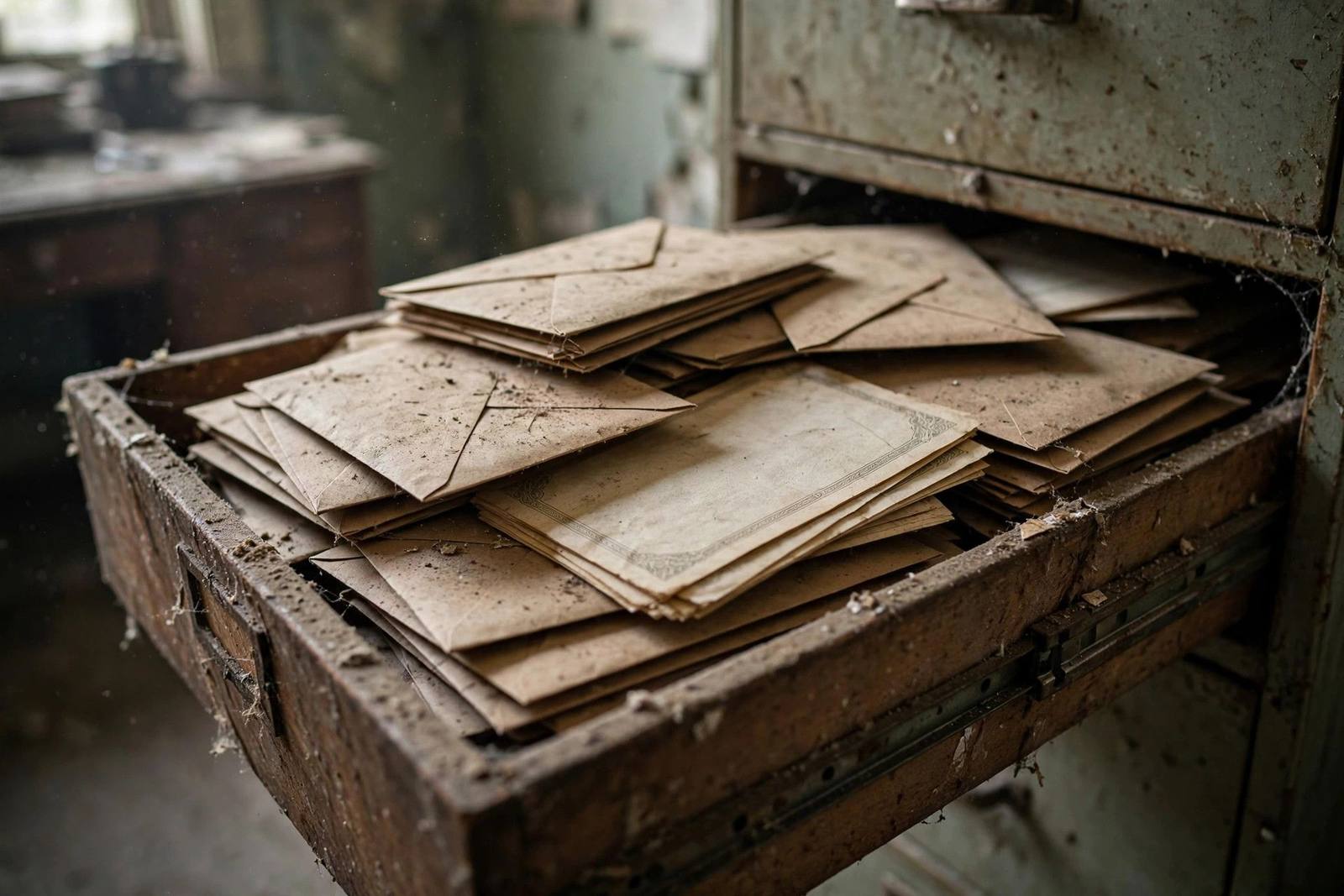
KARACHI: In steel trunks and bank lockers across Pakistan sits a stranded fortune: printed share certificates, some embossed with the crests of companies that changed names twice since, bought in the IPOs of the 1980s and 1990s and never touched again. Their owners know the shares exist. What they often do not know is that paper shares cannot be sold on the modern PSX at all — the market settled into electronic form a generation ago — that dividends on them pile up unclaimed at registrars, and that every year of delay adds risks of loss, damage, forgery disputes and inheritance complications. The remedy is dematerialisation: surrendering the paper to be verified and cancelled, and receiving the same shares as an electronic balance in a CDC account, tradeable in minutes and visible on a statement. This guide walks through the process exactly — where the paper goes, what verification means, the transfer deed, the lost-certificate problem, and the special case of shares in a deceased holder's name.
The paper world the market left behind
Until the Central Depository Company began operations in the late 1990s, ownership of a Pakistani share was the certificate: a printed document recording the holder's name, the number of shares and distinctive numbers, transferred by signing a transfer deed on the back and delivering the bundle to the buyer, who lodged it with the company to be registered. The system was slow, and its pathologies — forged deeds, stolen certificates sold to innocent buyers, shares lost in the post, registers weeks out of date — were a standing scandal of the old Karachi market. The Central Depositories Act, 1997 and the CDC's book-entry system replaced delivery of paper with transfers between electronic accounts, and the listed market migrated: today, trades settle through accounts at the depository, as the plumbing in our guide to settlement assumes throughout.
But migration was voluntary for existing holders, and a vast tail never moved. Some holders distrusted the new system; some died; some simply forgot certificates bought in a privatisation issue decades ago. Regulators and the CDC have run periodic drives to shrink the paper tail, and companies' registrars still maintain physical registers alongside the depository. The position today is unambiguous in one respect: to sell listed shares you must hold them electronically — a broker cannot accept paper for an exchange trade — so dematerialisation is not an upgrade but the price of admission to your own property.
What you need before you start
The process needs an electronic destination, so step one is a CDC account if the holder has none: a sub-account through a broker or an Investor Account directly with the CDC, opened under the normal KYC with CNIC and a Unique Identification Number, as in our guide to opening a brokerage account. Step two is an inventory of the paper itself, done carefully: for each certificate, the company (noting renamings and mergers — the certificate's company may have become another), the folio number, the certificate and distinctive numbers, the share count, and the exact name as printed, which must match the holder's CNIC or be explained. Bonus certificates issued over the decades belong in the same inventory; families frequently find the original purchase was only part of the holding, with bonus paper scattered through the same files — and unpaid dividends waiting at the registrar besides, traceable through the process in our guide to unclaimed dividends.
Step three is confirming the shares still exist as you think they do. Companies consolidate and split shares, merge, delist and occasionally dissolve; a certificate in a company that was merged into another now represents shares of the successor at a swap ratio, and a certificate in a long-delisted shell may represent little at all. The company's share registrar — the transfer agent named in its annual report and on the PSX's company pages — can confirm the folio's current status from the register. Five minutes with the registrar saves the classic wasted journey: presenting immaculate paper for a company that ceased to exist in 2004.
The conversion process, step by step
Conversion itself runs through the account operator: the holder lodges the original certificates with their broker participant or the CDC for onward transmission to the company's registrar, completing the prescribed forms — in substance, a request to cancel the paper and credit the shares electronically, with the holder's verified signature. The registrar checks everything against the physical register: certificate numbers, distinctive numbers, folio, share count, and the signature on file, which for old folios may be a specimen recorded decades ago. Verification is deliberately unhurried, because this is the moment forgery would strike: once paper is cancelled and electronic shares credited, the transaction is practically irreversible, so registrars resolve every mismatch before proceeding — a signature that has changed with age, a name spelled differently, a certificate partially damaged, each is cured by affidavit or fresh verification rather than waved through.
On successful verification the registrar confirms the deposit, the paper certificates are cancelled and defaced, and the shares appear in the holder's CDC account as an ordinary electronic balance, identical in every right to shares bought yesterday: same dividends, same votes, same saleability. The holder sees the credit on their CDC statement — check it, line by line, against the inventory; the statement-checking habit in our guide to reading your brokerage and CDC statements exists for exactly this moment. From then on the holding lives in the modern system: dividends flow to the mandated bank account, corporate actions arrive as notices, and the next generation inherits an account reference rather than a trunk of mysteries, a difference our guide to inheriting shares spells out.
Lost, stolen and damaged certificates
The commonest crisis is that the paper cannot be found. The law's answer is the duplicate certificate procedure, and its caution is deliberate: a duplicate is a claim that the original is gone, and if the original later surfaces in a buyer's hands the company faces two claims to the same shares. Expect, therefore, a sequence involving an application to the registrar, a police report or lost-property record where required, an indemnity bond on stamp paper in the prescribed form — often with sureties — and public notice, before the company issues duplicates that can then be dematerialised. Timelines run to months, and fees and stamp costs apply. The lesson is worth stating plainly because families learn it late: a certificate kept safely is worth real money and time, and a photograph or photocopy, while useless as a negotiable document, is gold as evidence of folio and certificate numbers if the original is ever lost.
Damaged paper — water, fire, termites, the Karachi monsoon in a ground-floor trunk — sits between the two cases: what survives legibly can usually be verified against the register's own records of certificate and distinctive numbers, and registrars deal with mutilated certificates under the Companies Act framework with indemnities scaled to the risk. Never attempt repairs, lamination or overwriting on a certificate; a "helpfully" altered document looks, to a verifier, exactly like a forged one.
Shares in someone else's name: gifts, old transfers and the dead
Paper surfaces three name problems. First, the unregistered transfer: grandfather bought shares and took a signed transfer deed from the seller in 1993 but never lodged it. The register still shows the seller; the buyer's claim rests on the deed and possession, and regularising it now — through the registrar, with the deed and whatever supporting evidence survives — ranges from routine to legally thorny depending on the parties' availability and the deed's condition. Take advice before assuming paper plus deed equals ownership. Second, gifts within families executed on paper but never transferred: the same logic applies; the register governs until changed. Third, and most common, certificates in a deceased holder's name: these cannot be dematerialised into a relative's account by request. They move only through transmission on the strength of a succession certificate, as our inheritance guide explains, after which the heirs receive the shares electronically and the paper is cancelled in the process.
One more population deserves a warning: holders of certificates in companies that later required conversion, or that sit in the custody of long-defunct brokers and agents from the paper era. Shares were sometimes left with the broker who arranged the purchase; decades later the firm is gone and the trail runs through its successors, the exchange's records and the registrar's register — which is why the registrar, who holds the definitive folio record, is always the right first call. If the folio exists, the shares exist, whoever physically holds the paper.
Costs, timelines and the questions registrars hear daily
Families budget for this process better when its shape is stated plainly. The direct costs are modest — account-opening and depository charges under the CDC's published tariff, any registrar or company charges prescribed for the service, and stamp and legal costs where indemnities or affidavits are involved — trivial against the value of shares that have often multiplied through decades of bonuses since purchase. The real currency is time and trips: verification cycles between broker, depository and registrar, the curing of signature and name mismatches, and the duplicate-certificate procedure where paper is lost, which alone can run for months. Straightforward cases, with clean paper and matching records, are commonly a matter of weeks; every discrepancy adds a round trip, which is why the inventory discipline described earlier — exact names, exact numbers, registrar confirmation first — pays for itself.
The questions registrars hear daily map the country's paper history. My father bought these; he has died. Then transmission on a succession certificate comes first, and conversion happens into the heirs' accounts in the same motion. The certificate is in my maiden name / an old spelling / a name I no longer use. Then evidence links the names — CNIC records, an affidavit — and the registrar verifies the chain rather than the label. I sold these shares years ago but kept the certificate. Then the register, not the paper, decides: if the transfer was registered, the certificate in your drawer is a cancelled souvenir, and if it was not, you may still own shares you thought were gone — one reason registrars check the folio before anyone celebrates or despairs. The company has vanished. Then the trail runs through mergers, name changes and, in the worst cases, liquidation records — the folio's story is recoverable far more often than families fear, because the register outlives the company's signage.
One reassurance belongs in this guide, because fear of the process itself keeps paper in lockers: dematerialisation changes the form of the holding, nothing else. The shares credited are the same shares — same company, same class, same dividend and voting rights, same folio history now carried electronically — and the conversion is not a sale, not a transfer to the broker or the CDC, and not a taxable disposal by the holder. The depository holds the record; the investor holds the ownership, exactly as the paper certificate evidenced it, minus the paper's fragility. Holders attached to the physical documents can keep photocopies for sentiment; the originals' cancellation is not a loss of proof but its replacement by a register entry that cannot burn, flood or be forged onto someone else's name.
After conversion: keeping the electronic life clean
Dematerialisation is a beginning, not a conclusion. The holder now in the electronic system should immediately set the things paper never had: a dividend mandate to a current bank account so income stops stranding; updated address, phone and email with the broker and CDC so corporate-action notices actually arrive; and a record — kept with family documents — of the account details, the folio history and the companies held. Review the CDC statement at least annually against expectations, because the electronic system makes discrepancies visible early, when they are cheap to fix. And if the wider family holds paper — parents, uncles, the ubiquitous locker — the greatest favour one organised investor can do is to run this process alongside them once, while signatures can still be matched and holders are alive to sign. Every certificate converted today is an inheritance dispute that will never happen. This article is educational content, not financial advice.
Key takeaway: Paper shares cannot be sold until they are dematerialised — open a CDC account, inventory every certificate, lodge the paper through your broker for registrar verification, and the cancelled paper returns as a tradeable electronic balance in your name.