KARACHI: For decades, imported coal arrived in Pakistan the messy way: unloaded slowly at Karachi's city-centre port, trucked through crowded streets, and stockpiled in the open air of one of the world's largest cities. Pakistan International Bulk Terminal Limited — PIBTL — was built to end that. Based at Port Muhammad Bin Qasim, east of Karachi, it is the country's first fully mechanised terminal dedicated to "dirty" bulk cargo: coal coming in, and clinker and cement going out. It operates under a 30-year build-operate-transfer concession from the Port Qasim Authority, it was sponsored by the Marine Group of Companies, part-financed by the International Finance Corporation, and since a Supreme Court order in 2018 it has been the designated home of Karachi's coal imports. For investors, it is something rarer than a shipping stock: a single-asset infrastructure concession whose volumes rise and fall with Pakistan's appetite for coal.
What the terminal does, in plain terms
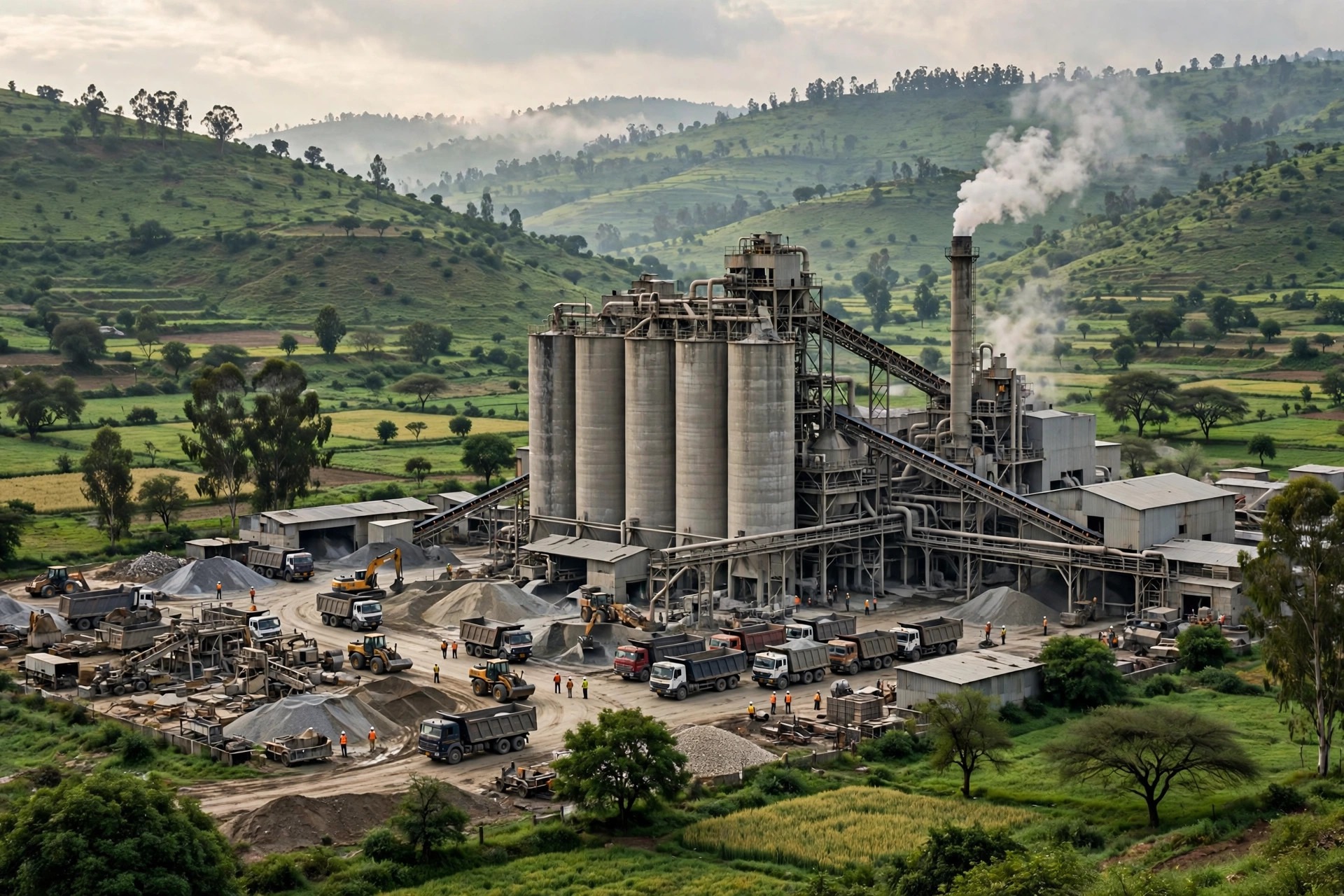
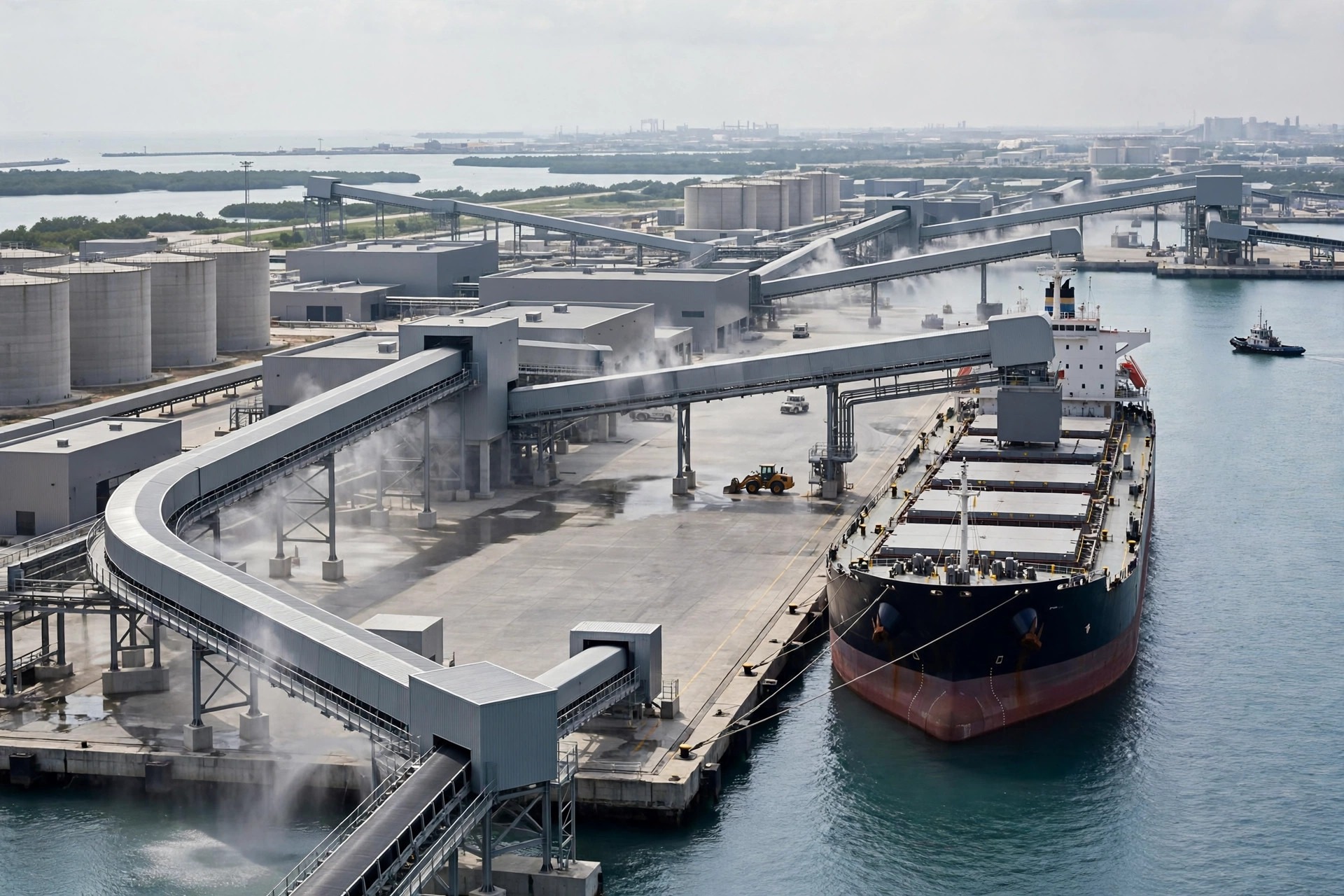
A bulk terminal is a machine for moving mountains of loose cargo between ship and shore. PIBTL's jetty at Port Qasim is equipped with ship-unloading cranes for coal and a loading crane for clinker and cement, connected by conveyor systems to a storage yard of roughly 62 acres. The design capacity, as the company describes it, is up to 12 million tonnes a year of coal imports and 4 million tonnes a year of clinker and cement exports, with room to expand total handling toward 20 million tonnes. Mechanisation is the whole point: where a comparable coal vessel could take around a week to discharge with conventional methods at Karachi Port, PIBTL's systems were designed to turn the same ship around in about two days, with the cargo moved by enclosed conveyors rather than by open grabs, trucks and manual handling.
Its customers are the industries that burn or ship bulk. On the import side: cement manufacturers, who use coal as kiln fuel; power producers; steel, textile, chemical and general industrial users; and coal traders. On the export side: cement and clinker producers selling into regional markets — the outbound leg of the trade our explainer on Pakistan's exports places in context. The terminal is a common-user facility: it does not belong to one cement group or one power company, but serves any customer on published terms, which is precisely how the Port Qasim Authority and the Ministry of Maritime Affairs' master plan conceived it.
The Marine Group: stevedores who became terminal builders
PIBTL is described by its sponsor as the flagship project of the Marine Group of Companies, the Karachi shipping group led by Captain Haleem A. Siddiqui, a former merchant navy officer. The group's roots are in the unglamorous, essential trades of the port: Premier Mercantile Services has worked as stevedores — the firms that physically load and unload ships — since the 1960s, alongside shipping agency and related marine services. The group's defining step up came with Pakistan International Container Terminal (PICT), the container terminal it developed and operated at Karachi Port, which brought modern, privately run container handling to the city's port and later attracted investment from the Philippines-based global operator ICTSI.
PIBTL was the group's second great terminal project, and the pattern repeated: identify a cargo handled badly by old methods, propose a purpose-built private terminal on a build-operate-transfer basis, bring in international development finance, and list the project company so the public can own a share. The company was incorporated in March 2010 as a private limited company and converted into a public company in July 2011. In November 2010 it signed its BOT contract with the Port Qasim Authority — a 30-year concession under which PIBTL would build and operate the terminal at its own cost, with no government funding and no throughput guarantee, and hand the facility back at the end of the term.
Building it: development finance and a long construction
Port Qasim Authority had invited expressions of interest for a coal and clinker/cement terminal in 2007, and after evaluation of competing proposals the Marine Group's company was selected. The project that followed was large by Pakistani private-infrastructure standards: an investment in excess of US$300 million, according to the company's annual report, including a purpose-built jetty, trestle, cranes, conveyors and storage yards on a site of about 62 acres of backup area plus waterfront. The International Finance Corporation — the World Bank Group's private-sector arm — took both a debt and an equity role, an involvement the IFC described at the time as its largest equity commitment in a port project, and one that imposed World Bank environmental standards on the design.
Construction and commissioning took years, as port projects do: dredging, marine works, equipment installation and testing all had to precede the first commercial cargo. The terminal began hot commissioning in 2017, handling its first coal vessel — the MV African Finfoot, carrying about 41,500 tonnes of coal for a trading customer — that spring, and became fully operational in mid-2017, the point from which its 30-year operating term runs. It listed on the stock exchange and built a broad public shareholder base, which the company numbers in the tens of thousands.
2018: the Supreme Court moves Karachi's coal
The terminal's defining regulatory moment came in June 2018, when the Supreme Court of Pakistan, hearing concerns about the environmental and health effects of open coal handling in a dense city, restrained coal handling at Karachi Port Trust and ordered imported coal shifted to PIBT at Port Qasim — the facility built, with enclosed and mechanised systems, precisely to keep coal dust out of a city centre. The judgment converted PIBTL from a competitor into the default gateway for coal imports through Karachi's ports, and it remains the clearest illustration of the company's nature: its volumes are set not only by markets but by policy — by court orders, port master plans, energy policy and environmental rules. The same policy exposure runs the other way, of course: Pakistan's longer-term energy debate, about how much coal the country should burn at all, hangs over every coal-linked asset, and imported-coal demand from cement makers and industry rises and falls with construction activity, fuel prices and the competitiveness of local coal from Thar.
How PIBTL makes money
The revenue model is a tariff model. Shipping lines and cargo owners pay handling charges per tonne for unloading or loading, together with related charges for storage and ancillary services, under the tariff framework of its concession. Revenue, in other words, is volume multiplied by rate: tonnes of coal in, tonnes of clinker and cement out, each at regulated or contracted charges. Costs are those of a capital-intensive utility-like asset — a large fixed base of depreciation on the terminal, maintenance of cranes and conveyors, labour, energy (the company has its own power arrangements for terminal operations) and the royalty or revenue-share obligations owed to the Port Qasim Authority under the BOT — against which higher throughput drops profit quickly once fixed costs are covered. This operating leverage cuts both ways, and it is why the company's results can swing sharply between a busy year for cement exports and coal imports and a quiet one.
Two further features shape the finances. First, the asset has a finite concession life: a BOT terminal is not a perpetual freehold, and the economics of the investment — recovering more than US$300 million of build cost plus a return — must be achieved within the 30-year term. Second, the project was financed substantially with debt, including foreign-currency development finance, so exchange-rate movements and interest costs have an outsized effect on the bottom line relative to a lightly geared operating company. Both features are standard in infrastructure concessions worldwide; both reward readers who look past the handling volumes to the balance sheet. Its seat in the benchmark index follows the same size-and-liquidity rules described in our guide to how the KSE-100 is calculated.
Two ports, one city: why Port Qasim got the coal
To see why PIBTL exists, it helps to picture Karachi's port geography. Karachi Port Trust, the historic harbour, sits inside the city — its berths reached through dense urban districts, its cargo moved by truck convoys through streets that also carry the city's ordinary traffic. Port Qasim, developed from the 1970s on the coast east of the city, was built for industry: deeper approaches, room for bulk terminals and steel mills, and space to grow. Pakistan's port master planning assigned the future of dirty bulk to Port Qasim, and PIBTL is that plan made concrete: coal, the cargo least suited to a city-centre port — dusty, heavy, moved in enormous parcels — was given a mechanised home away from the population, with enclosed conveying from ship to stockpile replacing the open grabs and spillage of the old method.
The environmental logic is built into the hardware. Mechanised unloading at PIBT moves coal from hold to yard on covered conveyor systems at rates conventional berths cannot match, which is why the same ship that occupied a Karachi berth for the better part of a week can be discharged in about two days — a saving in port time that shipping lines price into freight, and that cement and power customers ultimately share. The 2018 Supreme Court direction, born of Karachi residents' complaints about coal dust and health, recognised this design intent in law: the terminal was not merely available for coal, it was the facility the system had built for the purpose, financed to World Bank environmental standards through the IFC's involvement.
The customers at each end of the conveyor
PIBTL's volume mix tells the story of Pakistani industry in any given year. Inbound coal serves, first, the cement industry, historically the terminal's largest customer group — kilns burn coal as their primary fuel, and southern and even northern plants import through Port Qasim when imported coal beats local alternatives on price and quality. Power generation takes a share, varying with how much of the coal fleet runs and whether plant-specific jetties handle their own cargoes. Traders, textile mills, chemical plants and steel users make up the balance. Outbound, the loaders handle clinker and cement exports — the surplus production of Pakistan's southern plants sold into East Africa, the Gulf, Sri Lanka and beyond, a trade that swells when domestic construction slows and plants hunt foreign buyers for tonnes they cannot sell at home.
This mix gives the terminal a partial natural hedge — weak domestic demand hurts inbound fuel volumes but often coincides with stronger export push — without removing its exposure to the big variables: the world coal price, which decides how much coal Pakistan imports at all; the rise of Thar coal, which substitutes domestic supply for imports in power; and construction activity, which drives cement in both directions. A reader who wants to understand a PIBTL result announcement can do worse than start with three questions: how much coal did Pakistan import, how much clinker did it export, and what did the rupee do to the company's dollar-linked financing costs in the period?
What investors typically watch
Followers of PIBTL watch, first, throughput: monthly and annual tonnes handled, split between coal imports and clinker/cement exports, because volume is revenue. Second, the drivers behind that volume — cement-sector demand and export orders, industrial coal consumption, the relative price of imported versus Thar coal, and any policy moves on coal handling, ports or the environment. Third, tariff and concession developments with the Port Qasim Authority. And fourth, the debt and currency position, for the reasons above. These are observation points for understanding the business, not a recommendation — this profile is educational content, not financial advice. Readers who want the foundations can work through the Aktzien learning library, which explains concessions, leverage and index membership in plain language.
Key takeaway: PIBTL is a single-asset infrastructure concession — Pakistan's first mechanised dirty-bulk terminal — sponsored by the Marine Group at Port Qasim, earning per-tonne handling charges on coal imports and clinker exports under a 30-year BOT that began operating in 2017.