KARACHI: Pakistan's oil industry did not begin with the modern republic. It began in the Attock district of Punjab in 1915, when drillers working for a London-registered company struck oil at Khaur at a depth so shallow it startled the industry. That company was the Attock Oil Company, and its direct descendant on today's stock exchange is Pakistan Oilfields Limited — POL. Headquartered at POL House in Morgah, Rawalpindi, a few streets from the refinery that shares its lineage, POL is an exploration and production company with a difference from its state-owned peers: it is the listed exploration arm of the Attock Group, majority-owned by the Attock Oil Company, operator of some of Punjab's oldest fields, partner in the prolific Tal block in Khyber Pakhtunkhwa, and owner of stakes that reach across the whole northern oil chain — from the wellhead, through pipelines and LPG plants, to a quarter share in National Refinery in Karachi.
What POL does today
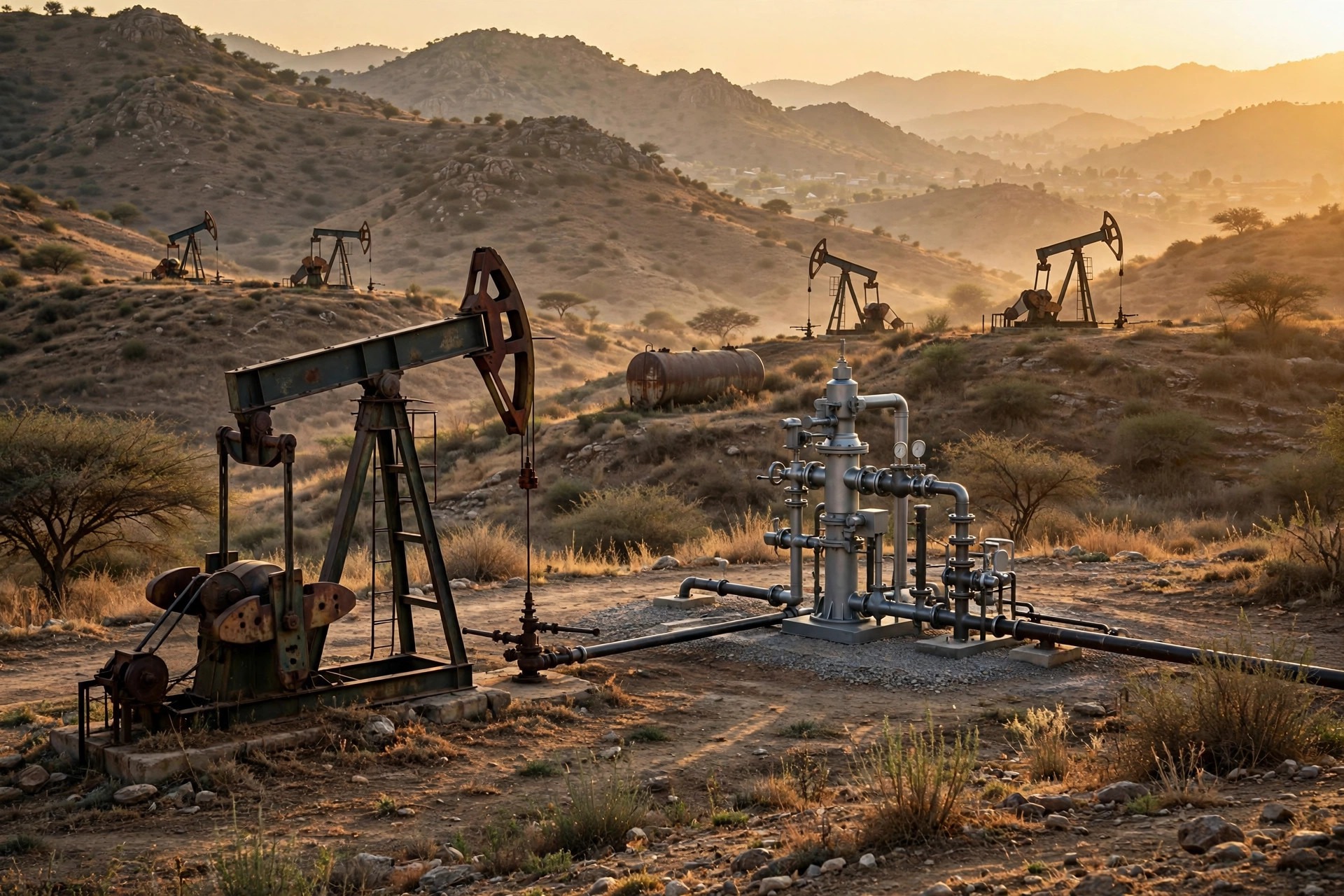
POL explores for and produces crude oil, natural gas and liquefied petroleum gas, and also produces sulphur and solvent oil as by-products of its processing plants. It wholly owns and operates mature northern leases including Balkassar, Joya Mair and Khaur — the field where its parent began — holds majority interests in and operates the Pariwali and Turkwal leases, and operates the Pindori field and exploration blocks including Ikhlas and DG Khan. Its non-operated interests are just as important: a substantial minority share of the MOL-operated Tal block, one of Pakistan's most productive onshore blocks, and an interest in the Adhi field operated by Pakistan Petroleum.
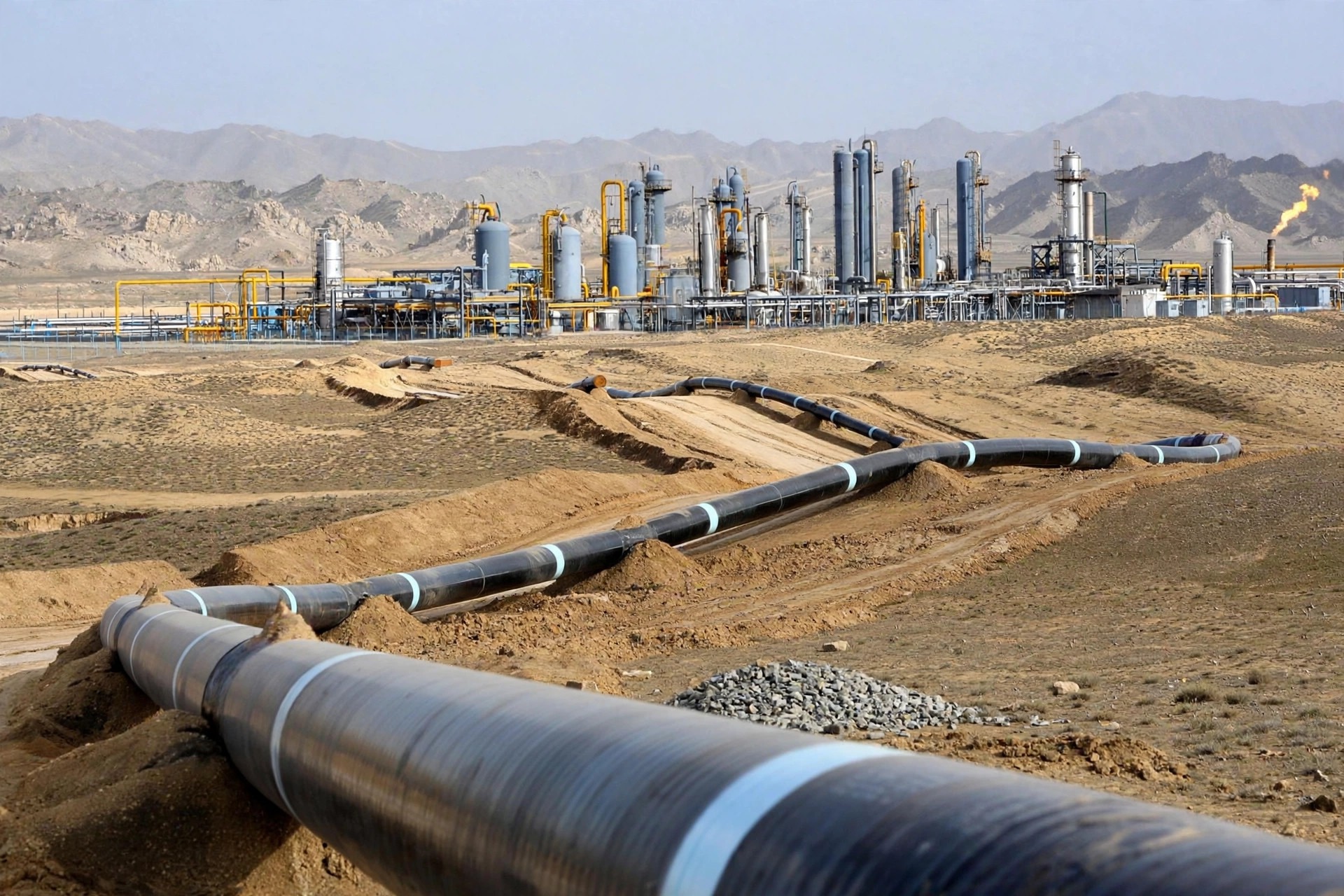
Beyond the wellhead, POL markets LPG under its POLGAS brand and through its subsidiary CAPGAS, operates pipelines that carry its own and other producers' crude oil to Attock Refinery at Morgah, and holds a 25 per cent stake in National Refinery Limited plus a smaller stake in Attock Petroleum, the group's fuel retailer profiled in our piece on Attock Petroleum (APL). It is, in miniature, an integrated northern oil group inside a single listed exploration company — a structure our guide to exploration and production stocks on the PSX sets alongside the state-heavy models of OGDC and PPL.
1913–1950: Attock Oil and the first Punjab fields
The Attock Oil Company was registered in London in December 1913 by British investors, and began drilling in January 1915 at Khaur, where oil flowed from a well barely 223 feet deep. The crude fed a new refinery built at Morgah, which began operations in 1922 — the plant that still runs today as Attock Refinery, profiled separately in our piece on Attock Refinery (ATRL). The Khaur field disappointed as it depleted, but a 1937 discovery at Dhulian revived the enterprise and carried Attock's operations through the Second World War and into partition.
Independence changed the legal ground. Pakistan's petroleum rules of 1949 reserved new oil development licences for Pakistani nationals and companies incorporated in Pakistan — which London-registered Attock Oil was not. The response, in 1950, was to create Pakistani vehicles: Burmah Oil formed Pakistan Petroleum, and Attock Oil formed Pakistan Oilfields, incorporated on 25 November 1950 with Attock Oil taking the majority of its capital and the balance offered to Pakistani investors; the government itself became a shareholder in both new companies in the early 1950s. Attock Oil kept its established fields under the old rules, while exploration in new areas became the subsidiary's job — an arrangement that lasted, in essence, until 1978.
1950–1978: the subsidiary finds its feet
POL's early decades were a working education in Potwar geology. It drilled exploratory wells at Bains and Dhariala in the early 1950s, tested the Karsal structure — where a well drilled with its neighbour Pakistan Petroleum was declared a commercial producer in 1959, the first oilfield proven in Pakistan since independence — and in 1968 struck oil at Meyal, at a depth of over 12,000 feet. Meyal became the company's backbone, leading the country's oil production in the late 1970s, and its associated gas justified investment in an LPG extraction plant — the origin of the POLGAS business, which turned gas that might have been flared into bottled fuel for households and industry.
Control of the parent changed in the late 1970s: Attock Oil's ownership passed to new investors associated with the Kuwait International Finance Company and the Saudi businessman Ghaith Pharaon — the channel through which Attock entered the orbit, later controversial, of the BCCI banking group, a history documented in a 1992 report to the United States Senate. For POL itself, the decisive event of the era was corporate rather than financial. In November 1978, under an agreement with the government, Attock's Pakistani operations were split in two: Pakistan Oilfields took over the exploration and production business, and the Morgah refinery was separated into a newly created Attock Refinery Limited. POL emerged as the group's standalone upstream company — 60 per cent held by Attock Oil, with the government and the public holding the rest at the time.
Discoveries, the Tal block and the privatisation era
The decades after 1978 filled out the modern portfolio. POL became operator of the Pindori field — discovered by Occidental Petroleum in 1991 — which by the early 2000s supplied a large share of its oil, and made its own discovery at Pariwali in the Potwar in 1995. In October 2002 the government sold its remaining major shareholding in POL to the public in one of the privatisation programme's notable offerings; until 2003, POL was the only oil and gas exploration company quoted on Pakistan's stock exchanges, a first-mover status that made it the market's original energy stock.
Its most valuable partnership, though, was in the north-west. POL held a quarter interest in the Tal block in what is now Khyber Pakhtunkhwa, operated by Hungary's MOL, where gas and condensate were discovered in 2003 and a series of further finds — Mamikhel South in 2020 and Razgir in 2024 among them — made Tal one of the country's most important producing blocks. In 2005, a consortium of Attock Group companies including POL bought 51 per cent of National Refinery from the government, giving POL its 25 per cent refinery stake and tying the Attock chain from Tal and the Potwar to Karachi's refining complex. Newer operated successes, such as the Jhandial discovery in the Ikhlas block in Attock district — inaugurated in 2017 as the company's first major discovery in five years — continued the pattern, and in February 2026 POL was awarded a new exploration block at Jherruk with a full working interest.
How POL makes money
The revenue mechanics are the upstream mechanics explained in our OGDC guide, with a Potwar accent. Crude oil and condensate are sold to refineries — much of it moving through POL's own pipelines to Morgah — at prices derived from international benchmarks. Natural gas is sold at regulated wellhead prices set under the petroleum policy applicable to each field; older fields sit under older pricing terms, which is why the long-running dispute over the conversion of the Tal block to the 2012 policy's terms, and a contested windfall levy on oil, has mattered to the partners' economics and reached the Islamabad High Court. LPG from the Meyal plant and other facilities is sold at market-linked prices under the POLGAS brand and through CAPGAS. Royalties go to the state, operating costs are largely in rupees, and dividend income from National Refinery and other investments rounds out the result.
What distinguishes POL financially is the age and ownership of its asset base. Its core fields are mature — decades into production, with the natural decline that implies — so exploration success and the Tal partnership carry unusual weight in replacing reserves. And as a private-sector-controlled explorer, it has historically been read by the market as a dividend-paying company whose payouts track realised oil prices and Tal's output, without the state-shareholder dynamics that shape OGDC and PPL. Readers comparing the three will find the contrast drawn out in our profile of Pakistan Petroleum (PPL), the company created in the same 1950 settlement as POL itself.
The Morgah cluster: pipelines, LPG and a refinery next door
Geography binds the Attock Group together. At Morgah, a Rawalpindi suburb shaped by a century of oil, POL's head office stands in the same neighbourhood as the Attock Refinery it was separated from in 1978 — and the two remain commercial Siamese twins. Crude from POL's Potwar fields, and from other northern producers, moves to the refinery through pipelines the company owns and operates, a quieter and safer alternative to road tankers that also earns POL transportation income on third-party crude. The refinery, configured for northern crude, is the natural buyer of everything the Potwar produces; the fields, in turn, are the refinery's natural suppliers. An investor reading either company without the other is missing half the diagram.
The LPG business completes the cluster's logic. Gas produced alongside Potwar oil — associated gas — is processed at POL's plants, Meyal foremost, into liquefied petroleum gas, solvent oil and sulphur. The LPG is marketed as POLGAS and through CAPGAS, the distribution subsidiary in which POL holds the majority, reaching households and commercial users well beyond the gas-pipeline network — the same off-grid energy market that makes LPG strategically important in Pakistan's winters. Sulphur and solvent oil, by-products though they are, illustrate the upstream habit of monetising every stream a field produces: in a mature field, where the oil flow declines each year, the by-product and gas streams are what keep total revenue per well respectable.
The parent itself explains the structure. The Attock Oil Company — still domiciled in England, where it was incorporated in 1913 by Francis J. Mitchell, and controlled since the 1970s by the Pharaon family — sits above a group often described as Pakistan's only vertically integrated oil conglomerate: Attock Refinery and Pakistan Oilfields in the north, National Refinery in Karachi, Attock Petroleum's filling stations, and even Attock Cement beyond the oil chain. The geology underneath it all is the Potohar Basin, the province Attock Oil opened up: until the early 1970s it was the only oil-producing basin in Pakistan, which is why the group's assets cluster where they do. Within that structure POL's precise stakes matter to its income: it holds 51 per cent of CAPGAS and 11 per cent of the PPL-operated Adhi field, alongside the 25 per cent of National Refinery and the smaller Attock Petroleum stake already mentioned.
Maturity and the replacement problem
Every exploration company is a melting ice cube with a drilling programme: reserves produced today must be replaced by discoveries tomorrow, or the business shrinks by arithmetic. POL's version of this problem is sharpened by the age of its core. Khaur has produced, in one corporate form or another, since 1915; Meyal since 1968; even Pindori and Pariwali are mature assets by industry standards. Against that decline curve, the company's growth assets are its Tal block interest — a partnership share in a block operated by MOL, where development drilling and new finds such as Razgir continue to add production — and its operated exploration acreage, where Jhandial showed in 2017 that the Potwar and its adjoining blocks can still surprise, and where the Jherruk award in 2026 added fresh ground. The ratio that ties the story together is reserve replacement: in years when Tal's development and new discoveries add more than the fields produce, POL's inventory of future production grows; in years when they do not, the ice cube melts a little faster, whatever the oil price does to the year's profit. It is the single most instructive number in any E&P annual report, and POL's is no exception.
What investors typically watch
Followers of POL watch production from the operated Potwar fields and, above all, from Tal; exploration results in its operated blocks; oil prices and the rupee, which together set rupee realisations; the progress of pricing and windfall-levy disputes affecting Tal; LPG prices and volumes; and the dividend stream, including what National Refinery contributes. Its Attock Group context matters too — developments at the refinery, the retailer and the group's other companies can move POL's investment income and strategy. These are observation points, not advice: this profile is educational content, not financial advice.
Key takeaway: Pakistan Oilfields carries a lineage from Attock Oil's 1915 Khaur discovery through its own 1950 incorporation and the 1978 split from Attock Refinery — today it is the Attock Group's listed explorer, built on mature Potwar fields, the Tal block partnership, LPG and pipelines.