KARACHI: On the Faisalabad–Sheikhupura road stands the largest chlor-alkali complex in Pakistan — the company's own description, and a fair one. Sitara Chemical Industries, SITC on the Pakistan Stock Exchange, began producing caustic soda in the mid-1980s and grew, plant by plant and venture by venture, into the flagship of a Faisalabad business group with interests reaching from specialty chemicals to textiles, power and beyond. For a beginner, SITC is two lessons in one company: how electrolysis economics work, and how a Pakistani industrial family turns one good plant into a group.
Incorporated in 1981, producing from 1985
Sitara Chemical Industries Limited was incorporated on 8 September 1981 as a public limited company under the old Companies Act 1913, and began producing caustic soda in 1985 at an initial rate of about 30 tonnes a day. The timing was shrewd. Pakistan's textile industry — the great consumer of caustic for scouring, bleaching and mercerising — was expanding, domestic caustic supply was short, and imports filled the gap at prices a local producer could profitably undercut from a plant sited an hour from the mills of Faisalabad, the country's textile capital.
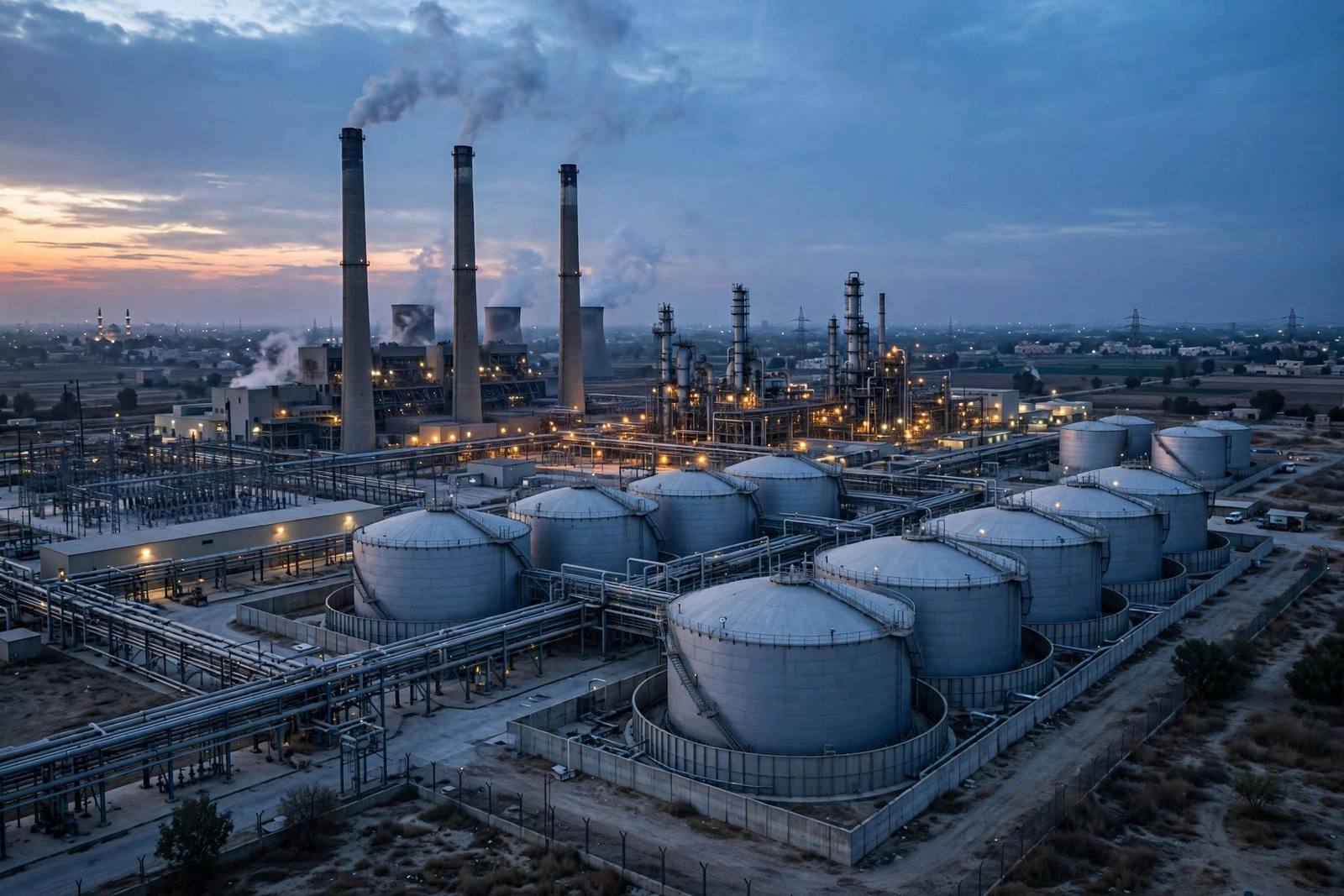
The company listed on the Karachi Stock Exchange on 10 June 1987, early in its producing life, and expanded caustic capacity in stages across the following decades. Company materials of recent years put caustic soda capacity at about 630 tonnes per day, spread across membrane-cell plants built and rebuilt in successive generations — BMR and the M-series plants in site shorthand — with the electrolysis technology migrating over time towards the modern membrane process, which uses less power per tonne than the older diaphragm and mercury routes it replaced across the industry.
The chlor-alkali complex and its many children
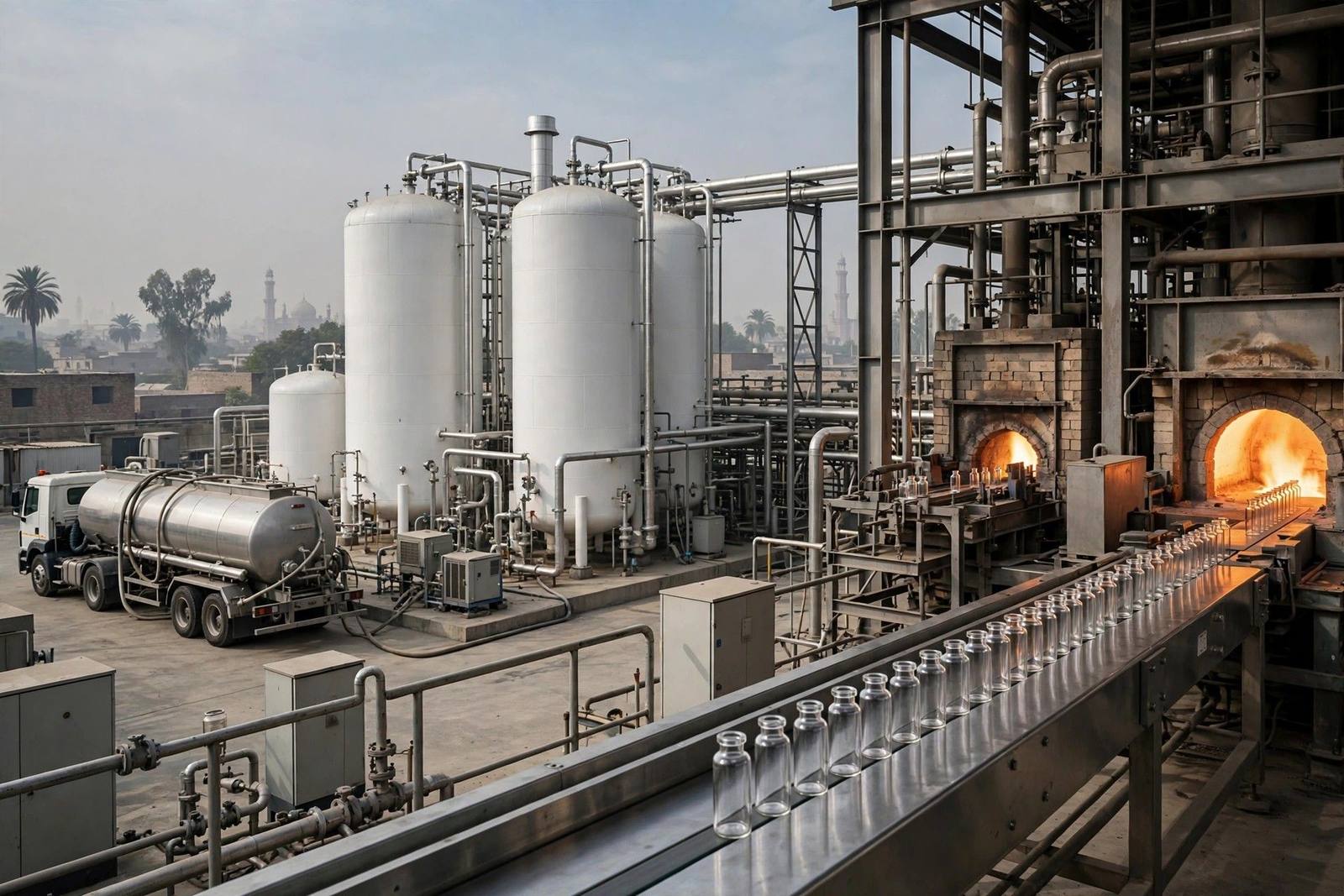
Electrolysis of brine yields caustic soda, chlorine and hydrogen in fixed proportions, and Sitara's product catalogue is what a disciplined maker does with that chemistry set. The basic line runs: caustic soda in liquid and flake form, liquid chlorine, hydrochloric acid, sodium hypochlorite and bleaching powder. The specialty shelves hold calcium chloride, ferric chloride, magnesium chloride, magnesium sulphate and liquid carbon dioxide. An oleo-chemicals arm produces soap noodles — the shredded, dried soap base from which toilet soap bars are milled — together with glycerin and stearic acid, using European-technology plant the company sized at about 35,000 tonnes a year of soap noodles.
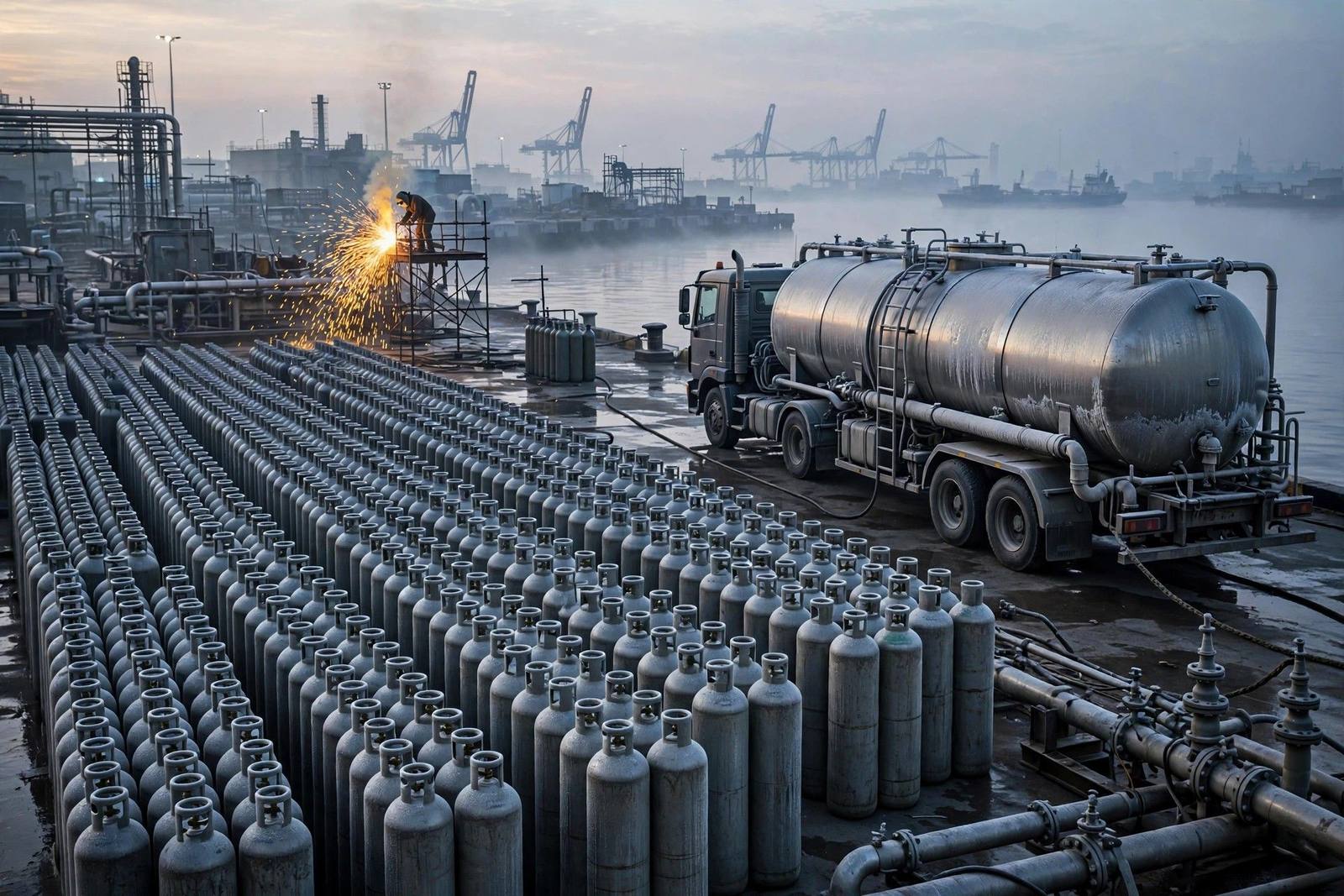
Energy, the industry's decisive cost, is made in-house: the company has operated gas-fired and coal-fired captive power plants of roughly 29 and 38 megawatts, with a further coal plant of about 50 megawatts added in recent development. A textile division spins yarn on roughly 28,500 spindles and has marketed its own suiting fabric under the Rajah's brand — a Faisalabad manufacturer's natural sideways step, buying its own caustic on one side of the group and selling yarn and cloth on the other. SITC's Faisalabad rival-and-mirror is Ittehad Chemicals; the two histories together, told in our guide to chemical stocks on the PSX, are practically a history of the trade.
A flagship that grew into a group
The Sitara name now sits over a wider family of companies — chemicals at the core, with sister ventures in fields such as peroxide and other industries carrying the Sitara identity in the Faisalabad industrial landscape. The listed company itself has stayed recognisably the group's industrial flagship: the caustic complex, the power plants, the soap-noodle and specialty lines and the textile unit all report within SITC, which makes its annual report a partial map of the group as well as a single company's accounts.
Two governance details belong in a beginner's notebook. First, the company has been certified as Shariah-compliant by the SECP since March 2019 under the Shariah governance framework, with its own Shariah adviser — a fact that matters to the significant body of investors who screen for it, and one that places SITC in the screened universes they study. Second, control rests with the sponsoring family and group in the usual Pakistani pattern, so strategy — new plants, new ventures, the balance between chemicals and textiles — is set by sponsors with most of their wealth inside the business.
How the money is made
The earnings engine is the chlor-alkali spread: caustic soda and chlorine-derivative prices on one side, and the cost of salt and — above all — electricity on the other. Captive generation is therefore not a side venture but margin policy: every megawatt Sitara makes itself is a megawatt whose cost it manages, in an industry where power can decide whether a tonne of caustic earns or loses money. The specialty chemicals and soap noodles sweeten that base, selling at speciality rather than commodity margins into soap, detergent and consumer-goods supply chains, while the textile division adds a separate, cotton-and-yarn cycle whose profits rise and fall on export demand and the cotton crop rather than on alkali prices.
Segment reporting in the accounts separates the Chemical Division from the Textile Division precisely so readers can weigh those two engines, and the careful habit is to do exactly that: a year in which chemicals carry textiles is a different story from a year in which yarn carries chemicals, even if the bottom lines look identical. Compare Sitara's chlorine logic with Engro Polymer's, which consumes chlorine into PVC, or with Lucky Core Industries, the diversified chemicals major, and the sector's family tree comes into focus.
Strengths, risks and controversies
Strengths: scale in its core product — the largest domestic chlor-alkali base by the company's own account — deep captive power, a derivative and specialty slate that softens commodity exposure, four decades of operating knowledge, and the demand gravity of Faisalabad's textile cluster at its doorstep. Shariah-compliant status broadens its eligible investor base in a market where that screening genuinely moves allocations.
Risks: the textile division ties part of earnings to Pakistan's most competitive export industry; caustic soda faces the same import-parity pricing pressure as at every domestic rival; coal and gas for captive power are neither cheap nor reliably priced in Pakistan's recent energy history; and chlorine chemistry imposes safety obligations whose failure would be a human event before it was a financial one. Group sprawl is the softer risk: flagships that fund siblings can starve their own maintenance, and minority shareholders must read related-party disclosures with the attention they deserve in any family group.
The name on the PSX and the investor who studies it
SITC has been listed since 1987 and trades as a mid-cap chemical name with a textile kicker. Its dividend record has included respectable cash payouts in solid years, consistent with a mature, cash-generative core plant, though always subject to the group's capital plans; readers should use our guide to how PSX dividends work for the payment mechanics and treat any single year as an example, not a promise. Credit assessors have rated the company in the single-A band in recent published actions, a useful independent check on balance-sheet character.
The investor who studies SITC is part chemist, part conglomerate analyst: comfortable separating alkali spreads from yarn margins, watching power tariffs and coal prices as closely as product prices, and valuing the patience of a family group that has compounded one Faisalabad plant into an industrial name since 1981. This article is educational content, not financial advice. Few Pakistani companies show so clearly how a single process — splitting brine with electricity — can finance forty years of diversification.
Reading Sitara's two engines
The most instructive exercise SITC offers a beginner is a two-column reading of a single year's results. In the left column, the Chemical Division: caustic volumes against Faisalabad and national textile activity, chlorine-derivative realisations, soap-noodle shipments into the detergent trade, and the captive power cost that binds them. In the right, the Textile Division: yarn counts and export orders, cotton prices against yarn prices — the spinner's eternal spread — and the suiting brand's small but symbolically large presence in the domestic fabric market. Companies are usually diversified to smooth earnings; Sitara's two engines smooth imperfectly, because textile weakness and chemical weakness share a common cause in national energy and demand conditions, and the honest analyst notes the correlation rather than assuming it away.
Scale, meanwhile, has quietly changed what the company is. A 30-tonne-a-day entrant in 1985 could be ignored by rivals and regulators alike; a complex describing itself as the country's largest chlor-alkali site, with three captive power plants and a specialty-chemicals catalogue, is infrastructure — its outages would be felt in soap, textile and water-treatment supply chains within weeks. That status brings obligations as well as pricing power: environmental management of chlorine and effluent, community safety on a busy inter-city road, and the expectation, unreasonable but real, that the plant simply runs. The annual report's safety and sustainability disclosures are where a reader checks whether the company's self-understanding matches its systemic size.
The group dimension completes the picture. Flagships finance families: the cash thrown off by a mature alkali complex has historically funded the Sitara name's ventures beyond the listed perimeter, and the listed shareholder's return depends on the discipline of that allocation — how much of the alkali surplus is reinvested in the complex itself, paid out, or committed to the group's wider ambitions. There is no formula for judging that, only the record, read over a decade rather than a year.
There is a civic dimension, too, that profiles of chemical companies too rarely record. A complex of Sitara's size on the Faisalabad–Sheikhupura road is an employer, a ratepayer, a trainer of process operators and electricians, and a standing argument that Pakistani industry can run sophisticated continuous-process plant decade after decade with its own people. Generations of Faisalabad engineers have passed through such plants on their way across the country's chemical industry. When analysts describe Pakistan's thin industrial base as a national weakness, companies like this one are the counter-evidence that already exists — and the shareholder, reading the annual report's human-resources and plant descriptions, is looking at a piece of national capability as well as a private asset.
The Faisalabad setting deserves its own sentence in the investment logic. This is a city built on textiles, ringed by the mills that consume caustic soda by the tanker, and served by an industrial workforce for whom process plants are the family trade. Sitara's complex does not import its market or its skills; both live within a short drive of the gate, in the cluster the plant itself helped to supply since 1985. Cluster economics of that kind are easy to overlook in a spreadsheet and hard for a rival to replicate from a greenfield site — one more reason a complex begun at 30 tonnes a day now describes itself, credibly, as the centre of its trade.
For the new reader, a closing practical note: SITC reports on a June financial year, with segment results that let the two engines be graded separately each quarter. Set the chemical segment against caustic prices and the textile segment against yarn spreads for the identical period, and the consolidated result stops being a single mysterious number and becomes what it actually is — two businesses, sharing a gate on the Faisalabad–Sheikhupura road, reporting in one envelope.
That cluster point also explains the company's recruitment gravity: process engineers, membrane specialists and power-plant operators in the Faisalabad region circulate among a small set of serious employers, and a flagship that trains well keeps skills the whole cluster uses. Sitara's four decades have made it one of those training grounds — an unlisted asset that shows up, indirectly, in the plant's reliability record year after year.
It is a record — alkali, power, specialties and yarn, compounded patiently from a single Faisalabad gate since 1981 — that rewards exactly the long reading this profile has tried to model.
Key takeaway: Sitara Chemical is the Faisalabad chlor-alkali flagship — incorporated in 1981, producing caustic soda from 1985, listed in 1987 — whose captive power, specialty chemicals and textile arm turned one electrolysis hall into the core of a business group.