KARACHI: For generations of Pakistani men, the morning shave began with a name borrowed from a tree. Treet — the razor blade in the green-and-yellow world of the local barber's shelf — is one of Pakistan's oldest consumer brands, and the company behind it, Treet Corporation, is one of the Pakistan Stock Exchange's most curious small conglomerates. What began in 1952 as a razor-blade plant set up with an American partner in Karachi became, under the Syed family of Lahore, a group spanning blades and razors, corrugated boxes, soaps, batteries, pharmaceuticals and motorbike assembly — with several of those ventures separately listed in their own right. TREET, its ticker, is therefore not one business but a portfolio wearing a single share price. This profile explains how a blade company became a group, what each piece does, how the whole structure earns its money, and why followers of the stock spend so much time on the family tree of its subsidiaries.
1952: an American razor comes to Karachi
Treet was founded in 1952 by Syed Wajid Ali, a Lahore industrialist from one of the country's prominent business families, as a joint venture with the American Safety Razor Company of the United States — then a major force in the global blade trade. The original razor-blade plant stood at Karachi's West Wharf, close to the port through which its imported steel and machinery arrived, and in 1954 it was relocated to Hyderabad, in Sindh, where blade-making took root. The business logic was the era's classic: blades were a mass, repeat-purchase import; local manufacture with an American partner's technology could supply the market at Pakistani prices while building an industrial skill — precision grinding and honing of very thin steel — that few local firms possessed.
The corporate form caught up with the business a generation later: Treet Corporation Limited was formally incorporated on 22 January 1977 as a public limited company, and its shares are listed on the Pakistan Stock Exchange, with the registered office eventually settled at the group's industrial base in Kot Lakhpat, Lahore. Under the second and third generations of the family — the group has been chaired in its modern era by Syed Shahid Ali, with Syed Sheharyar Ali as chief executive in recent PSX records — the centre of gravity shifted decisively from Hyderabad and Karachi to Lahore, and from a single product to a portfolio. But the blade remained the flagship: Treet's conventional double-edge blades and, later, its disposable and system razors made it, for decades, the default Pakistani answer to the global giants of shaving, competing on the same shelves described in our sector guide to PSX food and personal-care stocks.
From blade maker to small conglomerate
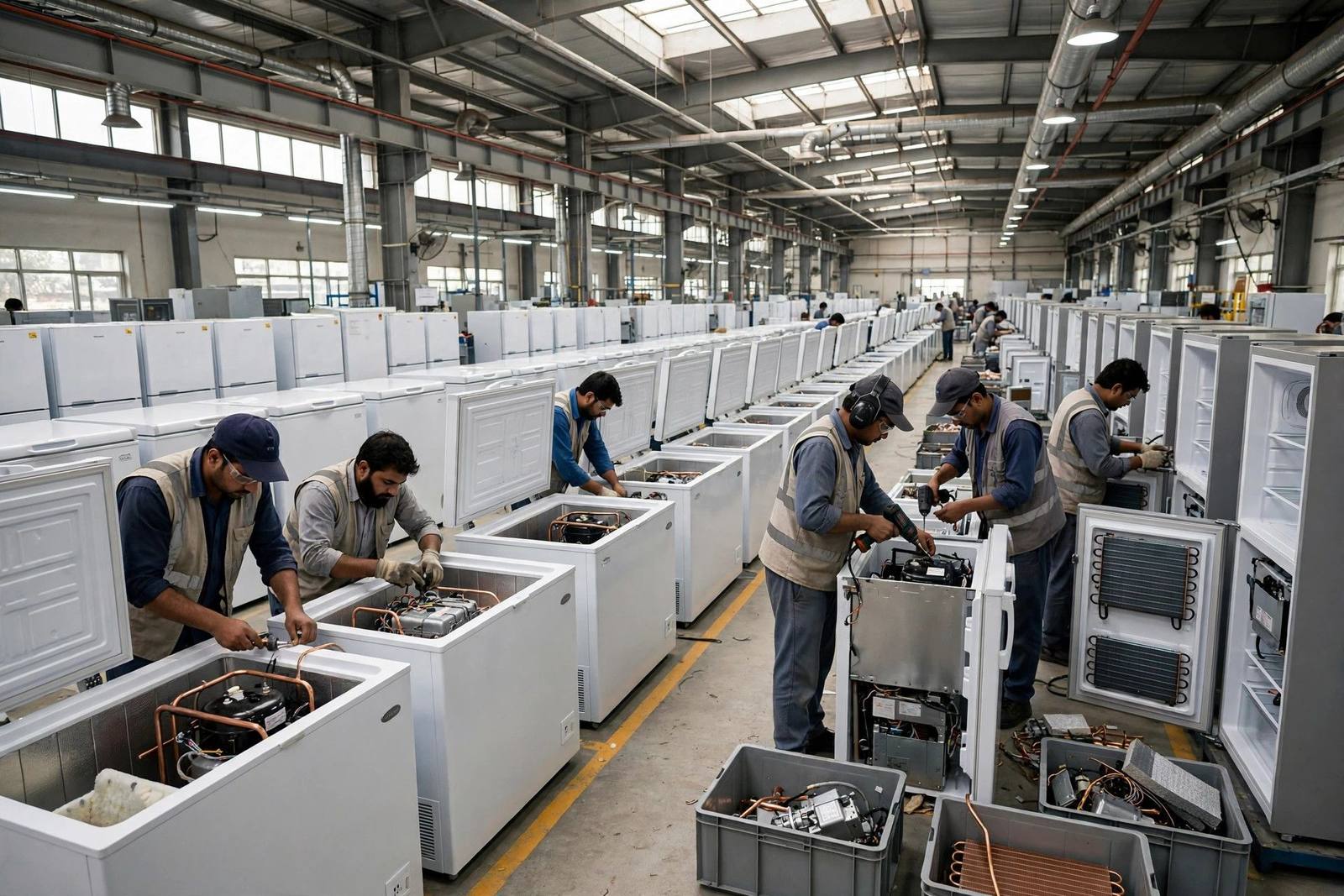
The diversification was built vehicle by vehicle, and the vehicles are the story. In 2005 the group established the First Treet Manufacturing Modaraba — a multipurpose modaraba, managed through the group's Treet Holdings, floated under Pakistan's Islamic-finance modaraba framework explained in our guide to modarabas in Pakistan — to undertake manufacturing businesses including corrugated boxes for shipping and storage, and soaps. Through related group companies came other ventures: Renacon Pharma, making haemodialysis concentrates — the fluids used in kidney dialysis — a medical niche about as far from razor blades as manufacturing gets; assembly and sale of motorbikes and rickshaws under the group's trading arms; metal components; and an HR management services company supplying contract labour. The group's own summaries list the modern structure plainly: Treet Corporation at the top, with subsidiaries and undertakings including Treet Holdings, the First Treet Manufacturing Modaraba, Treet Power, Renacon Pharma and others orbiting the Kot Lakhpat core.
The most consequential diversification was into batteries. In 2018, through the Modaraba, Treet established a battery plant at the Faisalabad Industrial Estate to make maintenance-free and deep-cycle batteries under the Daewoo brand under licence — a serious entry into Pakistan's large automotive and backup-power battery market, where summer load-shedding had made the deep-cycle battery a household appliance in its own right. In April 2023 the battery segment was demerged from the Modaraba and listed separately as Treet Battery Limited, which has since taken the business into lithium-ion products under its Lithion NeoPower branding. The blade company's family was still growing: in 2023 Treet announced an entry into shaving foam, forming a dedicated shaving-foam venture in 2024 — a return, in a sense, to the bathroom shelf where it all began, this time selling what goes with the razor rather than just the razor — and in 2025 it approved a reported Rs430 million expansion of its hygiene-razor capacity in response to local and export demand.
What the group actually sells
Start with the core. Blades and razors remain the parent company's principal activity in its own filings: conventional double-edge blades, disposable razors, and hygiene and feminine razors — a range the company itself counts in dozens of product variants — sold across Pakistan and exported. Around it, the group sells corrugated boxes to other manufacturers, soaps, lead-acid and newer-technology batteries through the separately listed battery arm, haemodialysis concentrates through its pharma arm, motorbikes and rickshaws assembled and traded through group vehicles, and assorted metal components and services. Almost every line answers a mass Pakistani need — shaving, packaging, washing, starting a car, powering a home through an outage, dialysing a kidney — which is the unifying logic of an otherwise miscellaneous list: the group's real competence is making and distributing everyday physical products at Pakistani price points, under brands or licences local consumers recognise.
How a conglomerate of small parts makes money
There is no single Treet margin; there are several, stacked. The blade business is a branded consumer staple: high volumes, small tickets, distribution through wholesalers, grocers and barbers, with imported blade steel as the key input and brand loyalty plus price architecture as the defence against multinational rivals and cheap imports. The battery business is heavier — lead, energy and warranty costs, sold through dealer networks against entrenched competitors — and its results now arrive through a separately listed company in which TREET shareholders hold an indirect stake. Boxes and soaps are conversion and brand businesses respectively, each tied to industrial and consumer demand. Pharma concentrates sell into hospitals and dialysis centres on quality and relationships.
For the shareholder, the structure matters as much as any single line. Treet Corporation's accounts consolidate its subsidiaries, but several group businesses also have their own listings and their own outside shareholders — the Modaraba's certificate holders historically, and Treet Battery's public holders since 2023. Value created inside the group is therefore divided among different sets of owners at different levels, and the parent's share price can trade above or below a simple sum of its parts depending on how the market feels about holding-company complexity — the classic conglomerate question examined in our explainer on Pakistan's conglomerates. Dividends to TREET holders, in turn, depend on cash actually upstreamed from operating companies after their own investment needs, not on consolidated profits alone; the mechanics of declarations are the standard ones in how PSX dividends work.
Strengths, risks and the sprawl question
The core strength is the blade franchise itself: a brand older than most of its customers, a distribution reach built over seventy years, and a home market where the traditional wet shave keeps double-edge blades commercially alive long after richer markets moved on. The battery venture added a second engine in a structurally growing category, and the 2023 demerger gave it a listed currency and dedicated management. Export demand for razors — strong enough to justify the 2025 capacity expansion — suggests the core can grow beyond Pakistan's own bathroom shelves.
The risk is in the title of this profile: sprawl. Every small conglomerate must answer why its parts belong together, and Treet's list — dialysis fluids and motorbikes beside blades and soap — invites the question more than most. Diversification into unrelated lines has consumed capital and attention across the group's history, the demerger and modaraba structure make the accounts genuinely hard for a beginner to read, and family control — the sponsor family's stakes are substantial and publicly reported — concentrates decisions in the pattern our family businesses guide describes. Consumer risks apply too: blade steel and lead are imported or import-priced, currency falls squeeze several cost lines at once, and the global shaving giants contest the premium shelf that Treet's newer razors aspire to. None of this is hidden — the group reports it all — but it has to be read at the level of segments, not headlines.
The name on the PSX: TREET
TREET trades as a small-to-mid-cap consumer-industrial hybrid, and uniquely among its peers it is really a listed holding over other listed and unlisted pieces — including a separately quoted battery company carved out of its own modaraba in 2023. That makes its announcement stream unusually rich: capacity expansions in razors, new personal-care brands such as the men's and women's ranges the group has been preparing under names including Genesis and Estela, subsidiary results, and restructuring steps all arrive through the same ticker. Liquidity is that of an established second-tier name — real, but thinner than the index leaders — and the share has historically attracted holders who think in terms of the group's combined assets and brands rather than a single product line. New readers can anchor the name in the wider market's structure through our KSE-100 explainer and the index's own shifting membership.
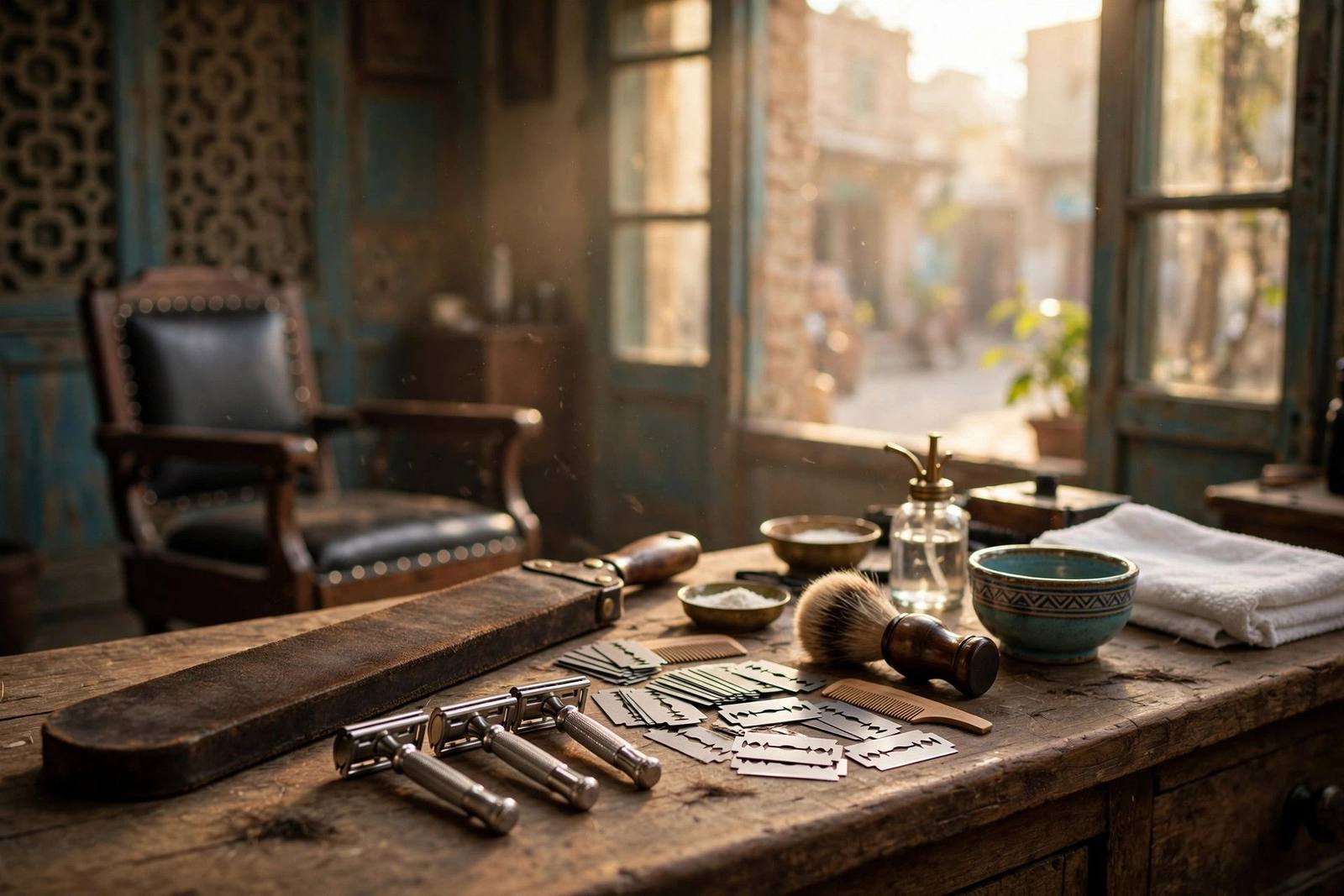
The core deserves one more look, because it is easy to underestimate a blade. The double-edge blade is a nearly perfect emerging-market consumer product: tiny, light, cheap, bought constantly, and used in a ritual — the barbershop shave — that remains a social institution across Pakistan's towns. Treet's decades in that ritual give it something money struggles to buy quickly: habitual trust at the level of the individual barber's hand, replicated in millions of shops, plus an export trade built on the same economics in other wet-shaving markets. The strategic problem of the modern era is generational. Younger consumers meet shaving through cartridges, trimmers and disposables promoted by global giants with global advertising, and a heritage blade maker must climb from the product it owns into the products that are replacing it — hygiene razors, feminine razors, foams and the personal-care ranges the group has lately been assembling — without losing the cash engine that funds the climb. That is precisely the transition the recent investments — the shaving-foam venture, the new branded grooming ranges, the Rs430 million hygiene-razor expansion — are attempting, and it is the single most important thing happening inside the group: more consequential, over a decade, than any individual year's battery or box results, because it decides whether the 1952 franchise is a foundation or a museum piece. The encouraging sign for the optimists is that the company is attempting the climb with its own cash generation rather than watching the shelf move and complaining about imports — the same instinct, in the end, that put an American razor plant beside Karachi's West Wharf in 1952 and kept it Pakistani ever since.
What kind of investor studies Treet Corporation
TREET is homework for the structure-minded: an investor willing to read consolidated and segment accounts, follow two or three related listings at once, value a heritage consumer brand alongside a battery plant, and keep a sceptical eye on whether each new venture earns its place in the family. The watch-list writes itself — razor volumes and exports, battery arm results, the progress of the shaving-foam and personal-care entries, any further demergers or consolidations, and the dividend that tests how much subsidiary cash reaches the parent. This article is educational content, not financial advice, and nothing in it is a recommendation to buy or sell any security.
Key takeaway: Treet grew from a 1952 Karachi blade venture into a Lahore family conglomerate of razors, boxes, soaps, batteries and pharma — a portfolio stock whose story is best read one subsidiary at a time.