KARACHI: Pakistan's edible-oil shelf was, for decades, one of the most settled in the supermarket: a few venerable banaspati and cooking-oil names, owned by a few venerable houses, bought out of habit by generation after generation. Unity Foods is the company that charged at that shelf. In less than a decade it went from a dead textile listing to one of the country's largest listed edible-oil and speciality-fats producers, pushing the Sunridge brand from flour and rice into oils, and fielding a stable of oil and banaspati labels — Dastak, Ehtimam, Zauqeen, Lagan, Unity Oil — against incumbents many times its age. Singapore's Wilmar International, one of the world's great agribusiness groups, bought in, then bought more. Then, in 2025 and 2026, the story turned: a founder's exit, a transfer of control, board turmoil, a large loss provision by Wilmar, and reported investigations that remain allegations under examination, not concluded findings. Unity is therefore two profiles in one — the upstart's rise, and a hard lesson in what governance risk means when it stops being a footnote. Both halves follow from the documented record.
1991–2012: the first life, as a spinning mill
The listing Unity now occupies began life in an entirely different trade. The company was incorporated in 1991 as Taha Spinning Mills Limited, a yarn manufacturer, and became a public limited company in June of that year — one of the many textile flotations of the era. Its spinning business did not survive Pakistan's textile shakeouts. Yarn operations were suspended in 2008 amid mounting losses and a liquidity crisis, the mills closed completely by 2012 after litigation with creditors, and in 2013 the land and buildings were sold. What remained was the corporate husk: a listed shell with a history, a shareholder register and a stock-exchange quotation, but no operating business. Shells of that kind are a recognised feature of the PSX landscape — a listing is itself an asset, because it offers new owners a faster, cheaper route to the market than a fresh flotation — and in 2016 buyers arrived for this one.
2016–2019: a reverse takeover and an oil refinery
In 2016 a new ownership and management group led by Muhammad Farrukh Amin acquired the listed company in what was, in substance, a reverse takeover: the shell stayed, the business inside it changed completely. The new team's industry was food, and its chosen battlefield was edible oil — a market of enormous daily volume, dominated by imported palm oil refined and branded locally, where a challenger with modern refining and aggressive distribution could plausibly take share. In June 2017 the board approved a rights issue to fund the pivot: the money was to acquire a solvent extraction plant, an oil refinery and supporting assets, and the company's principal activity was formally changed from yarn to edible-oil extraction and refining. The Taha Spinning name went; Unity Foods arrived.
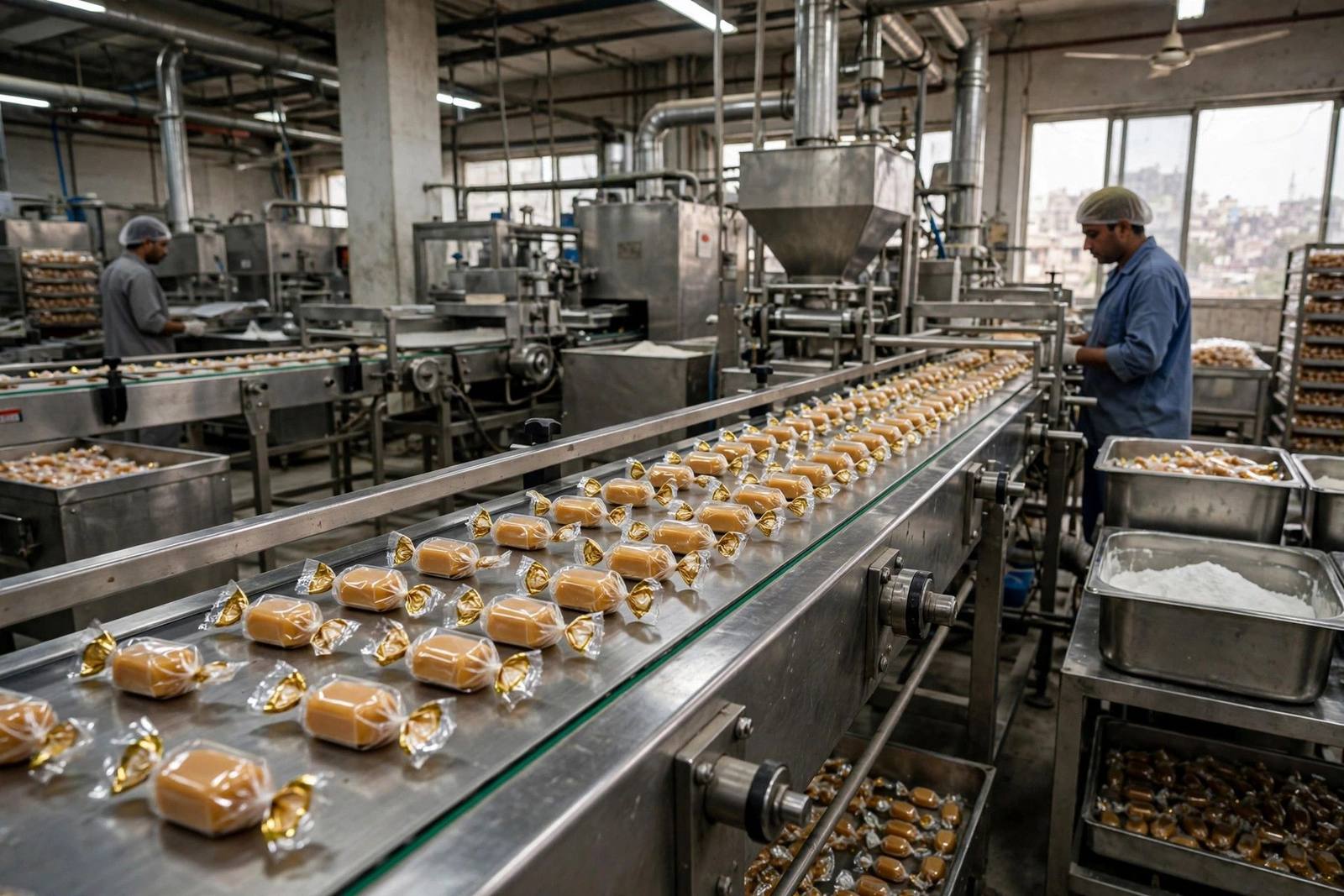
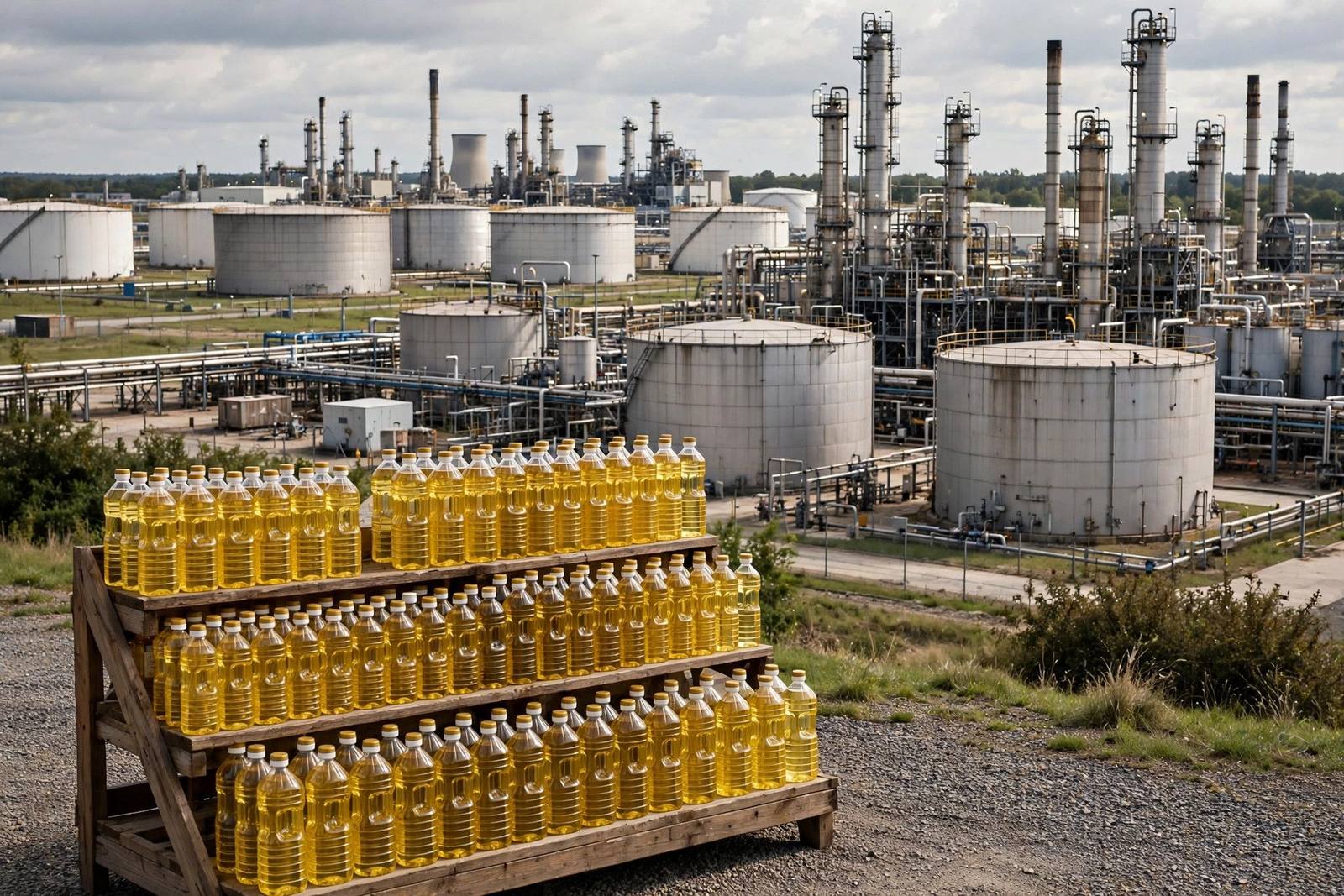
The build-out that followed was fast and acquisition-led. In 2019 the company raised further equity through a follow-on offering and bought a crude palm oil refinery at Port Qasim, a purchase reported at the time as lifting its refining capacity severalfold — from a small base to a scale that put it in argument with the established refiners. The same year it bought control of Sunridge Foods, a flour and staples company, initially taking a majority stake and later the whole company. Sunridge became the group's consumer face beyond oils: fortified flours, basmati rice, lentils, pulses and kitchen staples under the Sunridge name, made in facilities that came to include a PESA flour plant at Port Qasim, a flour mill on Karachi's Super Highway site, and flour and rice milling at Sheikhupura in Punjab. A food group was being assembled at speed — oils and banaspati at the heavy end, staples in the middle, and, through later additions, animal feed under the Pure brand, speciality fats for chocolate, confectionery and bakery customers, soap manufacturing at Hub, and even a confectionery operation acquired within the Sunridge fold. The full shelf is mapped in our guide to food and personal care stocks on the PSX.
Wilmar arrives: 2020–2024
The move that certified the upstart was the arrival of Wilmar International. Wilmar is among the world's largest agribusiness companies — a giant in palm oil and edible oils across Asia — and in July 2020 its local vehicle, Unity Wilmar Agro, acquired a substantial block of Unity Foods shares. For the Karachi market the signal was powerful: the global trade's most sophisticated oil player had chosen this challenger as its Pakistan platform. The relationship deepened in March 2024, when Wilmar Pakistan Holdings, through Unity Wilmar Agro, acquired a further large block of shares in a transaction the Competition Commission of Pakistan subsequently authorised, taking Wilmar's interest — held through its subsidiaries — to the largest single position in the company, described in the company's own reference material at around half the equity. Wilmar's presence brought more than capital: it brought commodity sourcing through one of the world's great palm and oilseed networks, technical depth in refining and speciality fats, and a governance expectation that public shareholders reasonably read into the share register.
Those were the years of the full insurgent playbook. Unity's plants multiplied across the map its annual reports draw: refineries at SITE and Port Qasim in Karachi, crushing at Kotri for soybean and canola seed sourced from the Americas, palm oil and speciality fats from Malaysia and Indonesia, soap at Hub in Balochistan, and exports reaching markets from Sri Lanka and Bangladesh to the Gulf, Vietnam, China and Singapore. In 2020 the company also turned to the debt market, announcing a sukuk of up to three billion rupees for working capital — the classic funding shape of a commodity processor, whose true factory is a pipeline of imported raw material that must be financed from ship to shelf. By the middle of the decade the upstart had genuinely arrived: a KSE-100 constituent in its strong years and a standing answer to anyone who claimed Pakistan's food shelves could not be challenged.
How Unity makes money
Edible oil is a conversion business built on imports. Pakistan grows some oilseed but nothing like enough; the industry's raw material arrives by ship as palm oil from Malaysia and Indonesia and as soybean and canola seed, largely from the Americas, for crushing at Kotri-style extraction plants. The refiner's margin is the spread between those landed commodity costs — plus freight, duty and the rupee's exchange rate on the day — and the prices its brands can hold on the shelf, in a market where the product is a daily necessity and switching costs the consumer nothing. Banaspati, the hydrogenated staple of Pakistani cooking, and branded cooking oils sold in tins, pouches and bottles are the volume engine; speciality fats for industrial customers — the chocolate, biscuit and bakery trade — are the quieter, specification-led margin; staples under Sunridge spread the distribution cost across more categories in the same shops; and feed, the residue of crushing sold to the dairy and poultry economy, ensures the seed is paid for twice. It is a working-capital furnace: inventory and receivables at commodity scale absorb cash continuously, which is why the group's funding — rights issues, offerings, the sukuk — is part of its operating story rather than a separate financial one. Fellow travellers on the same shelf, from confectionery to packaged foods, are profiled in Ismail Industries.
One experiment showed how far the challenger instinct reached. Through Sunridge, the group put its own name over the shop door as well as on the packet, developing Sunridge-branded bakery and grocery retail — outlets selling fresh bakery made from the group's own staples alongside the grocery basket. Retail was never the group's centre of gravity, and no reader should mistake it for a supermarket chain in the making; but as a statement of method it was pure Unity. Every layer of the chain between the oilseed ship and the kitchen shelf — crushing, refining, branding, distribution, and finally the shelf itself — was treated as a margin someone else was keeping, and therefore as a margin worth contesting. That instinct built the company at remarkable speed. The sections that follow describe what it cost when the contest moved from the shelf to the boardroom.
2025–2026: control changes, and the questions begin
In December 2025 the founding chapter closed. Muhammad Farrukh Amin resigned as chief executive and moved to a non-executive directorship, the chairman Amir Shehzad took the chief executive's role, and under a shareholders' agreement between Amin and Wilmar dated that month, management control of Unity Foods passed to Wilmar. Within weeks the new chief executive had also resigned — in February 2026 — independent directors had stepped down, and reporting on the episode described a board left struggling for the quorum it needed to function. Then came the disclosure that reframed everything: in 2026 Wilmar told its own market that it had recognised a very large loss provision against its Unity investment, stating that during 2025 it had become aware the company was having difficulty servicing certain bank facilities notwithstanding previously published financial statements that had indicated profitability and material liquid assets. Wilmar said it had sought guidance from Pakistani regulators on steps including a possible administrator and an independent investigation, and shareholder proceedings between Wilmar and Amin were filed in Pakistani courts.
Pakistani reporting in the same period described a Federal Investigation Agency case naming former senior management in connection with alleged falsification of accounts and misuse of funds, with the agency itself noting that the roles of other individuals remained to be established during investigation. Every part of that paragraph must be read as it is written: these are disclosures, allegations and proceedings — serious, market-moving, and unresolved. No finding against any individual is stated here, because none is available to state. What can be said plainly is what the episode teaches. A company can be simultaneously a real industrial operation — refineries, brands, exports, thousands of shopkeepers stocking its oil — and a governance problem, and the second fact can overwhelm the first in the market's judgement. Readers who followed the announcements file as it happened, rather than the summary afterwards, saw the risk arrive in the order risk usually arrives: leadership change, board instability, then questions about the numbers. Our guide to reading PSX announcements exists for exactly this discipline.
The name on the PSX, and who studies it now
UNITY's exchange life mirrors its corporate one: a dormant shell quotation, a spectacular second act as a growth and momentum name in its expansion years, KSE-100 membership at its height, and a final phase — at the time of writing — dominated by governance headlines rather than oil margins. Its dividend character was always that of a company reinvesting and raising capital rather than distributing it, so income investors were never its natural register; the register it did attract was the growth register, and growth registers reprice fastest when trust is questioned. That is not a verdict on the underlying assets: refineries at Port Qasim do not stop refining because a boardroom is in dispute, and the brands' shelf presence is a fact any shopper can verify. It is, rather, the market's standard treatment of uncertainty about who controls a company and whether its past accounts can be relied on.
The investor studying Unity today is therefore doing a different job from the one who studied it in 2021. Then, the questions were industrial: refining spreads, Sunridge's growth, Wilmar's intentions. Now the first questions are forensic and legal — the state of the investigations, the outcome of the shareholder proceedings, the credibility of restated or reviewed numbers, and the intentions of a Wilmar group that is simultaneously the largest shareholder, the aggrieved party and the most plausible source of a rescue. Students of Pakistani family businesses on the PSX will recognise the underlying theme: sponsorship is strength until succession and control become the story. This profile is educational content, not financial advice.
Key takeaway: Unity Foods was rebuilt from the Taha Spinning shell after 2016 into a Wilmar-backed edible-oil and staples challenger under the Sunridge and Dastak brands — and its 2025–26 control change, board turmoil and reported investigations make it a case study in governance risk.