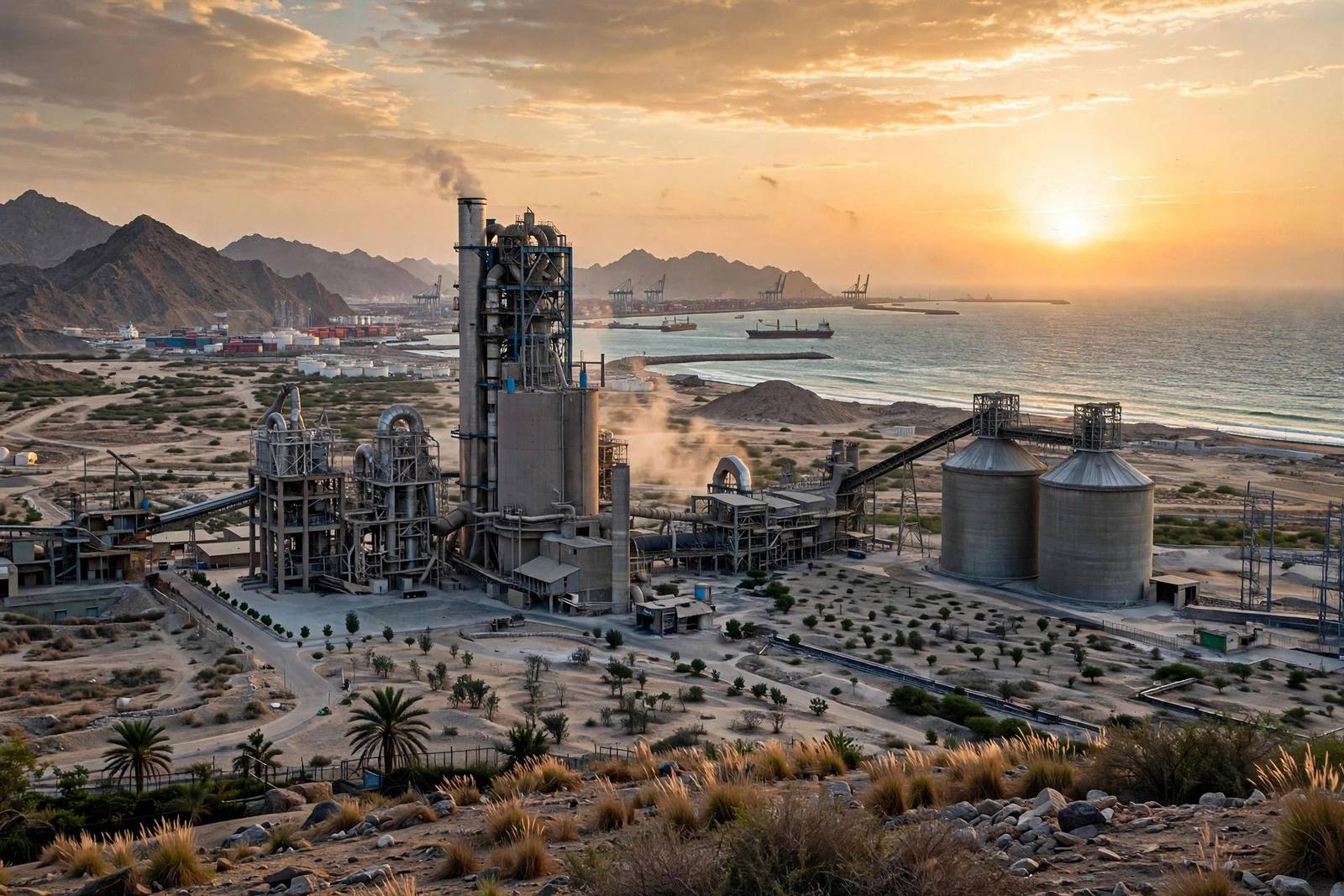
KARACHI: Stand at the gate of the plant at Hub, on the Balochistan coast north-west of Karachi, and you are standing at the southern anchor of Pakistan's cement industry. Attock Cement Pakistan — ACPL on the Pakistan Stock Exchange — makes the cement sold under the Falcon brand, the bags that build Karachi's towers, Sindh's houses and a share of the region's export trade. It is a one-plant company with a famous name, a foreign controlling shareholder, and a story that begins not in Attock, despite the name, but in a Saudi-Pakistani venture of the early 1980s.
What Attock Cement makes and where it sells
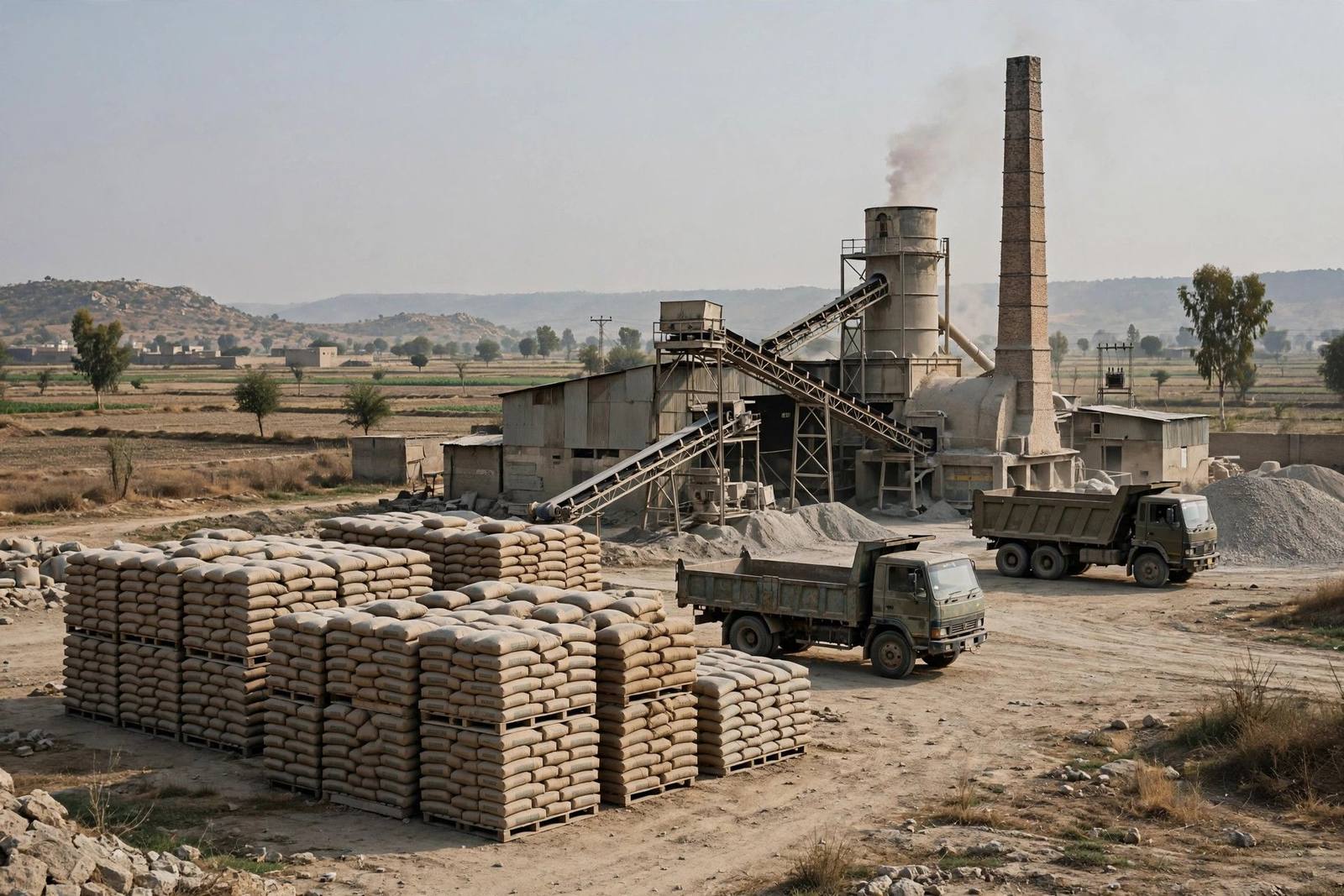
ACPL manufactures ordinary Portland cement, sulphate-resistant cement and block cement, marketed under the Falcon name. Ordinary Portland is the industry's standard product; sulphate-resistant grades serve ground and coastal conditions where salts attack ordinary concrete; block cement serves the concrete-block makers who supply much of Pakistan's everyday construction. From Hub, the natural market is the south: Karachi above all, the rest of Sindh, southern Balochistan, and — because Hub sits near the sea — export destinations reachable by ship, a trade Pakistani coastal plants have served in surplus years.
Cement geography is destiny, as our guide to cement stocks on the PSX explains: the product is heavy, cheap per kilo and expensive to truck, so every plant defends a home territory and fights at the margins of everyone else's. ACPL is the south-zone counterweight to northern producers such as Gharibwal Cement and Flying Cement, whose limestone sits hundreds of kilometres away in Punjab.
Established in 1981, producing from 1988
The company was incorporated in Pakistan in October 1981 as a public limited company, a joint venture associated with the Pharaon interests of the late Dr Ghaith Pharaon, the Saudi-based international investor whose Attock-named group built positions across Pakistani oil, refining and industry. The initial project was large for its time — an outlay commonly put at about Rs 1.5 billion including a substantial foreign-exchange component — and the Hub plant was notable as a major private-sector, Middle East-funded industrial project of its era.
Commercial production began in 1988, with clinker capacity of about 2,000 tonnes per day, roughly 0.6 million tonnes a year, using dry-process suspension pre-heater technology that was then modern for Pakistan and saved materially on fuel. The name on the gate came from the wider Attock group identity — the same stable as the refinery and oil businesses founded around Attock in Punjab — even though the cement plant itself has always been a Balochistan operation, headquartered from Karachi.
Expansion in stages, listing in 2002
ACPL grew the way Pakistani cement makers usually do: line by line, in the industry's successive demand booms. A second, larger clinker line of about 3,300 tonnes per day was added in the expansion of 2006–07, and a further line followed in the late 2010s, taking annual cement capacity to around three million tonnes by 2018. Each expansion was a bet placed years ahead of the demand it served, financed through the cycle and justified, in the company's telling, by Karachi's growth and the export option that a coastal plant always holds.
The shares reached the market comparatively late: Attock Cement was listed on the Karachi Stock Exchange in 2002, a decade and a half after production began. That sequence — build privately under a sponsor, list once established — is common among group companies in Pakistan, and it meant public investors bought into a known plant with a trading record rather than a construction promise.
The Pharaon holding and the Attock family of companies
Control rests with Pharaon Investment Group Limited Holding S.A.L of Lebanon, which has held roughly 84 per cent of ACPL — an unusually concentrated register even by Pakistani standards, leaving a small free float for public shareholders. The wider Attock group in Pakistan spans oil exploration through Pakistan Oilfields, refining, and petroleum marketing, which makes the cement company the construction-materials outlier in an otherwise energy-heavy family.
That concentration cuts both ways, and ACPL's recent history shows it. In the mid-2020s the controlling stake itself became the story, as the Pharaon holding was put in play and rival Pakistani groups announced intentions to acquire it — a reminder that when a sponsor owns five-sixths of a company, the most important shareholder event is not the annual meeting but the sponsor's own decision to stay or sell. Minority holders ride along with the outcome, protected by takeover rules but not in control of them.
How a coastal cement plant makes money
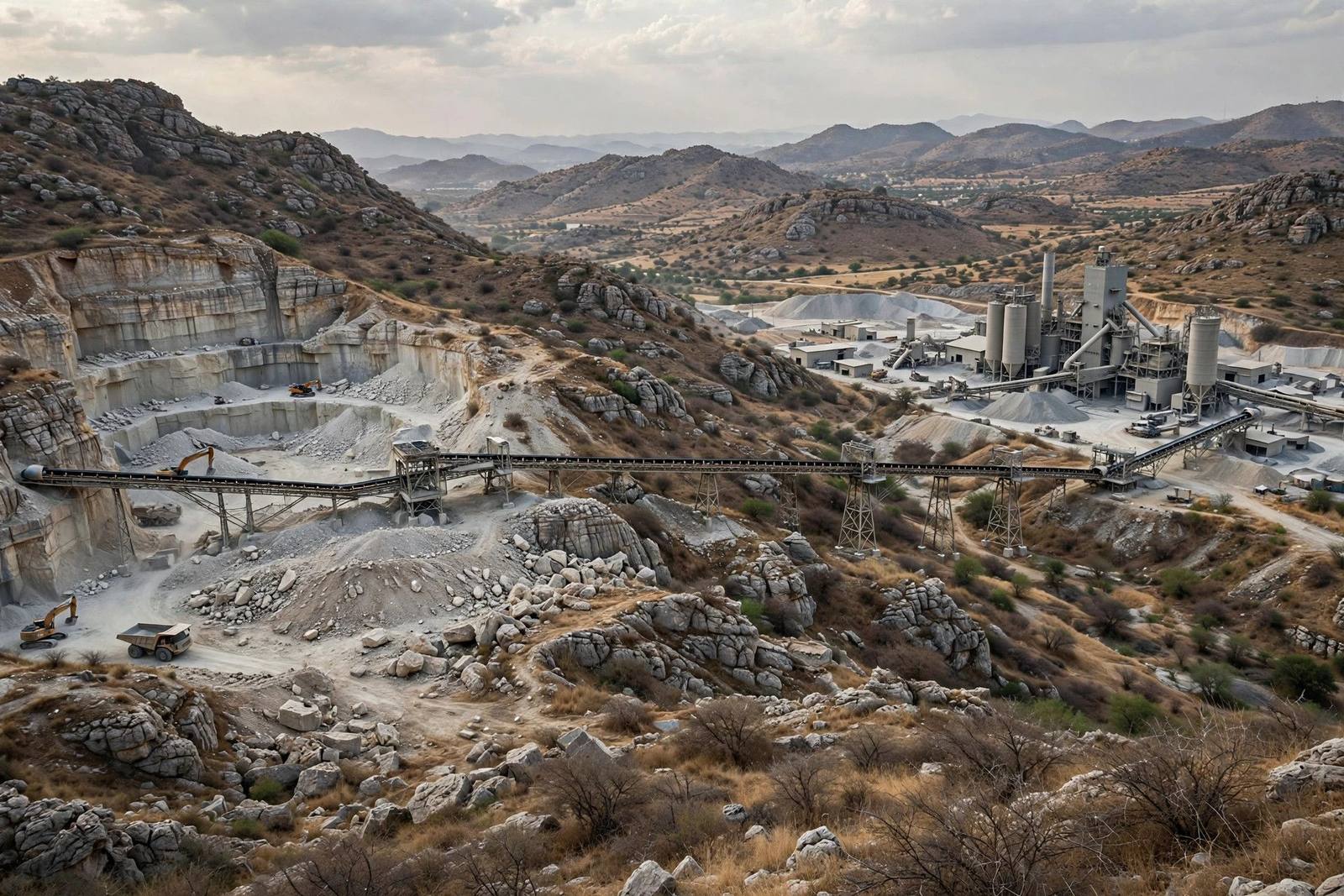
The arithmetic is the industry's standard stack. Limestone and other raw materials are quarried and crushed, burned with fuel into clinker in a rotary kiln, then ground with gypsum into cement and sold by the bag or in bulk. Revenue is volume times the retention price — the share of the bag price the manufacturer keeps after dealers, transport and taxes take theirs. Costs are dominated by fuel and power: coal, much of it imported for coastal plants, is the single line that decides whether a good year becomes a great one or merely a survivable one.
Hub's coastal position shapes both sides. Imported coal arrives by sea close to the plant, and finished cement can leave the same way for export markets when domestic demand sags — exports pay less per tonne than Karachi retail sales, but they keep kilns turning, and a kiln is an asset that loses money standing still. Against that, the plant competes in its home market with every other southern producer and with northern cement trucked or railed south in strong-price years. Compare the model with D. G. Khan Cement, which runs both northern and southern plants, or with Lucky Cement, the southern giant whose scale ACPL cannot match but whose market it shares.
Strengths, risks and controversies
Strengths first: an established brand in Falcon, a single efficient site built up in modern stages, genuine export optionality, and a sponsor with deep pockets and four decades in Pakistani industry. The plant's southern location serves the country's largest city, whose construction demand, however cyclical, never disappears.
Risks are the cement industry's usual four, sharpened by concentration. Fuel costs — imported coal prices and the rupee — can compress margins faster than bag prices can be raised. Demand is hostage to interest rates, development spending and Karachi's property cycle. A one-plant company carries one-plant risk: a kiln outage is not a partial problem. And the small free float that follows from an 84 per cent sponsor holding means the share can trade thinly, with the price set by few hands — liquidity risk that position size must respect. Environmental scrutiny of quarrying, dust and emissions, a live issue for every Pakistani cement plant, applies at Hub as elsewhere.
The name on the PSX
ACPL trades in the cement sector, outside the KSE-100's largest names, and its register shape — one dominant holder, a modest public float — is the first fact a new reader should absorb. Its dividend record has historically been respectable in profitable years, as mature single-plant cement makers often convert earnings to cash without endless expansion claims on it, but payouts remain a board decision taken year by year against fuel costs and capital plans. Our guide to how PSX dividends work explains the announcement and book-closure mechanics behind any payout.
What kind of investor studies ACPL
ACPL rewards the investor who thinks geographically: watch Karachi construction, southern dispatches in the industry's monthly data, coal prices, and the export trade through Pakistan's ports. It also rewards attention to the shareholder register, because with control so concentrated, sponsor intentions are a fundamental variable, not gossip. This article is educational content, not financial advice. Read ACPL beside its southern peers and the pattern sharpens — same fuel, same city, same cycle, different owners — and the differences that remain are management, cost position and the discipline to expand only when the market will pay for it.
Exports, the port and the southern market.
Karachi's appetite alone does not explain Hub. Pakistan's cement industry discovered seaborne exports in the surplus years of the 2000s, shipping clinker and cement to the Gulf, East Africa and beyond, and coastal plants — Attock among them — were the natural exporters. Exports rarely pay the rich retention of a Karachi retail bag, but they serve two purposes no accountant should underrate: they keep kilns at efficient operating rates when home demand dips, and they earn dollars in an economy chronically short of them. When you read that southern dispatches to export markets have risen, you are usually reading that domestic demand has disappointed; when exports fade, the home market is absorbing everything the kilns can make. ACPL's split between the two is therefore a diagnostic, not a detail.
The southern home market has its own texture. Karachi construction runs on apartment towers, industrial estates, port and infrastructure works and the endless incremental housing of a megacity — demand steadier in composition than the north's, if equally hostage to credit conditions. Sindh's towns and Balochistan's coastal development add a second tier. Against ACPL stand the other southern kilns, including the country's largest producer, and the competitive question is rarely whether Falcon can be sold — established brands sell — but at what retention, after freight and dealer margins, in a market where every rival's bag is chemically near-identical. Brand, availability in the right week, and the dealer network's loyalty are the real moat, such as it is, in commodity cement.
For the accounts reader, three lines repay attention each half-year: fuel cost per tonne, which reveals the coal blend and procurement skill; the export share of dispatches, which reveals demand balance; and capacity utilisation, which reveals whether the third line's capital is earning its keep. A coastal plant running full, exporting opportunistically and holding its Karachi share is doing everything its geography allows — remaining profit movements after that are mostly the market's, not management's.
History offers one more lens. ACPL was built when Pakistan's cement industry was still substantially a state-and-scarcity business, and it has since lived through the industry's complete reinvention: deregulated pricing, waves of private capacity, the arrival of giant integrated groups, export booms and fuel shocks. A plant conceived in 1981 as a single 2,000-tonne line is now a three-line complex of roughly five times that daily scale on the same coastal site. Companies that survive that many regime changes in a commodity industry usually share the same unshowy virtues — a quarry and a location that keep paying, a brand the trade trusts, and owners who expand in stages the balance sheet can carry. Attock's record, expansions and all, fits that description, and the takeover interest its controlling stake attracted in the mid-2020s suggests the wider industry reads the asset the same way.
And there is a forward-looking habit the profiles of all three southern and northern mid-caps share: watch what the industry does about energy. Kilns are being fitted with waste-heat recovery, solar fields are appearing beside plants across the sector, and alternative fuels edge into kiln burners wherever regulation and supply allow. For a company whose margin is substantially its fuel bill, each such project is a small annuity of saved cost — unglamorous, cumulative, and exactly the kind of capital spending a staged expander like Attock has historically been willing to make between its headline line additions.
For the new reader, a closing practical note: ACPL reports on a June financial year, and its results land in the market alongside the rest of the cement sector's, which makes peer comparison unusually convenient — same months, same monsoon, same coal market. Lay its retention, utilisation and export share beside the southern majors for the same period and its character declares itself within two reporting cycles.
Key takeaway: Attock Cement is the Pharaon group's single-plant southern cement maker — founded in 1981, producing at Hub since 1988, listed in 2002 — selling Falcon cement into Karachi and export markets, with a tightly held register that makes its controlling stake part of the investment story.