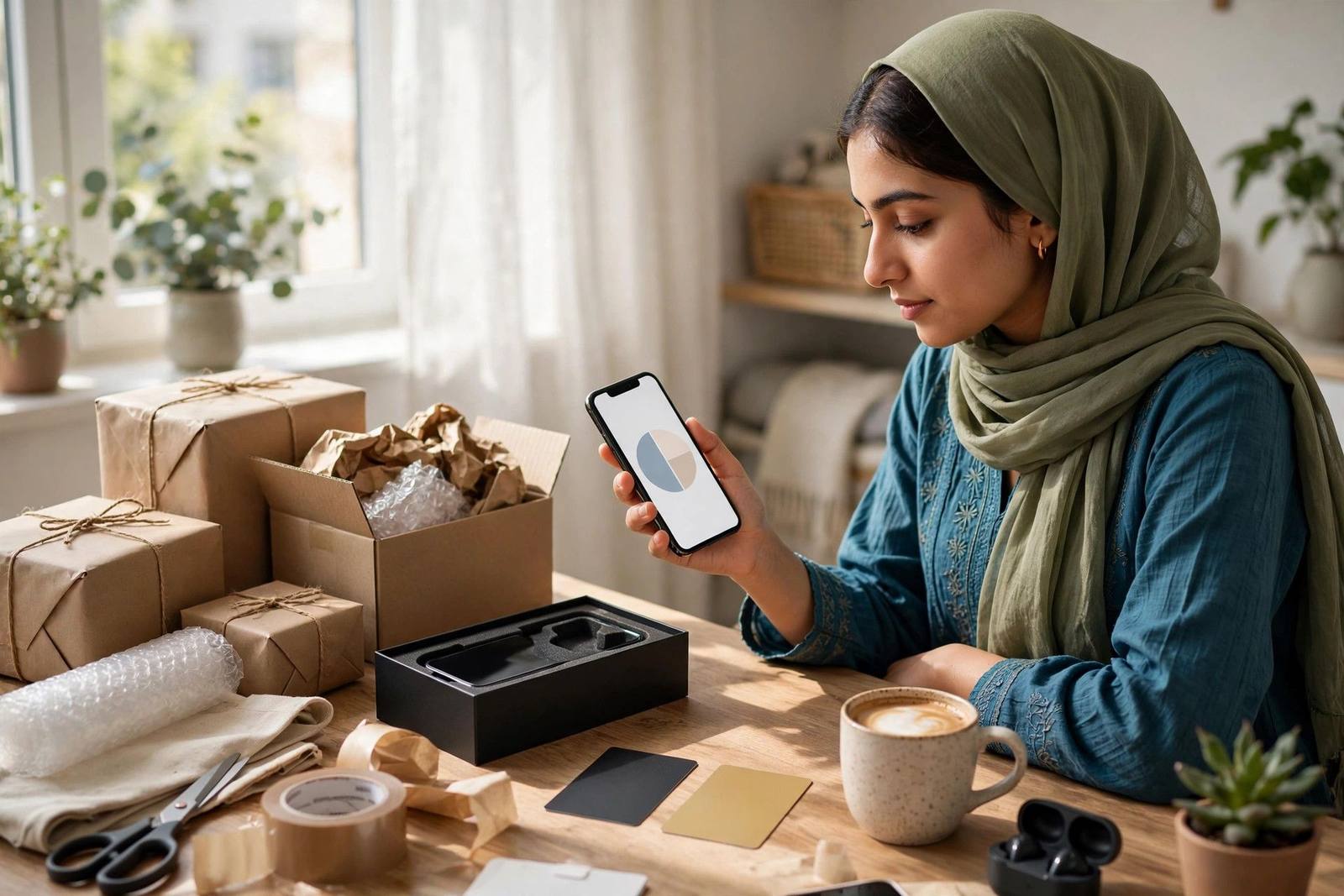
KARACHI: At the checkout of a Pakistani online store, between the cash-on-delivery option and the card fields, a new button has taken up residence: split this purchase into easy monthly payments, approved in minutes, no card required. Buy now, pay later — BNPL — has arrived in Pakistan wearing the clothes of a payments feature rather than a loan, and that costume is its most important characteristic. Economically, BNPL is consumer credit: someone fronts you the money for a phone, a pair of shoes or a laptop, and you repay over weeks or months. Legally and psychologically, it presents as something lighter — a checkout convenience, a budgeting tool, a friendlier instalment. Both descriptions are true, and understanding BNPL means holding them together. This guide explains how the model works, who is actually lending the money, where its cost hides when the headline says zero, and how it fits into Pakistan's older, larger instalment economy.
An old instinct in a new interface
Pakistan did not need Silicon Valley to teach it instalment buying. For decades, electronics shops in Karachi, Lahore and every smaller city have sold televisions, refrigerators and motorcycles on monthly instalments, recorded in a register, underwritten by the shopkeeper's knowledge of the customer's street, employer and family. Banks layered card-based instalment plans on top, letting cardholders convert purchases into monthly payments at the point of sale or afterwards by phone. What BNPL adds is not the instalment but the frictionlessness: digital underwriting at the moment of purchase, approval in minutes for customers with no card and no bank relationship, and integration directly into the checkout of online stores, where the loan offers itself before the customer has consciously decided to borrow.
The providers in Pakistan span several species. Dedicated fintech startups built their brands on the checkout button and the app. Islamic instalment platforms offer the same split-payment experience structured as a sale under Shariah principles. Banks and larger digital platforms have folded pay-later options into their own apps, and conventional retailers run in-house plans under BNPL branding. Names in this market have launched, pivoted and, in some cases, quietly shut down within a few short years — the global BNPL sector went through the same shakeout — which itself teaches something: the model is harder to run profitably than its breezy interface suggests. Behind any particular offer may stand a fintech's own balance sheet, a partner bank or non-bank finance company, or an investor-funded lender; the app is the storefront, not necessarily the creditor, and the documents you accept name the real one.
How the money flows
Strip a BNPL transaction to its plumbing. You choose pay-later at checkout for a purchase of, say, Rs 60,000. The provider approves you — typically using your CNIC, phone data, platform history and whatever credit information it can access — and pays the merchant the purchase price, usually minus a merchant fee the provider charges the seller for the service. You owe the provider, not the store, and repay in the schedule offered: three, four or more monthly instalments are common structures, sometimes with an upfront first payment at purchase. The merchant loves the arrangement because instalments lift conversion and basket size; shoppers buy the phone today that savings would have delivered in eight months. The provider earns from some combination of the merchant fee, late fees, and, on longer tenures, a markup or financing charge built into the instalments.
The underwriting is the genuinely novel piece. Traditional Pakistani consumer lending leant on salary slips, bank statements and the bureau file described in our guide to eCIB credit history. BNPL underwriting leans on small limits and fast learning: start the customer with a modest ceiling, watch the first cycles closely, raise limits for punctual payers, cut off defaulters instantly. It is the shopkeeper's register rebuilt as software — reputation earned in small transactions, credit extended in proportion to observed behaviour. This is why BNPL reaches customers the banks never served: the thin-file young shopper, the informal-sector earner, the woman whose household income is real but undocumented. It is also why the system's risk management is unforgiving in its own way: miss early, and the door closes at exactly the moment other doors were never open.
Where the cost hides when the banner says zero
"Zero interest, zero markup" is BNPL's favourite headline, and it can even be accurate — for the shopper who pays every instalment on time on a short plan, subsidised by the merchant fee the seller pays for the sale. The cost migrates elsewhere, and a careful user checks four hiding places. Price differences: some merchants price BNPL purchases above their cash price or reserve discounts and promotions for cash and card buyers, embedding the financing cost in the sticker. Late fees: missed instalments attract charges that, annualised against a small purchase, are anything but small, and rescheduling a plan is rarely free. Longer tenures: stretching beyond the short promotional windows commonly introduces explicit markup, converting the product into a conventional instalment loan at rates that must be compared, not assumed. Behavioural cost: the least visible and largest — purchases made because the monthly figure felt painless, which would have failed the household's own test at full price. A Rs 60,000 phone split four ways is still a Rs 60,000 phone.
The comparison discipline from the wider consumer-credit world applies unchanged: total of all payments plus all fees, set against the cash price, equals the cost of the credit. On short, genuinely zero-cost plans paid punctually, BNPL can be the cheapest borrowing a Pakistani consumer can access — cheaper than the credit card balance it often replaces. On long plans, late plans and purely impulsive plans, it reverts to what all unsecured consumer credit is: expensive money, efficiently delivered. The product is neither hero nor villain; the plan's length, the payer's punctuality and the purchase's necessity decide which it becomes, transaction by transaction.
Regulation: a checkout button meets the rulebook
Credit is credit, whatever the interface, and Pakistani regulators have been fitting BNPL into frameworks built for lenders. The State Bank regulates banks and payment systems and has moved digital lending — the app-based nano-loans that are BNPL's close cousins — under explicit consumer-protection rules covering disclosure, pricing display and recovery conduct, after early abuses in the app-loan market drew public criticism. The SECP licenses and supervises non-bank finance companies, the species through which many instalment businesses must operate, and its digital lending framework for NBFCs likewise imposes disclosure and conduct standards. Where a BNPL provider is neither a bank nor a licensed NBFC but a technology layer over a licensed partner, the licensed partner carries the regulatory responsibility — a structure consumers cannot easily see from the app, which is why reading the agreement's naming of the creditor matters more here than in a bank branch.
Two regulatory gaps deserve a consumer's awareness rather than a lawyer's. The first is credit reporting: as BNPL and app lending expand beyond the traditional bureau net, punctual payers may build no bureau reputation from their good behaviour while defaulters' treatment varies by provider and partner — ask, before your first plan, whether the facility is reported and to whom. The second is collections conduct: the digital lending scandals that prompted tighter rules involved harassment of borrowers and their contacts by rogue apps, often operating from outside the licensed perimeter entirely. A legitimate provider licensed in Pakistan, with a published address, a real agreement and in-app dispute channels, is a different animal from an unknown app demanding contact-list access — and the difference is worth checking before the first purchase, not during the first collection call. The same caution extends to data: the permissions a shopping app genuinely needs are few, and one requesting sweeping access to contacts, messages and files in exchange for a small instalment limit is telling you, in its own language, how it intends to collect if you ever miss a payment. The State Bank and SECP both publish licensee lists; two minutes there is the cheapest due diligence in consumer finance.
BNPL beside its rivals: committees, cards and shop credit
Pakistani households now choose among an unusual menu of instalment technologies, and each prices trust differently. The committee, examined in our guide to rotating savings circles, funds lumpy purchases from the household's own future income, charges nothing, and enforces discipline socially — but delivers money on the circle's timetable, not at a checkout. The credit card instalment plan offers structured monthly payments with bank-grade documentation and bureau reporting, at a markup the shopper must compute. The shopkeeper's register survives wherever relationships do, flexible and undocumented. BNPL's proposition against all three is immediacy plus reach: money at the digital moment of desire, for customers the other systems screen out. Its corresponding weakness is the mirror image — it makes borrowing easiest exactly where reflection is shortest, inside a checkout designed by people paid when you buy.
The sensible household synthesis treats BNPL as a scheduling tool, not an income source. It can legitimately move a necessary purchase — the laptop a freelancer earns from, the phone a delivery rider works with, the appliance whose absence costs money monthly — forward from a savings date to today, on a short zero-cost plan the budget can prove it can carry. It cannot legitimately enlarge the household's standard of living beyond its income, because no financing product can; it can only re-date the reckoning and charge for the service. Before confirming any plan, three questions do the work: what is the cash price and the all-in instalment total; which payment dates does this create against my salary dates; and what happens, in rupees, if I am ten days late in month three? A provider whose app answers all three plainly has earned the transaction. One that cannot, has answered a different question.
The young borrower's first file
For Pakistan's youngest consumers, BNPL is often the first formal borrowing of their lives — arriving years before a bank would offer them anything — and it sets habits with long shadows. Splitting purchases teaches either that instalments are a budgeting instrument to be planned, or that income is whatever the apps will advance, two lessons with very different decades ahead of them. Parents and older siblings watching a first pay-later plan can do worse than insist on the household rules that govern every credit in this series: one active plan at a time, instalments that fit inside the wants band of the budget, never for food or ordinary consumption that ends before the payments do, and an absolute bar on borrowing from one app to service another. The last of these is where digital instalment debt turns dangerous fastest, because multiple small plans across multiple apps recreate, in a phone, the over-commitment spiral that bank debt-burden rules exist to prevent — invisible to each provider, obvious only to the borrower.
None of this argues the technology away. A payments-native generation will borrow in apps as surely as its parents borrowed in branches, and a regulated, disclosed, small-limit instalment is a better first credit than a loan shark, an informal register or a maxed card. The instalment economy is permanent; literacy within it is the variable. One further discipline belongs to the app era specifically: keep a single list of every active plan — provider, item, instalment, due date, instalments remaining — reviewed on salary day alongside the household budget, with one ceiling on combined monthly instalments that no checkout button is allowed to breach. Providers each see only their own slice of your commitments; you are the only risk manager who sees the whole, in a system designed so that nobody else has to. This article is educational content, not financial advice; provider terms, plan structures and regulatory requirements change quickly in this market, so verify the creditor's licence and the full payment schedule on the actual offer before accepting any plan.
Key takeaway: BNPL is consumer credit in a checkout costume — often genuinely cheap on short plans paid on time and subsidised by merchants, expensive when late, long or impulsive — so judge it by total cost, plan length and what happens when you miss.