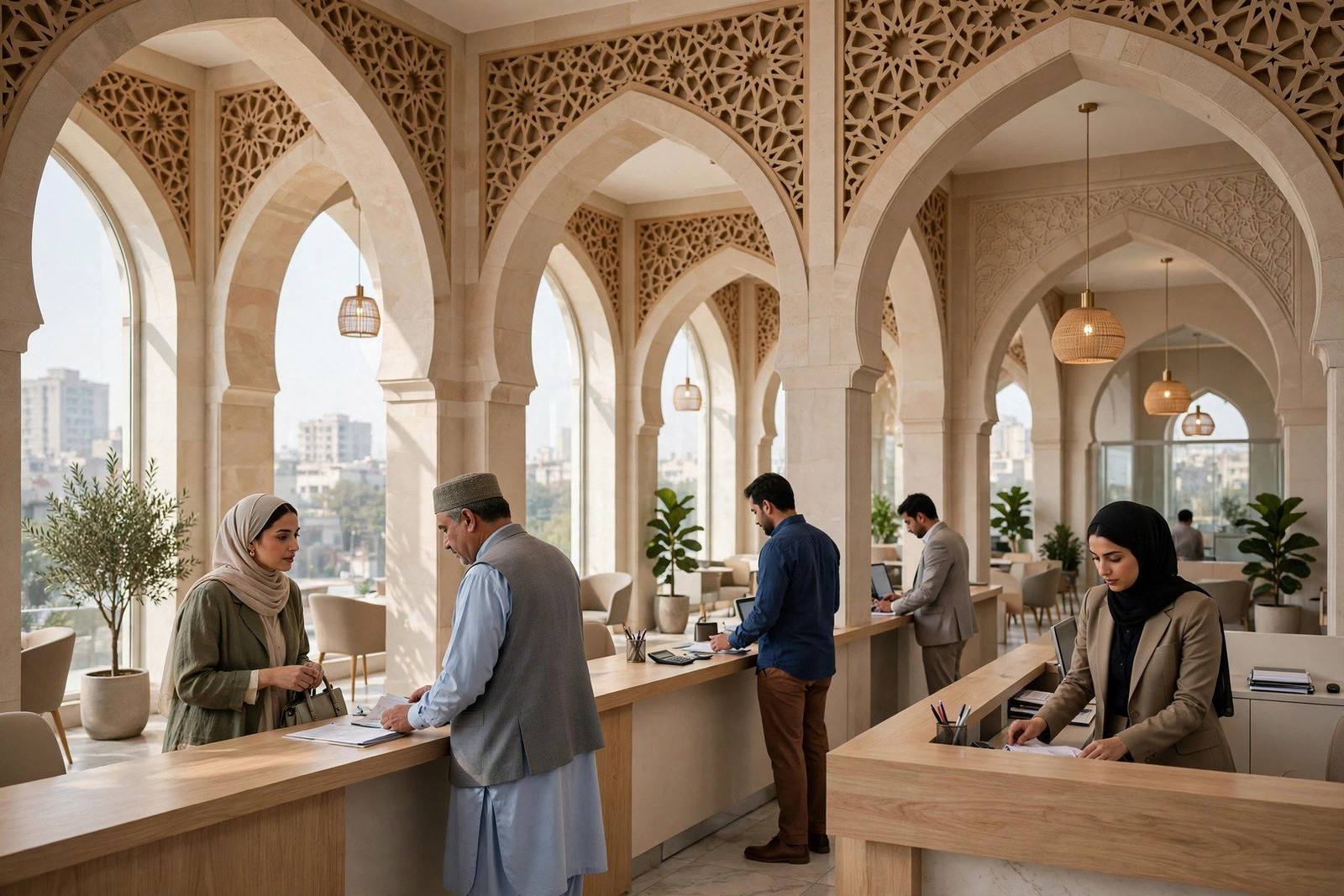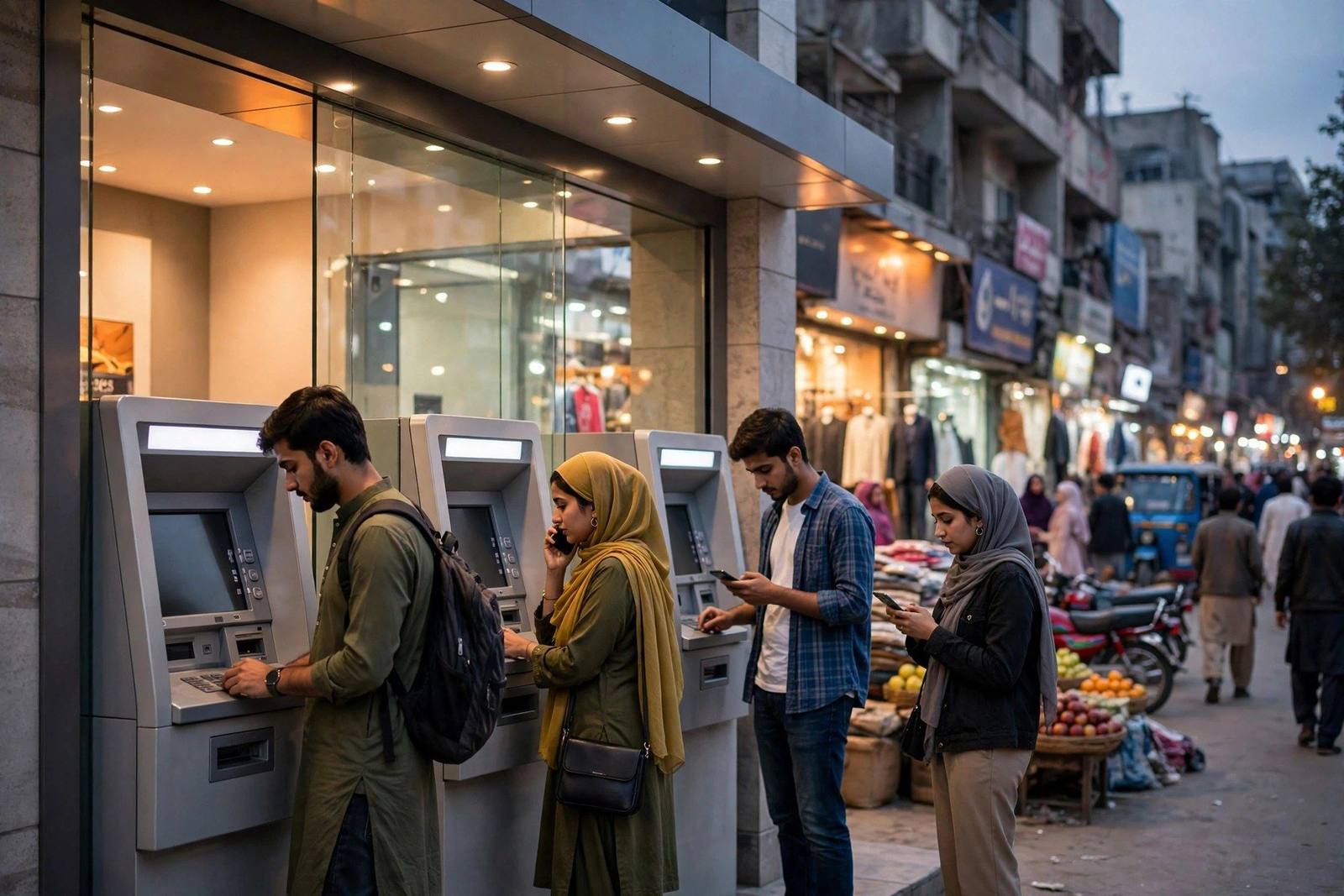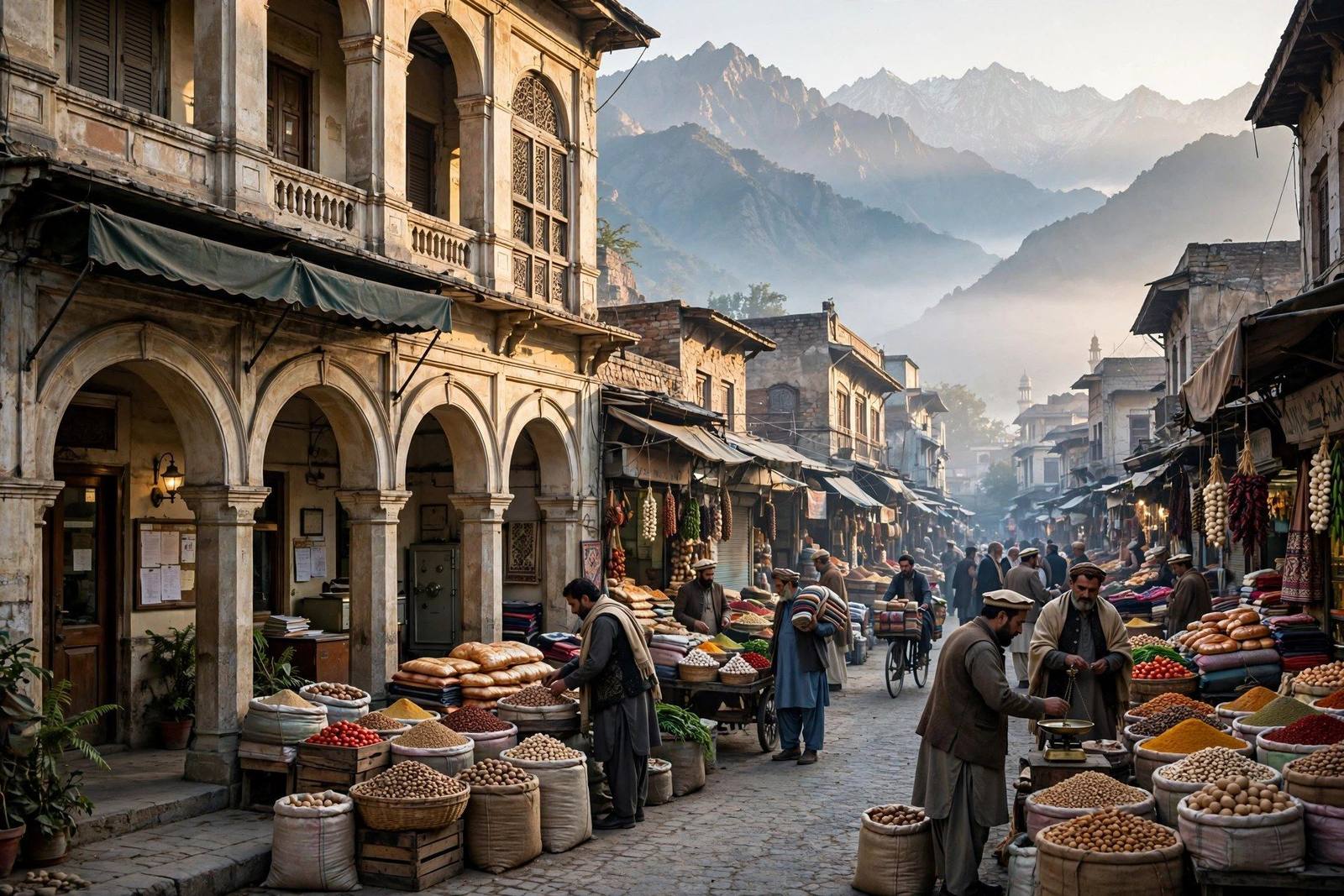
KARACHI: Most Pakistani banks were founded by merchants, industrial families or the federal state. The Bank of Khyber was founded by a province. Created by an act of the provincial assembly in 1991, headquartered in Peshawar and majority-owned by the Government of Khyber Pakhtunkhwa, it is at once a commercial bank competing for deposits and loans, a development institution with roots in microfinance and small-business lending, and the provincial government's most visible financial asset. Its shares trade on the Pakistan Stock Exchange as BOK. For a beginner working through Pakistan's listed banks, it is the clearest example of a regional public bank: shaped by the economy of Pakistan's north-west, increasingly national in reach, and always carrying a public mandate alongside a commercial one.
Created by law in 1991
The Bank of Khyber was established in 1991 under the Bank of Khyber Act, passed by the provincial legislature of what was then called the North-West Frontier Province. It belonged to a small family of provincial institutions created around the same era — the Bank of Punjab is its closest sibling — reflecting a policy moment when provinces were encouraged to build their own financial institutions to promote savings, investment and development within their borders, rather than relying entirely on federal banks whose head offices sat in Karachi.
The bank's early capital told the same story: the provincial government provided the overwhelming share, with a contribution from DEG, the German development finance institution, among its early backers — a detail that underlines the development purpose written into the project from the start. In September 1994 the bank was granted scheduled-bank status by the State Bank of Pakistan, a decisive step: scheduling allowed it to expand beyond its home province, join the clearing system and engage fully in trade finance.
Its registered home has remained Peshawar — The Mall, in the cantonment — and that address is part of the identity. Where Karachi's banks grew out of trade and Lahore's out of industry, the Bank of Khyber grew out of a government deciding that a frontier province, long served thinly by the national banking system, needed a bank of its own.
Microfinance roots and a development streak
What distinguished the young Bank of Khyber from a simple provincial treasury bank was an early and deliberate push into small-scale lending. Microfinance operations began in the mid-1990s, aimed at micro-enterprises and small borrowers; operations extended into rural areas in cooperation with non-governmental organisations and rural support programmes, and by the end of the decade the bank had organised microfinance as a distinct unit and profit centre. Contemporary accounts describe it as an early structured attempt by a Pakistani commercial bank to reach the micro-enterprise market — years before microfinance became a separate, fashionable sector with its own specialised banks.
That development streak never entirely left the institution. The bank has continued to present SME and small-borrower financing as a core competence, to run dedicated departments for long-term project finance alongside its microfinance work, and to draw on credit lines and partnerships aimed at provincial development. For investors, this history matters because it explains the shape of the loan book: a greater weight of small and medium borrowers, agricultural and trading clients, and public-sector-linked business than a purely metropolitan bank would carry.
It also explains the bank's social footprint in its home province. In districts where a national bank's presence might be a single branch, the Bank of Khyber has historically been a fuller presence — paying salaries and pensions, handling government receipts and payments, and financing the traders and small manufacturers of the bazaar economy.
Listing, Islamic banking and national expansion
The bank's modern era began with its public listing. In January 2006 it made an initial public offering on the Karachi Stock Exchange — the predecessor market of today's PSX — opening its register beyond the provincial government while leaving the government firmly in control. Since listing, the bank has paid a series of cash dividends and issued bonus shares in various years, building the pattern of a listed public-sector company that must balance its owner's fiscal expectations with minority shareholders' returns.
Islamic banking arrived early and grew large. The bank began Islamic operations in 2003, and dedicated Islamic branches came to account for roughly half its network at points in its recent history — a far higher share than at most conventional banks. That emphasis fits its home market, where demand for Shariah-compliant banking is strong, and it positioned the bank well as national policy turned increasingly towards Islamic finance. The bank operates conventional and Islamic branches side by side under one licence, with a dedicated Islamic banking group overseeing the Shariah-compliant side.
Geographically, the network spread from its Khyber Pakhtunkhwa heartland into Punjab — its second market — with a thinner presence across Sindh, Balochistan, Gilgit-Baltistan, Azad Jammu and Kashmir and the merged districts. Branch numbers climbed through the 2010s from well under two hundred to around 260 or more in the early 2020s. The direction of travel is clear: still a frontier bank by identity, but no longer only a frontier bank by footprint.
Ownership: a province as sponsor
The Government of Khyber Pakhtunkhwa holds roughly two-thirds of the bank — a majority that makes the province, in effect, its sponsor. A significant minority stake is held by Ismail Industries, the Karachi-based consumer-goods group, giving the register an unusual blend of public control and private industrial shareholding. The remaining shares form the public float held through the PSX.
Provincial ownership shapes the bank in ways a reader of its accounts should understand. Appointments at the top are influenced by the owner; strategy must answer to a development mandate as well as to return on equity; and the bank naturally does a large volume of business with its own government — deposits of public funds, payment services and financing connected to provincial priorities. The offsetting strengths are equally real: a committed local sponsor, an anchor deposit relationship, and a public purpose that supports the franchise in its home market. The same public-versus-commercial tension runs through other state-linked listings discussed in state-owned enterprises on the PSX explained, while Pakistan's conglomerates explained sets out the sponsor question in its private-sector form.
What the bank does, day to day
Commercially, the Bank of Khyber offers the standard suite: current and savings accounts, term deposits, trade finance, working capital, term loans, consumer products, cards, ATMs and digital banking, alongside its Islamic equivalents — Shariah-compliant accounts, car and home financing structures, and trade and business finance built on murabaha, ijara and similar contracts. Its microfinance and SME windows sit within that suite rather than outside it.
Its customer base reflects its geography: provincial government departments and their employees, pensioners, traders, transporters, small manufacturers, agricultural borrowers and the salaried middle class of Peshawar, Mardan, Swat, Abbottabad and the province's other towns, plus a growing book in Lahore, Karachi and Islamabad. Remittances from the large Khyber Pakhtunkhwa diaspora in the Gulf are a natural deposit and payments flow for the bank, as they are for the province's economy generally — money sent home to families in the province's towns and villages, arriving through exactly the branch network the bank was created to build.
How it makes money
The earnings engine is the familiar banking one described in the policy rate explained: deposits gathered at the lowest sustainable cost, deployed into advances and government securities, with the spread — after staff, branch costs and provisions — forming the profit. Three features give BOK its particular flavour. First, government and public-sector deposits can be large and comparatively stable, but they can also move with provincial finances. Second, the Islamic book earns through Shariah-compliant financing and sukuk holdings rather than conventional interest, blending two income logics in one set of accounts. Third, the SME and micro heritage means credit costs behave differently from a blue-chip corporate book: more granular, more labour-intensive, and sensitive to local conditions in the north-west.
Fee income from trade, remittances, cards and government payment services supplements the spread, while treasury income rises and falls with the rate cycle that lifts or squeezes every Pakistani bank. As with its peers, a high policy-rate era tends to flatter earnings through securities income, and the honest test of the franchise is deposit growth and credit quality across the whole cycle — the years when rates fall and small borrowers struggle are the years that reveal what the loan book really contains.
Strengths, risks and controversies
The bank's strengths begin with identity and place. It is the default bank of a province, with brand recognition in its home market that national rivals cannot buy, a large Islamic network built early, and a sponsor whose interest in the bank's survival is not in doubt. Its development mandate, properly executed, also gives it access to programmes, credit lines and customer segments that purely commercial rivals reach less easily.
The risks begin with the same address. Concentration in one province exposes the bank to that province's economy and security history; the north-west has endured long periods of militancy and displacement that directly affected borrowers and branches. Public ownership brings governance questions familiar from Pakistan's state-linked companies — board politicisation, leadership turnover with changes of government, and the temptation to direct lending for non-commercial reasons. Credit quality in SME and micro segments requires constant discipline, and the bank must invest in technology at a pace set by far larger competitors.
None of these caveats is abstract; they are the standard questions analysts put to management at the bank's corporate briefings, and the annual report's risk disclosures, the credit-rating reports by PACRA and VIS, and the provisioning record across cycles are where a careful reader tests the answers.
The name on the PSX
BOK listed in 2006 and has traded ever since as the market's principal listed play on a provincial government bank. Its register — a dominant government holder, a strategic private minority and a modest public float — means liquidity is thinner than in the big five banks, and the share can move sharply when results or provincial developments surprise the market. Its dividend history since listing, a mix of cash payouts and bonus issues in different years, reflects the balancing act of a listed company with a fiscal-minded majority owner; the mechanics are covered in the PSX dividend calendar guide.
The investors who study BOK are typically those interested in Pakistan's regional economies, in Islamic banking growth, or in public-sector franchises trading on local knowledge. This article is educational content, not financial advice, and BOK's story — part commercial bank, part provincial institution — rewards reading its own filings before any conclusion is drawn.
Key takeaway: The Bank of Khyber (BOK), created by provincial law in 1991, majority-owned by the Government of Khyber Pakhtunkhwa and listed in 2006, pairs a frontier footprint and microfinance roots with a large Islamic network — a commercial bank with a public mandate.