KARACHI: A tonne of carbon dioxide is invisible, weightless for practical purposes and identical everywhere on earth — which makes it a strange thing to build a market on, and a fascinating one. Yet carbon markets now move serious money around the world, and Pakistan, a country that contributes a small share of global emissions while suffering an outsized share of climate damage, is trying to claim its place on the selling side of that market. The raw material is here: the great mangrove forests of the Indus delta, millions of hectares of farmland and rangeland, new plantations, cleaner cookstoves, biogas plants and industrial gases to be destroyed before they escape. What Pakistan mostly lacks so far is the machinery that turns a growing mangrove into a tradeable, trusted credit that a foreign airline or technology company will pay for — registries, measurement systems, legal clarity about who owns the credit, and rules that stop the same tonne being sold twice. This guide explains how carbon credits actually work, the difference between the compliance and voluntary markets, what Pakistan has already sold, what its new policy framework attempts, and where the honest risks of hype and greenwashing lie.
One credit, one tonne: the basic machine
A carbon credit is a certificate representing one tonne of carbon dioxide equivalent either removed from the atmosphere or prevented from entering it. A project — planting mangroves, capturing methane from a landfill, distributing cookstoves that burn less wood — measures its effect against a counterfactual baseline: what would have happened without the project. Independent auditors verify the claim under a standard, the standard's registry issues credits with serial numbers, and buyers retire those credits to claim they have compensated for a tonne of their own emissions. Every serious part of that chain exists to defend one word: integrity. Credits collapse in value when buyers suspect the forest would have grown anyway (the additionality problem), when the trees burn or are cut a decade later (permanence), when saving one forest simply moves logging to the next valley (leakage), or when the same tonne is counted by both the project country and the buyer's country (double counting).
Two families of market buy these credits. Compliance markets are created by law: the European Union's emissions trading system caps industrial emissions and forces companies to surrender allowances, and some national systems allow a limited share of offsets. Voluntary markets are created by corporate promises: companies buy credits to support net-zero claims, with quality screened by private standards — Verra's Verified Carbon Standard and the Gold Standard are the best-known registries — and, increasingly, by integrity initiatives rating which credit types deserve trust. Pakistan today sells almost entirely into the voluntary and results-based side, because it has no domestic cap-and-trade system of its own; its policy debate is about hosting projects well and capturing a fair share of the price, an agenda our companion guide to climate risk and Pakistan's economy approaches from the damage side.
The mangrove that made Pakistan famous in this market
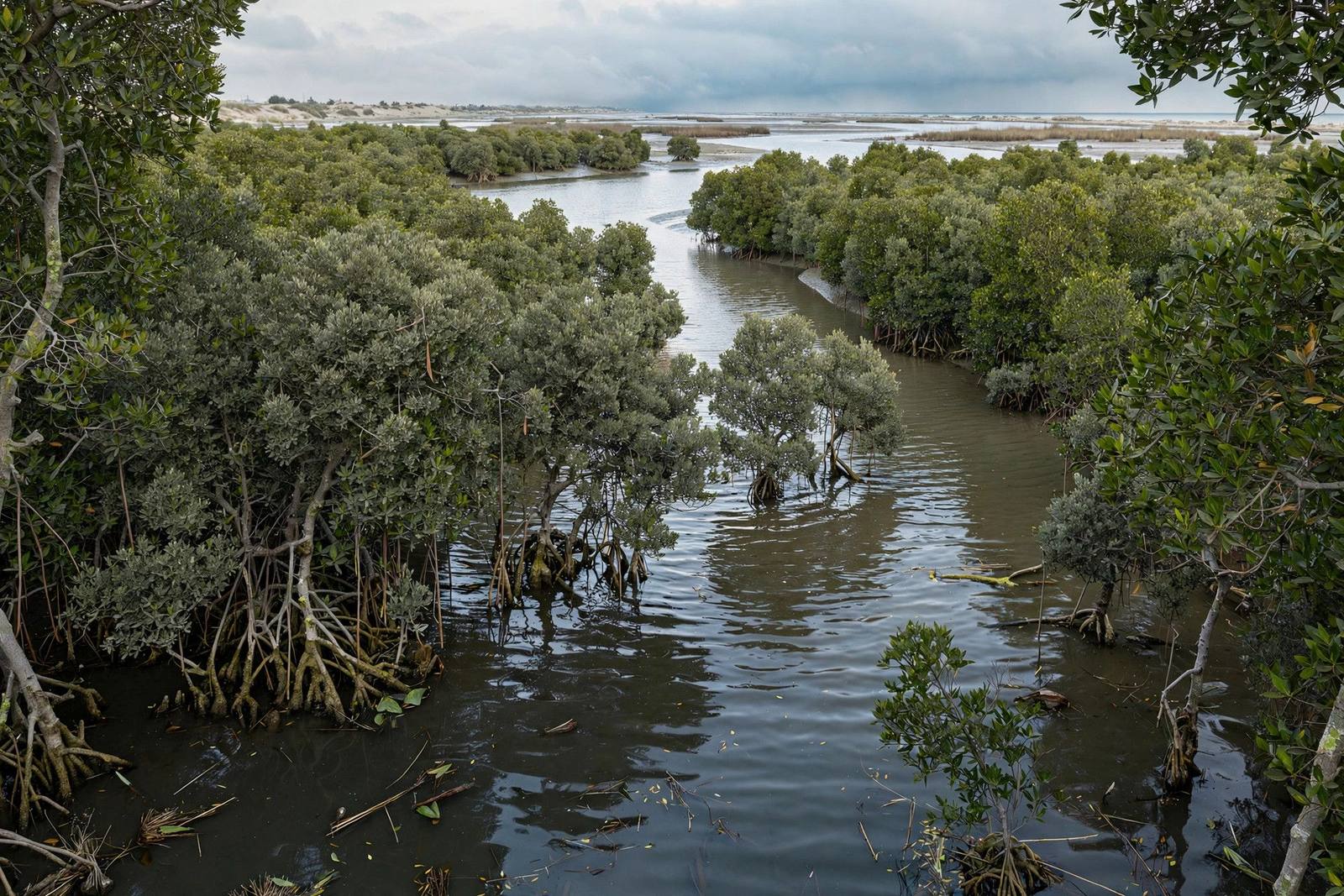
Pakistan's calling card is Delta Blue Carbon, the project restoring and protecting mangroves across a vast area of the Indus delta in Sindh, developed with the provincial government and private partners. Mangroves are carbon champions: they bury carbon in waterlogged soils for centuries, shelter fish nurseries and blunt storm surges against a coastline that badly needs the protection. The project's credits, verified under an international standard, have been sold in auctions that drew international attention and reported prices well above the average for nature-based credits at the time — evidence, supporters say, that verified quality with strong community benefit-sharing commands a premium. The Sindh government has explored expanding the model along more of the coast, and a sister landscape project in Balochistan's coastal belt has been discussed in the same terms.
The mangrove story also teaches the market's timescales. A mangrove credit rests on decades of protection: guards, community agreements, alternative livelihoods so that cutting mangroves for fuel and fodder stops paying. Revenue-sharing with local communities is not decoration — it is the permanence mechanism, the reason the trees are still standing when the auditor returns. Pakistan's other famous greening effort, the Billion Tree Tsunami plantation drive in Khyber Pakhtunkhwa, was assessed by international conservation bodies for its restoration work; turning scattered plantations and farmland trees into registered credits is harder than a single delta concession, because ownership, measurement and protection fragment across thousands of smallholders. Aggregation — bundling many small plots under one verified project — is the industry's standard answer, and one of its standard costs.
Article 6: when governments trade the tonnes themselves
Above the voluntary market sits the Paris Agreement's Article 6, the rulebook for countries trading climate outcomes with each other. Under Article 6.2, one country can finance reductions in another and count the transferred units — called ITMOs — toward its own national target, provided the host country applies a corresponding adjustment, adding the tonnes back to its own ledger so they are not counted twice. Under Article 6.4, a United Nations-supervised mechanism issues credits meant to succeed the old Clean Development Mechanism of the Kyoto era, in which Pakistan hosted a modest portfolio of projects — industrial gas destruction, bagasse cogeneration, wind and hydro among them. Article 6 matters to Pakistan's finance ministry because government-to-government deals can be larger and more durable than voluntary purchases — and dangerous for the same reason: every tonne sold with a corresponding adjustment is a tonne Pakistan cannot count toward its own climate pledge, so selling the cheapest reductions today can make tomorrow's national target dearer. Pricing that trade-off is the quiet heart of the country's carbon policy.
Domestically, the framework is young. The Pakistan Climate Change Act of 2017 created the council and authority structures for climate governance, and the climate ministry has since issued carbon-market policy guidelines intended to tell project developers who approves a project, how benefits are shared, how the national registry will track credits and what share of value the state expects to retain. Readers should treat the operational detail as a moving target — guidelines are revised, and the registry and authorisation practice will be defined as much by the first deals as by the documents. The Securities and Exchange Commission and the exchanges enter the story at the financial edge: carbon credits are not listed securities on the PSX today, but green bonds and green sukuk — covered in our batch guide — are the neighbouring instruments through which climate finance already reaches Pakistani investors.
Who guards the guards: standards, registries and ratings
A beginner meeting this market should learn its referee system, because the referees are where trust is manufactured. The standards — Verra and Gold Standard chief among them — write the methodologies for each project type: how a mangrove baseline is drawn, how cookstove usage is sampled, how leakage is deducted. Validation and verification bodies, accredited auditors working project by project, check that the methodology was actually followed on the ground. The registries then issue, transfer and retire credits, and their public ledgers are what stop a credit being sold twice. Around this core has grown a second layer of private ratings agencies that grade credits the way PACRA and VIS grade bonds, plus integrity councils publishing principles for what counts as a high-quality credit and for the claims a buyer may honestly make with it.
Pakistan's homework is to connect its national systems to that machinery without friction or favour. Project approval needs a published door: which ministry or authority authorises a project, on what timeline, with what letter issued for Article 6 transfers. The national registry — whether built at home or mirrored from international registries — must reconcile every credit issued on Pakistani soil against the country's climate accounts. And the data underneath, from forest inventories to satellite monitoring of the delta, has to be good enough that a foreign auditor signs without embarrassment. These sound like bureaucratic details because they are, and in carbon markets the bureaucracy is the business: a credit is a claim that paperwork somewhere tells the truth about trees somewhere else.
For the ordinary reader, the practical entry point is humble: before believing any carbon headline, ask four questions of the project behind it — who verified it, under which standard, with what baseline, and who exactly receives the money. A project that answers all four in public documents is a business; one that answers none is a brochure. Pakistan's climate negotiators make the same demand of the world in reverse, arguing that a country flooded for its negligible emissions deserves grant-like climate finance rather than loans — the loss-and-damage debate — and the credibility of that argument rises with every credit Pakistan sells that survives international scrutiny.
What else could Pakistan sell?
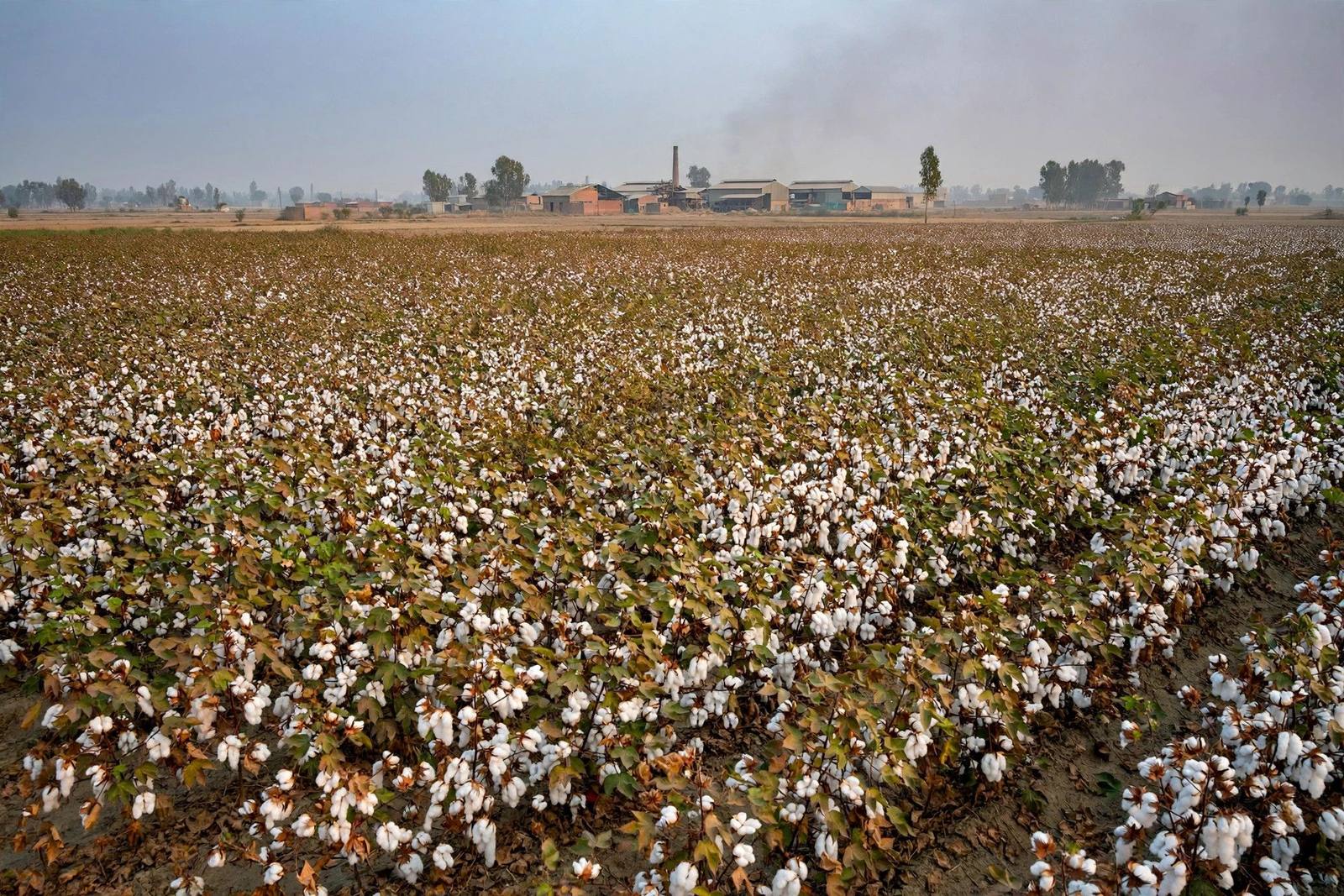
Beyond mangroves, the project pipeline discussed by developers and officials spans several families. Clean cooking — efficient stoves and biogas digesters for rural households — generates credits from reduced wood and dung burning, with the caveat that stove credits globally have faced hard questions about overstated usage, and methodologies have tightened in response. Landfill and wastewater methane capture attacks a gas far more potent than carbon dioxide in the short term. Industrial efficiency and fuel switching in cement, fertiliser and textiles can qualify where the baseline is honest. Regenerative agriculture — soil carbon on farmland — is the largest theoretical prize and the hardest to verify, because soil carbon is slow, variable and reversible with a single change of practice. Each family has its own standard, auditors and sceptics; the pattern to remember is that credit prices differ enormously by type, and the differences are the market's running argument about integrity made visible.
There is a final, under-discussed question of price formation and bargaining power. Carbon revenue is negotiated, not discovered on a deep exchange: a handful of large buyers face a handful of credible project developers, and the host government's share, the developer's margin and the community's portion are all settled inside contracts the public rarely sees in full. Pakistan's interest as a seller is to be a price-maker where its assets are genuinely scarce — large, verified, community-backed mangrove credits are not a commodity grown everywhere — and a price-taker only where the market truly is global and fungible. Publishing the terms of early deals, even in summary, is how a country learns what its climate assets are worth; secrecy protects negotiators in the short run and impoverishes every seller who follows them.
The honest risks: greenwash, price swings and land
Carbon markets have real enemies, and some of their criticisms are correct. Voluntary credit prices have swung violently as investigations questioned the baselines of big forestry projects abroad, and buyers have retreated from nature-based credits before — a developer in Sindh or Punjab is exposed to a reputation cycle made on other continents. Credits can also become an excuse: a foreign emitter polishing its image with cheap tonnes while its own emissions continue is the greenwashing scenario that integrity councils now police through claims codes. On the ground, the risks are about land and people. A carbon contract can run for decades over land that communities graze, farm or gather from; badly designed projects anywhere in the world have restricted access and shared little revenue, which is why Pakistan's guidelines stress benefit-sharing and why the delta project's community arrangements draw as much scrutiny as its carbon maths.
For investors, the exposure today is mostly indirect: plantation and forestry ventures, the cement and fertiliser companies whose efficiency projects could earn credits, the banks arranging climate finance, and the green instruments the government has begun to issue. The investable lesson is the same one our guide to Pakistan's exports teaches in another context — a new export is only real when the paperwork, standards and logistics behind it work at scale. Carbon is an export of a peculiar kind: the product is a verified absence, shipped as a registry entry, and paid for on trust. Pakistan has the coastline, the sunlight and the need. Building the trust machinery is the actual project. This article is educational content, not financial advice.
Key takeaway: Carbon credits pay Pakistan for verified climate benefits — mangroves above all — but the money follows integrity: honest baselines, permanent protection, community sharing and no double counting are the product being sold.