KARACHI: Pakistan's largest industry begins in a field. Cotton — the silver fibre of the old textbooks — feeds the ginning factories that clean it, the spinning mills that twist it into yarn, the looms that weave it, the dye houses that finish it and the garment factories whose shirts and towels earn the country's biggest share of export dollars. Textiles are routinely described in official and industry reporting as Pakistan's largest manufacturing sector and largest export earner, and cotton is the raw material the whole chain was built around. Which is why the troubles of the cotton crop are never just farm news. When the harvest fails — to flood, heat, whitefly or bad seed — mills import cotton with scarce dollars, yarn prices convulse, export orders drift to competitors and the trade deficit feels it within a season. Pakistan has historically stood among the world's largest cotton producers, yet in poor recent years it has also stood among the large importers — a paradox that sums up the sector's crisis. This guide walks the chain from phutti to fabric, explains how cotton is priced and traded, why yields lag the world's, and what the crop's recovery would mean for the listed textile economy.
From phutti to bale: the first mile
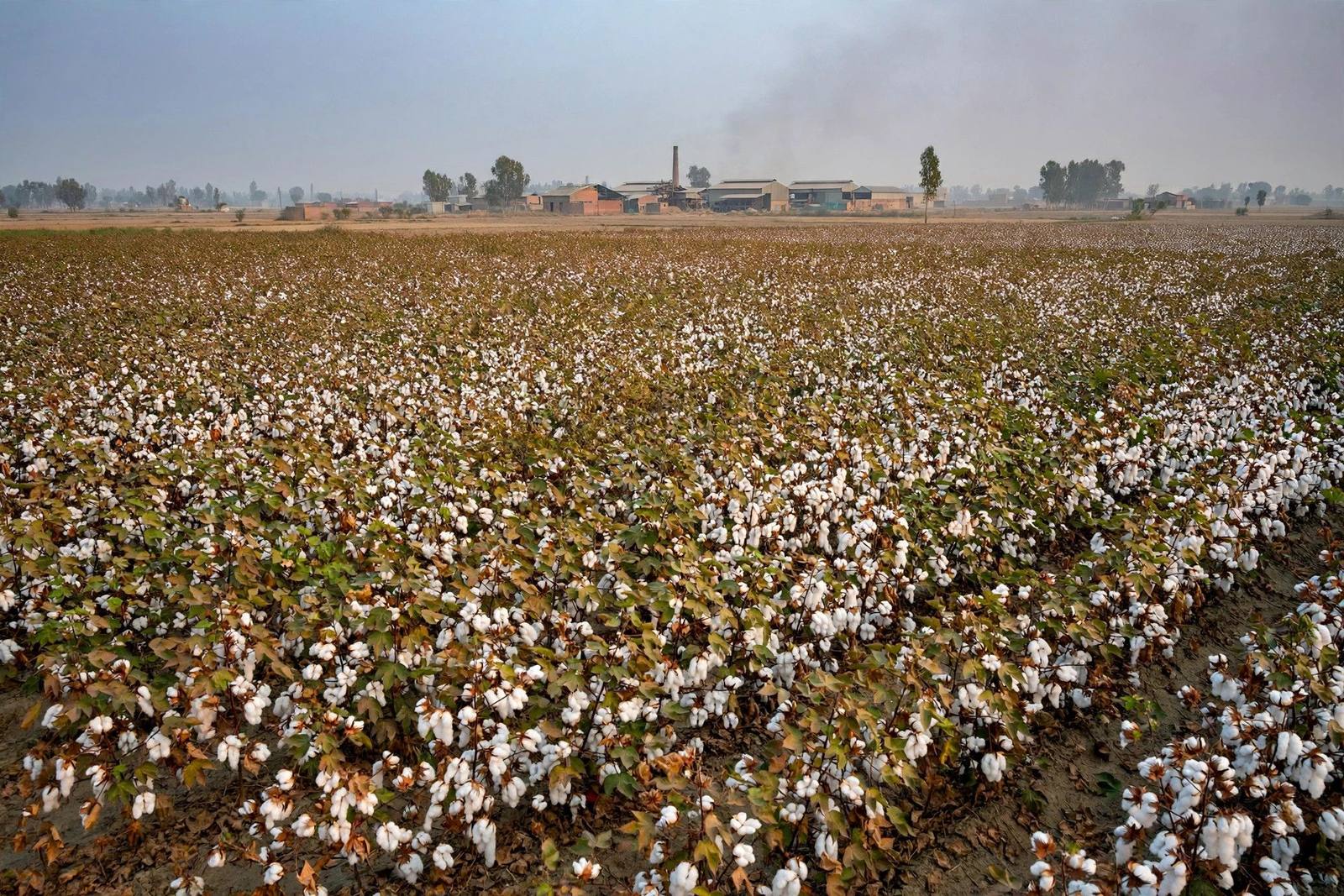
The farmer grows seed cotton, called phutti — fluffy bolls carrying the seed inside. Picking in Pakistan is done overwhelmingly by hand, much of it by women, over repeated passes as bolls open; hand-picking can produce cleaner cotton than machine harvesting when done carefully, and contaminated, trash-filled cotton when rushed or when plastic and hair enter the picking bags — a quality complaint buyers have raised about Pakistani cotton for years. The phutti travels to a ginning factory, one of the hundreds of gins concentrated in cotton districts of southern Punjab and Sindh, where saws and rollers separate the lint from the seed. The lint is pressed into standard bales for the spinning mills; the seed goes to oil expellers, its oil into cooking oil and vanaspati and its cake into animal feed — a by-product economy that supports the ginning margin in years when lint prices alone would not.
The ginning outturn — how much lint a given weight of phutti yields — is the quiet number the whole first mile negotiates around, since it varies with variety, weather and trash content. Farmers sell by weight of phutti, ginners sell by weight of lint, and the commission agents and middlemen — the arhti system of the agricultural markets — finance, aggregate and move the crop between them, taking their margin and, critics say, much of the farmer's information advantage with it. The Pakistan Cotton Ginners' Association publishes fortnightly arrival figures through the season that traders treat as the crop's pulse; the Pakistan Central Cotton Committee, funded by a cess on the industry, carries the research mandate; and the Cotton Crop Assessment Committee's estimates frame the official argument about how big the crop actually was — an argument that matters because import plans, mill buying and prices all hang on it.
The chain it feeds: spinning, weaving, garments
Above the gin stands the textile chain whose listed companies fill a large block of the PSX — the world our sector guide to PSX textile stocks maps company by company. Spinning mills turn lint into yarn, the most cotton-sensitive link: yarn is close to a commodity, margins are thin, and the spinner's skill is buying the crop well across the season. Weaving and composite mills take yarn into greige fabric; processing houses bleach, dye and print it; garment and home-textile exporters cut and sew the shirts, denim, towels and bed linen that carry Pakistan's name into European and American wardrobes. The industry's peak body, the All Pakistan Textile Mills Association, lobbies on the chain's shared obsessions — energy prices, gas supply for captive power, tax refunds and the exchange rate — because every link sells in dollars and pays much of its cost in rupees.
The chain's dependence on one crop is also its design flaw. When domestic cotton was abundant and cheap, Pakistan specialised in the coarse and medium yarns and fabrics that cotton does best, and underinvested in the man-made fibres — polyester and its blends — that dominate global apparel trade. Imported cotton has different characteristics from the local crop, and blending imported lint with synthetic fibres is now routine mill practice, but a chain built for a domestic harvest suffers when the harvest does not come. Our guide to family businesses on the PSX explains who owns much of this chain, because the great mill groups are family houses almost without exception.
How cotton is priced
Pakistani cotton prices live in two worlds at once. Locally, the season's rhythm sets a spot rate quoted in the trade — traditionally per maund of lint — which bodies such as the Karachi Cotton Association have long published as a reference, while actual deals move at premiums and discounts for staple length, strength, micronaire and trash. Globally, the anchor is the international cotton price, tracked through the Cotlook indices and the futures traded in New York, because a mill can always choose the imported bale instead: the local price therefore gravitates toward import parity — the landed cost of foreign cotton, plus quality differences — in deficit years, and toward export parity when Pakistan has a surplus to sell. Government intervention prices for phutti have been announced in some seasons to support growers, with procurement historically limited in scale; the announcement moves expectations even where actual state buying is small.
For the farmer, the relevant comparison is rarely cotton alone. Cotton competes for land and water with sugarcane, maize and rice, and its relative price at sowing time — against the cost of seed, fertiliser, pesticides and the diesel in the tube well — decides the acreage before a single boll opens. That acreage decision, aggregated over millions of small farms across the cotton belt, is the first cause of the crop's swings; the weather and the pests merely edit the result. Our farm-economy guide, Pakistan's farm economy explained, sets cotton inside that wider competition for land, canal water and credit.
Why the crop keeps disappointing
The charge sheet is long and mostly agronomic. Seed sits at the top: Pakistan's cotton seed system supplies large volumes of uncertified, low-germination seed, and the legal and breeding framework for modern Bt cotton varieties — the insect-resistant genetics the world's big producers adopted — has tangled for years in approvals, royalty disputes and poor seed multiplication, leaving farmers with ageing varieties losing their resistance. Pests exploit the gap: whitefly, which also carries the devastating cotton leaf curl virus, pink bollworm and thrips can strip a promising crop in weeks, while pesticide quality in local markets is notoriously uneven. Climate has turned harsher — heat waves at flowering, untimely rain at picking, and catastrophically, the 2022 floods, which drowned standing cotton across Sindh and southern Punjab and demonstrated that the crop's geography is a flood geography. Add squeezed water, expensive fertiliser and an extension service that reaches few farmers with timely advice, and stagnant yields against the world's rising line stop being a mystery.
The consequences ripple in a fixed sequence the market has memorised. A short crop shows up first in the ginners' arrival figures, then in spinners' import bookings — the United States, Brazil and Central Asian growths are the usual origins — then in the monthly trade data as a cotton import bill the central bank must finance, and finally in yarn and fabric competitiveness, since imported lint at a weak rupee costs more than the home crop it replaced. Mills respond by shifting blends toward synthetics and by pressing the government on energy and taxes; farmers respond next season by planting something else, which is how a cotton crisis echoes for years after the weather that caused it.
The farmer's end of the bargain
It is easy, reading mill and export statistics, to forget that the chain begins with some of Pakistan's most exposed producers. The typical cotton grower farms a small holding, buys seed and pesticide on credit from the same commission agent who will sell the crop, and watches the phutti rate at the local market with no storage and no hedging tool — if the price drops at picking time, the crop is sold anyway, because the loan is due. Quality premiums that buyers promise for clean, long-staple cotton rarely survive this power imbalance, so the farmer optimises for weight, not quality, and the mill then complains about the cotton it effectively ordered. Contract-farming experiments, seed-company field programmes and digital advisory services all try to break that circle by paying for quality at the farm gate; their patchy record is a reminder that incentives, not slogans, run the first mile of the chain. Until the grower's arithmetic changes, the crop's quality ceiling will not.
The seed problem deserves one more paragraph, because it is the rare bottleneck that is simultaneously biological, legal and commercial. A cotton variety is a living technology: its insect resistance decays as pests adapt, its yield advantage erodes as rivals improve, and its seed must be multiplied each season under quality control that Pakistan's fragmented seed market — hundreds of suppliers, thin certification capacity — struggles to enforce. Farmers respond rationally to unreliable seed by planting more of it and trusting less of any label, which raises costs and caps yields in a single motion. The research system that should feed the pipeline — public institutes, the cotton research stations, university breeders — has historically been funded through the industry cess that shrinks exactly when the crop shrinks, a pro-cyclical trap the sector's reformers name first. Break the seed bottleneck and several other problems soften at once; leave it, and every other reform leaks.
The trade's calendar completes the picture. Arrivals build from late summer into the autumn peak, ginning runs at full stretch while the crop flows, and by spring the market's attention has already turned to the next sowing — which is why a single season's disaster produces two years of argument: the year of the shortage itself, and the year in which farmers, burned once, plant something else and the shortage repeats by choice. Breaking that echo is as much a part of recovery as any seed law.
What a recovery would require — and what to watch
The recovery agenda is as well known as the problems: a functioning certified-seed system with enforceable quality; modern variety approvals settled in law rather than limbo; pest management taught and monitored at district level, including the discipline of destroying old crop residue where bollworm overwinters; picking and handling practices that protect Pakistan's cleanliness advantage; and research funding — the cess-supported system through the Pakistan Central Cotton Committee and the research institutes — restored to serious levels. None of it requires a breakthrough, which is either the encouraging or the damning part of the story, depending on the reader's temperament. Pilot efforts in seed reform and mechanised picking are watched closely precisely because the prize is so large: every million bales not imported is foreign exchange saved and mill margin kept at home.
For the PSX reader, the discipline is to connect field news to company exposure properly. A composite exporter selling finished garments feels cotton mainly through yarn cost and order books; a pure spinner feels it in the next quarter; ginning itself is a largely unlisted, private business, so the chain's listed risk sits in spinning and weaving names. Track the arrival figures, the official crop estimates and the import data rather than any single headline, and remember that the crop year and the financial year refuse to align neatly. A country that clothes the world should not struggle to grow its own fibre — the fact that it does is the most honest summary of the gap between Pakistan's agricultural inheritance and its agricultural institutions. This article is educational content, not financial advice.
Key takeaway: Cotton is the raw material under Pakistan's biggest export industry, and its failures — seed, pests, water and weather — now force costly imports that weaken the very textile chain the crop was meant to feed.