KARACHI: The China-Pakistan Economic Corridor — CPEC — is the Pakistani flagship of China's Belt and Road Initiative: a bundle of energy projects, motorways, railways plans and the port of Gwadar, agreed in the mid-2010s and launched with headline figures in the tens of billions of dollars. Pakistani leaders called it a 'game changer'; critics called it a debt trap; the truth, a decade on, is a mixed infrastructure legacy that any investor in Pakistan needs to understand project by project rather than slogan by slogan.
CPEC was never a single loan or a single contract. It is an umbrella over dozens of projects financed in different ways — Chinese government loans, commercial loans to Pakistani entities, and equity investments by Chinese companies, especially in power generation. Untangling which is which is the first skill the topic demands, because the risks and returns of a Chinese-equity power plant and a sovereign motorway loan are entirely different animals. The corridor's origins are worth a paragraph, because they explain its shape. CPEC grew out of China's search for an overland energy and trade route that bypasses the Malacca chokepoint, and Pakistan's search — after years in which Western capital treated it as a security risk rather than an investment — for a patron willing to build infrastructure at scale. The 2013 understandings and the 2015 launch during President Xi Jinping's visit formalised a marriage of strategic convenience. Neither side's founding motive was primarily commercial return, which is why judging CPEC purely as a portfolio of investments, or purely as geopolitics, always misses half the animal.
What actually got built: power first
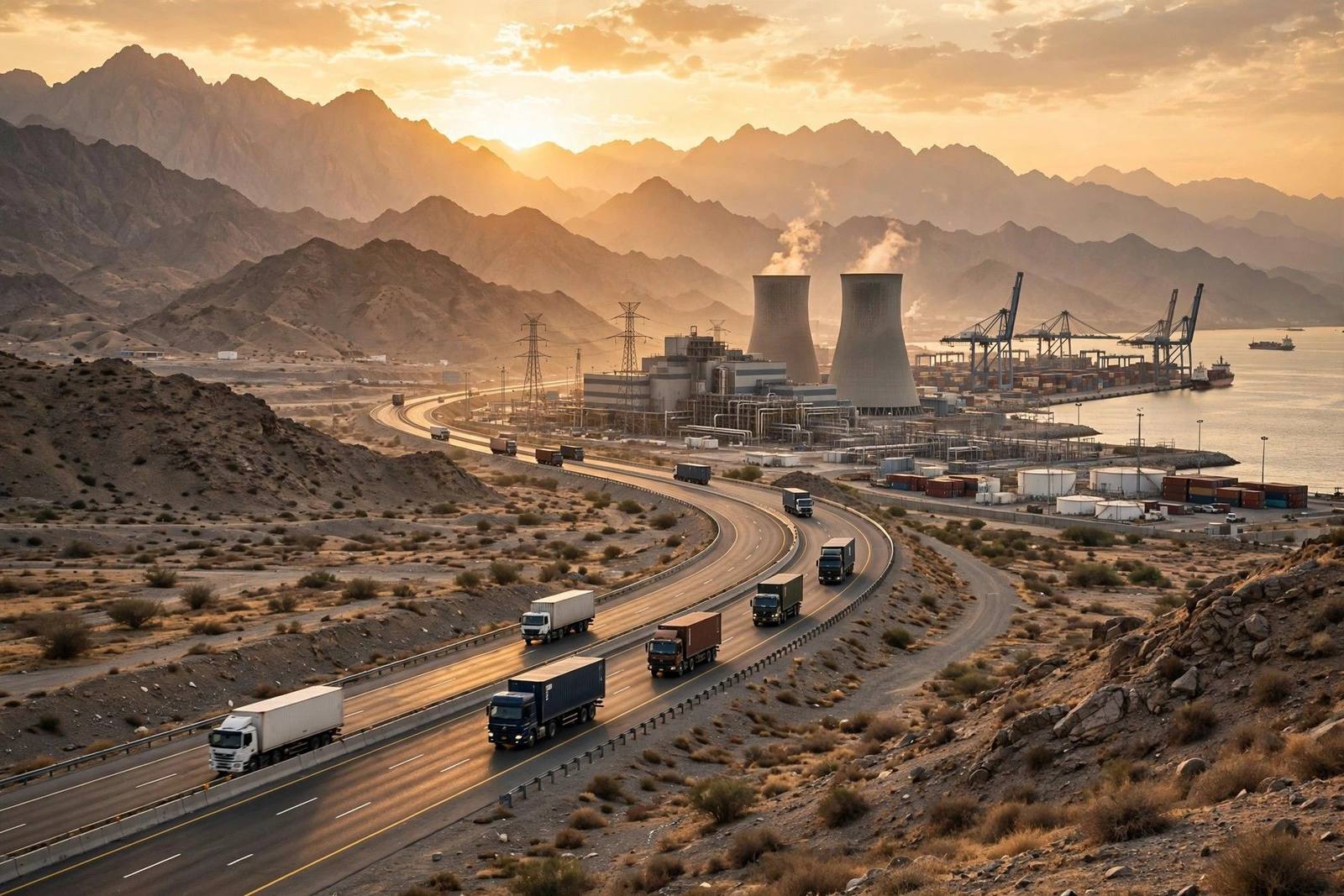
Phase one was dominated by electricity, and deliberately so. Pakistan in the early 2010s suffered crippling load-shedding that idled factories and dominated politics. CPEC's early-harvest energy projects — coal plants at Sahiwal, Port Qasim and Thar, hydro schemes, wind farms in Sindh's corridor and transmission upgrades such as the Matiari–Lahore line — added thousands of megawatts of generation in a few years. Whatever else is debated about CPEC, the lights staying on was a real economic event: industrial output, and the earnings of every factory on the grid, recovered with supply.
The cost side arrived later, in the form of capacity payments and dollar-indexed returns owed to the plants' owners — costs folded into the power sector's wider circular debt problem. Investors in listed Pakistani power and energy names live inside that settlement every day: Chinese-built plants changed the supply picture permanently while adding fixed dollar obligations that the tariff system struggles to fund. Both halves of that sentence are true, and serious analysis holds them together.
Energy detail matters for anyone holding Pakistani power exposure. The CPEC fleet mixes imported-coal plants near ports, mine-mouth plants burning Thar lignite — the desert coalfield that turned Sindh into an energy province — hydro projects on the Jhelum and Indus tributaries, and wind farms in the Jhimpir corridor. Each fuel carries different economics: imported coal exposes tariffs to global prices and freight; Thar coal is cheap at the pithead but the lignite is low-grade and the mining is capital-hungry; hydro is clean and cheap to run but hostage to hydrology and to resettlement politics. The portfolio, not any single plant, is the asset Pakistan bought.
Roads, and the port that is still a promise
The second visible layer is transport. CPEC financed upgrades and new sections of motorway and highway — the Multan–Sukkur motorway, the Havelian–Thakot section toward the Karakoram Highway, and improvements on the western alignment through Balochistan and Khyber Pakhtunkhwa. The commercial logic is the corridor's name: shorten the route between western China and the Arabian Sea so that trade can move between Kashgar and Gwadar instead of around through the Strait of Malacca.
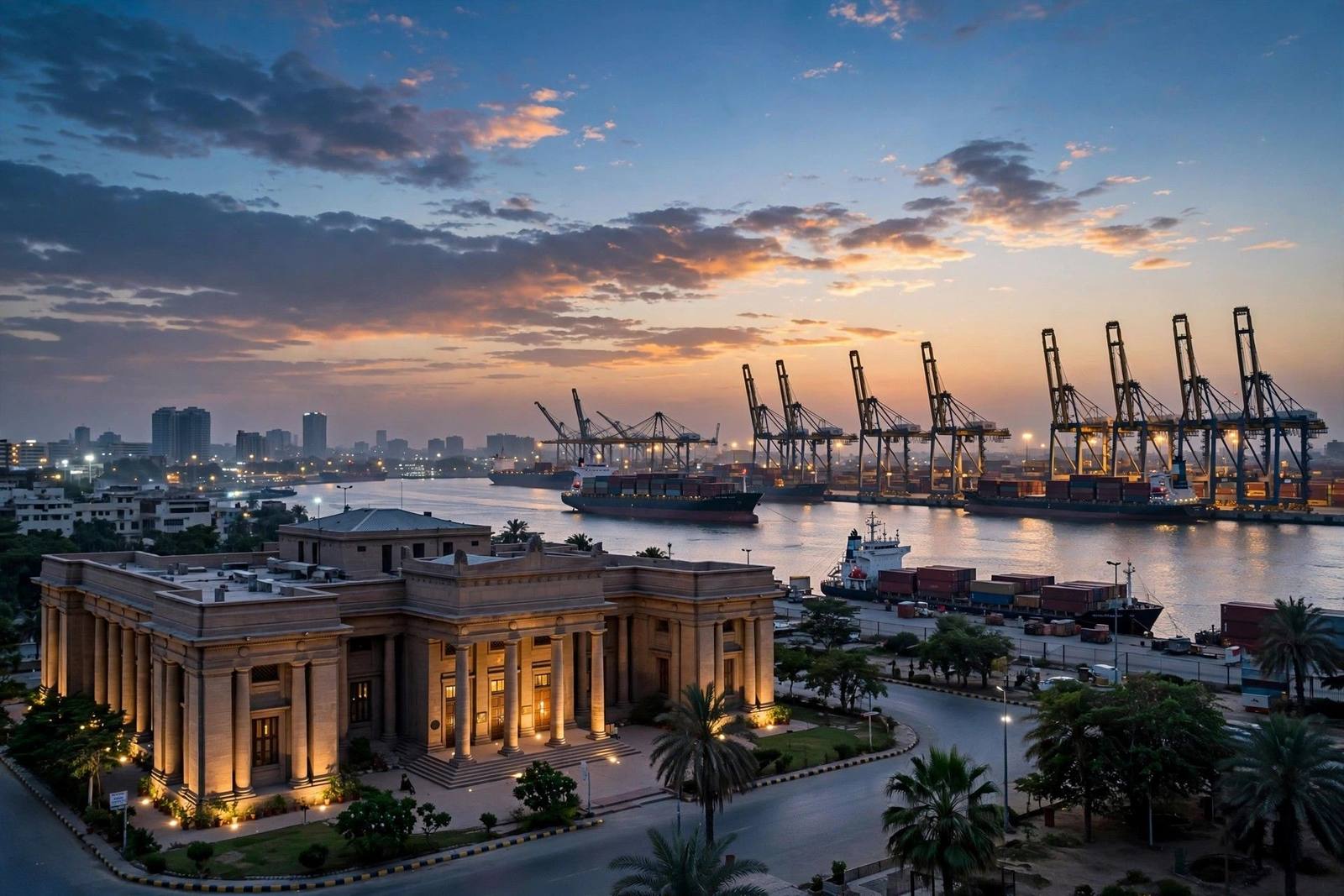
Gwadar itself — the deep-water port in Balochistan operated by a Chinese state firm, with its free zone and new airport — remains the least finished piece. The port functions, the free zone has tenants, and the airport built with Chinese grant money is a genuine asset, but cargo volumes are a small fraction of the hub rhetoric, and the city still struggles with water and power for its own residents. For now Gwadar is strategic infrastructure and an option on future trade routes, not a commercial port economy — a distinction investors should keep firmly in mind.
The railway that never arrived is the corridor's most instructive absence. The ML-1 upgrade — rebuilding the Karachi–Peshawar main line, Pakistan Railways' spine — has been agreed, redesigned, repriced and postponed repeatedly, its cost estimates swinging by billions as scopes changed. Its limbo shows the limits of the corridor model when a project is too big for Pakistan's borrowing headroom and too commercially soft for easy financing: the announcement is cheap, the financial close is the event. Investors learned to apply the same discount to every mega-project headline since — count financial closes and construction starts, not memoranda and framework agreements.
The debt question, answered carefully
No CPEC topic generates more heat than debt. The careful version is this: CPEC added to Pakistan's external obligations, but it is not the main body of them. Pakistan's debt problem is older and broader — multilateral lenders, bondholders, Gulf deposits and domestic borrowing all outweigh the Chinese bilateral share, as our guide to Pakistan's government debt sets out. The distinctive CPEC exposures are concentrated in energy: loans and equity returns attached to power plants, payable through the electricity tariff, in dollars.
Where criticism lands fairly is on terms and transparency. Power contracts offered returns that look generous in hindsight, project selection was government-to-government rather than competitively tendered, and details were slow to be published. Where criticism overshoots is the 'debt-trap' shorthand: Pakistan's recurring IMF programmes, discussed in our guide to IMF programmes, are driven by fiscal and export weaknesses that predate CPEC and would exist without a single Chinese loan. Blaming the corridor for the whole external position is as wrong as crediting it with the whole recovery.
Payments discipline toward Chinese producers became, in the early 2020s, the partnership's sore point. As Pakistan's power-sector arrears mounted, large sums owed to CPEC power companies accumulated, and Beijing pressed for settlement and for revolving arrangements to keep dues current — at times linking the mood music of rollovers and new lending to the treatment of existing producers. For listed-market readers, the episode carries a general lesson: in Pakistan's energy chain, the identity of your creditor and counterparty is a risk variable. Sovereign-adjacent Chinese claims get negotiated at summit level; purely commercial claims queue elsewhere.
Special economic zones and the industrial bet
If phase one was concrete and kilowatts, phase two is supposed to be factories. Special economic zones at Rashakai, Allama Iqbal Industrial City near Faisalabad, Dhabeji and Bostan offer Chinese and joint-venture firms serviced land and fiscal incentives, aiming to repeat the relocation story that moved light manufacturing across Asia: rising Chinese wages push labour-intensive production to cheaper locations, and Pakistan wants to be one of them — in textiles, footwear, electronics assembly and agro-processing.
Progress has been slower than the brochures. Zones need reliable power, water, customs efficiency and one-window operations that actually work with one window; investors compare Pakistan not with its own past but with Vietnam, Bangladesh and Ethiopia. The honest assessment is that the SEZ bet remains open: the infrastructure phase bought Pakistan the physical prerequisites, but the industrial payoff depends on the unglamorous governance — tariffs, refunds, contract enforcement — that decides where a factory owner in Shenzhen actually signs.
The human geography of CPEC deserves mention alongside the megawatts. Corridor roads have measurably changed Balochistan's and Gilgit-Baltistan's connection to national markets — driving times cut, perishable goods moving, new roadside economies forming — even where the grand industrial promises lagged. Thar's transformation is the sharpest case: a remote desert district acquiring mines, plants, roads, an airport and thousands of jobs, with local communities' share of the benefits contested in the familiar extractive-industry pattern. Development corridors redistribute before they enrich, and the politics of CPEC inside Pakistan follows the distribution map as much as the growth map.
Agriculture, technology and the phase-two pivot
The declared phase-two agenda widens beyond industry: agricultural cooperation (seed technology, meat and dairy value chains, cotton research), science and technology parks, socio-economic projects such as schools and water schemes, and cooperation on exports and digital infrastructure. Chinese hybrid seed and farming techniques address real Pakistani weaknesses — the yield gaps described in our guide to the farm economy — though technology transfer in practice depends on local partners' capacity to absorb it.
For the listed market, phase two matters less as a project list than as a signal of where Chinese capital and demand will flow next: agriculture inputs, food processing, mining — including the giant Reko Diq copper-gold project, which is not CPEC but sits in the same Balochistan geography — and technology ventures. The corridor's centre of gravity is shifting from building Pakistan's infrastructure to buying into its production.
Agriculture cooperation is where phase two could quietly matter most. Chinese seed technology — hybrid rice, cotton and vegetable varieties — addresses yield gaps that cost Pakistan more export value than most factory projects promise, and joint work on meat processing and foot-and-mouth disease control targets the sanitary barriers that keep Pakistani meat out of premium markets, including China's own. The volumes are unglamorous beside a power plant, but the mechanism — technology transfer into Pakistan's largest-employing sector — has a multiplier the concrete never had. Watch the seed registration trials and the meat export protocols, not the summit communiqués, for evidence it is real.
Security and politics: the risks that price everything
CPEC's gravest problem is not financial. Chinese workers and projects in Pakistan have been attacked repeatedly, and each attack raises the cost and slows the pace of everything else; security for Chinese nationals is now a standing item in bilateral relations and a real line in project economics. The corridor has also survived — and been buffeted by — Pakistan's political turnover and its periodic balance-of-payments crises, which delayed payments to Chinese power producers and strained the partnership's goodwill at exactly the moments Pakistan needed rollovers and deposits from Beijing.
China, for its part, has become one of Pakistan's indispensable creditors: rolling over deposits and commercial loans has become a fixture of IMF programme arithmetic. That dependence is itself a fact investors must hold: Pakistan's external financing, and therefore its exchange rate and interest rates, now partly run through decisions taken in Beijing as well as in Washington and Riyadh.
A final perspective for the long-term holder: corridors outlive their news cycles. The Karakoram Highway was a strategic project of an earlier era that became ordinary infrastructure; CPEC's roads, plants and port will likewise become background facts of Pakistan's economic geography, argued about by historians rather than traders. The investment question is never whether the corridor exists — it visibly does — but whether Pakistan builds the export industries on top of it that service its costs. That question is answered in zone occupancy rates, customs data and the trade balance with China, all published, all readable, none requiring a slogan.
What kind of investor studies CPEC
CPEC is not an asset you can buy; it is a set of forces repricing assets you can. It changed the power sector's cost base, the map of industrial land, the outlook for Balochistan's minerals and the structure of Pakistan's external debt. The CPEC-literate investor separates the built from the announced, follows zone occupancy rather than memoranda, watches payments discipline toward Chinese producers in the power chain, and treats phase-two headlines as options, not earnings. This article is educational content, not financial advice. A decade in, the corridor's lesson is that infrastructure is the easy part of economic transformation — the factories, exports and institutions have to be built by policy, and that part is still under construction.
Key takeaway: CPEC ended Pakistan's power crisis and redrew its map, at the price of dollar obligations and deep dependence on one creditor — and its second, industrial phase will be decided by governance, not concrete.