KARACHI: Most pharmaceutical companies sell you a finished medicine — a tablet, a capsule, a syrup with a brand name. Citi Pharma Limited — CPHL on the Pakistan Stock Exchange — built its business one step earlier in the chain, making the active pharmaceutical ingredients, the APIs, that other drug companies turn into those finished medicines. From its large plant at Kasur, south of Lahore, it produces paracetamol in bulk for the makers of Pakistan's best-known painkillers, along with antibiotics and other ingredients that the country's formulators would otherwise have to import, mostly from China and India. Founded only in 2012 around the acquisition of an existing pharmaceutical business, listed in 2021 after one of that year's most closely watched IPOs, Citi Pharma has since been pushing in both directions: deeper into ingredients, and forward into finished formulations, nutraceuticals and even biologics under its own name. Its story is a compact lesson in Pakistan's long-running attempt to make more of its own medicines.
What Citi Pharma does
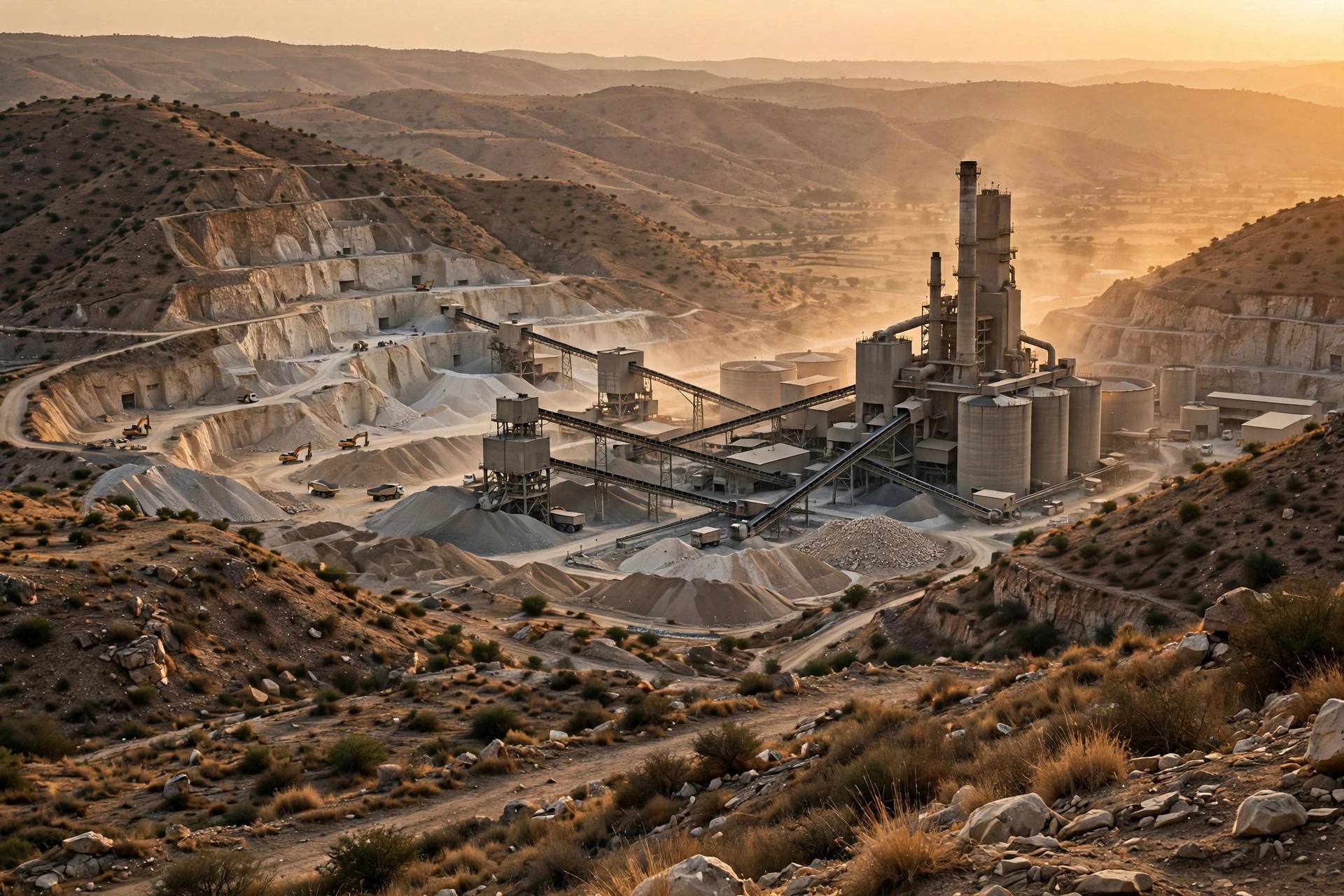
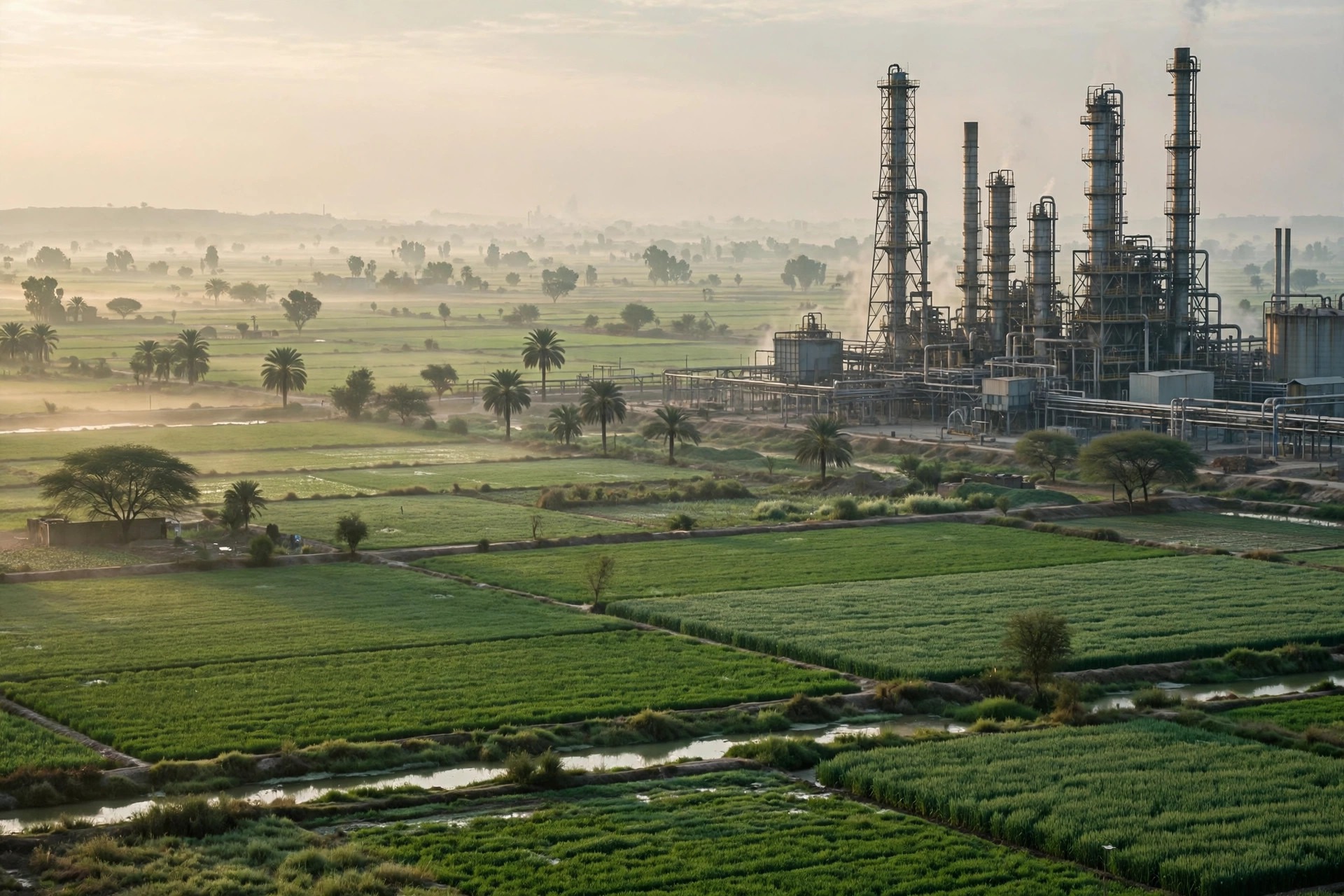
The company describes its business as the manufacture and sale of APIs, finished formulation products, medical chemicals and botanical products. The API side is the historic core. Its Kasur facility — spread over more than 46 acres, with a covered area of over half a million square feet — houses dedicated API production units for paracetamol, penicillin and amoxicillin, cephalosporins and ciprofloxacin, built to current good-manufacturing-practice (cGMP) standards with the strict separation between antibiotic families that drug regulation requires. Paracetamol is the volume anchor: the company has been described in its listing documents and rating reports as one of Pakistan's largest paracetamol producers, selling the ingredient to leading local and multinational formulators — its IPO-era materials named customers of the standing of GlaxoSmithKline, whose Panadol is the ingredient's most famous destination, alongside AGP, Searle, Efroze and Bosch.
The formulations side turns ingredients — its own and others' — into finished dosage forms: tablets, capsules, dry-powder suspensions and injectable vials, in dedicated penicillin, cephalosporin and general units, sold to institutions and increasingly under the company's own marketing. Nutraceuticals and botanical products — vitamins, supplements and herbal lines that sit beside regulated medicines — form a third, faster-growing shelf. Head office is in Johar Town, Lahore; the plant is at Kasur. In the sector surveyed by PSX pharmaceutical stocks, CPHL is the distinctive ingredients-first name among brand-led drug companies.
Origins: an acquisition from the Army Welfare Trust (2012–2013)
Citi Pharma was incorporated as a private limited company on 8 October 2012. Its operating substance arrived the following year: in 2013 it acquired the business operations of Askari Pharmaceuticals (Private) Limited from the Army Welfare Trust — the welfare and business organisation associated with Pakistan's military — and Askari's operations were transferred into Citi Pharma, which continued the business of producing and distributing APIs and formulation drugs from the Kasur site. Acquiring a going concern rather than building greenfield gave the young company licensed facilities, an operating API plant and customer relationships from day one — an important head start in an industry where regulatory approvals for plants and products take years.
The sponsors behind the company are the brothers Nadeem Amjad, who serves as chairman, and Rizwan Ahmad, the chief executive — entrepreneurs whose wider interests, as rating agency VIS records, extend across telecommunications, real estate, hospitality and pharmaceuticals. The sponsor family has retained a controlling stake of just over half the company since listing, with family members holding significant individual blocks — a common Pakistani pattern in which a listed company remains, in substance, a family enterprise with public minority partners.
The 2021 IPO and the expansion it funded
Citi Pharma converted to a public unlisted company in October 2020 and listed on the Pakistan Stock Exchange on 9 July 2021, following a book-building process in June 2021 that priced the issue from a floor of Rs 28 per share and offered 35 per cent of the post-issue capital to institutions and the public. The prospectus set out a three-part use of proceeds that still describes the company's strategy. First, expand the API business: lift paracetamol capacity from 3,600 tonnes a year towards 6,000, on the strength of demand that had surged during COVID-19, and add new ingredients such as ascorbic acid, chloroquine phosphate and hydroxychloroquine sulphate, names the pandemic had made familiar. Second, build out formulations: new facilities for vials, dry-powder suspensions, capsules and tablets at capacities measured in the millions of units per day across dedicated penicillin, cephalosporin and other lines. Third, enter healthcare provision with a planned 50-bed hospital in Lahore offering outpatient, surgical and diagnostic services — an unusual diversification for a drug maker, presented as both business and social contribution.
The listing made CPHL the first company of the 2021–22 financial year to reach the PSX, and the exchange marked it with the customary gong ceremony, noting the strategic point investors were buying into: in a country that imports the overwhelming majority of its pharmaceutical raw materials, a scaled local API producer is import substitution with a stock ticker. Subsequent company reporting describes a widening molecule portfolio — from a handful of products at listing to a much larger registered range within a few years, including newer pellet-form ingredients such as esomeprazole, omeprazole and dexlansoprazole — together with nutraceutical exports, toll-manufacturing relationships and early work in biologics, where management has spoken of insulin and other advanced products as long-term ambitions. As with all such plans, the filings, not the ambitions, are the record to follow.
Why APIs matter: the import-substitution logic
To see why Citi Pharma exists, follow a tablet backwards. A finished medicine is mostly not medicine: a paracetamol tablet's weight is largely fillers and binders, with the API — the paracetamol itself — as the small, active core. Pakistan's formulators are world-class at the finishing steps but have historically imported the great bulk of their APIs, leaving the industry exposed to foreign prices, shipping disruptions, currency swings and geopolitics; shortages of something as basic as paracetamol during fever outbreaks have repeatedly made the point in public. Making APIs at home is chemically and regulatorily harder than formulating: it requires large, compliant plants, solvent handling, effluent management and Drug Regulatory Authority of Pakistan (DRAP) approvals for each molecule, which is why so few Pakistani firms do it at scale and why policy has swung behind those that try.
Citi Pharma's Kasur footprint is built for that logic. API manufacture is space-hungry and separation-obsessed — penicillin and cephalosporin production must be quarantined from other products to prevent cross-contamination — so a large, purpose-organised site with segregated units is itself a competitive asset that cannot be replicated quickly. Each additional approved molecule adds a product whose local supply the formulators previously imported, and gives the company a second way to grow besides volume: breadth of catalogue.
How Citi Pharma makes money
The revenue mechanics differ by segment. APIs are business-to-business commodity-plus products: priced by the kilogram against import parity — roughly, what the same ingredient would cost landed from China or India — so the company's margin is the gap between efficient local production cost and that import benchmark, helped when the rupee weakens (imports get dearer) and squeezed when global API prices fall or energy and chemical input costs jump. Volumes are large, buyers are sophisticated drug companies negotiating hard, and quality approval is the licence to play at all. Formulations earn differently: finished medicines carry brand, distribution and regulatory value, so margins per unit of ingredient are higher — but so are the costs of marketing, medical promotion, registrations and, in Pakistan, exposure to DRAP's pricing regime for medicines, which caps what many products can charge and periodically becomes the sector's central political argument. Nutraceuticals sit in a lighter regulatory category with faster product cycles and export potential, smoothing the mix.
Across all three, the investor's essential question is mix: a results period weighted to bulk paracetamol reads differently from one weighted to own-brand formulations and nutraceuticals. Rating agencies assessing the company have made the same point in formal language — a strong position in a strategically supported, demand-stable segment, with diversification into higher-margin products gradually improving the profile — while noting the capital intensity and working-capital demands of chemical manufacture. The company's growth has also been debt- and equity-funded in turns, including rated sukuk financing for expansion, so the balance sheet is part of the story in a way it is not for the cash-generative consumer giants elsewhere in the index.
What investors typically watch
The CPHL checklist starts upstream: paracetamol and API prices and volumes, and the import-parity spread that decides ingredient margins. New molecule approvals — each DRAP registration widens the sellable catalogue — and utilisation of the Kasur units show whether the listed expansion is filling. Formulation and nutraceutical growth, including institutional tenders and exports, tracks the higher-margin strategy. Regulatory weather — DRAP pricing decisions, API policy incentives, quality inspections — can move the whole sector at once, as readers comparing CPHL with brand-led peers like Searle or the multinational GSK Pakistan will notice: the formulators are Citi's customers and its competitors at the same time. Finally, leverage and expansion delivery — hospital, biologics and capacity projects announced versus commissioned — discipline the growth story. Its KSE-100 membership, governed by the rules in how the KSE-100 is calculated, makes these questions benchmark-relevant rather than niche.
This profile is educational content, not financial advice. Citi Pharma's significance is larger than its size: it is the listed spearhead of Pakistan's attempt to manufacture the ingredients of its own medicines — and the background at Aktzien Learn will help readers judge how that attempt is progressing, filing by filing.
Citi Pharma's journey also mirrors a policy story that extends well beyond one company. For decades Pakistan's pharmaceutical settlement was simple: protect and price-control finished medicines, and let the ingredients come from abroad. The vulnerabilities of that settlement — exposed whenever Chinese or Indian supply tightened, the rupee slid, or a basic drug ran short — pushed regulators and industry towards a new bargain in recent years: encourage local API manufacture with policy support, streamline DRAP approvals for ingredients, and accept that building chemical capacity takes patient capital. CPHL is the listed instrument through which public investors hold a piece of that national project, alongside its company-specific risks: customer concentration among big formulators, the commodity character of its anchor molecule, and the execution load of running an ingredients plant, a formulations business, a nutraceuticals line and expansion projects simultaneously under family management. Its periodic market communications — including a 2025 clarification in which the company publicly denied social-media rumours of an overseas plant it had not approved — are a reminder that fast-growing small-caps attract speculation, and that the exchange filings remain the only reliable record. Reading those filings, rather than the rumours, is precisely the habit this series exists to build.
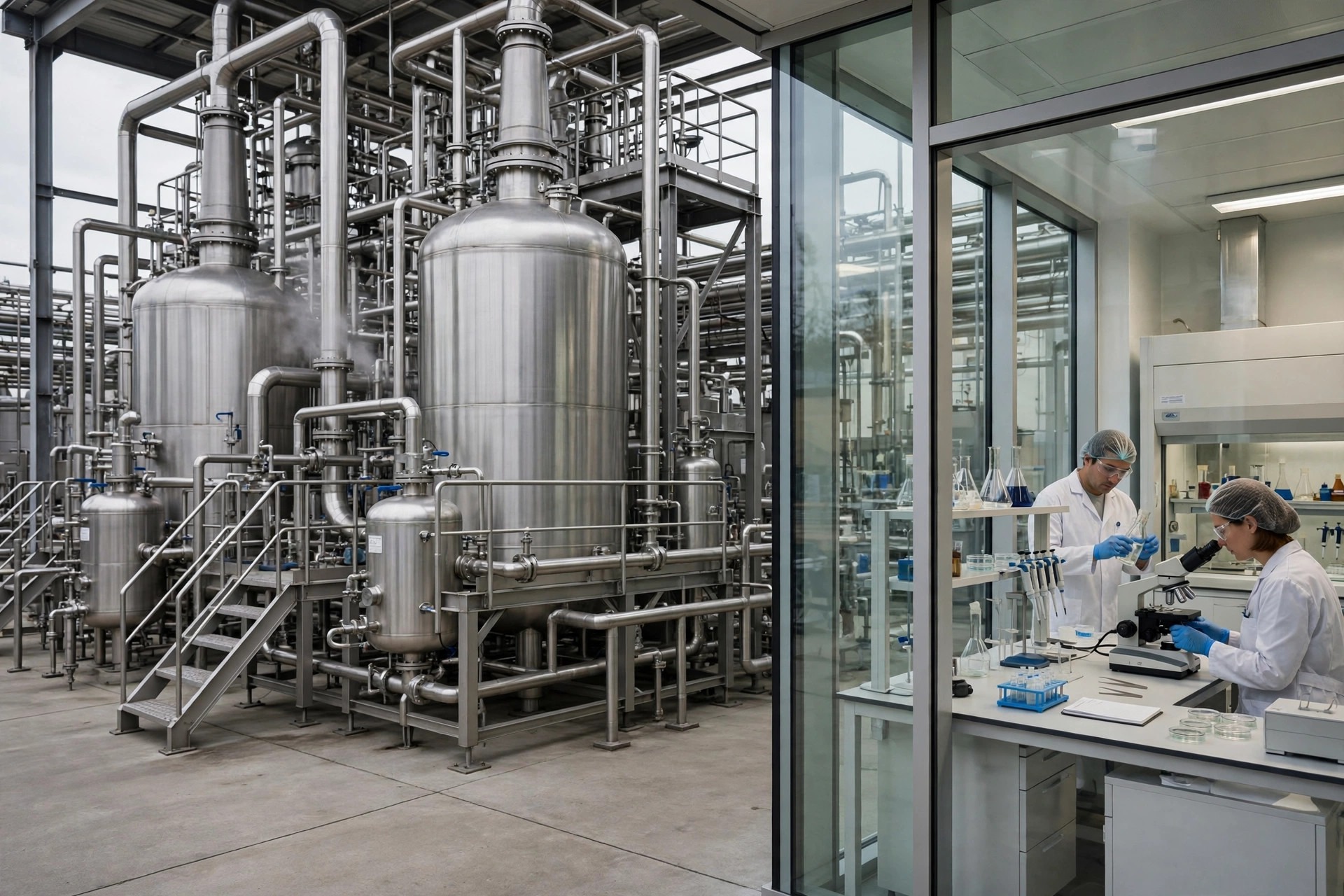
The Kasur plant itself is worth picturing, because its layout explains the business better than any ratio. API production is heavy chemical work — reactors, dryers, solvent recovery, effluent treatment — arranged in separated blocks so that a penicillin line can never contaminate a general line, with quality-control laboratories releasing every batch against pharmacopoeia specifications before a kilogram leaves the gate. Formulation halls run to a different rhythm of tablet presses, capsule fillers and packing lines. The site's sheer acreage, noted by every analyst who visits, is the expansion option made visible: land for the next unit is already owned, inside the same regulatory perimeter, in a country where assembling industrial land and licences from scratch takes years. Competitors can announce capacity; Citi Pharma can point to surveyed ground at Kasur. Whether that option converts into approved, utilised, profitable plants is the operational question on which the company's next decade turns — and the one its results, quarter by quarter, will answer in public.
Key takeaway: Citi Pharma grew from a 2013 acquisition of Askari Pharmaceuticals into one of Pakistan's largest API makers — paracetamol and antibiotics from Kasur — listed in 2021 to fund ingredient expansion, a push into finished formulations and nutraceuticals, and longer-term ambitions in biologics and healthcare.