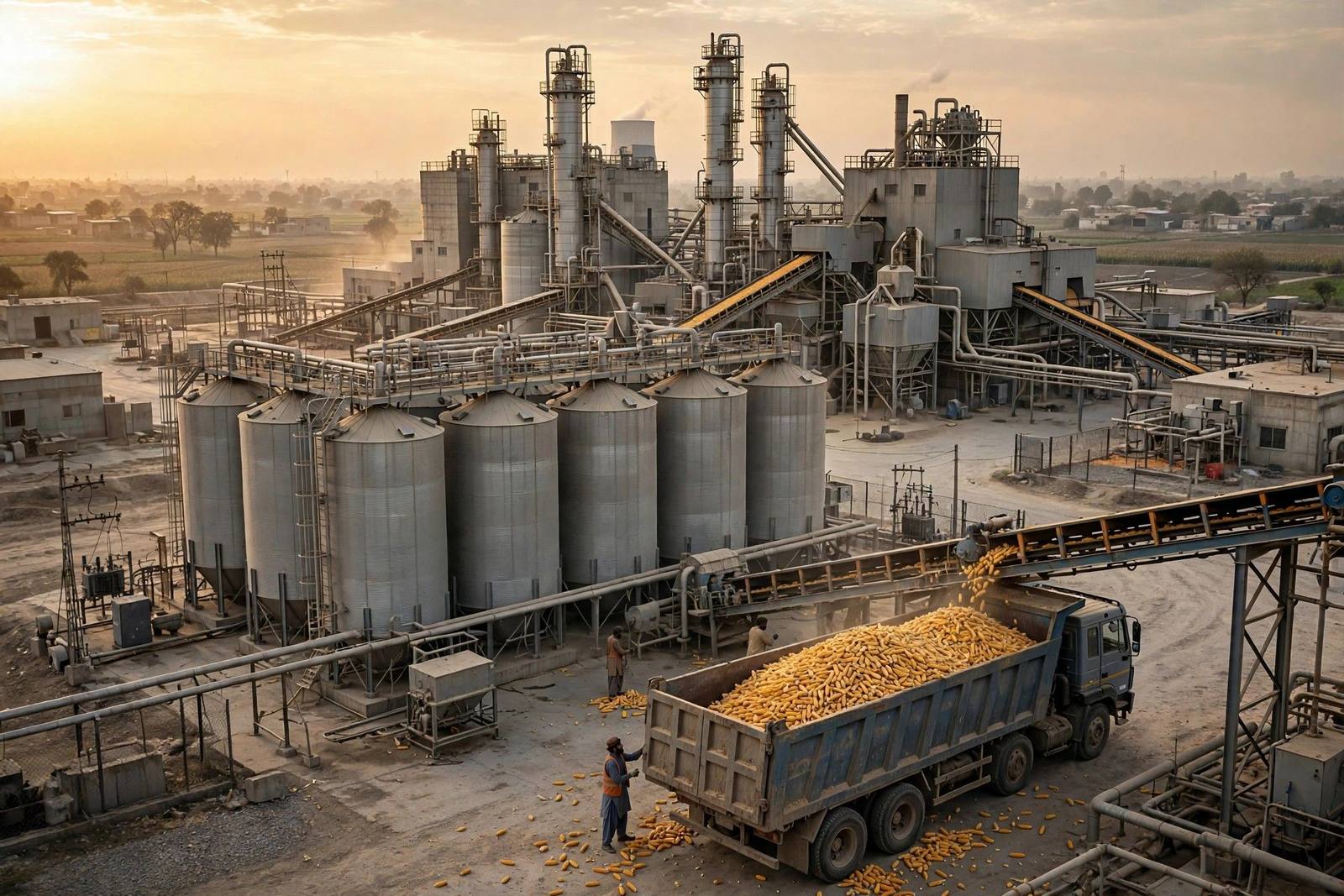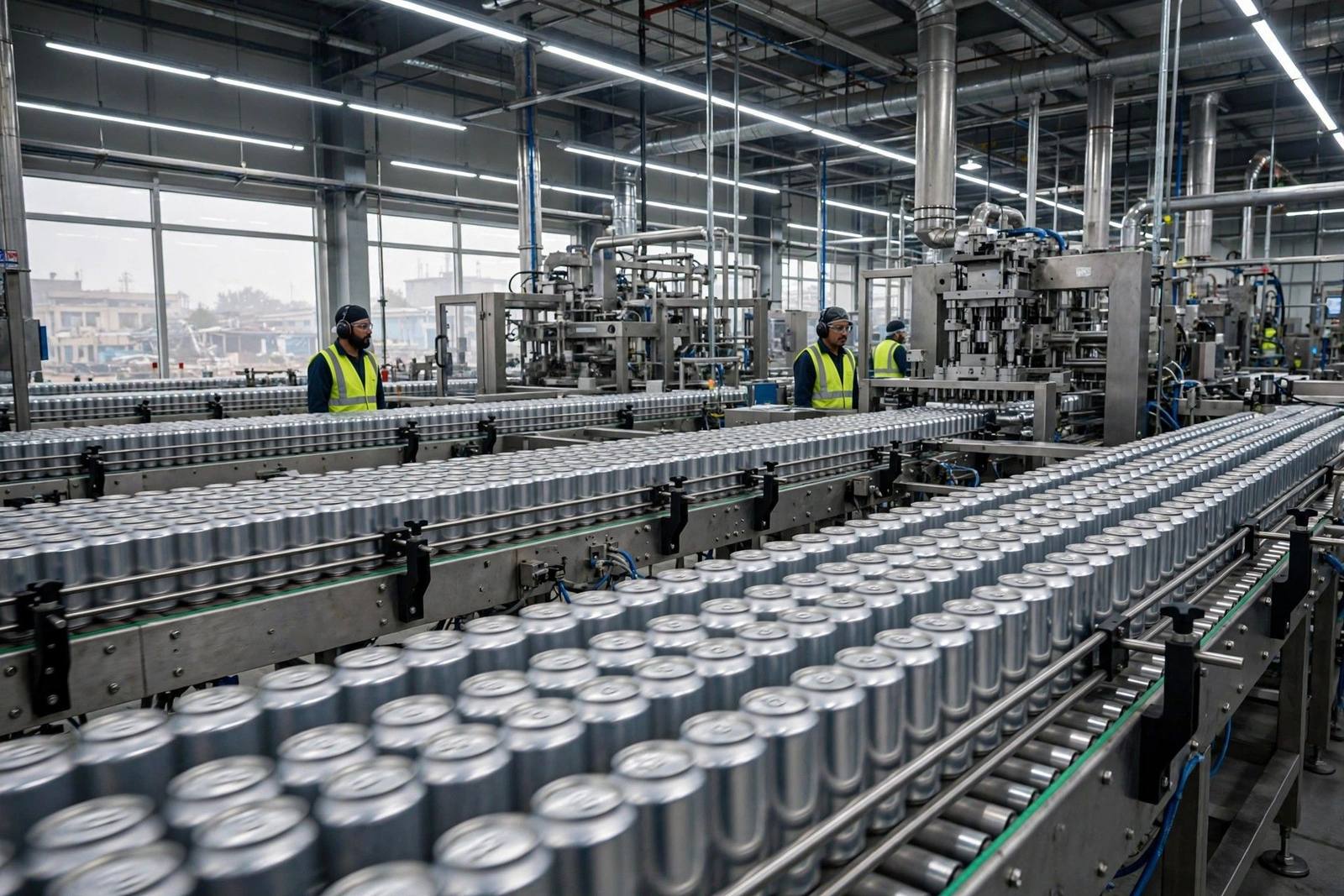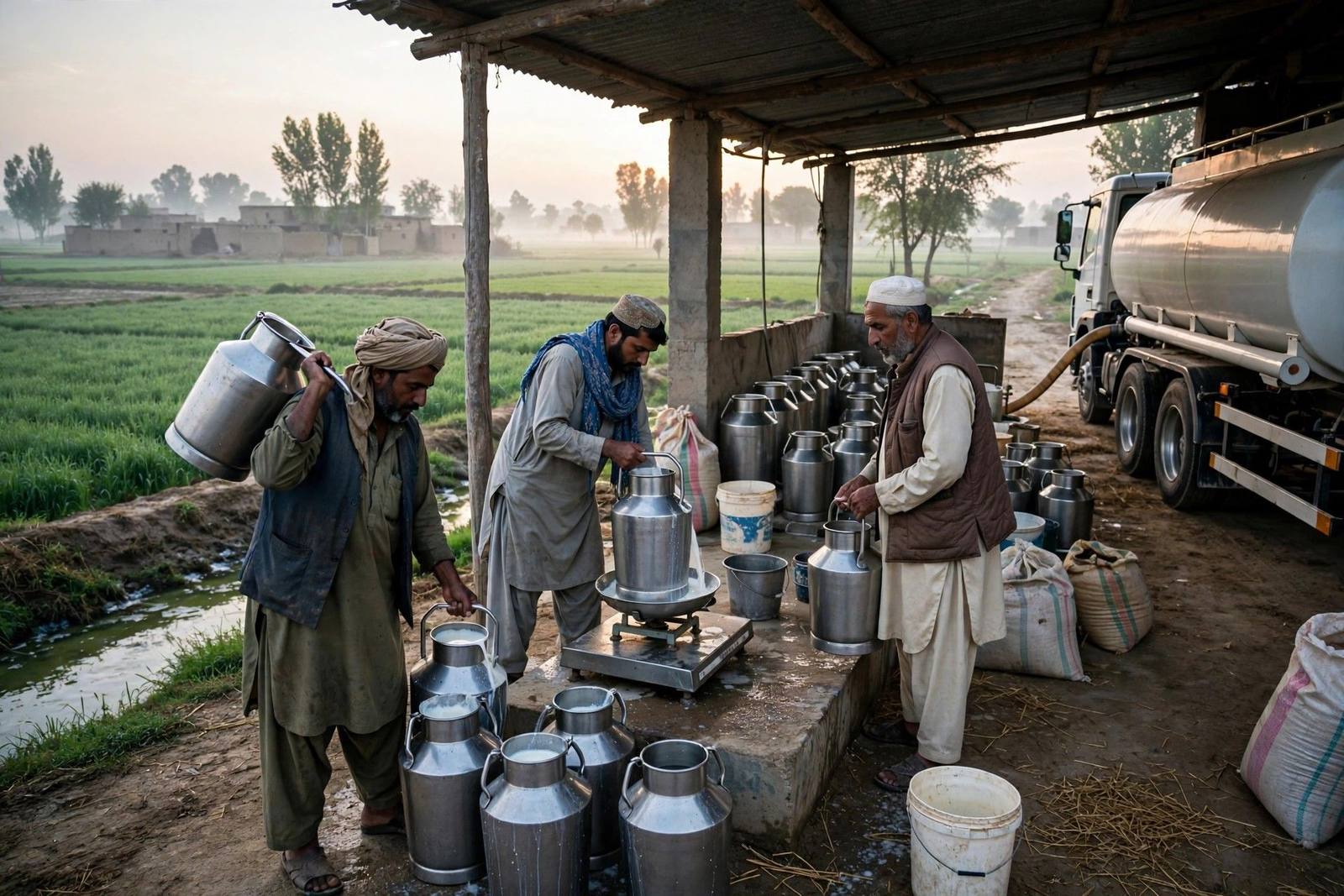
KARACHI: For most of Pakistan's history, milk arrived loose — carried from farm to city in metal cans, sold by the litre from a shopkeeper's churn, and boiled at home before anyone trusted it. The company that did most to change that habit is the one behind the red-and-white carton in the supermarket chiller: Olper's. The business began life in 2005 as Engro Foods, a start-up inside the Engro group, and it is now FrieslandCampina Engro Pakistan Limited — FCEPL on the Pakistan Stock Exchange — majority-owned by one of the world's largest dairy co-operatives and still run on the same founding idea: collect milk from hundreds of thousands of small Pakistani farmers, process it safely, and sell it in a sealed pack a family can trust.
Engro's unlikely start-up: 2005 to the Olper's launch
Engro Foods was set up in 2005 as a subsidiary of what was then Engro Chemicals Pakistan, a group better known for fertiliser and chemicals than for anything in a kitchen. The move looked eccentric at the time. Pakistan was one of the world's largest milk-producing countries, yet almost all of its milk moved through the informal, loose-milk trade, and packaged milk was a small urban niche. The Engro thesis was that the niche would grow with cities, incomes and food-safety awareness — and that the hard part would not be selling milk but sourcing it: building a collection network that could gather small quantities, village by village, chill them quickly, test them rigorously and move them to a processing plant before the tropical heat ruined them.
The first production facility was built at Sukkur, in Sindh, and the flagship brand, Olper's, launched in 2006 as a UHT — ultra-high-temperature treated — milk: heated briefly to a very high temperature and sealed in aseptic cartons, so it keeps for months without refrigeration until opened, and needs no preservatives. The timing and the pitch were aimed squarely at the loose-milk habit: purity, safety and convenience, in a country where adulteration of loose milk was a standing public worry. A tea whitener, Tarang, followed in 2007, aimed at Pakistan's defining milk occasion — the cup of doodh patti chai — at a lower price point than full-cream milk.
Growth was fast enough to make the subsidiary a story in its own right. Engro Foods listed on the Karachi Stock Exchange in 2011 through an initial public offering, and by the following year reporting on the group noted that the young dairy company's market value had grown larger than that of its own parent — a striking marker of how completely investors had bought the packaged-milk thesis. A second production facility at Sahiwal, in the heart of Punjab's milk country, and a company dairy farm at Nara, in Sindh, filled out the physical footprint that the company still describes today: two plants, its own farm, and a milk-collection network numbering well over a thousand collection centres.
What the company actually sells
FCEPL reports in two segments. The larger is dairy-based products. Olper's is the master brand, spanning UHT milk in several pack sizes and formats, cream, flavoured milk, full-cream milk powder and other extensions such as cheese and desi ghee that the company has layered onto the name over the years. Tarang serves the tea-whitening occasion. Dairy Omung offers a lower-priced UHT milk proposition, with Omung Dobala beside it — the portfolio logic of a price ladder, in which a household can trade up or down within the company's brands rather than leaving for a rival or back to loose milk. The second segment is frozen desserts, sold under the Omoré brand: ice creams and frozen treats that use the same cold-chain and distribution reach as the milk business, and that peak, as the whole category does, in Pakistan's long, hot summer.
The invisible half of the business is upstream. Packaged milk begins at village collection centres where farmers — most with a handful of animals — deliver morning and evening milk that is tested, chilled and aggregated into tankers. The company has long run farmer-development programmes alongside collection: training on animal health, feed and hygiene, with a particular emphasis in its reporting on women farmers, who do much of Pakistan's dairy work. That network is simultaneously a supply chain, a quality-control system and a rural development programme, and it is the asset that a new entrant would find hardest to copy — plants can be built in two years; trust with hundreds of thousands of farmers cannot.
2016: the Dutch co-operative takes a majority
The company's second life began in 2016, when Royal FrieslandCampina — the Dutch dairy co-operative owned by thousands of member farmers in the Netherlands, Germany and Belgium, and one of the largest dairy companies in the world — entered a strategic partnership with Engro and acquired a majority stake of about fifty-one per cent in the business, held through its Dutch holding vehicle. Engro Corporation retained a large minority holding of roughly forty per cent, keeping the founding group firmly inside the tent. In 2019 the company was renamed FrieslandCampina Engro Pakistan Limited — a name that literally puts both parents on the carton — and the ticker became FCEPL.
The logic of the deal ran both ways. For FrieslandCampina, Pakistan offered one of the world's biggest milk pools, a young and growing population, and a formalisation story — the slow shift from loose to packaged milk — with decades left to run. For the Pakistani business, the new parent brought more than a century and a half of accumulated dairy science: animal husbandry, milk-quality systems, product development and processing know-how from a co-operative that handles milk at a vastly larger scale. The company frames its model as "grass to glass" — control and care from the farm through processing to the consumer's table — and its farmer training and quality-testing regimes are presented as the local application of that parent philosophy.
Ownership still shapes how the stock is read. With roughly ninety per cent of the shares held between the Dutch parent and Engro, the free float is small, trading can be thin, and the company's strategy is set with two large, long-term shareholders rather than by the market. It is a textbook example of the pattern explored in our guide to PSX food and personal-care stocks, where multinational and group parents dominate many of Pakistan's best-known consumer brands.
How a dairy company makes money
The arithmetic starts with a litre of raw milk. FCEPL buys milk at farm-gate prices that move with season — flush in the cooler months, scarce and dearer in the summer heat — plus the cost of collecting, chilling and transporting it from over a thousand points to Sukkur or Sahiwal. Processing, packaging materials (themselves substantially imported and dollar-priced), energy, distribution and marketing then stand between that litre and the shelf price of a carton. The margin on plain UHT milk is structurally thin; the richer ground is in the mix — cream, powders, flavoured milk, cheese, ghee and frozen desserts — where processing adds value that a commodity litre does not carry. Watchers of the company therefore track mix as closely as volume: a litre sold as Omoré or Olper's cream is worth more than the same litre sold as basic milk.
Demand has its own structure. Packaged milk in Pakistan still serves a minority of total milk consumption; the great competitor is not another brand but the loose-milk trade, which carries no packaging or processing cost and benefits whenever household budgets are squeezed. That makes FCEPL's growth a conversion story — each percentage point of the national milk pool that shifts from loose to packaged enlarges its market — but it also makes the business sensitive to anything that widens the price gap between loose and packaged milk. Taxation is the sharpest such wedge: changes in the sales-tax treatment of packaged milk, such as the imposition of sales tax on UHT milk in the 2024 federal budget measures the company discussed in its reporting, raise shelf prices against an untaxed informal alternative and test exactly the conversion the company depends on. Set FCEPL beside the other dairy name in this series, At-Tahur of the Premia brand, and beside the multinational food giant in our Nestlé Pakistan profile, and the three together map the formal end of Pakistan's milk economy.
Strengths, risks and honest caveats
The strengths are brand, network and parentage. Olper's is one of the few packaged-food brands in Pakistan that genuinely anchors a category; the collection network is a physical moat of chillers, tankers and farmer relationships; and behind the company stands a global co-operative's technical depth plus Engro's local operating pedigree — the group whose story is told in our Engro Holdings profile. In a food-safety-conscious market, that combination is hard to replicate.
The risks are equally clear. Raw-milk prices are set by weather, fodder costs and the informal market, not by the company, while its selling prices are constrained by what a household will pay over the loose alternative — a margin vice that tightens in every inflationary episode. Packaging and energy costs import the exchange rate into the cost base. Regulation can move against packaged food through taxation at a budget's notice. And the frozen-desserts segment, for all its summer strength, competes with entrenched ice-cream brands and a vast informal kulfa-and-falooda economy. None of these are verdicts; they are the standard checklist a careful reader brings to FCEPL's annual report.
The name on the PSX, and who studies it
FCEPL has been a KSE-100 constituent in its time — Wikipedia and market reporting list it among the index's components in recent periods — and its index membership, like that of any mid-sized consumer name, is reviewed and can change at the exchange's periodic rebalancings. Its dividend character follows the logic of a reinvesting consumer business with two strategic parents: payouts are a board decision balancing growth spending against shareholder returns, not a fixed commitment, and should be read year by year in the results announcements.
The investors who study FCEPL are typically those interested in Pakistan's consumer formalisation story — the long migration of food spending from informal to branded, taxed, quality-assured channels. Their observation points are consistent: milk-procurement volumes and prices, the growth of the packaged share of the market, mix improvement toward value-added products, the effect of tax changes on the loose-versus-packaged price gap, and summer execution in frozen desserts. This article is educational content, not financial advice.
Milk, mornings and the meaning of the brand
One reason Olper's endured where other packaged-milk launches faded is that it attached itself to a ritual rather than a recipe. The Pakistani morning — chai brewing, children being readied for school, parathas on the stove — runs on milk, and the company's advertising and packaging have consistently presented the brand as the safe, modern form of an ancient daily act: the same nourishment the loose-milk man delivered, without the adulteration lottery. That positioning carries a commercial discipline with it. A brand trusted at breakfast cannot afford a quality scandal, which is why the testing regimes at collection centres — where milk can be rejected on the spot in front of the farmer who carried it in — are not back-office detail but the brand promise being enforced at village level, twice a day, every day.
The longer contest is demographic. Every year, more of Pakistan's milk drinkers are city-born, supermarket-shopping and short of the time and the buffalo-keeping relatives that the loose trade assumed. FCEPL's bet, and its parent's bet in buying control, is that this slow urban arithmetic eventually formalises the milk economy the way it formalised soft drinks and cooking oil before it. The pace of that formalisation — not any single quarter's volumes — is the number that decides what this company ultimately becomes.
That demographic reading also explains the company's patience with thin plain-milk margins. Every household converted to packaged milk at the value end of the ladder is a household that can later be sold cream, powder, flavoured milk or a frozen dessert by a brand it already trusts at breakfast. The ladder, more than any single rung, is the business — and it is why competitors watch FCEPL's distribution and collection footprint with more respect than its margin in any single year might suggest.
Key takeaway: FrieslandCampina Engro Pakistan began as Engro Foods in 2005, built Olper's into the face of packaged milk, and since 2016 has paired Engro's local roots with a Dutch co-operative's dairy science — a conversion story whose pace is set by how fast Pakistan moves from loose to packaged milk.