KARACHI: The yellow pack of Nurpur butter has been on Pakistani breakfast tables since before most of today's shoppers were born. Behind it sits one of the stock exchange's more unusual stories. Fauji Foods — FFL on the Pakistan Stock Exchange — is not a company the Fauji group founded. It is a company the Fauji group rescued: the dairy business built by the Noon family from 1966, listed in 1970, famous for butter, cheese and milk powder, loss-making by the middle of the 2010s, and acquired in September 2015 by Fauji Fertilizer Bin Qasim and Fauji Foundation. Renamed Fauji Foods, relaunched with new brands, recapitalised repeatedly and widened in 2024 with the Fauji group's cereals and food businesses folded in, it is the Fauji family's wager that Pakistan's loose-milk, open-market food habits will keep migrating — slowly, stubbornly — onto the packaged shelf.
What Fauji Foods sells
Fauji Foods, based in Lahore with its historic plant at Bhalwal in Sargodha district, is a packaged-food company whose heart is dairy. Under the Nurpur brand it sells butter — the product that made the name — along with UHT milk, cheese, cream, flavoured milk and related dairy lines. In February 2016, months after the takeover, it launched Dostea, a liquid tea whitener aimed squarely at Pakistan's defining beverage habit: the milky cup of chai, for which households that cannot stretch to fresh milk for every cup use whiteners instead. Around the dairy core the group has gathered other Fauji food assets. Fauji Cereals — a business dating to 1954, which began production in 1956 in a joint venture with Quaker Oats before the American partner exited in the early 1960s — makes breakfast cereals such as corn, wheat and rice flakes and branded lines including Bran Flakes and Frosted Flakes, plus porridges, dessert mixes and flour products. Fauji Infraavest Foods brought frozen and value-added lines marketed under brands such as Opa (fries and frozen vegetables among them). Both businesses were acquired by Fauji Foods from Fauji Foundation in February 2024, consolidating the group's food ambitions into the one listed vehicle. The competitive neighbourhood — multinational dairies, giant local food groups and the informal sector — is mapped in our guide to food and personal care stocks on the PSX.
The Noon years: 1911 to 2015
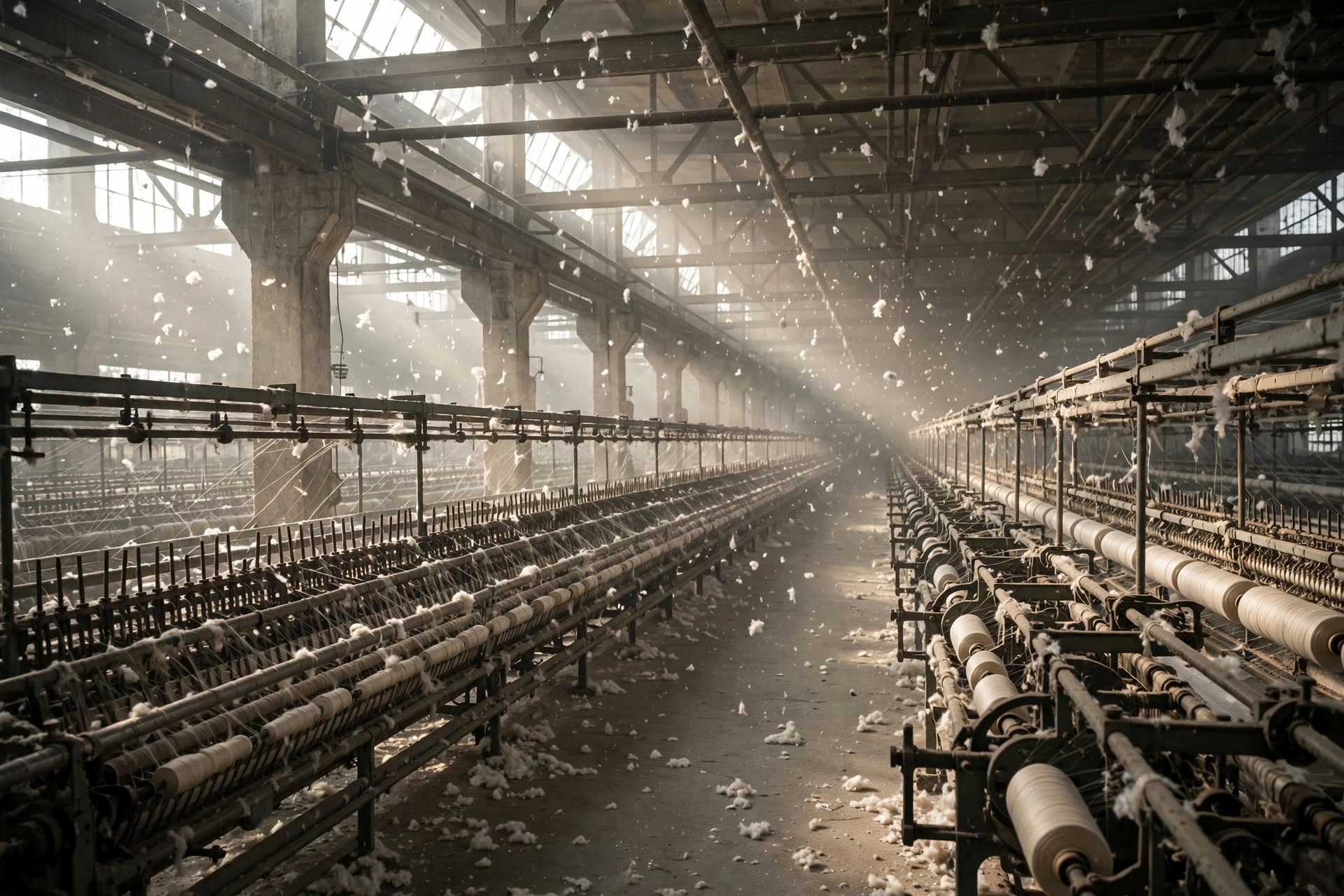
The roots go deeper than the company. The Noon family had been in business at Bhalwal since 1911, running a cotton-ginning factory, and opened Noon Sugar Mills in 1964. Noon Pakistan was established in 1966 — set up by Manzoor Hayat Noon — and listed on the Karachi Stock Exchange in 1970. Commercial operations at its Bhalwal dairy plant were under way by the early 1970s, producing butter, cheese and milk powder sold nationwide under the Nurpur name — Nurpur being a place name the family carried into the brand. For decades the model worked: a trusted regional dairy brand with national distribution, earning modest but steady margins. The 2010s were harder. Competition intensified from multinationals and aggressive local rivals, the economics of collecting milk from thousands of small farmers grew tougher, and the company slid into losses — it was loss-making for two consecutive years before the takeover, with the founding family's next generation, including Malik Adnan Hayat Noon and Salman Hayat Noon, holding the large majority of its shares. In September 2015 the Fauji acquirers took control — the 2015 annual report records Fauji Fertilizer Bin Qasim and Fauji Foundation acquiring 51 per cent of Noon Pakistan (later accounts put the combined initial stake higher, around 70 per cent) — and Noon Pakistan began its second life as Fauji Foods.
The Fauji turnaround attempt
The new owners treated the acquisition as a rebuild, not a harvest. The House of Nurpur was relaunched in May 2016, Dostea was launched to attack the high-volume tea-whitener segment, and a balancing, modernisation and replacement programme reported at about Rs 7 billion ran through to 2018, upgrading the Bhalwal plant's efficiency and capacity. Money followed the machinery: Fauji Fertilizer Bin Qasim extended a loan of about Rs 3.5 billion to the company, and further sponsor support — reported at about Rs 3 billion more in 2018 — covered obligations as losses persisted through the turnaround years. In 2018 the story nearly changed owners again: China's Inner Mongolia Yili Industrial Group, one of the world's largest dairy companies, expressed its intention to acquire up to 51 per cent of Fauji Foods from the Fauji holders; by 2019 Yili had withdrawn, and the Fauji group kept the business. Ownership within the group has since been consolidated under the Fauji fertilizer flagship's orbit, and the February 2024 acquisitions of Fauji Cereals and Fauji Infraavest from the Foundation signalled the settled strategy: one listed Fauji food company, holding dairy, cereals and frozen foods together.
How a packaged-dairy company makes money
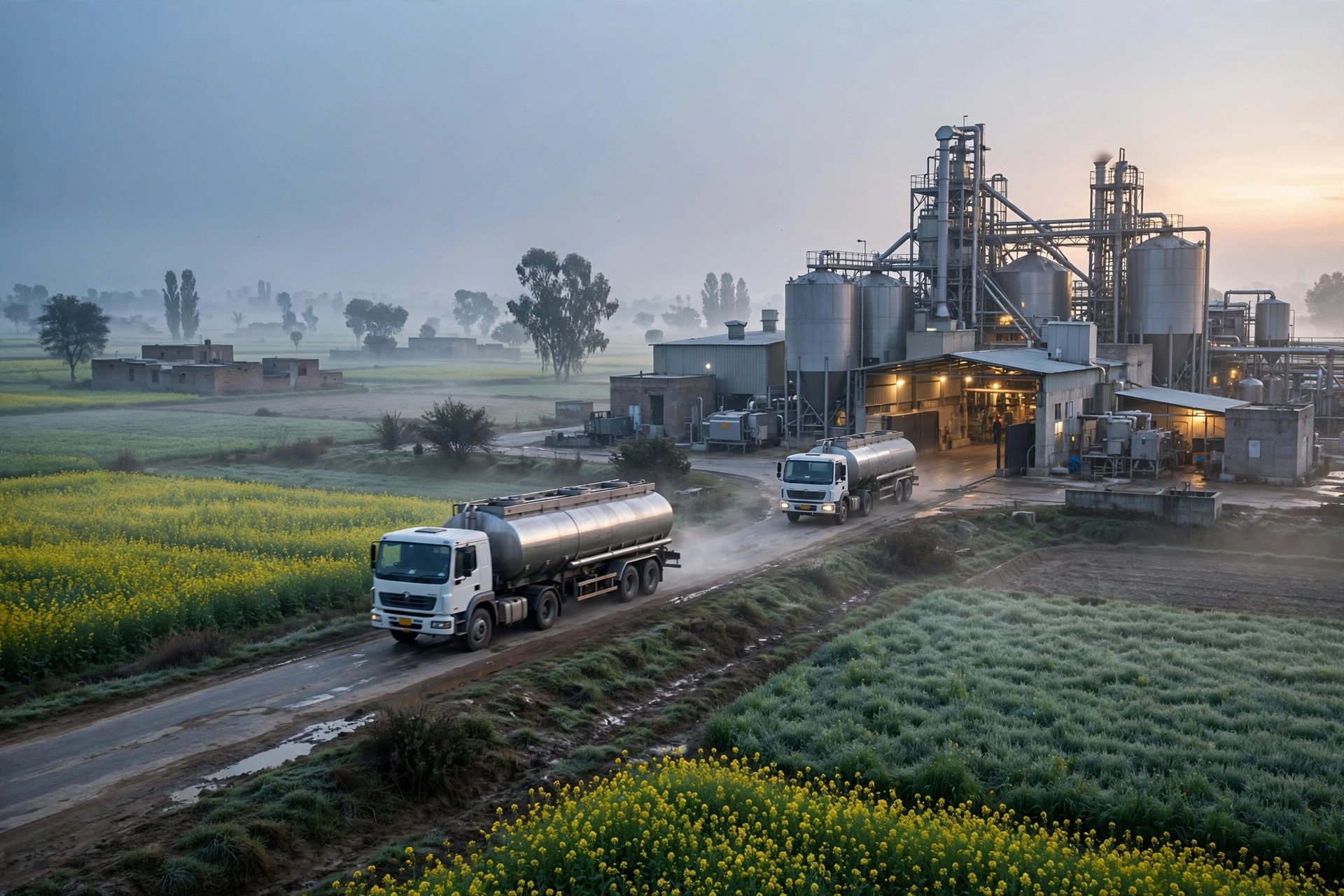
The economics start at the farm gate. The company collects fresh milk from rural collection networks — chilling centres, tankers, quality testing — in competition with every other processor and with the informal market that still handles most of Pakistan's milk. That raw-milk price, which swings with season (winter flush, summer scarcity), fodder costs and rival demand, is the single largest cost. Processing turns milk into products with very different economics: fresh and UHT milk are high-volume, thin-margin staples; butter, cheese and cream carry better margins but smaller demand; tea whiteners are a formulation business, built on vegetable fats and milk solids, where brand and price-per-cup rule. Overheads include packaging (a major and import-sensitive cost), energy for pasteurisation and cold chains, distribution into hundreds of thousands of small shops, and the advertising needed to keep a shelf brand chosen. Profit appears only when utilisation is high, wastage low and the mix tilts towards value-added products — which is why the turnaround centred on plant modernisation, brand relaunches and a broader, less milk-dependent portfolio. It is also why packaged dairy is a long game in Pakistan: the informal loose-milk sector pays no taxes, runs no cold chain and sells on daily trust, so the formal sector's growth is paced by urbanisation, incomes and food-safety awareness rather than by any single company's wishes.
Its place in the Fauji system — and on the shelf
Within the Fauji portfolio, FFL is the consumer-facing outlier: the fertilizer and cement siblings sell commodities to dealers and projects, while Fauji Foods must win a housewife's choice in a crowded dairy cabinet, against Nestlé Pakistan-scale rivals and beloved regional brands. Its strategic value to the group is diversification into consumer demand — and, for the Foundation, another industrial asset whose eventual cash flows can support welfare work, alongside Fauji Fertilizer Company and Fauji Cement. For shoppers, its significance is simpler: a heritage brand kept alive and modernised rather than allowed to fade, and a Bhalwal plant whose milk collection sustains farming incomes across its Sargodha-district hinterland.
The shelf is a battlefield: brands, chai and the loose-milk problem
To grasp Fauji Foods' daily fight, picture its three arenas at once. In the dairy cabinet it faces multinational scale — pasteurised and UHT giants with national cold chains and advertising budgets a mid-sized local player cannot match — plus strong regional brands with fierce local loyalty. In tea whiteners, Dostea fights for the most price-sensitive ritual in Pakistani life, the daily cup of chai, where a few rupees per litre decide allegiance and where the product is judged in seconds by colour and taste. And behind both arenas stands the competitor with no brand at all: the neighbourhood milkman and the loose-milk shop, which together still supply most of Pakistan's milk, unpasteurised, untaxed and trusted by habit. Every packaged-dairy strategy in the country is really a conversion strategy against that incumbent — a slow argument, made household by household, that sealed, standardised, safer milk products are worth their premium. Fauji Foods' edge in that argument is heritage and breadth: a butter brand grandmothers already trust, cereals on the same breakfast table, and a sponsor with the patience — demonstrated through years of support cheques — to let conversion economics compound.
The 2024 consolidation changed the company's shape in a way worth registering. Before it, Fauji Foods was essentially a dairy turnaround. After absorbing Fauji Cereals — itself a 1950s pioneer that introduced ready-to-eat breakfast cereals to Pakistan with Quaker Oats — and the Infraavest frozen-foods business, it became the group's general food platform, less exposed to any single commodity (above all raw milk) and better able to share distribution, procurement and brand investment across categories. Portfolio breadth is also a defence in margin terms: when fresh-milk economics sour, cereals and frozen lines can carry more of the overhead, and vice versa. Whether that platform logic delivers durable profit is the question the next years will answer; that the question is now about a portfolio, rather than about one struggling dairy, is itself the measure of how far the 2015 rescue has come.
One further inheritance from the Noon era deserves mention: place. Bhalwal is not an industrial estate on a motorway but a working town in the citrus-and-cotton country of Sargodha district, and the plant's milk shed ties the company's cost base to the fortunes of small farmers within a few hours' drive — farmers whose animals, fodder and water economics set the raw-milk price long before any board decision does. That rootedness is a vulnerability in drought or fodder-scarce years, and an advantage in every other year: collection relationships built over decades are not easily poached, and a factory that has bought a village's milk since 1972 starts each negotiation with trust a new entrant must purchase. Much of Pakistani dairy processing runs on exactly this kind of accumulated local capital, invisible on the balance sheet and decisive in the market.
The timeline, gathered in one place, shows how many lives this one company has lived: a family's ginning business from 1911, sugar in 1964, a dairy company in 1966, a listing in 1970, national brand-building through the following decades, two years of losses, a foundation takeover in 2015, a brand relaunch and a tea-whitener launch in 2016, a near-sale to a Chinese dairy giant in 2018–19 that came to nothing, and a portfolio consolidation in 2024 that added cereals with roots in 1954 and a frozen-foods arm. Companies with that many chapters are usually case studies in decline. Fauji Foods' interest lies in the opposite possibility — that a heritage food business, recapitalised by owners with deep pockets and longer horizons than the market's, can be reassembled into a modern packaged-food group while its oldest brand never leaves the shelf.
What no turnaround plan can change is the category's clock speed: packaged food wins share in years and decades, not quarters, and every actor in it — Fauji Foods included — is ultimately riding urbanisation, cold-chain build-out and the slow formalisation of Pakistan's food economy. The company's task is to be standing, branded and distributed when that tide arrives in each town; its history suggests it knows how to wait.
What investors typically watch in FFL
- Revenue growth and market share — whether Nurpur and Dostea keep gaining shelf space against larger rivals.
- Raw-milk prices and gross margin — the seasonal spread between collection costs and packaged selling prices.
- The product mix — growth in value-added dairy, cereals and frozen lines versus thin-margin liquid milk and whiteners.
- Sponsor support and balance sheet — the history of loans and equity injections, and progress towards standing without them.
- Utilisation and distribution reach — how fully the modernised plant runs, and numeric distribution in retail outlets.
- Group consolidation moves — further Fauji food assets folded in, following the 2024 cereals and Infraavest acquisitions.
FFL's seat in the KSE-100 is itself part of the story — a mid-sized food company carried into the benchmark, where the rebalancing rules periodically re-test its size and liquidity. This profile is educational content, not financial advice: it traces how a 1966 family dairy became a foundation's consumer bet — a bet whose outcome will be decided in milk-collection villages and supermarket aisles, not in the boardroom where it was placed.
Key takeaway: Fauji Foods is the Noon family's 1966 Nurpur dairy, listed in 1970 and acquired by the Fauji group in 2015 after years of losses — now the group's packaged-food vehicle across dairy, tea whiteners, cereals and frozen foods.