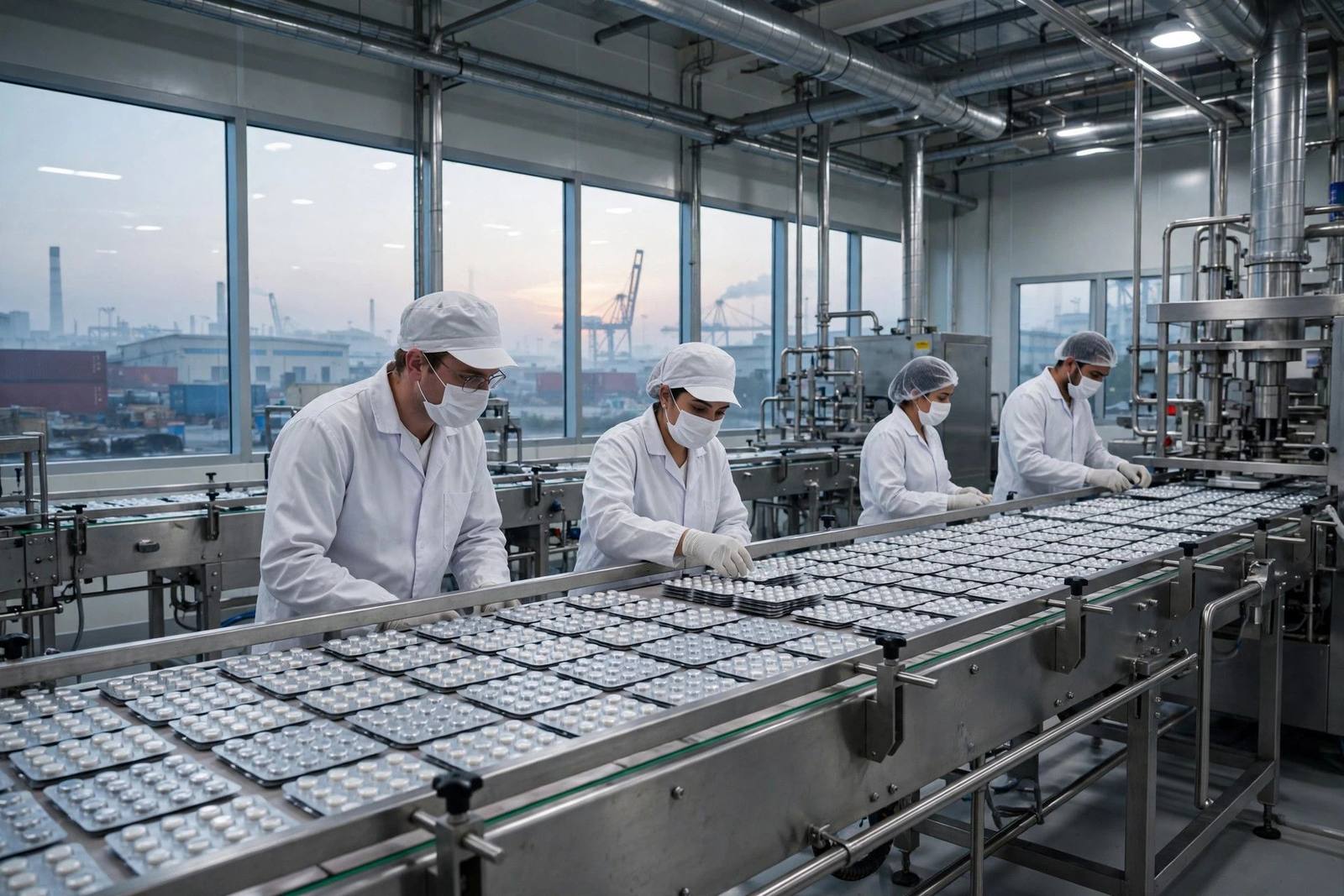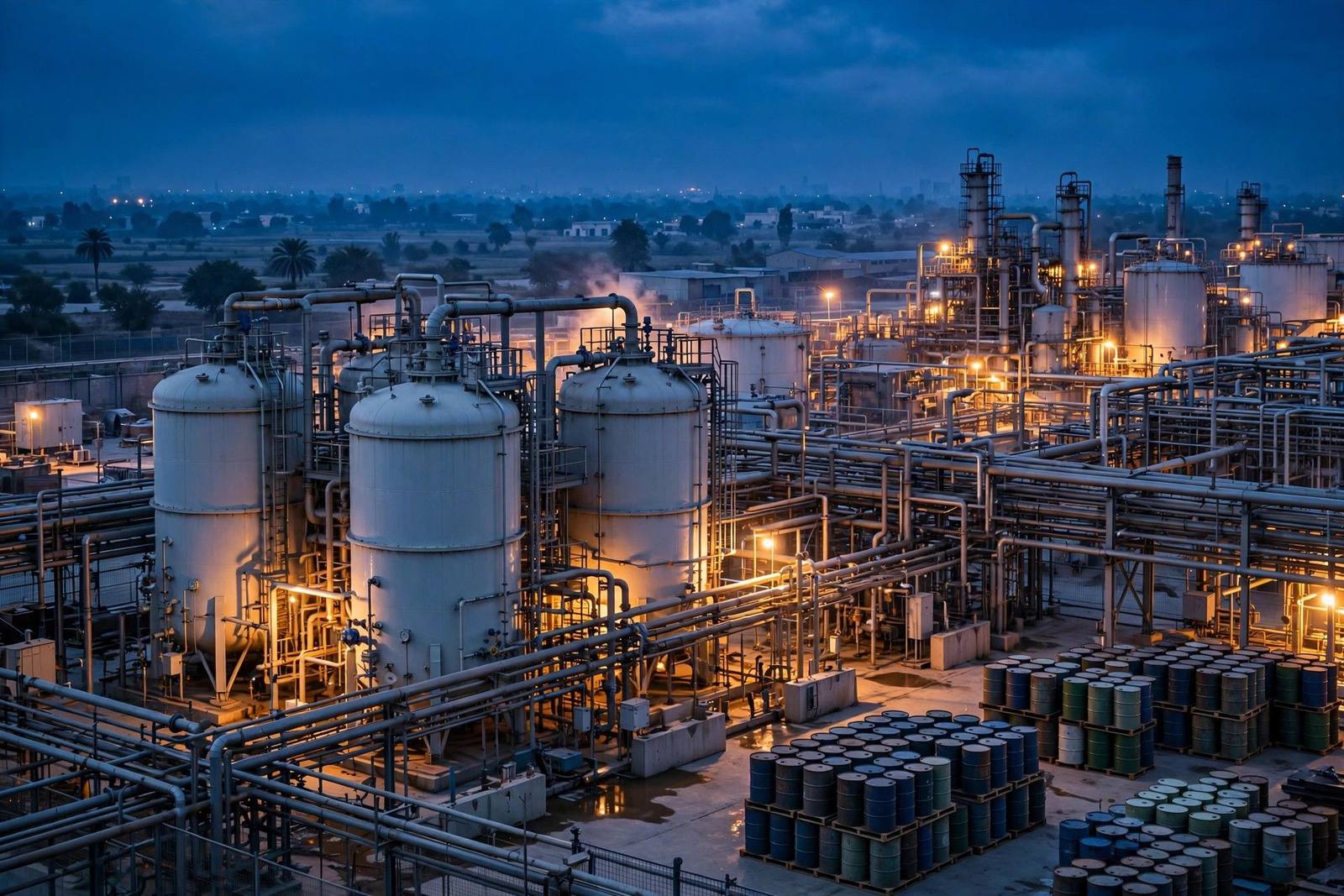
KARACHI: Air is free, but separated air is a business. Every hospital oxygen line, every steel-cutting flame and every food-packaging line in Pakistan runs on gases that someone had to pull out of the atmosphere, purify, compress and deliver — and one of the companies doing that work at national scale is Ghani Chemical Industries Limited, GCIL on the Pakistan Stock Exchange. GCIL is the industrial and medical gases arm of the Ghani group: it operates air separation units (ASUs) near Lahore, at Port Qasim in Karachi and at Hattar in Khyber Pakhtunkhwa, sells oxygen, nitrogen, argon and related products to industry and hospitals, and in recent years has added projects from calcium carbide to LPG. This profile explains how a gases business works, how the Ghani group built this one, and what investors study in it.
The business of separating air
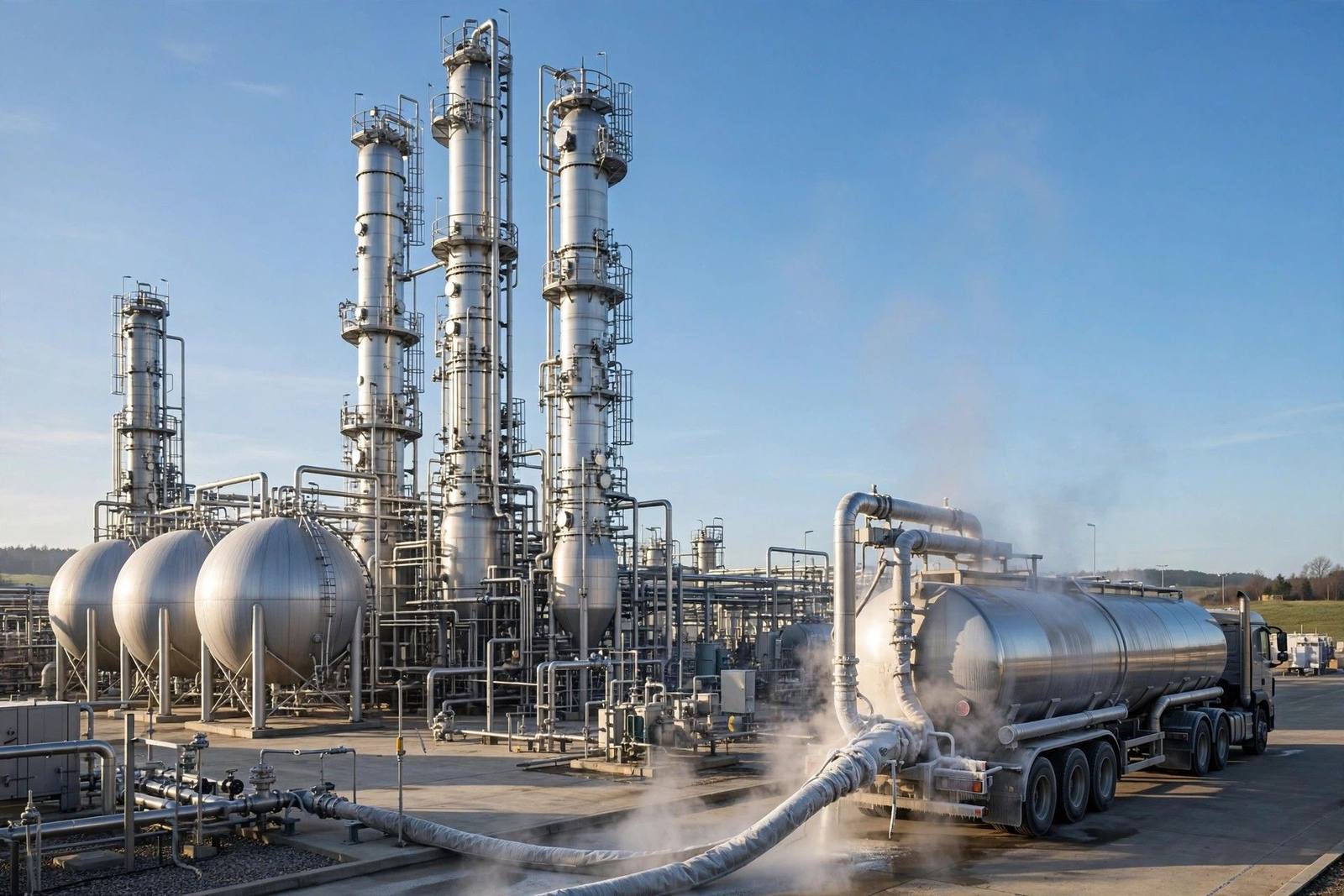
An air separation unit does something conceptually simple at industrial scale: it compresses air, cools it until it liquefies, and then distils the liquid air into its components — oxygen (about a fifth of air), nitrogen (about four-fifths) and argon (about one per cent) — using the fact that each boils at a different temperature. The products leave as compressed gas in cylinders, as bulk liquid in tankers to customers' storage vessels, or by pipeline to a neighbouring plant. Medical-grade oxygen is the same molecule held to pharmaceutical purity standards and an unbroken chain of documentation, because it goes into patients.
The industry's economics follow from the physics. Gases are bulky relative to their value, so production must sit near demand; electricity is the dominant cost, since compressing and refrigerating air is energy-hungry; and the anchor customers are contracts — hospitals that cannot run out of oxygen, refineries and chemical plants that take pipeline or bulk supply for years, steel and glass works, food processors that blanket products in nitrogen, and the ship-breaking yards at Gadani, where cutting torches consume oxygen in quantity. Pakistan's gases market was long led by the business now called Pakistan Oxygen — the former Linde operation — and GCIL's story is that of the local challenger that built a multi-plant network to contest it.
From Ghani Gases to a listed group company
The Ghani group's roots in gases predate the listed company. The group's first air separation plant was commissioned in May 2009 at Phool Nagar, on Multan Road in district Kasur outside Lahore, with a capacity of 110 tonnes per day; a second 110-tonne plant followed at Port Qasim, Karachi, in March 2014, putting the group on the ground in the southern industrial market. Ghani Chemical Industries Limited itself was established in Pakistan in 2015 as a private limited company and converted to a public limited company in 2017, becoming the group's listed vehicle for the gases business and a subsidiary of Ghani Global Holdings Limited, the family's listed holding company — whose own profile appears in this series as Ghani Global Holdings (GGL).
The listed years have been an expansion story told in plants. A third 110-tonne ASU joined the Kasur site in July 2019. A fourth plant, at Port Qasim, was built under a fifteen-year supply contract dedicated to Engro Polymer & Chemicals, the country's PVC maker — the classic gases-industry arrangement in which a plant is effectively anchored to one large customer's fence line. And the fifth and largest unit, a 275-tonne-per-day ASU in the Hattar Special Economic Zone in Khyber Pakhtunkhwa, was commissioned in April 2025, aimed at the industrial and medical demand of the north-west and at development projects in the region. Alongside the plants, the company has assembled the distribution sinews of the trade — cylinder fleets, tankers and a country-wide sales network — and picked up long-term supply arrangements with customers such as Attock Refinery, as its corporate briefings record.
Beyond gases: calcium carbide and a demerger
At Hattar, alongside the big ASU, GCIL built Pakistan's pioneering calcium carbide project — an import-substitute plant making a chemical Pakistan had historically bought from abroad, used in acetylene generation, steel desulphurisation and other industrial processes, developed with Chinese and European technical guidance. In 2025 that project left the company: under a demerger and merger scheme sanctioned by the Lahore High Court in February of that year, the whole calcium carbide undertaking was transferred to a sister company, Ghani ChemWorld Limited, with GCIL shareholders receiving 500 Ghani ChemWorld shares for every 1,000 GCIL shares they held, while designated assets of another group company moved into GCIL in exchange. The episode is a tidy lesson in how Pakistani groups use listed vehicles — projects are incubated inside one company, then separated into their own when they are ready to stand alone — and it left GCIL the purer gases business its name describes. The company has also moved into adjacent energy trading, including an LPG storage and filling venture, and has taken full ownership of its former associate Ghani Gases, tidying the structure its shareholders actually own.
The product shelf is wider than the three headline gases. Company briefings describe work across oxygen, nitrogen and argon into nitrous oxide for medical use, carbon dioxide for beverages and industry, dry ice, and liquid nitrogen for pharmaceutical and food applications, beside the cylinder and bulk formats through which all of it moves. Each niche has its own demand logic — beverage carbonation follows the soft-drink season, medical gases follow hospital capacity, ship-breaking follows the price of scrap steel at Gadani — and the portfolio effect is precisely the point of running a gases network rather than a single-product plant: the ASU produces all its main products jointly from the same air, so a weak market for one gas can be carried by strength in another, and the skill lies in balancing the liquid production slate against where the demand is that month.
How GCIL makes money
The revenue model mixes contract and spot economics. At one end sit long-term supply agreements — the dedicated Engro Polymer plant, refinery and hospital contracts — that deliver baseload volumes at negotiated prices and make a new ASU financeable. At the other end sit merchant sales: liquid oxygen, nitrogen and argon sold to the fragmented industrial market of steel fabricators, ship-breakers, food processors and workshops, plus cylinder gas through dealers, where margins are better but volumes dance with industrial activity. Medical oxygen is its own channel, sold to hospitals in bulk and cylinders, with demand that is steady in ordinary times and can spike violently in a health emergency, as the whole industry learned during the Covid-19 pandemic, when oxygen capacity briefly became front-page infrastructure.
Costs are dominated by electricity — an ASU is, in effect, a machine for converting power into separated gases — followed by distribution: a tanker fleet and cylinder logistics that amount to running a national haulage business as a sideline. That structure tells you what moves GCIL's profits: power tariffs and plant efficiency on the cost side; industrial production, hospital demand and contract wins on the revenue side; and utilisation across the network, because an ASU's economics improve relentlessly the fuller it runs. Growth therefore tends to come in steps — a new plant lands, results jump as it fills — rather than in smooth lines, and the rating agency PACRA has assessed the company in the single-A category with a stable outlook in its published reviews, citing that contract base and market position among the supports.
Strengths, risks and the group question
GCIL's strengths are network and position. It describes its facilities as the largest industrial and medical gases manufacturing set-up in Pakistan by plant footprint, it is the credible number two in a market long dominated by one incumbent — a duopoly-like structure in a necessity industry is a comfortable place to compete — and its anchor contracts give it visibility most mid-cap industrials lack. The Hattar plant extends that network into a province the incumbent model served from afar, with special-economic-zone incentives attached.
Set against that: electricity cost is a permanent exposure, and Pakistan's industrial power tariffs have risen hard; gases demand is pro-cyclical, tied to steel, automotive, ship-breaking and construction activity that slumps exactly when the wider economy does; and the expansion has been built with borrowed money and group support in proportions readers should check in the accounts. The group question deserves its own sentence: GCIL is a subsidiary inside a family holding structure that actively reshuffles assets among its listed vehicles — as the calcium carbide demerger showed — so minority investors must read every scheme of arrangement with care, since value can be moved as well as grown within such structures. That is not a criticism unique to Ghani; it is the standard homework for family-group listings on the PSX, and GCIL simply offers a recent, well-documented example of why the homework matters.
Two episodes explain the company's recent shape better than any ratio. The first was the pandemic, when medical oxygen stopped being a utility and became, for some weeks, the binding constraint on Pakistan's hospitals; gases producers ran plants around the clock, and the strategic value of domestic ASU capacity — the capacity GCIL had been adding since 2009 — was suddenly visible to the entire country. The second was the Hattar build-out, in which the group chose to plant its largest ASU and its calcium carbide project together inside a special economic zone in Khyber Pakhtunkhwa, close to northern industry and the region's development corridors, and then — having built the carbide project inside GCIL — separated it into Ghani ChemWorld so that each listed company would carry one clean story. Read together, the episodes show a group that builds ahead of demand and tidies afterwards; shareholders are asked to fund the first habit and to monitor the second.
The distribution network deserves a word of its own, because in gases the network is half the company. Bulk liquid travels in cryogenic tankers to customer vessels the producer often owns and maintains; cylinders circulate in a perpetual loop of filling, delivery, collection and testing, and the fleet of bottles on customers' premises is a working asset as real as the ASU itself. A challenger cannot simply undercut on price for long — it must match the incumbent's reliability at a hospital loading bay at three in the morning. GCIL's claim to stand as the market's second force rests as much on this unglamorous logistics as on its plant list, and its corporate briefings dwell on the country-wide network for that reason.
The name on the PSX and who studies it
GCIL trades in the chemical sector with a June financial year. Its free float has historically been about a quarter of the shares, the Ghani Global holding structure accounting for the rest, so trading is moderate rather than deep. The shares are followed as a growth-industrial story — new plants, contract announcements and the quarterly utilisation they imply — more than as a dividend name, and its market story in recent years has been the Hattar commissioning and the calcium carbide separation rather than payouts.
The investor who studies GCIL is typically looking for infrastructure-like exposure inside a manufacturing wrapper: necessity products, contracted baseload demand, and a challenger gaining ground on a long-standing incumbent — while accepting power-tariff risk and family-group complexity as the price of admission. The things they watch are ASU utilisation, the medical-versus-industrial sales mix, electricity cost recovery in prices, and any further group restructuring. This profile is educational content, not financial advice. GCIL's business, reduced to one line, is turning Pakistan's air into the gases its hospitals and factories cannot do without — and doing it in enough places at once to matter.
Key takeaway: Ghani Chemical Industries (GCIL) is the Ghani group's listed gases company — a subsidiary of Ghani Global Holdings operating air separation plants at Kasur, Port Qasim and Hattar — whose contracted oxygen, nitrogen and argon sales to industry and hospitals turn on power costs, utilisation and the pace of Pakistan's industrial economy.