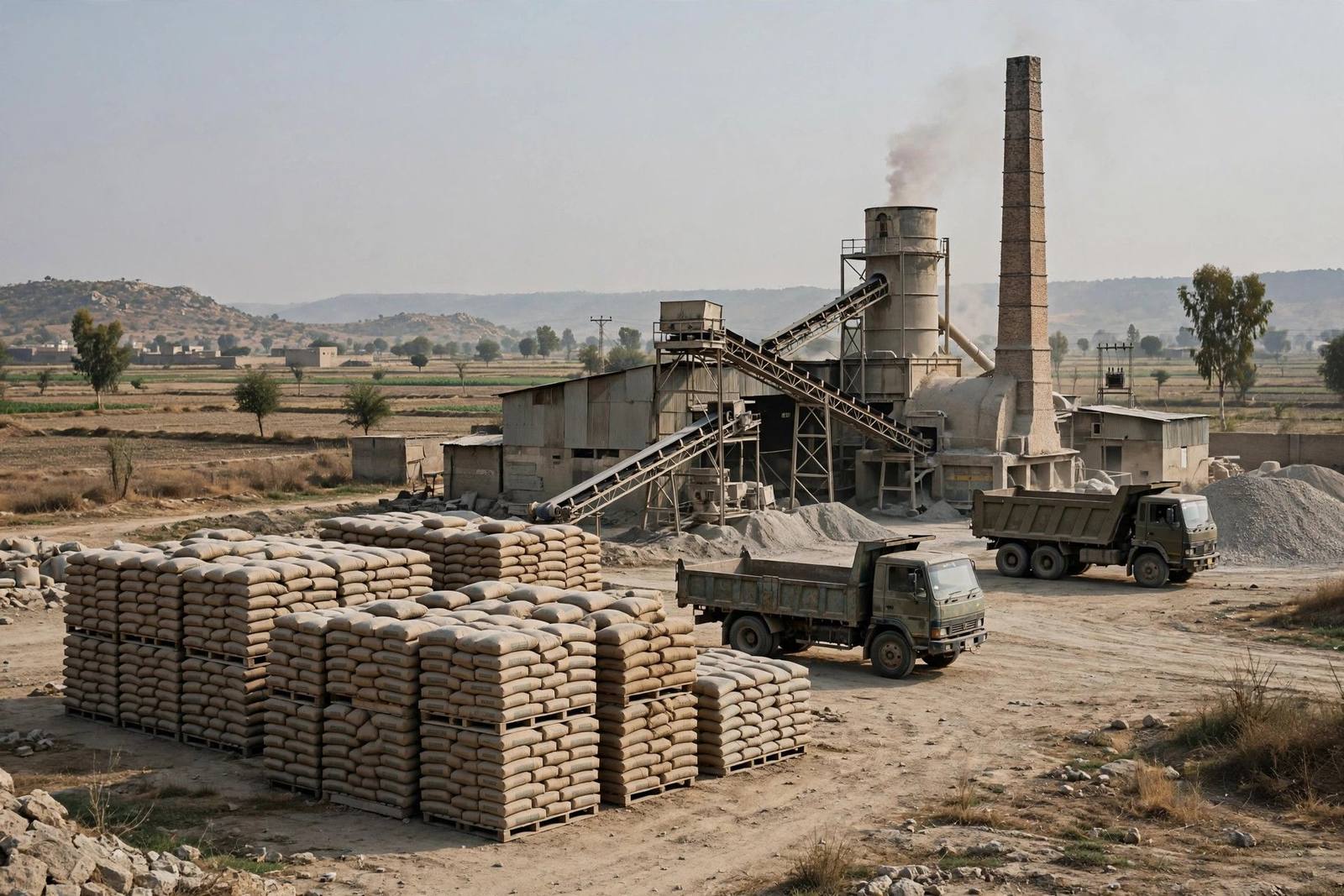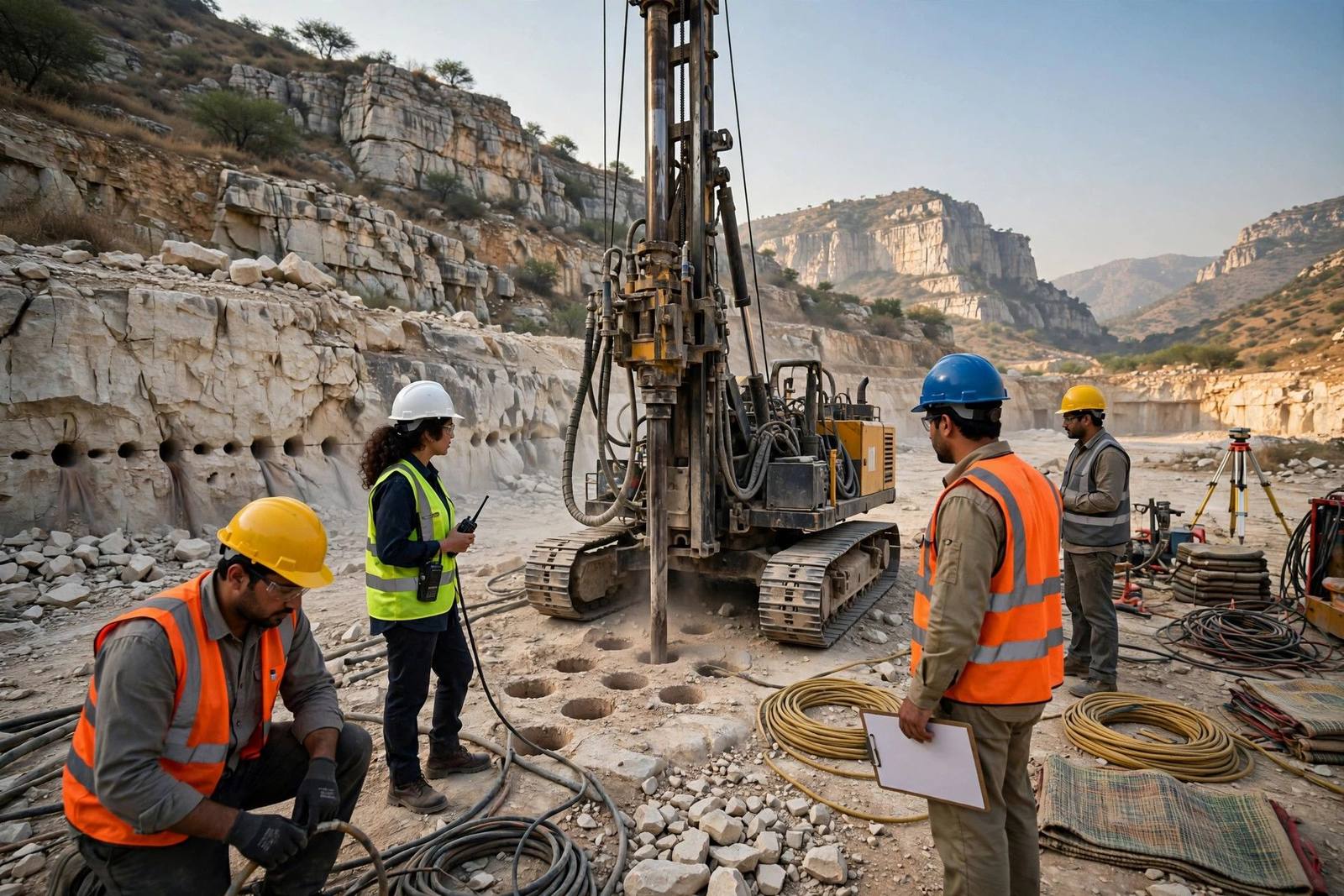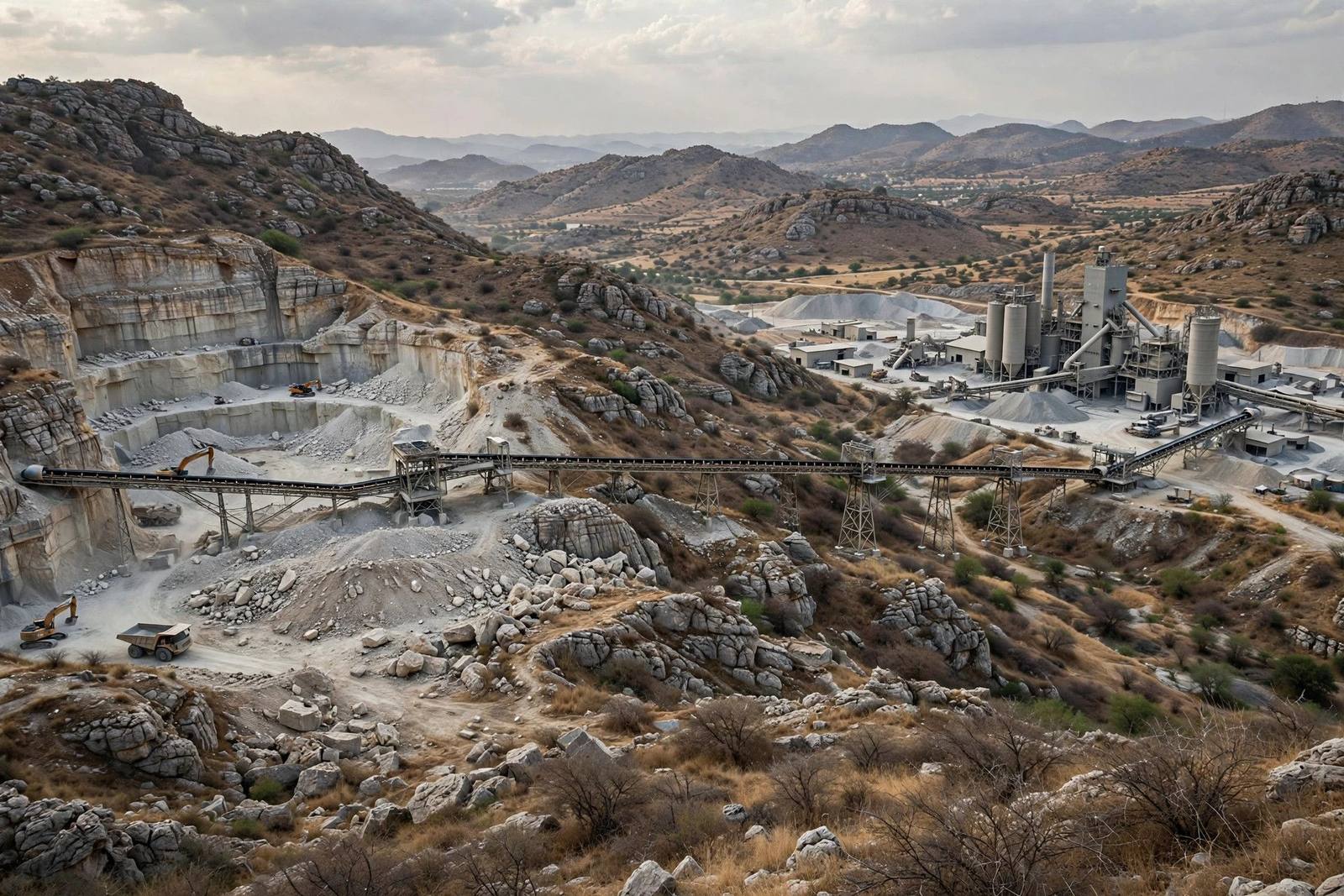
KARACHI: The limestone ridges around Ismailwal, in the Pind Dadan Khan area of Chakwal district, are not scenery — they are inventory. Gharibwal Cement, GWLC on the Pakistan Stock Exchange, quarries those hills, burns their stone in a modern kiln, and sells the resulting cement into the cities of northern and central Punjab. It is one of the older names in Pakistani cement, a company whose cement went into dams and barrages in its early decades, which passed through state ownership and privatisation, and which today stands as a single-plant, north-zone producer of respectable scale.
An old name in a young industry
Gharibwal Cement Limited was incorporated on 29 December 1960 as a public limited company, and operations commenced in the mid-1960s — early enough that the company's own account credits its cement with a role in national projects of that era, including Mangla Dam and the Qadirabad and Sulemanki barrages. Those were the years when Pakistan was building its great water infrastructure and a domestic cement works near the northern limestone belt was a strategic asset, not merely a business.
That heritage places Gharibwal in the first generation of the industry, alongside names a beginner meets in our guide to cement stocks on the PSX. But age alone does not sell cement. What matters today is the plant that stands at Ismailwal — and that plant is emphatically not the one from the 1960s.
Privatisation and the sponsoring families
Like much of Pakistan's cement industry, Gharibwal spent its middle years under state control, and its modern story starts with the privatisation wave of the early 1990s. Rating-agency profiles record that in 1992, as the cement sector was privatised, a majority stake was acquired by two families: the Peracha family, founders of the Gharibwal Group, holding the larger share, and the Rafique family holding the other substantial block. Muhammad Tousif Peracha has led the company as chief executive in that dispensation, with the group's interests extending beyond cement into glass, lubricants, real estate and overseas ventures.
Two-family control is a recognisably Pakistani ownership pattern, and it shapes the company in ways a reader should notice. Decisions can be fast and long-horizoned, because the sponsors' wealth is concentrated in the asset; equally, public shareholders are permanent minorities in a business whose strategy is set in family councils. Neither is automatically good or bad — the evidence is in the capital allocation over time, and Gharibwal's has been directed, overwhelmingly, at the plant itself.
The modern Ismailwal plant
The old works was effectively replaced by a modern plant with clinker capacity of about 6,700 tonnes per day — a little over two million tonnes a year of cement capacity in the rating profiles of the late 2010s. The equipment mix, roughly three-fifths Chinese and two-fifths European in origin, reflects how Pakistan's industry rebuilt itself in the 2000s and 2010s: Chinese kiln lines at competitive capital cost, European mills, instruments and packing plant where precision matters most.
Three features of the site deserve a beginner's attention. First, the raw material: the company reports a quarry of prime limestone and shale with reserves it describes as sufficient for a very long horizon — measured in centuries at current rates in its own materials — which removes the existential question that haunts quarries nearing exhaustion. Second, logistics inside the fence: a conveyor of about three and a half kilometres carries stone from quarry to plant at high hourly rates, replacing fleets of dumpers. Third, energy: the site has run in-house generation of roughly 38 megawatts, with waste-heat recovery — electricity generated from the kiln's exhaust gases — added to cut the fuel bill, the single most important cost discipline in north-zone cement.
The company has also, at times, contracted for a further very large line — an additional 8,000 tonnes per day with a Chinese supplier was announced in earlier expansion plans — the sort of project that, if and when executed, would transform its scale. Pakistani cement history is littered with announced lines that waited years for financing and demand to align, so the careful reader treats such contracts as intentions to be tracked in subsequent annual reports, not as capacity already built.
Selling cement in the north zone
Pakistan's cement market divides, in trade language, into a north zone and a south zone, split by distance and freight rather than any formal rule. Gharibwal is a northern producer: its home demand is the Gujranwala division and the wider central-Punjab market — Lahore, Faisalabad, Multan and the dense small-town construction economy between them — with the plant's position in Chakwal district giving it trucking reach across that triangle. Northern producers compete against some of the industry's strongest names, including Maple Leaf Cement and Fauji Cement, and against southern cement only at the freight-determined edges of their territories.
Demand in that market is the familiar Pakistani mixture: self-built housing, commercial construction, and public development spending, all of it sensitive to interest rates and all of it seasonal, peaking outside the monsoon and the harshest summer weeks. A northern plant without a port, unlike Attock Cement at Hub, has no easy export release valve; when the north has surplus capacity, the adjustment comes through price.
How the money is made — and where it leaks
Revenue is dispatches times retention price. Profit is what survives fuel, power, freight and the kiln's upkeep. For a northern plant, the fuel question is coal — increasingly a blend of local, Afghan and imported grades, each with its own price, quality and supply risk — and the power question is how much electricity the plant generates itself, from captive plant and waste heat, versus buying from the grid at industrial tariffs. Gharibwal's investments in captive power and waste-heat recovery are best read in that light: not green decoration, but margin defence.
Freight is the quiet second cost. Cement leaves Ismailwal by road, and diesel prices pass straight into delivered cost; a plant's competitive radius expands and contracts with the fuel bill. This is why utilisation matters so much in the results: a modern line running near capacity spreads its fixed costs thinly, while the same line at half utilisation produces the same tonnes a rival makes — at several hundred rupees more cost on each one.
Strengths, risks and controversies
The strengths are a long-life quarry at the plant gate, a modern single line of efficient scale, captive energy, and sponsors whose tenure stretches back three decades. The product itself is undifferentiated, which paradoxically helps an efficient mid-sized maker: builders buy availability and consistency, and a plant that delivers both keeps its dealers.
The risks begin with that same single-plant concentration — one kiln line is one point of failure — and continue with northern overcapacity, coal-price and currency swings on imported fuel, and the governance discount public investors often apply to closely held family companies. Expansion ambition is a risk of its own: a second giant line doubles the asset base and the debt together, and its wisdom depends entirely on demand in the years after it commissions, which nobody can know when the contract is signed.
The name on the PSX and the investor who studies it
GWLC trades as a mid-cap cement name, more liquid than the smallest industrials, less followed than the index heavyweights, and priced — as all Pakistani cement is priced — largely as a geared play on construction demand and coal. Its dividend behaviour has followed profitability rather than promise, as is normal for a company with periodic heavy capital spending; readers new to payouts should pair this profile with our explainer on how PSX dividends work.
The investor who studies Gharibwal is typically a cycle investor with a map: someone who tracks monthly industry dispatches, watches coal benchmarks and the rupee, and thinks in tonnes and retention prices rather than headlines. This article is educational content, not financial advice. The discipline it teaches — locate the quarry, date the kiln, name the owners, follow the fuel — transfers to every cement profile on this site, from the coastal south to the Khyber foothills.
Pricing, retention and reading the accounts
Outsiders often imagine cement companies set prices the way soap companies do. In truth, the bag price in a Lahore or Faisalabad market is a negotiated, weekly-moving number shaped by every northern kiln's dispatch targets, and what reaches Gharibwal's accounts is the retention — the factory-gate realisation after freight, dealer commission and taxes. Retention differences of a few hundred rupees per tonne, invisible to anyone outside the trade, are the difference between a good year and a poor one at identical volumes. This is why experienced readers of Pakistani cement results compare companies on retention and on cost per tonne rather than on revenue, and why the industry's monthly dispatch statistics, published by the manufacturers' association, are the sector's most-read document.
The cost side has its own geography lesson. Northern plants draw on a menu of fuels — local coal from Punjab and Khyber Pakhtunkhwa fields, Afghan coal trucked across the border, and imported coal railed or trucked from Karachi at a freight penalty a coastal rival does not pay. Blending those sources, kiln by kiln and season by season, against their heat values and delivered prices is unglamorous work that decides margins; so is the waste-heat recovery line, which converts exhaust gas that once warmed the Chakwal sky into electricity the plant no longer buys. When Gharibwal's gross margin moves against the northern peer average, the explanation is usually in that fuel-and-power paragraph of the directors' report.
There is also a balance-sheet habit worth naming. Single-plant family companies tend to carry the memory of hard decades in their financing: expansion funded in visible stages, dividends that yield to capital projects, and a reluctance to lever the quarry for ventures outside cement. Whether that conservatism is virtue or missed opportunity depends on the cycle you are standing in — it looks wise in every downturn and timid in every boom — but it has carried this company from the Mangla Dam era to the era of motorways without a change of essential character, and continuity of that kind is itself information.
It is also worth placing Gharibwal in its district's wider story. Chakwal and the Salt Range country have made cement for generations — the region's limestone built colonial-era works long before 1960 — and the modern industry there competes for the same stone, the same labour and the same road space. A plant at Ismailwal is thus not an isolated bet but a participant in one of Pakistan's oldest industrial clusters, with the shared suppliers, skills and infrastructure that clusters create. When the industry speaks of the north zone, it is speaking substantially of this belt of Punjab: quarry after quarry, kiln after kiln, each defending its radius of truckable demand. Gharibwal's radius — Gujranwala, Lahore, Faisalabad, Multan — happens to cover some of the most densely built land in the country, which is the quiet foundation under everything else in this profile.
The quarry, meanwhile, quietly underwrites the long term in a way financial statements struggle to express. Cement reserves are consumed hillside by hillside, and a company reporting limestone and shale for a horizon far beyond any investor's lifetime has removed the one depletion risk its industry cannot engineer around. Rivals nearer exhausted faces must buy land, move conveyors and re-permit; Gharibwal's stone sits where it has always sat, behind the plant, under the same ridges its cement first came from in the 1960s. In a sector priced on cycles of three to five years, that geological permanence is the longest fact in the accounts.
For the new reader, a closing practical note: GWLC reports on a June financial year, and its quarters rhyme with the construction calendar — monsoon-softened first quarters, stronger winter dispatches — in a pattern shared across the northern industry. Reading its results in the same week as its Chakwal-belt neighbours', against the association's monthly tonnage, is the fastest education the sector offers.
Key takeaway: Gharibwal Cement is a 1960-vintage, privatised-in-1992 north-zone producer whose modern Ismailwal plant, long-life limestone quarry and captive power make it a focused — and therefore fully exposed — play on Punjab construction demand.