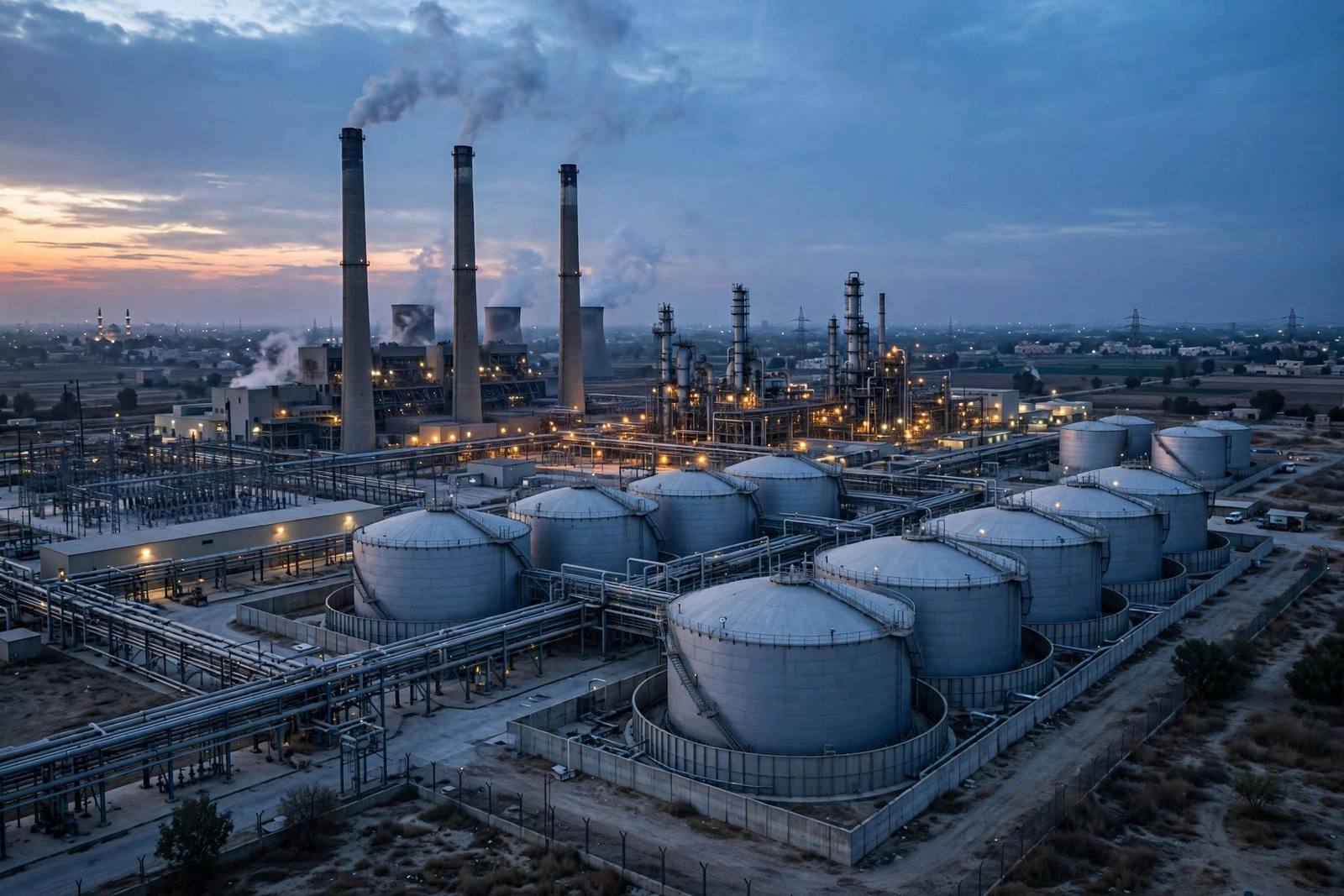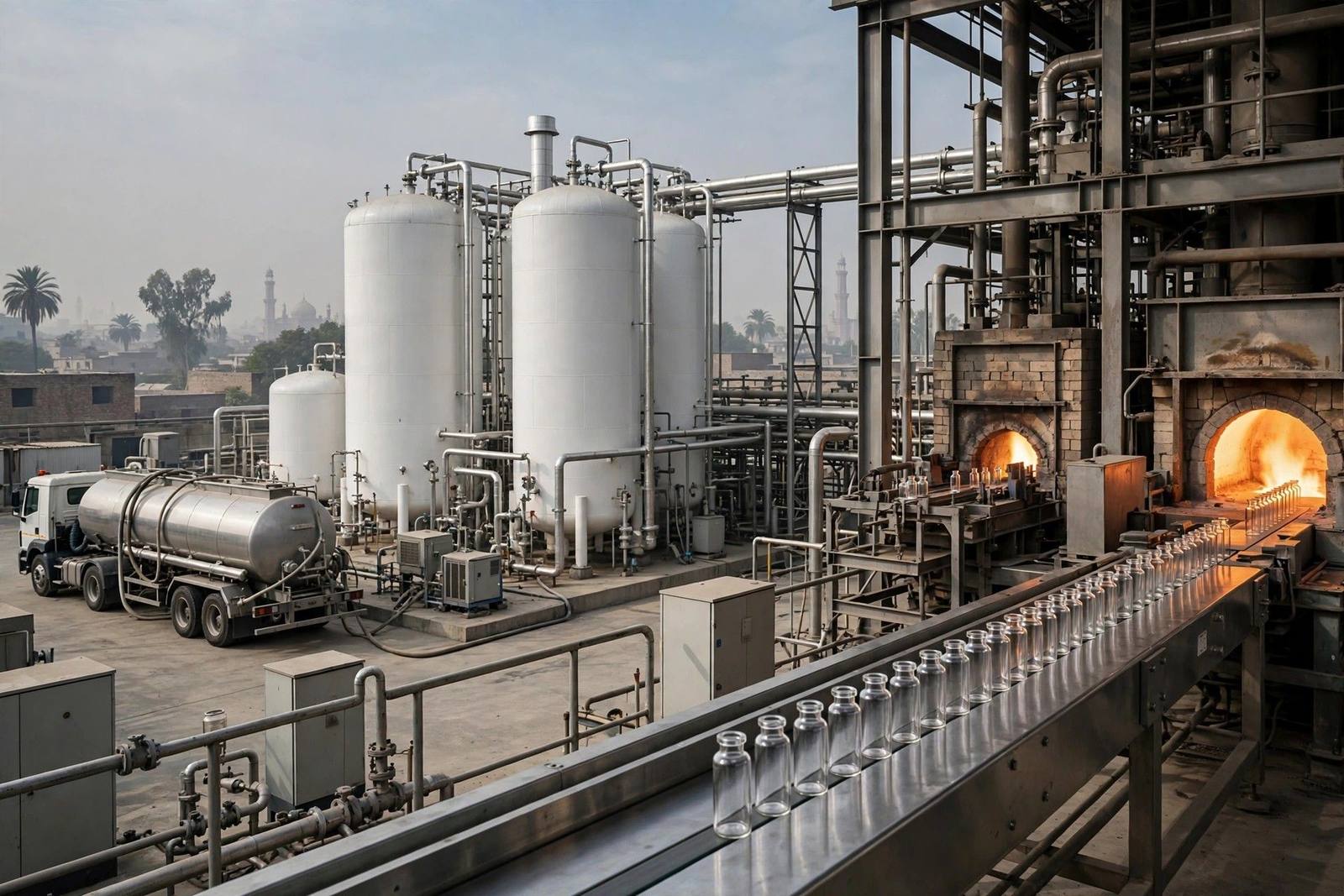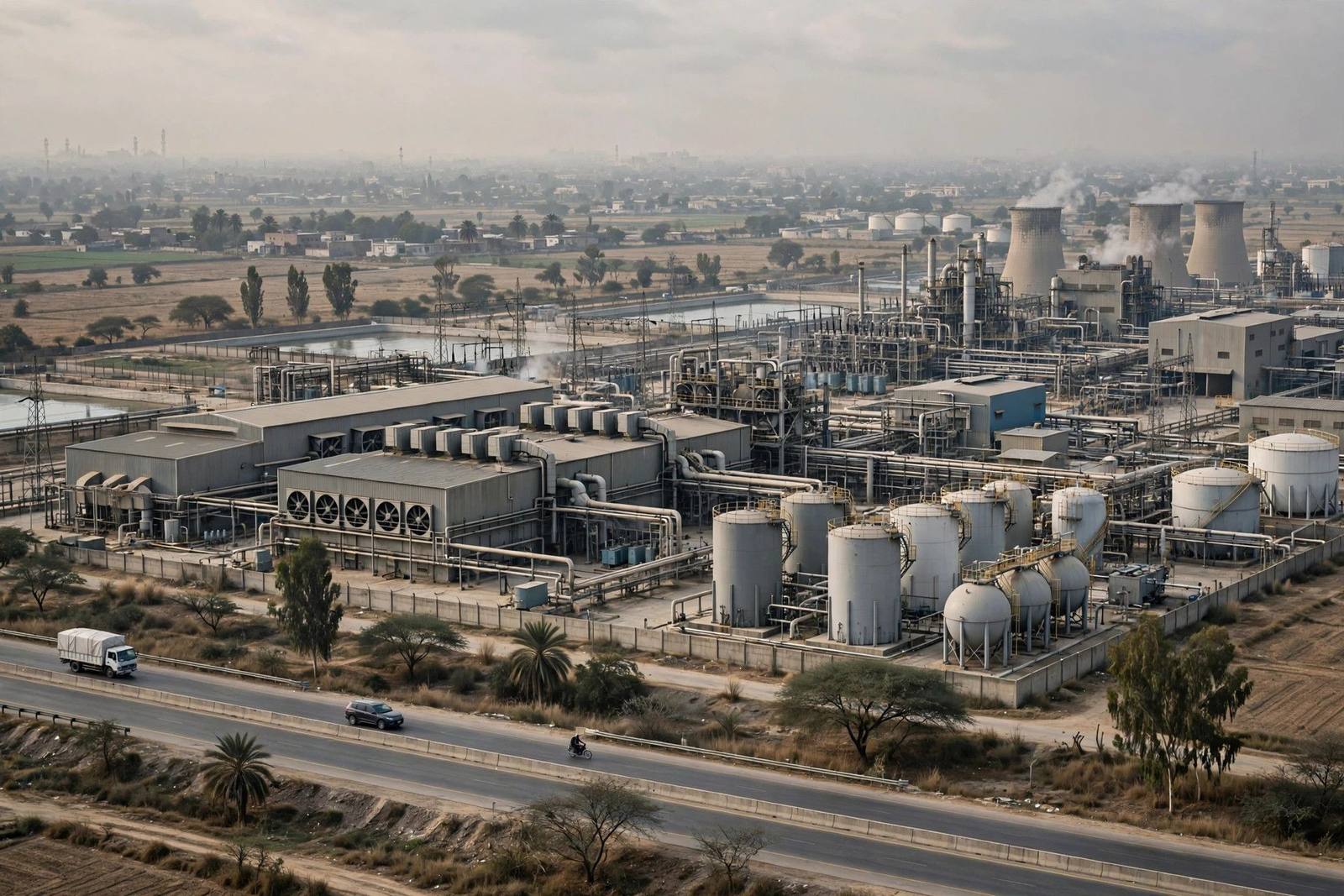
KARACHI: Take the Grand Trunk Road north from Lahore towards Kala Shah Kaku and you pass one of the founding sites of Pakistan's chemical industry. Ittehad Chemicals — ICL on the Pakistan Stock Exchange — makes caustic soda, the workhorse alkali that dissolves into soap making, textiles, paper and a hundred other processes, together with the chlorine family of chemicals that electrolysis produces alongside it. Its complex has been a state enterprise, a nationalised casualty, and a privatised family-run business — which is to say, its history is Pakistan's industrial history told from one factory gate.
United Chemicals: commissioned in 1964
The company was established in 1962 under the name United Chemicals, and operations were commissioned in 1964. The plant, set up with Italian technology from Oronzio De Nora, began with an installed capacity of about 60 tonnes a day of caustic soda and 54 tonnes a day of chlorine — a serious unit for a country then importing most of its basic chemicals. Rising demand brought the first expansion in 1969, lifting capacity to roughly 90 tonnes a day of caustic and 81 tonnes of chlorine.
Electrolysis is the key to everything that followed, so it is worth a sentence of chemistry. Pass current through brine and you get, in fixed proportions, caustic soda, chlorine and hydrogen. A chlor-alkali maker therefore never chooses its product mix freely: every extra tonne of caustic drags chlorine into the world with it, and chlorine must be sold — as liquid chlorine, hydrochloric acid, sodium hypochlorite and other derivatives — or the whole plant slows. The art of the business, at Kala Shah Kaku as everywhere, is balancing that pair.
Nationalisation, renaming and merger
The 1970s rewrote the company's identity. Under the economic reforms of the Bhutto era, United Chemicals was nationalised — company histories place the renaming to Ittehad Chemicals at the start of that decade — and placed under the Federal Chemicals & Ceramics Corporation, the state holding body for the sector. Another nationalised unit, the insecticide business renamed Ittehad Pesticides, was later merged into Ittehad Chemicals, widening the site beyond chlor-alkali.
State ownership brought investment without commercial urgency: capacity rose again in 1983 to about 150 tonnes a day of caustic soda and 135 tonnes of chlorine, and further expansions followed in later years. But the nationalised decades also left the turbulence the company itself acknowledges — ageing management systems, financial strain and a workforce and plant shaped by public-sector habits. Ittehad's story in this period is the standard Pakistani parable, neither uniquely bad nor uniquely good: the state could build chemical plants, and did, but running them for profit was another discipline entirely.
Privatised in 1995: the Chemi Group era
The ending of that chapter came in July 1995, when Ittehad Chemicals was denationalised through the Privatisation Commission and management passed to the Chemi Group of Industries, the Lahore business house whose name later framed the Ittehad Group identity around the company. The listed company itself had been incorporated in its modern form on 28 September 1991, in preparation for that transition to life as a quoted, privately controlled business.
Privatisation, in the company's telling, set off a programme of expansion and stabilisation: capacity climbed in stages from the levels inherited from the state era towards several hundred tonnes a day — about 380 tonnes a day by 2006 in the company's own historical summaries — and the product slate widened into specialities. The plant also added sulphuric acid production for captive use, an unglamorous but telling detail: integrated sites make their own intermediates where they can, because every bought-in tonne is someone else's margin.
What Kala Shah Kaku makes today
The present product line starts with caustic soda in solid, liquid and flake forms, and runs through the chlorine tree: liquid chlorine, hydrochloric acid and sodium hypochlorite — liquid bleach — together with zinc sulphate, calcium chloride, chlorinated paraffin, bleaching earth sold under the Shaffaf name, sulphuric acid and lime. That breadth is not restlessness; it is the chlorine-balance problem solved commercially, each derivative a destination for molecules the electrolysis hall produces whether ordered or not.
The buyers are Pakistan's process industries: textile mills scouring and mercerising cloth, soap and detergent makers, paper mills, water-treatment and food applications for calcium chloride, drilling-fluid and de-icing uses further afield. ICL's market overlaps directly with Sitara Chemical Industries, its Faisalabad chlor-alkali rival, and the two profiles read together give a beginner the whole structure of the trade; our sector guide to chemical stocks on the PSX places both among the wider industry.
How the money is made: power, salt and the pair price
Chlor-alkali economics reduce to three numbers: the price of caustic soda, the realised value of the chlorine family, and the cost of electricity. Electrolysis is among the most power-hungry processes in industry, so the tariff — grid, captive generation or a blend — sits at the centre of the cost base, alongside salt, the humble raw material, and membrane and plant upkeep. When caustic prices are strong and power is manageable, the spreads are handsome; when energy costs surge or imported caustic lands cheaply at Karachi, margins compress from both ends at once.
Two structural features deserve attention. First, the co-product discipline: because caustic and chlorine emerge together, ICL cannot simply chase the stronger price — it must keep the whole slate moving, which is why derivative capacity is strategic, not decorative. Second, import competition: caustic soda is traded globally, often priced keenly by producers abroad for whom chlorine is the prize and caustic the by-product, so the landed import price at Karachi frames what any Pakistani maker can charge. Compare that exposure with Engro Polymer, which solves the same chlorine-balance equation by consuming its chlorine in PVC.
Strengths, risks and controversies
Ittehad's strengths are site, slate and survival: a six-decade industrial complex on the GT Road near Lahore's markets, one of the broadest derivative ranges in domestic chlor-alkali, and a company that has already lived through — and out of — nationalisation, the hardest management school Pakistan offers. Its speciality products, from bleaching earth to calcium chloride, carry better margins than commodity caustic and cushion the cycle.
The risks are energy first, always; a business that buys electricity to split salt lives and dies by the tariff and by the reliability of supply. Commodity caustic exposes it to import pricing and to the textile cycle, since cloth processing is a major consumer. Chlorine handling imposes permanent safety obligations, and older plant — even expanded and modernised in stages — competes against newer membrane capacity elsewhere in the country. The privatisation-era controversies that attached to many 1990s sales in Pakistan form part of the historical background investors in that generation of companies should know exists, even when, as here, three decades of private operation have long since become the operative fact.
The name on the PSX and the investor who studies it
ICL — a ticker that handily confuses newcomers, since it belongs to Ittehad Chemicals and not to any similarly initialled group — trades in the chemical sector as a mid-sized industrial. Its shares are quoted on the exchange in Karachi's successor market, the PSX, and results are followed most closely by investors who track caustic prices and energy tariffs rather than by the momentum crowd. Dividends have been paid in stronger years in the manner of cyclical industrials — present when spreads allow, absent when power costs eat them; our guide to how PSX dividends work covers the mechanics.
The investor who studies ICL is studying Pakistan's basic industry at its most elemental: salt, power and alkali. This article is educational content, not financial advice. Learn to read a chlor-alkali P&L here — pair prices, power line, derivative mix — and you have learned the grammar of half the chemical sector, from Faisalabad to Port Qasim.
Six decades on the GT Road: what survival means
There is a temptation to treat a company like Ittehad as a footnote — mid-sized, family-run, in an unfashionable basic chemical. That misreads what its survival represents. The Kala Shah Kaku site has operated under private founders, a ministry, a state corporation and a privatised family group; it has made its core product through wars, nationalisation, energy crises and currency collapses; and it enters its seventh decade still expanding its derivative slate. In an economy where industrial firms routinely die with their founding generation or their founding policy regime, a chlor-alkali complex that has outlived four regimes of ownership is evidence of something real: a product the country cannot do without, a site whose location keeps paying, and an operating knowledge — how to run electrolysis cells through a Pakistani summer, a gas shortage and a grid failure — that lives in its workforce and cannot be imported.
The product development since privatisation tells the same story in chemical form. Commodity caustic alone leaves a maker naked to import prices; each derivative added — zinc sulphate for agriculture and industry, calcium chloride for drilling and food uses, bleaching earth for edible-oil refining, chlorinated paraffin for plastics — moves a share of output into niches where Pakistani supply is valued for proximity and service, not merely priced against a ship from the Gulf. Watch the mix in the annual report and you are watching management's answer to the only question that matters in basic chemicals: how much of what we make can command a speciality's margin rather than a commodity's?
Energy strategy is the twin question. Membrane-cell modernisation, captive options and load management decide whether an old site's cost per tonne can stand beside newer rivals; readers should track the power cost discussion in the directors' report with the same attention they give the sales line, because in chlor-alkali the two are equally revenue-shaped facts.
Geography completes the analysis. Kala Shah Kaku sits within economical reach of Lahore's industrial estates, the textile belt of Faisalabad and Sheikhupura, and the northbound GT Road corridor — a natural distribution fan for heavy, low-value-to-weight chemicals whose delivered cost is freight with a product attached. Chlorine derivatives in particular travel badly and store worse, which hands the local maker a structural advantage over imports that no tariff needs to create: a ship can land caustic at Karachi, but liquid chlorine and hypochlorite are, in practice, regional products made near their users. Ittehad's derivative breadth exploits exactly that physics, and it is why a plant founded when Pakistan had barely an industrial base still anchors its market in a far more competitive century.
That longevity also frames the company's place in its sector's memory. Ittehad is one of the names Pakistani chemical buyers have dealt with continuously since the 1960s — through the nationalised decades when allocation mattered more than marketing, and through the privatised decades when it did not. Supplier relationships in basic chemicals are renewed order by order, yet they accumulate: the textile group that bought caustic from United Chemicals buys derivatives from Ittehad today, and the plant's dispatch office is part of the region's industrial furniture. Reputation of that vintage does not appear in any valuation multiple, but its absence would appear in the volumes soon enough.
For the new reader, a closing practical note: ICL reports on a June financial year, and its quarters are best read against published caustic-soda price trends and the power tariff notifications of the same period. Two external series explain most of what the accounts then confirm — a reminder that in basic chemicals, the market writes the first draft of every result.
Continuity of that kind is the thread a long-term reader follows through every regime the plant has lived under — the same electrolysis halls, successively re-equipped, still splitting the same salt into the same indispensable pair of chemicals.
Key takeaway: Ittehad Chemicals is a founding chlor-alkali complex — established in 1962 as United Chemicals, commissioned in 1964, nationalised and renamed, then privatised in 1995 — earning its living by selling caustic soda and a broad family of chlorine derivatives against the cost of power.