KARACHI: Pakistan spent a century treating natural gas as the cheap, abundant inheritance of the Sui field — the fuel that ran its kitchens, fertiliser plants and power stations at prices so low that waste felt free. Then the inheritance ran down. As domestic fields matured and demand kept growing, Pakistan did what a dozen Asian economies did before it: it went to sea, contracting liquefied natural gas from Qatar, building import terminals at Port Qasim, and wiring a supercooled global commodity into a pipeline grid built for cheap local gas. The result is a system that keeps factories and winter stoves supplied, at a price — in dollars, in subsidy arguments and in geopolitics — that this guide unpacks piece by piece.
Why Pakistan needed LNG at all
The starting point is decline, not fashion. Pakistan's great gas fields, led by Sui in Balochistan, were discovered in the 1950s and produced for generations; output from the mature system has been falling for years even as connections, industry and population grew. Exploration added smaller fields but no second Sui. The gap showed up first as winter rationing for homes, CNG stations closing in waves, fertiliser plants running below capacity, and power stations burning expensive furnace oil and diesel instead — the substitution that swelled Pakistan's oil import bill. LNG was the fastest available bridge: a global market existed, ships could be chartered, and a terminal could be built in a fraction of the time a pipeline from Iran or Turkmenistan — projects discussed for decades and blocked by sanctions, security and finance — would require. Imports began in 2015 with the first terminal at Port Qasim, and the fuel, regasified and injected into the national grid as RLNG, became a permanent layer of supply rather than the emergency stopgap it was sold as.
How a cargo becomes gas in the grid
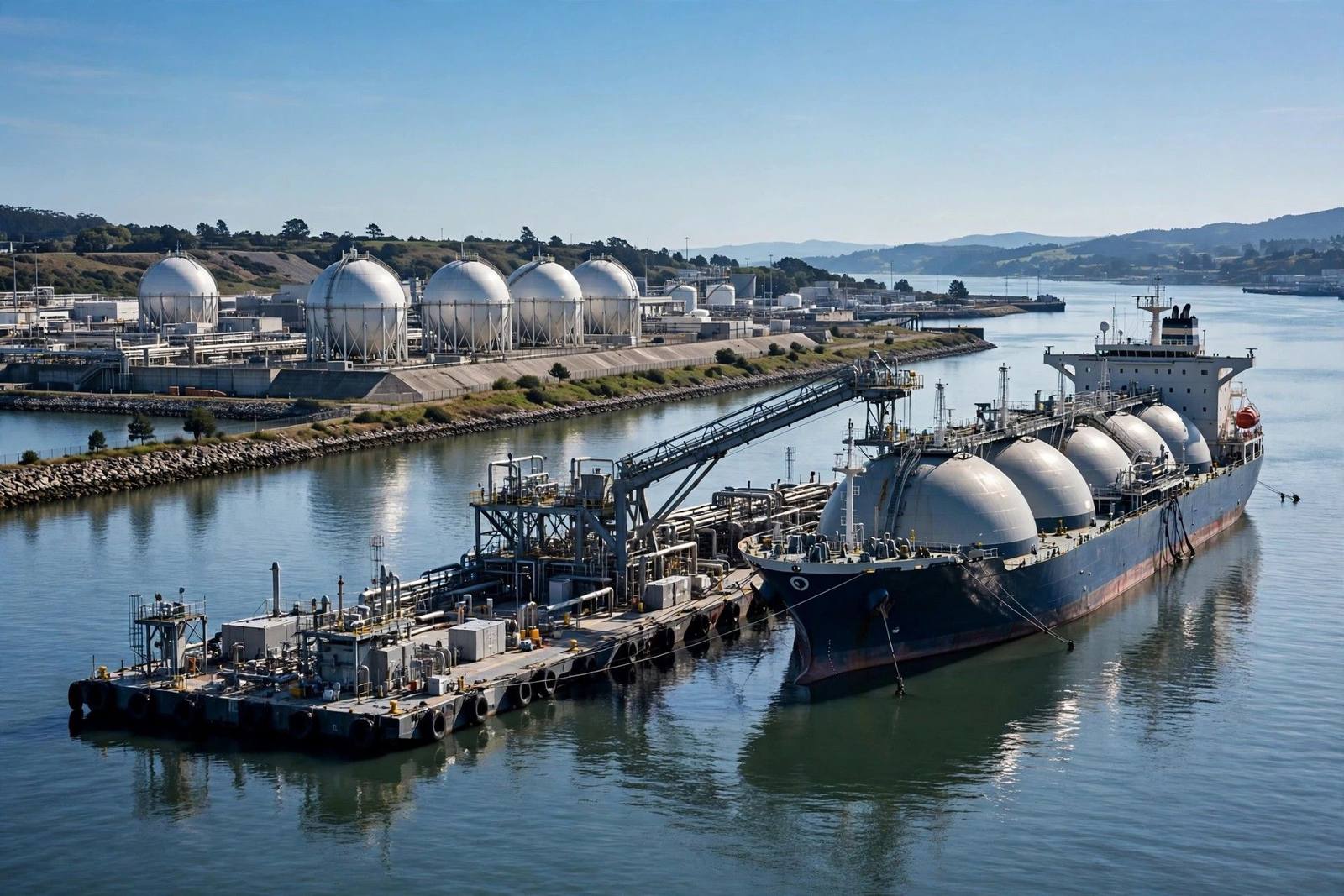
LNG is natural gas cooled to about minus 162 degrees Celsius, at which point it shrinks to a liquid a fraction of its gaseous volume and can be carried in double-hulled tankers. Pakistan's supply arrives mainly under long-term sale and purchase agreements with Qatar, negotiated state-to-state and executed through Pakistan State Oil and Pakistan LNG Limited, supplemented by spot and short-term cargoes bought through tenders when prices or shortages invite them — and declined, in the worst price spikes, when a single cargo costs more than the system can recover. At Port Qasim, two floating terminals — storage and regasification units moored offshore, developed by private sponsors including Engro's Elengy venture and the GasPort consortium — receive the ships, warm the liquid back into gas, and push it into the transmission system of the two great utilities, Sui Northern and Sui Southern, whose networks divide the country between them.
Every step charges rent. The Qatari price in long-term contracts is conventionally linked to crude oil — a slope of the oil price, in industry language — so RLNG inherits oil's volatility even though it is gas. The terminals earn a regulated tolling fee for regasification, payable for capacity whether or not cargoes arrive at the contracted pace, a fixed dollar cost that becomes politically contentious whenever spot prices or demand make imports look expensive in hindsight. Shipping, port charges, and the utilities' own margins and losses layer on top before the gas reaches a power plant, a fertiliser factory or a Lahore kitchen. Understanding LNG's price in Pakistan means refusing to look for a single villain: it is a stack of contracted charges, each defensible alone, summing to a fuel far dearer than the legacy wellhead gas whose prices were set by old policies and older fields.
The pricing knot: one grid, two gases, endless argument
Pakistan's deepest LNG problem is not procurement but plumbing of the financial kind. The grid carries two gases with radically different costs — cheap legacy gas, priced under historical wellhead formulas, and expensive RLNG — into one pool of consumers whose tariffs were designed for the cheap era. Successive governments ring-fenced RLNG in law for the sectors it was imported for, principally power and export industry, but physical molecules do not respect legal fences, and winter regularly forces the politically explosive diversion of RLNG into domestic burners, at costs the household tariff never recovers. The difference accumulates where such differences always accumulate in Pakistani energy: in utility balance sheets, in delayed subsidy claims, and in the gas-sector cousin of circular debt, documented in official and lender reporting as its own growing stock of arrears.
The regulator, OGRA, determines RLNG prices monthly from the cargo costs and charges in the stack — a process that produces a published number and a fresh controversy each winter, when global prices, the exchange rate and household need collide. Industry, meanwhile, compares its RLNG tariff with the subsidised or legacy-priced gas of competitors and with the energy costs of rival exporters abroad, and files its case in every budget consultation. There is no stable resting point in this argument because its terms keep moving; there is only the question of who is assigned the difference between what gas costs Pakistan and what Pakistanis are charged for it.
Qatar, contracts and the diplomacy of keeping warm
The long-term Qatari agreements — an original fifteen-year arrangement and a later ten-year contract on terms the government of the day presented as improved — are among Pakistan's most consequential commercial documents, and among its least public. Their broad architecture is known: oil-linked pricing, scheduled cargoes, take-or-pay style commitments softened by flexibility provisions whose details emerge only in disputes and renegotiations. Around them sits a wider relationship — Qatari investment interest, manpower, and the Gulf diplomacy that also underpins the external financing described in Pakistan's external financing — which means a gas negotiation in Doha is never only a gas negotiation. The spot market supplies the alternative and the discipline: when Asian spot prices fall below contract levels, Pakistani buyers tender aggressively and critics ask why contracts were signed; when spot prices explode, as they did in the crisis years of the early 2020s, cargoes are won by Europe and richer Asia, Pakistani tenders fail, and the same contracts look like the only sensible thing the state ever did. Both reactions are available in the archive, sometimes about the same cargo season.
Terminals, capacity and the third-terminal question
Pakistan's two operating floating terminals have, between them, capacity that in pure engineering terms exceeds average import demand — which is why proposals for additional terminals, onshore facilities and private 'virtual pipeline' schemes have generated as much litigation and policy argument as construction. Terminal sponsors earn on contracted capacity; the state system pays for capacity it may not use in soft-demand months; private industrial buyers have sought direct access to import their own cargoes through spare capacity, pressing against a regulatory framework built around state buyers. The arguments are technical — pipeline capacity from Karachi northwards is itself a constraint, and gas injected at Port Qasim must physically travel to Punjab's demand centres — but the stakes are commercial: whoever controls terminal access controls the gateway through which a rising share of Pakistan's energy enters.
What LNG changed — and what it could not
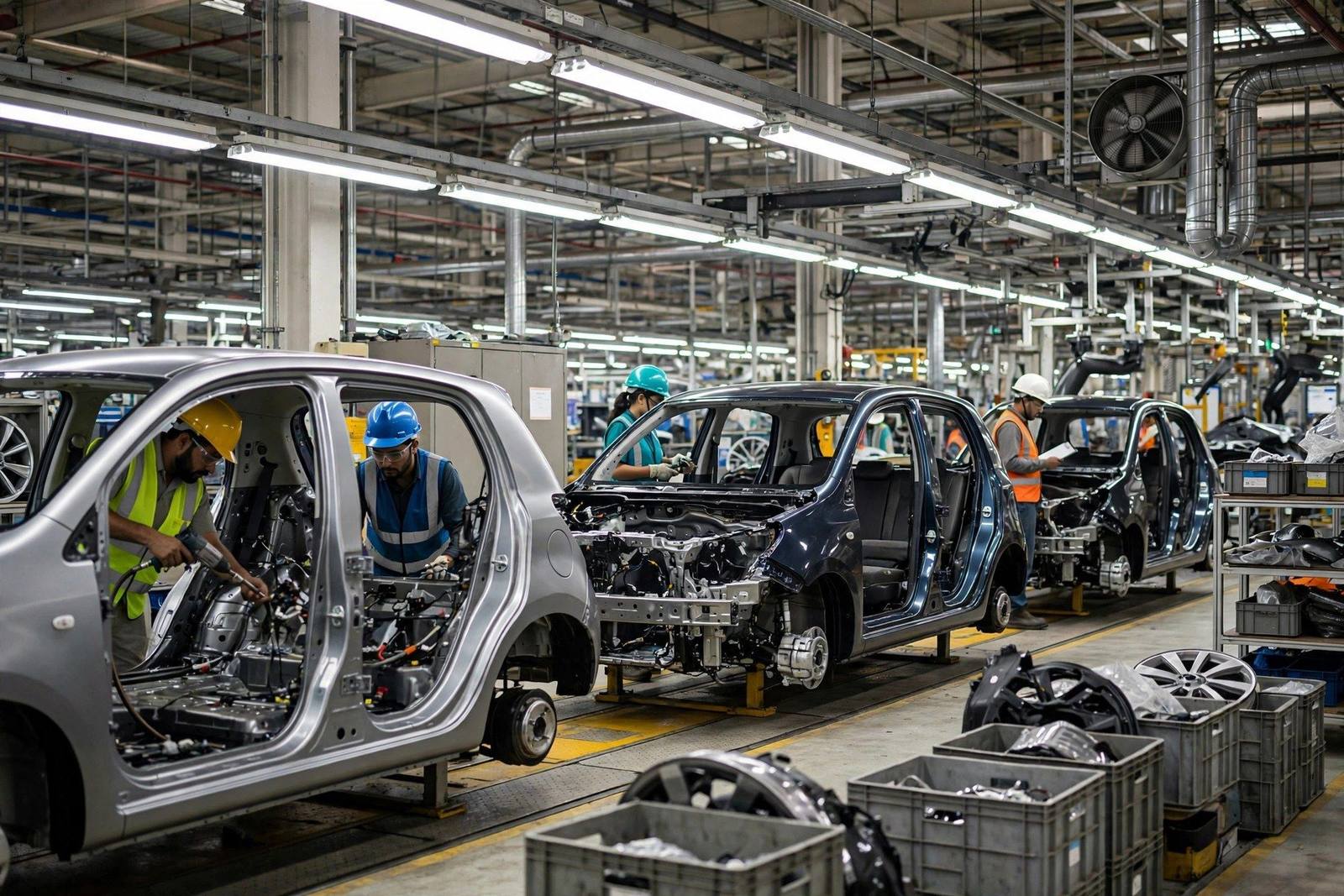
Give the fuel its due first. LNG ended the worst years of absolute shortage: power stations that would have sat idle or burned oil at multiples of the cost ran on gas; fertiliser production recovered enough to matter for food security and the export lines in Pakistan's exports explained; export factories in Punjab received a fuel supply their buyers' delivery schedules could rely on; and households, in most winters, cooked. The cost was a new exposure — to Asian spot markets, to the rupee-dollar rate applied to every cargo, and to the decisions of a single dominant supplier — layered onto a pricing system that still pretends, in its legacy tariffs, that gas is nearly free. Pakistan's energy mix now assumes LNG permanently; the open questions are its share, its price formation, and whether demand-side honesty — charging sectors something nearer cost, with protection aimed at households rather than molecules — ever catches up with the import infrastructure the country has already built.
How to read LNG news
When a tender is issued, awarded or scrapped, ask four questions: what price, against which benchmark, for delivery in which month, and who ultimately pays the difference if the end-user tariff does not cover it. When a terminal or contract is announced, ask what capacity payment or take-or-pay obligation the state has accepted, and for how long. Those two habits convert most LNG headlines from drama into arithmetic. This article is educational content, not financial advice.
The demand side: who gets the gas, and who waits
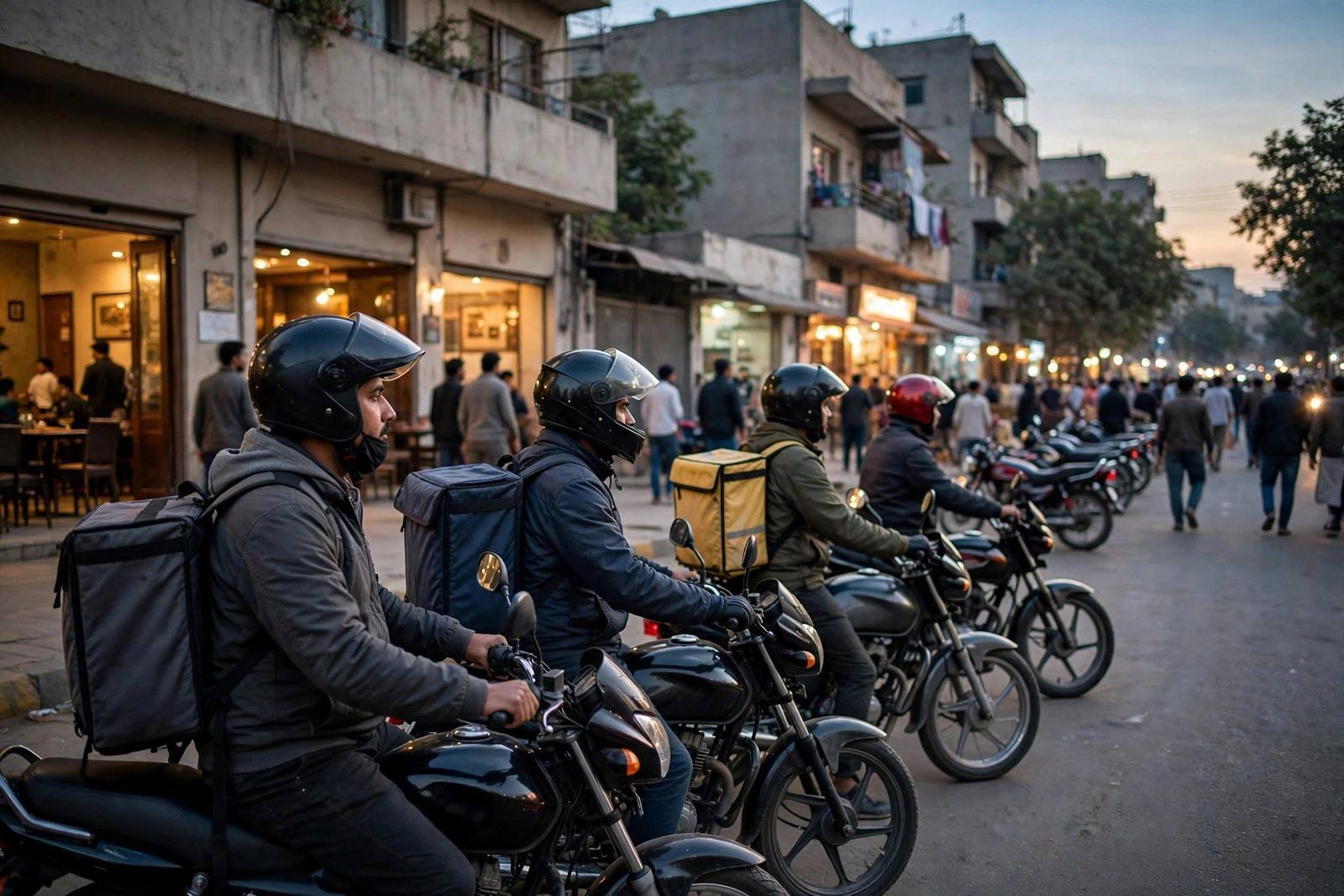
Scarcity is rationed in Pakistan by a priority order that is partly written in policy and partly improvised each winter. Households sit at the top of the stated order for network gas — a political fact rooted in the millions of domestic connections whose winter cooking and heating failures lead news bulletins — followed in varying sequence by power generation, fertiliser production as a food-security industry, export-oriented industry whose gas keeps dollar orders alive, general industry, and at the bottom the compressed-natural-gas stations for vehicles, whose decline from a nationwide network to a marginal service is the visible archaeology of the shortage. RLNG was supposed to relieve this ladder by adding supply dedicated to power and industry; in practice, winter peaks climb the ladder and pull imported gas into homes, while industry in Punjab endures scheduled closures that exporters price into their promises to foreign buyers. The fertiliser case shows the stakes in their purest form: gas is not merely fuel to a urea plant but feedstock, the raw material of the product itself, so a curtailed plant is not an inconvenience but lost harvest insurance — which is why fertiliser supply, food prices and LNG cargoes belong in the same conversation, and why the sector's listed producers discuss gas curtailment in their results with the gravity other industries reserve for demand collapses.
Looking forward, the system faces a pincer. On one side, indigenous production continues its decline and each year the import share must rise merely to stand still. On the other, the global LNG market Pakistan buys from is being reshaped by new supply from the United States and Qatar itself arriving later this decade, which most analysts expect to soften spot prices — relief that would flow straight into Pakistan's monthly RLNG determinations, if the contracts, terminal capacity and pipeline room are arranged to capture it. Arranging them is unglamorous procurement statecraft: renegotiating flexibility where possible, keeping terminal access contestable, maintaining creditworthiness with suppliers through the payment discipline whose absence fills the gas circular debt, and — hardest of all — reforming end-user tariffs in the fat years of cheaper cargoes rather than only in the lean ones. The cargoes will keep coming either way; the question the next decade answers is whether Pakistan buys them as a system or as a recurring emergency.
Key takeaway: LNG keeps Pakistan supplied after its own gas fields' decline — Qatar cargoes through Port Qasim terminals — but its oil-linked dollar price, stacked on terminal and network charges, collides with tariffs built for cheap Sui gas, and the difference becomes debt.