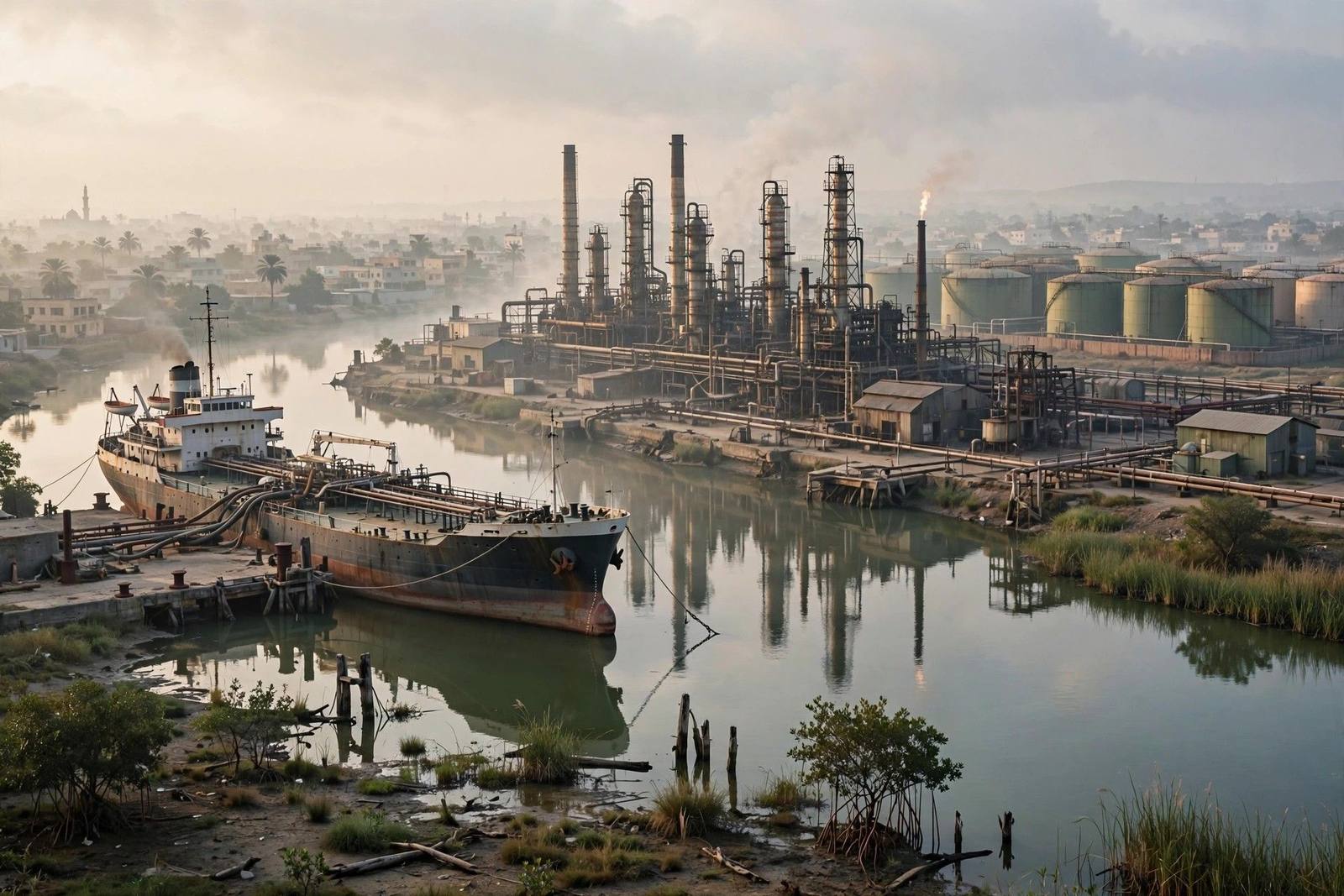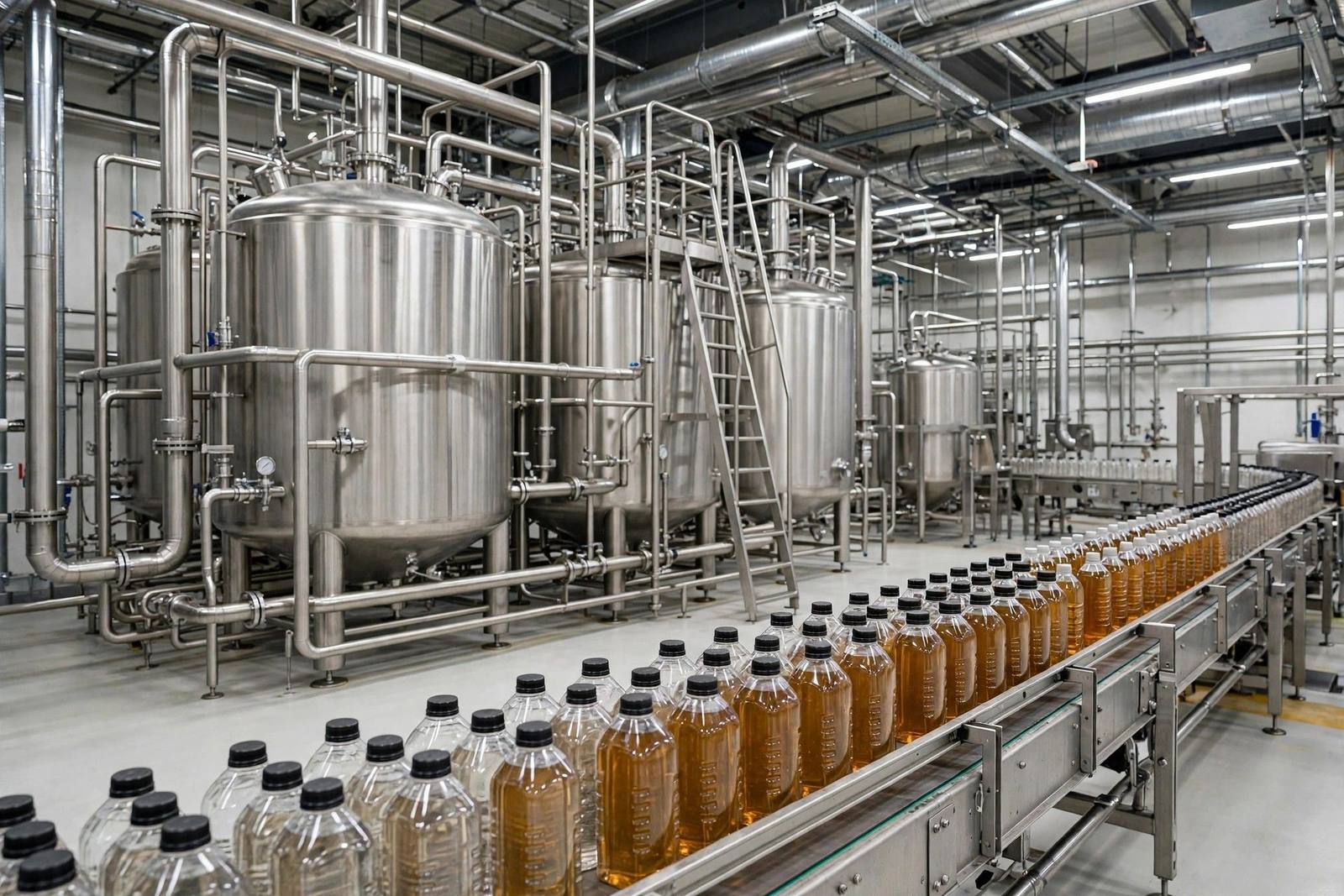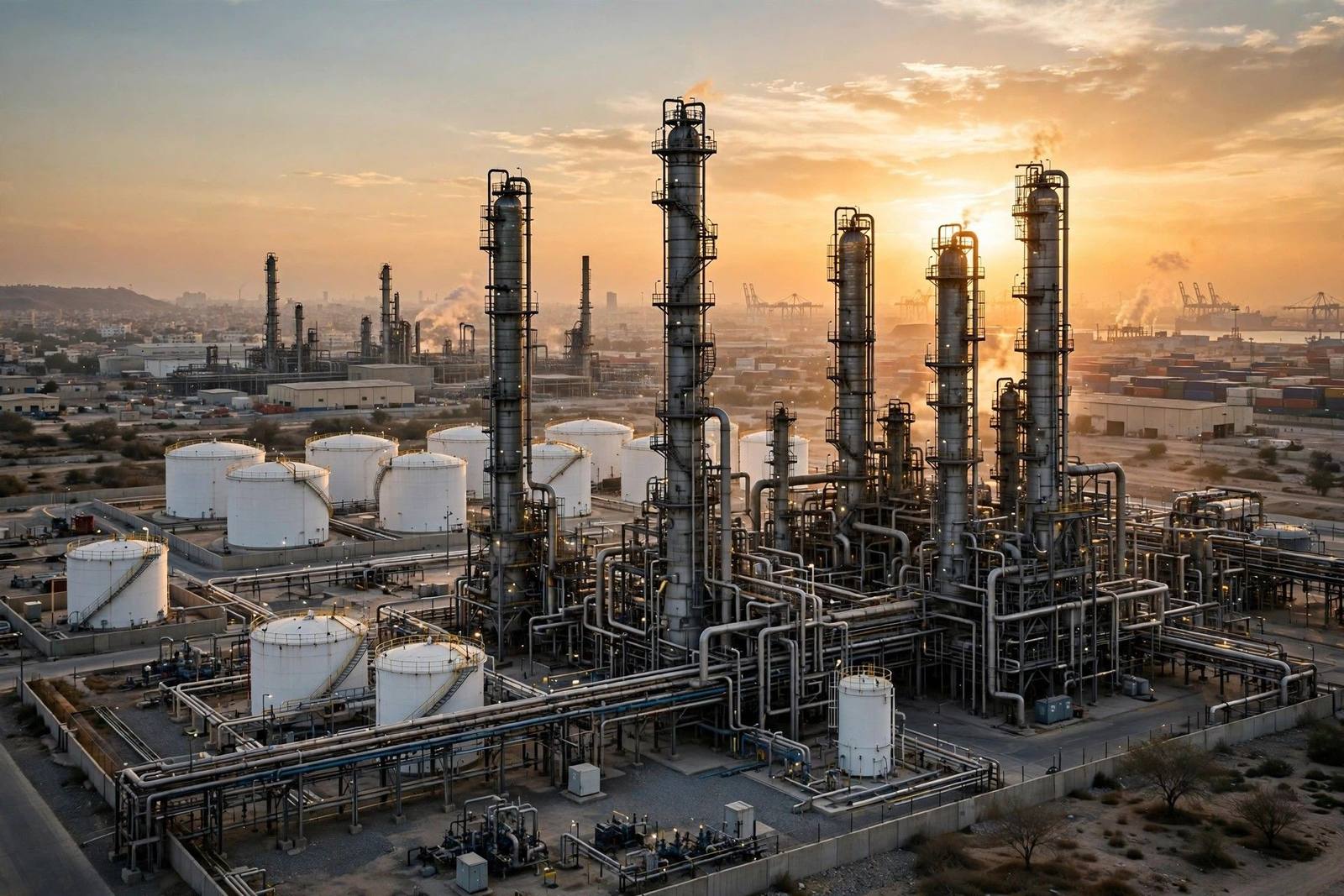
KARACHI: Every engine oil drained in a Pakistani workshop, every drum of industrial lubricant and much of the asphalt under the country's roads begins life in one place: National Refinery Limited at Korangi, Karachi. NRL, as the market calls it, is not Pakistan's largest refinery, but it is its most specialised. It is the country's only producer of lube base oils — the refined foundation from which all finished lubricants are blended — and the only refinery with a BTX petrochemical plant making benzene, toluene and xylene for the chemicals industry. Incorporated in 1963, nationalised in the 1970s, privatised in 2005 into the Attock group, and listed throughout, NRL has been a KSE-100 constituent and one of the exchange's classic cyclical stocks. This profile explains how a three-in-one refinery came to be built at Korangi, how it makes money, and why its lube business gives it a character no other Pakistani refiner shares.
Three refineries inside one fence
The first thing to grasp about NRL is that it is not one refinery but a complex of three, built in layers over two decades, plus a petrochemical unit. The story starts with the lube refinery: commissioned in June 1966, it was Pakistan's first plant designed to make lube base oils from crude, at a project cost of about Rs104 million — serious money in 1966. A fuel refinery followed in April 1977, adding the conventional products every refinery sells: motor gasoline, high-speed diesel, kerosene, jet fuel, liquefied petroleum gas and furnace oil. In April 1979 the BTX unit was commissioned, extracting aromatics that feed downstream chemical makers. Then, in 1985, a second, larger lube refinery — Lube-II — was completed, roughly tripling the lube complex's scale and entrenching the position NRL still holds: sole domestic producer of lube base oils, in a country that would otherwise import every drop of them.
In its modern form the complex processes on the order of 70,000 barrels of crude a day — company briefing material puts crude capacity at about 2.3 million tonnes a year in fuel terms with lube capacity on top — and sells through two reporting segments, fuel and lube. The lube segment produces multiple grades of base oils alongside asphalt, waxes and rubber process oil; the fuel segment sells the standard barrel of Pakistani products, with surplus naphtha typically exported. Later upgrades have kept the complex relevant to tightening fuel standards: a diesel desulphurisation and isomerisation project, completed in the late 2010s, let NRL produce lower-sulphur diesel and more, better gasoline — the company describes itself as the only refinery to have produced Euro-V-compliant high-speed diesel. The site at 7-B Korangi Industrial Area connects by pipeline toward the port and upcountry, so crude comes in and products go out without everything moving by road tanker.
1963 to 2005: state project, nationalisation, privatisation
NRL was incorporated on 19 August 1963 as a public limited company, in the first great wave of Pakistani industrialisation. At independence the country had inherited almost no refining capacity — a small refinery at Attock processed under half a million tonnes a year — and Karachi's first modern refinery, Pakistan Refinery, had only just been commissioned in 1962. National Refinery was the state's answer to the next gap: lubricants and the heavier end of the barrel, which Pakistan imported entirely. The lube-first design was a deliberate piece of industrial policy, and the complex grew exactly as the 1960s planners drew it — lube plant first, fuel plant a decade later, petrochemicals after that.
The political weather then broke over it, as it did over all Pakistani industry. In January 1972 the government of Zulfikar Ali Bhutto took the refinery over under the Economic Reforms Order, and NRL spent more than three decades as a state-owned enterprise — competently run by the standards of the era, a regular winner of stock-exchange top-companies awards, and listed on the Karachi exchange from 1970, but investing at the pace the public sector allowed. The long state chapter ended in 2005, when the privatisation programme sold control to the Attock group: accounts from the period record the Attock Group of Companies holding 51 per cent after privatisation. The group's grip is exercised today chiefly through its two listed energy arms — Attock Refinery Limited and Pakistan Oilfields Limited hold 25 per cent each — with the Islamic Development Bank holding a further 15 per cent, a register that ties NRL into Pakistan's most vertically integrated private oil family: the same group explores for crude through Pakistan Oilfields, refines it at Attock and National, and sells products through Attock Petroleum. Few Pakistani listed companies sit at the junction of so many related parties, and NRL's governance — an Attock-nominated board, group chief executives, and crude and product flows priced within a regulated system — has to be read with that structure in mind.
How a refinery — especially this one — makes money
Refining is the business of the spread. A refinery buys crude oil at international prices, runs it through its units, and sells the resulting basket of products at prices that, in Pakistan, are set by a regulated formula linked to import parity — what the same product would cost landed from the Gulf. The difference between the crude bill and the product basket, the gross refining margin, must cover energy, chemicals, labour, maintenance and capital costs before anything is left for shareholders. Two features of Pakistan's formula have shaped NRL's life for decades. The first is "deemed duty" — a customs-style levy embedded in product prices, historically granted on diesel and other products so that refineries could accumulate funds for upgrading; its rates have been cut, converted and argued over in budget after budget, and each change lands directly on refinery earnings. The second is inventory: a refinery holds weeks of crude and products, so when oil prices fall sharply, the stock it bought dear must be sold cheap, and refiners book heavy inventory losses; when prices rise, the same mechanics flatter them. NRL's results have swung accordingly, from record profits in strong-margin years to deep losses when prices, the rupee and demand fell together.
The lube segment softens that cycle, and it is why NRL is not simply a smaller Pakistan Refinery. Lube base oils are speciality products with steadier demand — every vehicle, factory and transformer in the country needs lubricants regardless of the fuel cycle — and as the sole local producer, NRL sells into a market where the alternative is imports at full landed cost. Its base oils feed the blending plants of the oil marketers and lubricant companies, including Wafi Energy Pakistan and Hi-Tech Lubricants, while its asphalt business swells with road-building seasons and its BTX aromatics go to chemical buyers no other refinery can supply. Company presentations have long made the point plainly: this is the only lube refinery in the country, the only refinery BTX plant, and a market leader in bitumen. That mix — commodity fuels on one side, near-monopoly specialities on the other — is the whole investment character of the stock in one sentence.
Strengths, risks and the upgrade question
NRL's strengths start with irreplaceability. Pakistan cannot currently make lube base oils anywhere else, and rebuilding such a complex from scratch would cost, by the company's own estimate, well over a billion dollars in plant alone — a moat created by 1960s state planners and defended ever since by economics rather than law. Its Attock-group ownership brings crude-supply relationships, technical depth and a parent ecosystem that understands refining cycles. Its product slate is the most diversified of any Pakistani refiner, and its Karachi location, pipeline links and export option for naphtha and base oils give it logistical flexibility smaller inland plants lack.
The risks are equally real. The fuel half of the complex shares the industry's structural problem: Pakistan's refineries are old, mostly hydroskimming or moderately complex, and produce too much furnace oil and too little of the petrol and diesel the market wants — the problem the national refinery policy and upgrade programmes, discussed in our explainer on Pakistan's oil import bill, are meant to solve. Upgrading NRL to a modern, deep-conversion complex would require capital on a scale that dwarfs its ordinary cash flows, raised in a sector where the pricing formula has changed often enough to make lenders cautious. Margins remain hostage to international cracks, exchange-rate swings feed straight into inventory gains and losses, and the lube monopoly, while durable, serves a market whose growth now includes a slow drift toward synthetics and, eventually, electric vehicles that use no engine oil at all. The honest summary is that NRL owns a genuinely scarce asset wrapped inside a genuinely difficult industry.
Reading NRL through its two segments
The cleanest way to follow the company is the way it reports itself: a fuel segment and a lube segment, sharing one crude slate and one site. The fuel segment is the volume business — diesel, petrol, jet fuel, kerosene, LPG and furnace oil sold to oil marketing companies, industry and the defence trade — and it behaves like fuel everywhere: regulated prices, thin and volatile spreads, violent inventory effects. The lube segment is the value business. From the same crude, the lube refineries draw the heavy fractions that other refiners burn or sell cheap, and convert them into base oils of several grades, bitumen in its seasonal grades, waxes and process oils. Its customers are blenders and industrial users who cannot easily substitute: a lubricant blender in Karachi or Lahore either buys NRL base oil or imports it at a landed cost that sets NRL's pricing ceiling — a ceiling that has historically left the segment with margins the fuel side can only envy.
Seasonality links the two halves in ways annual figures hide. Bitumen demand peaks with the road-building calendar and the dry months; lubricant demand follows the vehicle fleet's service rhythm and the agricultural machinery seasons; diesel and petrol follow the national pattern of harvesting, heat and holiday travel. Exports act as the safety valve — surplus naphtha from the fuel side, and at times base oils from the lube side, move out through Karachi when the domestic market cannot take them, tying part of the company's realisations to Gulf pricing in dollars. A reader who separates these threads in each quarterly report — segment profit, throughput, and the inventory line — will understand NRL's year before the headline numbers settle. It is more work than watching a pure fuel refiner, and it is precisely the work the stock rewards.
NRL on the PSX: a blue-chip cyclical with a speciality heart
NRL has been listed since 1970 and sits, in most years, among the exchange's significant names — a KSE-100 and KSE-30 constituent in recent index compositions — with the Attock bloc and institutions anchoring the register and a meaningful free float beside them. Its dividend record follows the refining cycle: generous in strong-margin years, absent in loss years, and anyone assessing it should average across a full cycle rather than annualise a good quarter. What followers watch is a refiner's checklist with an NRL twist: crude throughput and plant utilisation; international refining margins and the Arab Light crude the complex typically runs; the inventory gain or loss implied by price moves within each quarter; deemed-duty and pricing-formula changes in federal budgets; lube segment volumes, which reveal the health of the wider lubricants market; and progress — or slippage — on upgrade plans under the brownfield refinery policy. Marketing companies such as Hascol Petroleum sit downstream of the same barrel, and comparing their fortunes with NRL's is a quick way to see where in the chain a given year's money was made.
The investor who studies NRL is usually one of two types: a cycle trader who believes refining margins mean-revert and wants the most leveraged listed expression of them, or a scarcity investor who thinks the lube and BTX franchise is worth more than fuel-cycle earnings suggest. Both are really making a judgement about how long a 1960s complex, in the hands of a capable group, can keep converting an irreplaceable position into cash. This article is educational content, not financial advice.
Key takeaway: National Refinery is Pakistan's only lube base oil and refinery-BTX producer, an Attock-group complex at Korangi since the 1960s — a cyclical fuel refiner wrapped around a scarce, steadier specialities business.