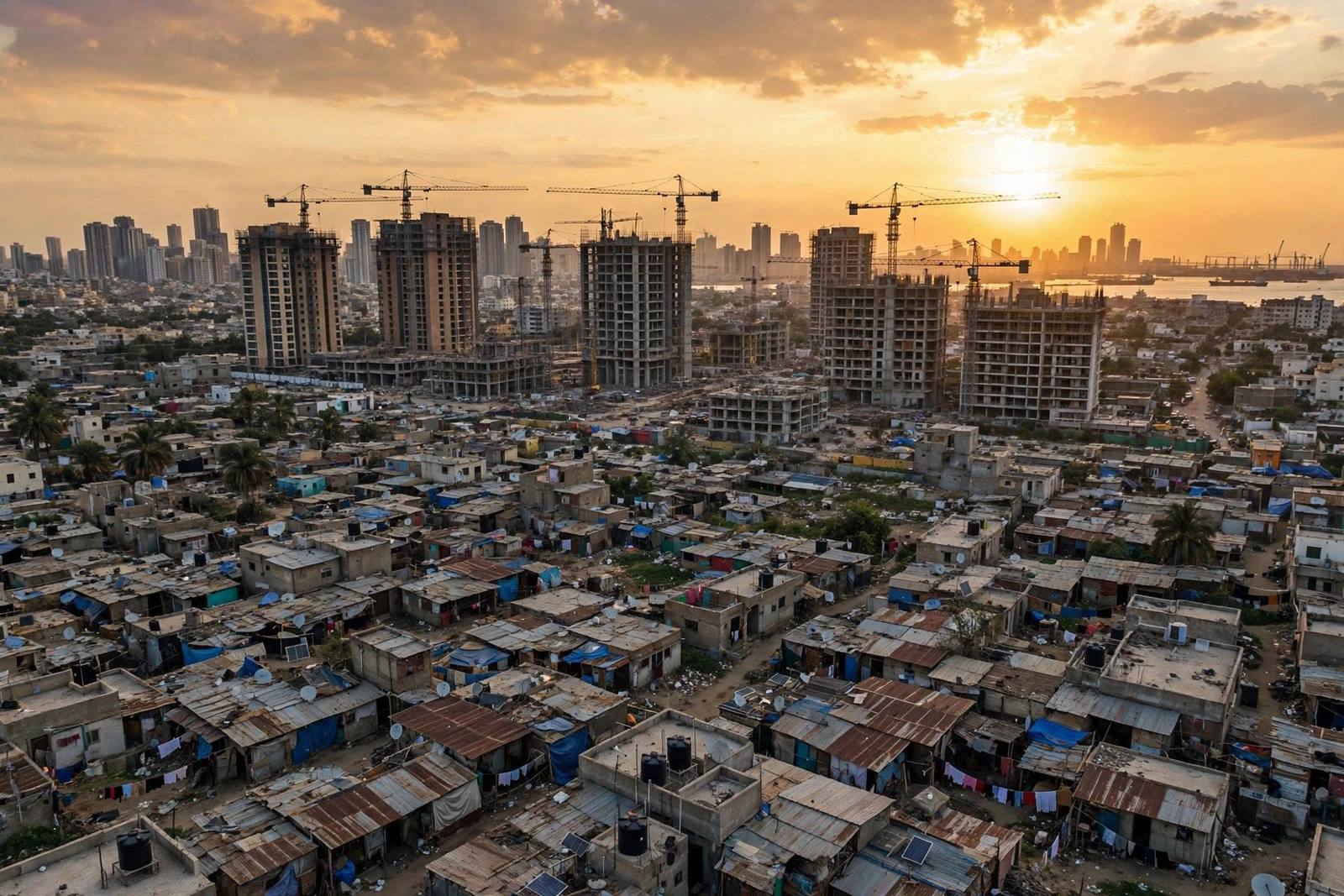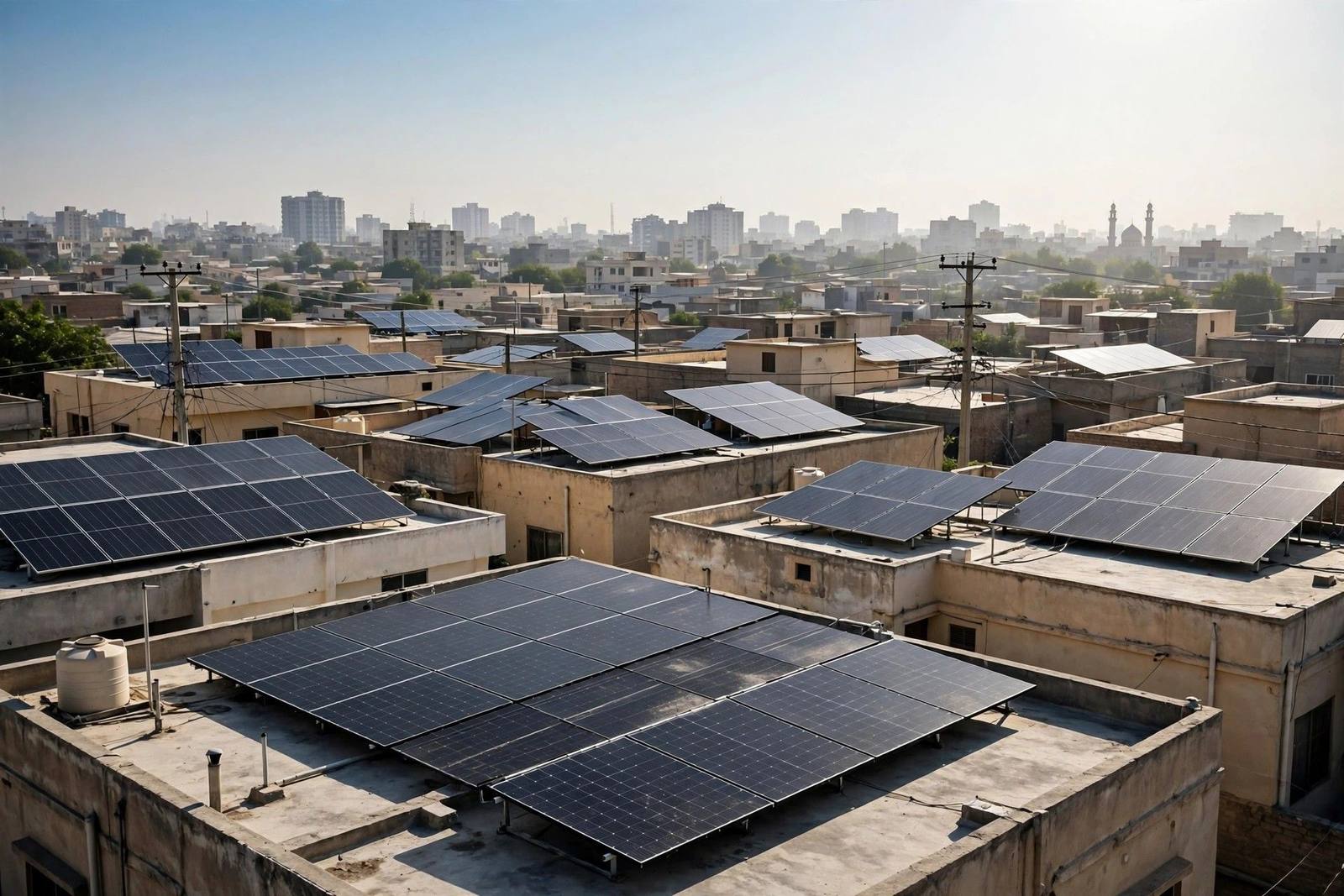
KARACHI: Pakistan contributes well under one per cent of global greenhouse-gas emissions, yet it sits near the top of every index of climate vulnerability — long ranked among the most climate-affected countries in the Germanwatch Climate Risk Index and classed by the ND-GAIN index as highly vulnerable with low readiness. The geography explains it: a country built around a glacier-fed river, a monsoon that arrives in bursts, a delta sinking into a warming sea, and some of the hottest inhabited places on earth in its southern plains.
For investors and policymakers alike, the point of this guide is translation: climate risk in Pakistan is not an environmental topic adjacent to the economy. It is a macroeconomic force that moves GDP, inflation, the fiscal deficit, the current account and the value of listed companies, as directly as interest rates do — and our guide to the water crisis shows its hydrological twin. Begin with the vulnerability arithmetic, because it disciplines everything else. Exposure: a population concentrated along a flood-prone river system and in heat-stressed plains and megacities. Sensitivity: an economy where a fifth of output and a third of jobs sit in weather-exposed agriculture, and where housing, drainage and insurance are weakest exactly where people are poorest. Adaptive capacity: a fiscally squeezed state, thin insurance markets and infrastructure built for a gentler climate. Multiply the three and you have the ND-GAIN result — not a moral judgement on Pakistan, but a statement about where a dollar of adaptation spending anywhere on earth buys the most avoided damage.
2022: the flood that repriced everything
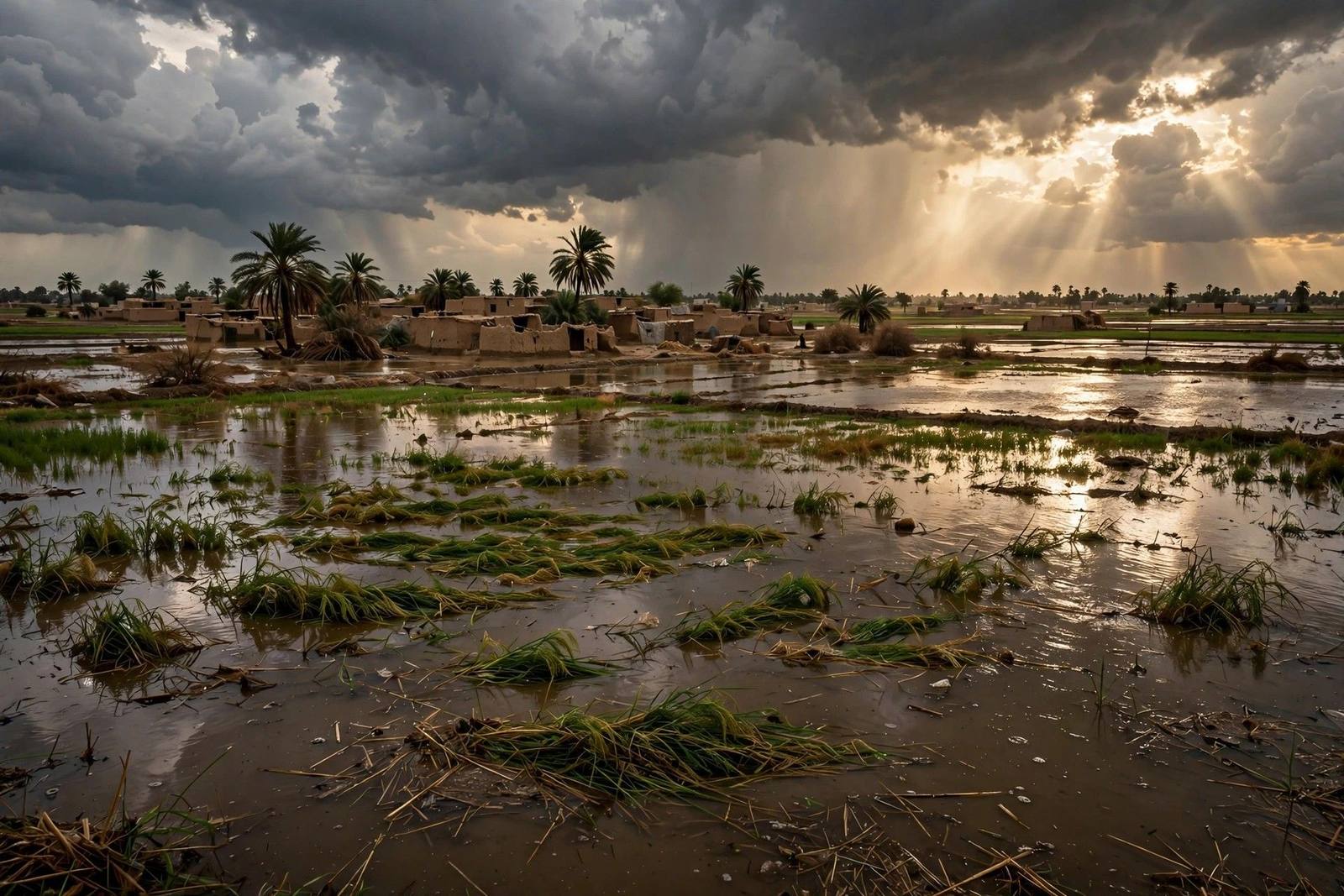
The 2022 floods are the reference disaster. An extraordinary monsoon, amplified by glacial melt, put roughly a third of the country under water at the peak, displaced millions and destroyed homes, roads, bridges and standing crops across Sindh, Balochistan, southern Punjab and Khyber Pakhtunkhwa. The official Post-Disaster Needs Assessment, prepared with international partners, put direct damage and economic losses together in the tens of billions of dollars — on the order of several per cent of GDP — with recovery needs larger still. Cotton, rice and livestock losses fed straight into exports, food imports and inflation.
Notice the transmission channels, because they are the template for every future event. Growth fell as output was destroyed. The budget absorbed relief and reconstruction while revenue shrank. The current account absorbed emergency imports of food and later of cotton for the textile mills. The rupee and reserves — see our guide to foreign reserves — took the strain at the worst possible moment, in the middle of an IMF negotiation. A weather event became a sovereign credit event within a single season.
The 2022 flood's sector ledger repays study. Agriculture took the largest direct hit — standing cotton, rice and sugarcane destroyed, over a million livestock lost by official counts — followed by housing, where well over a million homes were damaged or destroyed, and transport and irrigation infrastructure. Health and education losses compounded quietly: clinics flooded, schools occupied as shelters or ruined, disease surging in standing water. The assessment's mostquoted number is the total; its most important content is the distribution — the losses landed overwhelmingly on households and provinces with the least capacity to self-finance recovery, which is why floods are poverty events with a lag.
Heat: the slower, larger bill
Floods photograph well; heat does not, yet heat may be the costlier risk. Jacobabad and Sibi regularly record temperatures among the highest measured anywhere, and heatwaves now arrive earlier and last longer. The economics are grinding rather than dramatic: outdoor labour — construction, agriculture, street commerce — loses productive hours; electricity demand spikes for cooling precisely when systems are weakest; wheat yields suffer when terminal heat strikes the grain-filling weeks; and public health systems absorb heatstroke, kidney disease and worse maternal outcomes.
Heat is also an inequality multiplier. The rich buy air-conditioning, inverters and water; the poor sell assets, pull children from school and work through the dangerous hours anyway. Over a decade, that shows up as lower human capital — an economic loss no reconstruction budget reimburses. Urban design compounds it: the concrete, tree-poor city form described in our guide to urbanisation turns heatwaves into mass-exposure events, which is why shade, ventilation standards and cool roofs belong in economic policy, not just in architecture.
Adaptation, done honestly, has a project list rather than a slogan. Riverine: embankment maintenance, flood-plain zoning that stops rebuilding in the water's path, and early-warning systems that convert forecasts into evacuations and asset protection. Urban: drainage, heat action plans of the kind Karachi has piloted, tree cover and building standards that treat shade and ventilation as infrastructure. Agricultural: heat- and flood-tolerant seed, weather-indexed insurance, water management of the kind our other guides describe, and crop calendars adjusted to the new monsoon. None of this is speculative technology; the constraint is finance and the provincial capacity to execute.
The farm exposure: where climate meets the food supply
Agriculture is the transmission belt from climate to prices. The sector detailed in our guide to the farm economy depends on monsoon timing, river flows from glacial melt, and temperatures within crop-specific tolerances. Each is shifting: monsoons more erratic and intense, glaciers retreating after an initial meltwater surge, heat arriving during sensitive growth stages, and new pest and disease ranges opening as winters warm.
The 2022 floods destroyed a large share of the cotton crop, and the textile industry — Pakistan's export engine — imported raw cotton with scarce dollars, a perfect miniature of climate's balance-of-payments channel. Food crops are the inflation channel: a climate-hit harvest raises food prices, which raise headline inflation, which forces the State Bank to keep interest rates higher, which taxes every borrower in the economy. When analysts ask why Pakistani rates stay high, part of the honest answer now falls as rain, or fails to.
The private sector's adaptation market is quietly forming. Construction firms build the embankments and resilient housing; cement and steel supply them; banks are beginning — under regulator encouragement — to map physical risk in loan books; agribusinesses invest in seed and supply-chain resilience because their raw material depends on it; and a small climate-tech scene works on weather data, solar cold chains and flood mapping. For the investor, adaptation is that rare theme where the social and commercial logics point the same way — provided the state's payment discipline makes the contracts bankable, which returns the question, as always in Pakistan, to public finance.
Insurance, banks and the financial system's exposure
Climate risk reaches finance through three doors. The first is agricultural and microfinance lending: bank and microfinance portfolios in flood districts suffer repayment collapses after disasters, and crop insurance penetration is so low that losses sit with households and lenders rather than insurers. The second is physical collateral: mortgages, warehouse receipts and industrial assets in flood plains and heat zones are worth less than their loan files assume — a slow-motion valuation problem for banks. The third is sovereign risk: every major disaster worsens the deficit and the debt path, raising the cost of borrowing for the state and, through it, for everyone.
Pakistan's insurance market is thin — general insurance penetration is a small fraction of GDP — so the state is the insurer of last resort without having collected premiums. That fiscal reality explains the growing interest in risk-transfer instruments: catastrophe bonds, parametric insurance that pays on measured rainfall rather than assessed damage, and the green and sustainability sukuk discussed in our guide to green sukuk, which try to fund adaptation before the disaster rather than relief after it.
Migration is the adaptation of last resort, and it is already visible. Flood-displaced families who rebuild twice and lose twice make permanent moves — to Karachi's peripheries, to Gulf labour markets, to relatives in safer districts — redrawing the demographic map our urbanisation guide describes. Economists call this climate mobility; it is orderly when it is chosen and financed, and destabilising when it is neither. Policy that plans for it — skills, portable identity and benefits, receiving-city services — converts a risk multiplier into the country's oldest economic strategy, since mobility has always been how Pakistanis hedge a bad harvest.
Adaptation finance and the loss-and-damage argument
Pakistan's diplomatic signature issue is climate justice: having emitted little, it argues the industrialised world should pay for the damage — the 'loss and damage' fund agreed at the COP27 summit in 2022, where Pakistan's own floods gave the argument its moral force as it chaired the G77 bloc. Domestically, the arithmetic is stark: credible adaptation — embankments, drainage, resilient housing, heat action plans, climate-smart agriculture, the water investments our guides keep returning to — costs sums the budget cannot produce unaided, in competition with debt service that already consumes the largest share of revenue.
For investors, adaptation spending is also a demand story: cement, steel, engineering and construction firms build the resilient infrastructure; banks and funds intermediate the climate finance; insurers slowly build the risk market. The Geneva pledging conference after the 2022 floods showed the pattern — billions promised, much of it as loans rather than grants, disbursement slower than headlines. Treat pledges as intentions and disbursements as data, and the climate-finance story becomes legible.
Transition risk exists too, though it is the smaller half of Pakistan's problem. Exporters to Europe face carbon border pricing that will eventually charge for embedded emissions in cement, steel and textiles; the domestic energy transition — solar's rise, Thar coal's expansion, hydro's share — moves in contradictory directions at once; and international climate finance increasingly prices a borrower's resilience plans into its terms. For a country whose emissions are negligible, the transition agenda arrives mainly as trade rules and finance conditions written elsewhere — one more reason the adaptation story, where Pakistan's agency is real, deserves the analytical priority this guide gives it.
What companies disclose — and what to watch
Listed-company climate exposure in Pakistan is still disclosed patchily, but the questions are standardising. For a food or textile company: where are the plants and the crop sourcing, and what did the last flood year do to margins? For a bank: how much lending sits in climate-exposed districts and sectors, and does the credit policy know it? For energy and cement: what is the transition exposure as carbon border measures — notably the EU's carbon border adjustment, relevant to exporters — begin to price embedded emissions?
The State Bank has issued green banking guidelines and the SECP has pushed ESG disclosure for listed companies, so the reporting scaffolding is rising even if practice lags. The investor's edge in the meantime is geographic and physical: read the annual report's plant locations against a flood map, ask what heat does to the workforce and the power bill, and price the answers qualitatively where the company will not quantify them itself. Climate due diligence in Pakistan is still cheap precisely because so few buyers do it.
The intellectual failure to avoid is treating climate as a sector. It is a multiplier on every sector this library covers: it raises food inflation's floor, widens the fiscal deficit's disaster years, deepens the water crisis, stresses the cities, tests the banks and periodically re-prices the sovereign. A reader who integrates it reads Pakistan more accurately everywhere else — which is, in the end, the entire argument for putting this guide in an investor's library rather than an environmentalist's.
What kind of investor studies climate risk
Climate risk for Pakistan is not a scenario for 2050; it is a recurring line in the national accounts, realised in 2022 at a scale of several per cent of GDP and in smaller instalments most other years. The climate-literate investor stress-tests every thesis against a bad monsoon and a brutal May: farm-linked earnings, food inflation, fiscal slippage, emergency imports and the sovereign premium all move together in those months. This article is educational content, not financial advice. The cheapest hedge available to a reader is understanding — knowing which of your exposures drown, which bake, and which get paid to rebuild.
Key takeaway: Climate risk is now a first-order economic variable in Pakistan: floods and heat move GDP, inflation, the budget and the external account in a single season — and adaptation is the investment programme the country cannot postpone.