KARACHI: Pakistan sits on a geological map that should, on paper, make it a mining country. Copper and gold lie in the hills of Balochistan, coal stretches under the Thar desert, salt has been cut from the Khewra ranges for centuries, and marble, chromite, gypsum and gemstones fill out a catalogue that reads like a prospectus. Yet mining and quarrying have remained a small, stubbornly informal corner of the economy — a low single-digit share of output in national accounts, dominated by quarrying for the cement and construction industries rather than by the world-scale metal mines the geology promises. This guide explains what Pakistan actually digs up, who governs the sector, why the long-predicted mining boom keeps being postponed, and what would have to change for minerals to join textiles, remittances and agriculture as a real pillar of the economy.
What Pakistan actually digs up
Start with the unglamorous majority. By volume and by everyday importance, Pakistani mining means construction and industrial minerals: limestone and gypsum for cement plants, coal for power stations, brick kilns and industry, rock salt, silica sand, marble and granite, and the aggregates that feed every road and housing scheme. The listed cement industry covered in our guide to PSX cement stocks is, in effect, a mining industry with kilns attached — each plant sits beside captive quarries, and its cost base begins with what it costs to blast, crush and haul limestone. Add chromite from Balochistan and Khyber Pakhtunkhwa, iron ore in modest quantities, lead, zinc, barite, fluorite and fire clay, and you have a sector that is broad, busy and mostly invisible to the stock market.
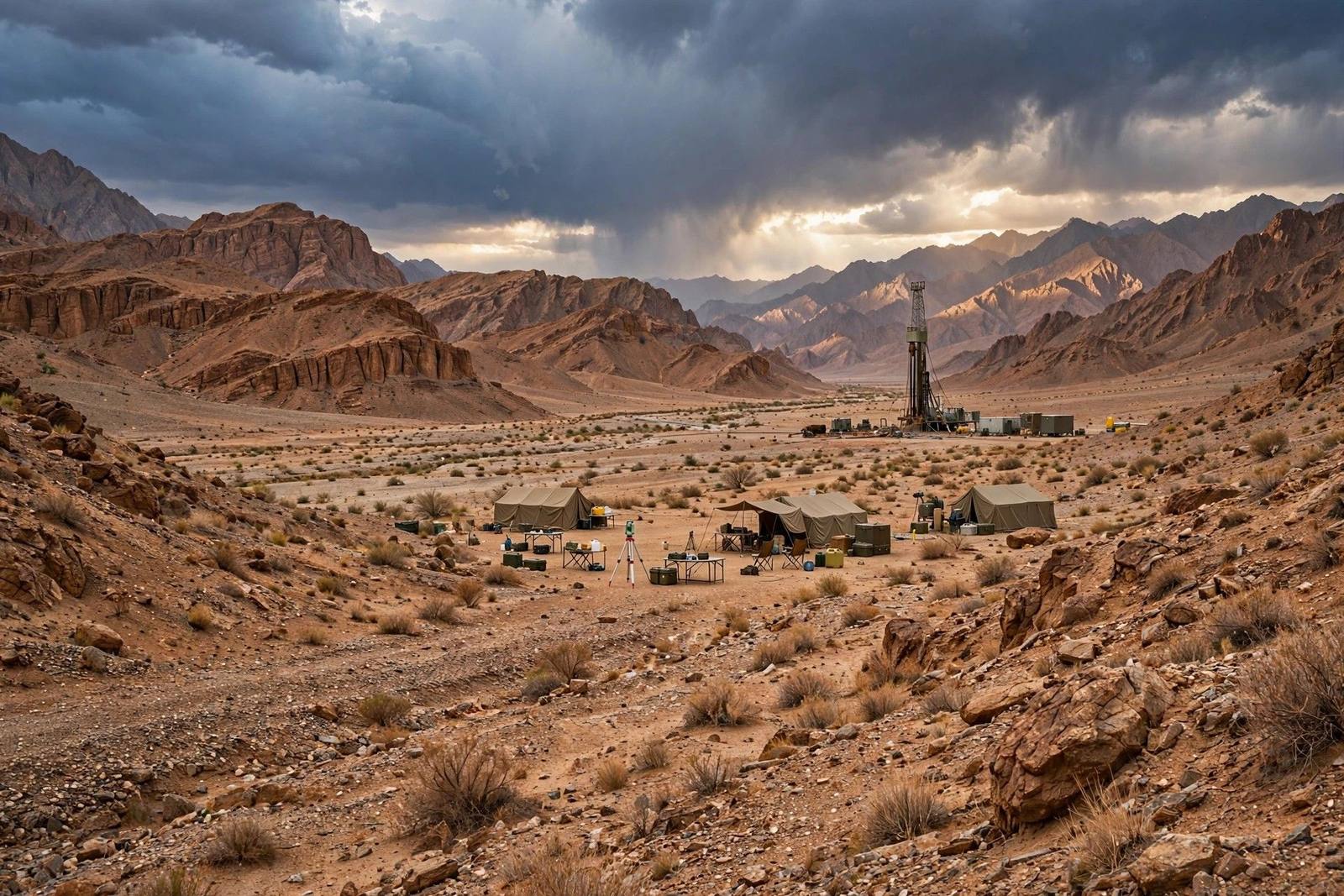
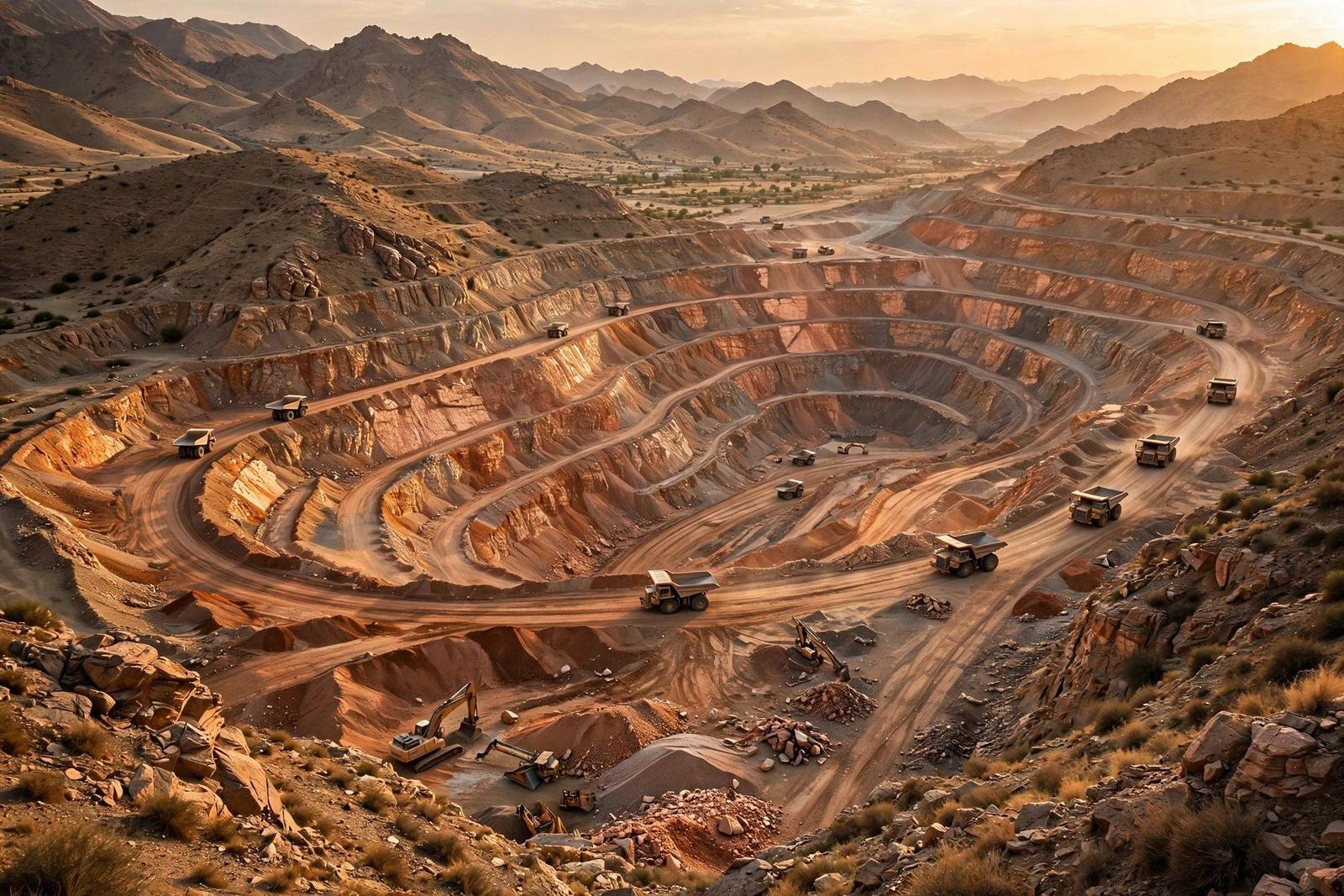
Then there is the glamorous minority: metals. The Tethyan mineral belt that runs through Iran and Afghanistan crosses Balochistan, carrying porphyry copper-gold systems of which Reko Diq is the giant and Saindak the long-running smaller proof. In the far north, Gilgit-Baltistan and the tribal districts hold gemstones — emeralds, rubies, aquamarine and peridot — mined largely by hand and traded through informal channels that capture little of their final value. The contrast is the story of the whole sector: world-class geology, small-scale extraction, and most value added — smelting, refining, cutting, polishing — happening somewhere else, if it happens at all.
Who owns the underground, and who gives permission
Under Pakistan's constitution, minerals are largely a provincial subject — a position strengthened by the Eighteenth Amendment, which devolved natural resources and left the provinces as the main licensors of exploration and mining leases through their mines and minerals departments. Oil and gas are the great exception, handled federally, which is why the petroleum world of OGDC and its peers runs on federal concessions while a copper prospect a district away runs on a provincial lease. The Geological Survey of Pakistan maps and studies the resource base, provincial directorates grant reconnaissance licences, exploration licences and mining leases, and the courts, landowners and local communities all hold pieces of the practical puzzle: surface land is rarely state-owned in any simple sense, and a lease on paper is only the beginning of access on the ground.
This federal-provincial split explains both the sector's diversity and its friction. Rules, royalty rates, renewal practices and processing speed differ by province, and a project that straddles categories — a mine whose concentrate needs a federally regulated railway, port or power supply — must negotiate several governments at once. Successive federal initiatives, including special investment facilitation arrangements in recent years, have tried to give large foreign mining investors a single window; the underlying constitutional position, however, still makes the host province a partner whose consent and share of benefits are central, a point the Reko Diq settlement made concrete by giving Balochistan a direct equity stake.
Why the boom kept not happening
The list of obstacles is familiar to anyone who studies Pakistani industry, but mining feels each one more sharply because mines are immovable, long-lived and capital-hungry. Security comes first: the richest mineral province, Balochistan, is also the one where insurgency, smuggling routes and contested politics raise the risk premium on any thirty-year investment. Infrastructure comes second: a bulk mine needs water in a desert, power in a grid-short country, and a railway or heavy road to a port — investments that can rival the mine itself. Policy risk comes third: the original Reko Diq dispute, in which a lease application was refused after years of exploration spending and the matter ended in international arbitration, taught a generation of mining executives to price Pakistan carefully — the eventual settlement repaired much, but not all, of that lesson.
Fourth is the structure of the domestic industry itself. Most Pakistani mining is done by small leaseholders working with thin capital, little mechanisation and minimal geological data, selling raw material into local markets. That model extracts value but rarely builds the surveys, feasibility studies and audited reserves that banks and stock exchanges can finance against. The result is a paradox visible in the data: mineral exports remain modest beside the country's needs — the gap at the heart of Pakistan's current account story — even as truckloads of raw chromite, marble blocks and uncut gemstones leave for processing abroad, exporting the jobs and margins with them.
Coal: the exception that already scaled
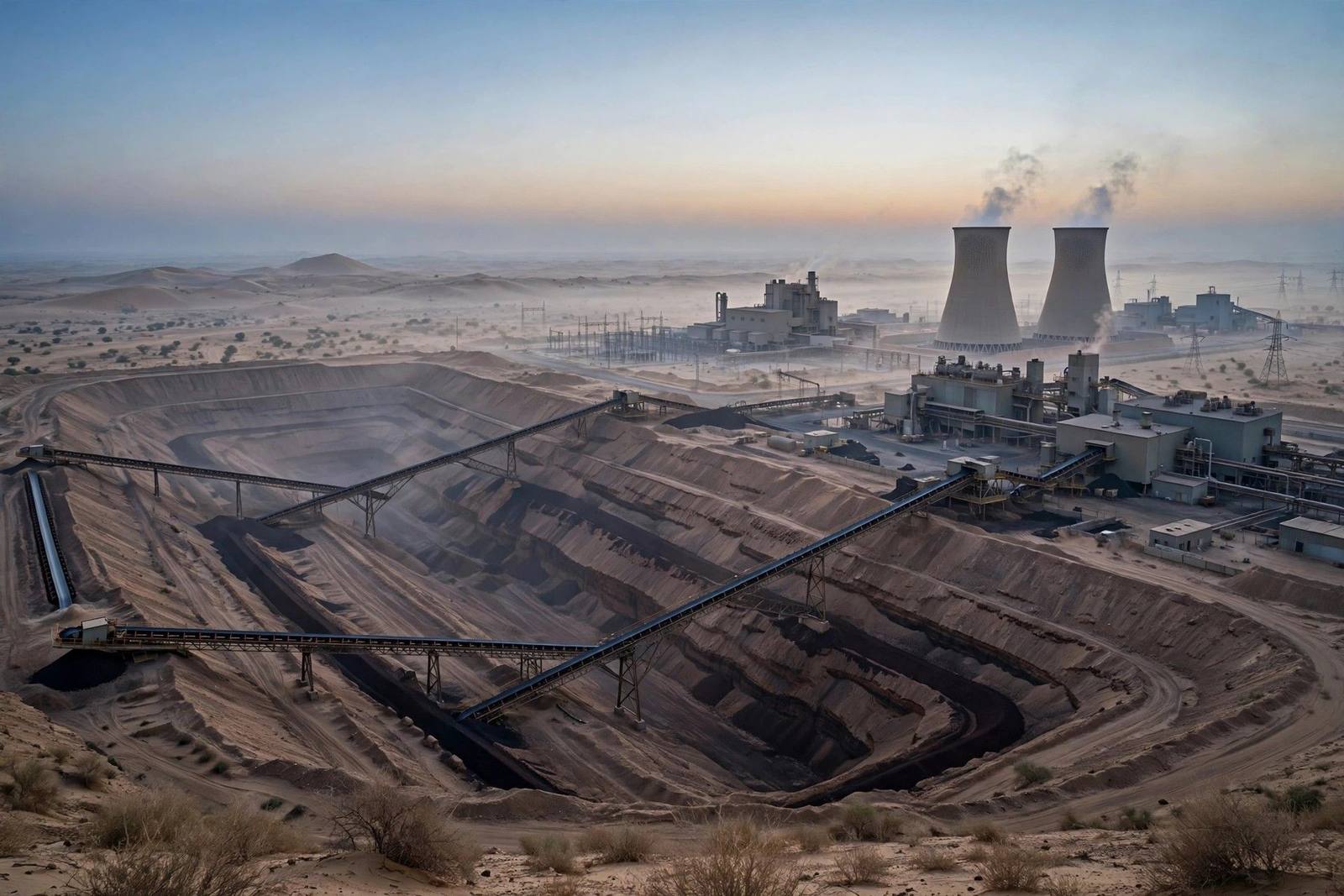
One part of the sector has broken through to industrial scale, and it is worth separating from the metals story. Thar coal, mined in open pits in Sindh and burned in mine-mouth power stations, turned a long-mocked desert lignite deposit into a working energy industry within a decade, displacing imported fuel and anchoring several listed companies' earnings. Smaller coalfields in Balochistan, Punjab and Khyber Pakhtunkhwa continue to supply industry and kilns, often in difficult and dangerous conditions that periodically draw attention to mine safety. Coal's lesson for the wider sector is double-edged: scale is possible when the state aligns licences, infrastructure and an anchor customer — and the environmental and social costs of getting it wrong are carried by the communities nearest the pit.
What a real mining economy would require
Economists who study mining-led growth point to a sequence that Pakistan has mostly run in reverse. First comes geological data — modern surveys that turn rumours of mineralisation into bankable maps, much of it a public good only the state will fund. Then a predictable fiscal regime: royalties and taxes high enough to give the host province a visible share, stable enough that an investor can model thirty years without fearing retrospective change. Then infrastructure planned as corridors rather than projects, beneficiation rules that reward local processing without banning raw exports so bluntly that mines become uneconomic, and environmental and community standards enforced early enough that projects are not stopped late by grievances that were audible from the start.
Finally comes finance. Mines are built with equity from mining majors, debt from lenders who demand reserve audits and offtake contracts, and — occasionally — listings that let local savers share the risk. On the PSX today, direct mining exposure is thin: investors meet the sector mainly through cement makers with captive quarries, energy companies with Thar interests, and the state exploration companies holding a stake in Reko Diq's holding structure. A deeper market would need operating mines with audited accounts to list — which is precisely what the current pipeline, if it delivers, could eventually supply.
Risks and honest counterweights
Enthusiasm for a minerals boom should carry three warnings. The first is the resource curse literature: mineral windfalls can appreciate a currency, hollow out other exports and enrich whoever controls the licence rather than the province that hosts the mine — outcomes that good fiscal design mitigates but does not abolish. The second is environmental: mining moves water, dust and waste in places where all three are politically explosive, and Balochistan's water scarcity makes every large project's water plan a social question, not an engineering footnote. The third is time. Even a successful project spends most of a decade in studies, financing and construction before its first export dollar; minerals are a 2030s answer to Pakistan's external problem, not a fix for this year's financing gap, which still runs through the channels described in Pakistan's external financing.
How to follow the sector as a reader
Watch processes, not press releases: exploration licences converting into mining leases, feasibility studies being completed and published, financing packages closing, infrastructure tenders being awarded, and — most telling of all — provincial royalty and company tax receipts rising in budget documents. For listed exposure, read the annual reports of the cement, energy and exploration companies named above and note what share of their story is minerals today rather than in a presentation. This article is educational content, not financial advice.
The everyday minerals economy nobody photographs
For every headline about copper, there are thousands of small operations that constitute mining as most Pakistanis experience it. The Khewra salt mine in Punjab, worked for centuries and now also a tourist site, supplies edible and industrial salt and supports a local economy of miners, traders and processors. Marble and granite from Khyber Pakhtunkhwa, Balochistan and the northern areas feed a dimension-stone industry whose polishing units cluster in Karachi, Lahore and Risalpur — an industry that loses much of its potential margin by exporting rough blocks instead of finished slabs, because gang-saws, resin lines and reliable power are capital many small firms cannot raise. Gypsum from Kohat and elsewhere goes to cement and fertiliser plants; silica sand to glass; coal from small Baloch and Salt Range mines to brick kilns whose demand rises and falls with construction. These trades employ large numbers, often informally and sometimes in conditions — unsupported tunnels, silica dust, child labour in the worst pockets — that provincial inspectorates are too thin to police. Formalising this economy is unglamorous work: surveying and auctioning leases transparently instead of allotting them by discretion, publishing production and royalty data, extending basic safety enforcement, and giving small miners access to the credit that would let them mechanise. It would raise less excitement than a copper megaproject and probably more broad-based income.
The gemstone trade shows the same pattern in miniature. Emeralds from Swat, rubies and aquamarine from the northern valleys and tourmaline from the tribal districts are dug by local miners, sold through chains of middlemen in Peshawar and Karachi, and overwhelmingly exported rough to be cut abroad — where the skilled, well-paid work of cutting and polishing multiplies their value several times over. Pakistan has gemmological institutes and cutting centres, and its diaspora includes master cutters; what it lacks is the consistent grading, certification and marketing that would let a Swat emerald sell as a Swat emerald rather than as anonymous rough. The lesson generalises across the sector: the resource is rarely the binding constraint. Institutions, skills and patient capital are.
Provinces, royalties and the politics of sharing.
Because minerals are provincial, the politics of mining is the politics of Pakistan's federation in concentrated form. A province grants the lease and sets the royalty; the federation controls ports, much of the energy system and international treaty obligations; the district hosting the mine bears the dust, the water demand and the in-migration. When those three levels disagree about who captures the value, projects stall in ways no feasibility study can fix — the original Reko Diq years being the expensive proof. The more durable settlements of recent years share a design: give the host province equity as well as royalty, so its interest rises with the project's success rather than with its obstruction; publish the fiscal terms, so suspicion has less room to grow; and route a visible share of benefits — jobs, water schemes, local procurement — to the immediate community rather than only to the provincial capital. None of this guarantees harmony. It does change the argument from whether a mine should exist to how its proceeds are divided, which is an argument a federation can actually have.
Key takeaway: Pakistan's mining sector is geologically rich but institutionally thin — quarrying and Thar coal work at scale today, while the metals boom waits on security, infrastructure, stable provincial deals and the decade-long patience that mines demand.