KARACHI: Pakistan drinks an ocean of milk, and almost none of it comes from a factory. The overwhelming share of the country's milk moves the way it has for centuries — from village buffalo and cow to middleman to city doorstep, loose, unbranded and unrefrigerated. At-Tahur Limited, the Lahore dairy behind the Prema brand, is a small listed bet against that system. From its own farm and processing plant at Kotli Rai Abu Bakar in District Kasur, it sells pasteurised milk, yoghurt, raita and flavoured yoghurt under a name that Lahore households associate with one claim above all: purity, starting with the Arabic word in the company's own name, tahur — pure. Incorporated in 2007, converted to a public company in 2015 and listed on the Pakistan Stock Exchange in July 2018, it is one of the smallest food companies a PSX investor can own — and one of the most instructive, because its whole story fits in a single cold chain. This profile follows the milk from the farm gate to the share register.
Why pasteurised milk is a hard business in Pakistan
To understand At-Tahur, start with the market it chose not to serve. Pakistan is among the world's largest milk producers, yet the formal, packaged share of that river of milk is small. The informal chain wins on price and habit: no packaging cost, no cold chain, credit from the neighbourhood milkman, and a consumer who boils the milk at home in any case. The packaged industry's answer, for most of its history, was UHT — milk sterilised and boxed to survive months without refrigeration, sold through ordinary shops. Pasteurised milk is the harder third way: heated enough to be safe, never sterilised, sold chilled in pouches and bottles with a life measured in days. It tastes closest to the farm product the consumer grew up with, but it demands an unbroken chain of refrigeration from plant to delivery van to shop chiller to home — in a country of load-shedding and summer heat. A pasteurised brand is therefore less a food product than a logistics promise, renewed every morning. It is the promise Prema was built to sell, in a formal-dairy contest whose giants — the company Pakistan knew as Engro Foods, profiled here as FrieslandCampina Engro Pakistan — mostly chose the UHT road.
2007–2018: from private dairy to listed company
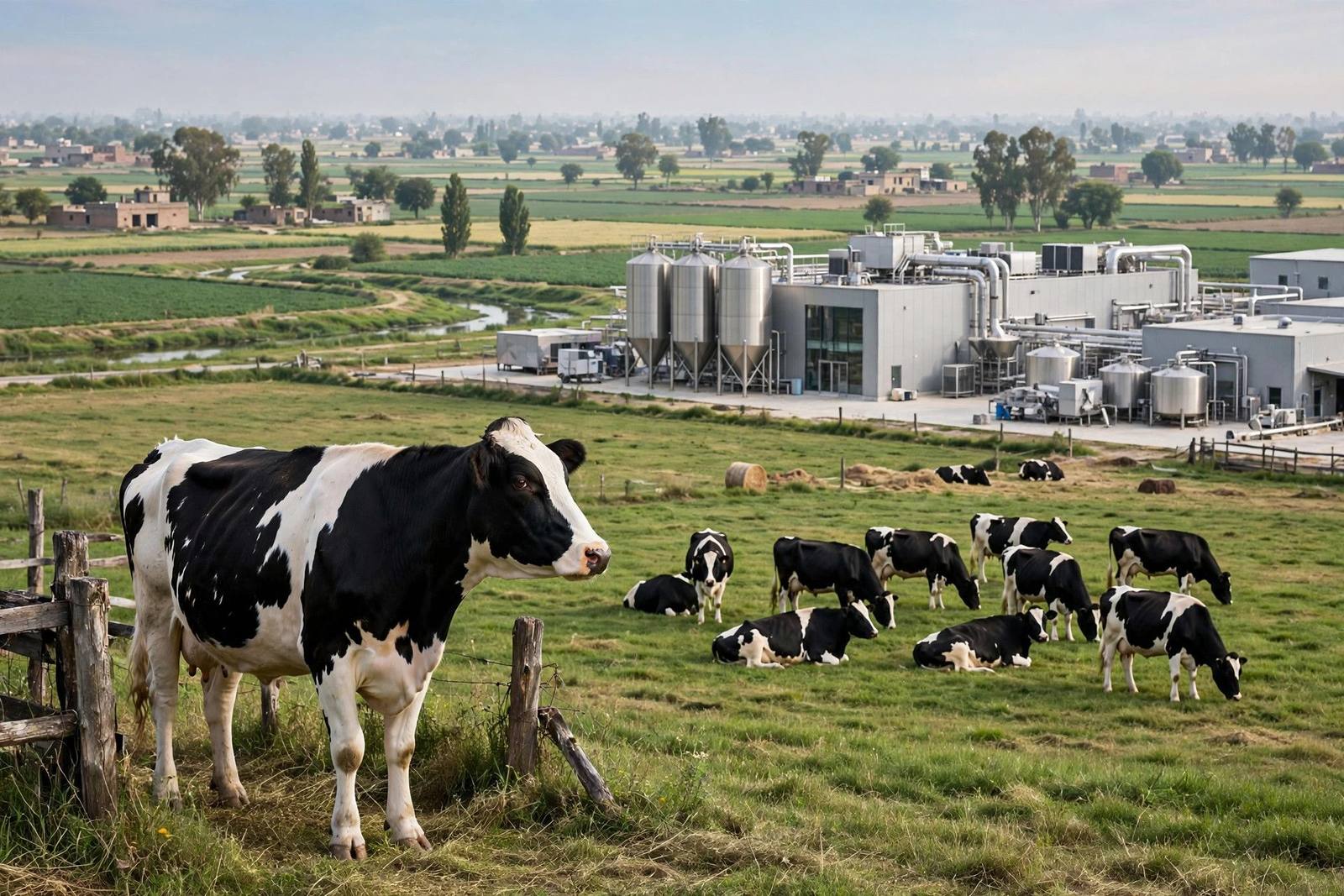
At-Tahur Limited was incorporated in Pakistan on 16 March 2007, under the Companies Ordinance then in force, as a private limited company. Its founding proposition, reflected in the legal description of its business that has not changed since — to run a dairy farm for the production and processing of milk and dairy products — was integration: own the animals, control the feed and the milking, process on the same site, and sell the result as a branded, traceable product rather than a commodity collected from strangers. The farm and plant were established at Kotli Rai Abu Bakar in District Kasur, in the agricultural belt south-east of Lahore that supplies the city with milk and vegetables — close enough for a chilled product to reach Lahore's shops within its short life, rural enough for a working dairy herd. The company's registered office sits in New Garden Town, Lahore, and its chief executive in recent reporting is Rasikh Elahi, the name most associated with building the business.
The road to the market was taken in the standard two steps. In September 2015 the company converted from private to public limited status — the legal preparation for outside shareholders — and on 23 July 2018 its shares were listed on the Pakistan Stock Exchange, under the ticker PREMA, taken directly from its milk brand. That choice of ticker is a small lesson in itself: the company listed its product, in effect inviting investors to judge the share the way shoppers judge the pouch. Listing gave a small, capital-hungry dairy access to public equity for the unglamorous assets the model demands — herd, plant, chillers, vans, distribution — and it put a family-scale enterprise inside the full disclosure discipline of the exchange, annual reports and all.
For a company of this size, that discipline is not a formality. A private dairy can run on the founder's knowledge of every animal and every route; a listed one must translate that knowledge into audited herds, depreciation schedules and directors' reports that strangers in Karachi can interrogate. The translation is healthy and it is also revealing: At-Tahur's filings let any reader watch, year by year, how a farm actually grows — how much went into biological assets and plant, how the distribution map widened, and where the cash a milk pouch generates was spent before the next pouch could be sold. Small listed companies are often dismissed as too illiquid to matter. As documents, they are among the most honest windows the market offers into how a Pakistani business really works.
Its distribution footprint, as those reports describe it, spread outward from Lahore in the pattern of a chilled brand feeling for its range: distribution centres and offices reaching Rawalpindi, and representation in cities including Sargodha, Multan, Faisalabad, Gujranwala, Peshawar and Karachi.The Prema range and the purity claim
The product line is deliberately short, as cold-chain economics dictate. Fresh pasteurised milk is the flagship and the volume carrier — the daily purchase that puts the brand in the refrigerator and the customer's routine. Around it sit the natural extensions of a milk pool: yoghurt, in plain and flavoured forms, raita — the spiced yoghurt accompaniment of the Pakistani table — and flavoured yoghurt and milk drinks aimed at children and the snacking occasion. Everything on the list shares one production logic: a perishable raw material that must be processed the day it arrives and sold within days, which makes the company's real product range its timetable. The brands foundation recognised Prema with its Brand of the Year award in the fastest-growing milk and yoghurt brand category in 2019 and again in 2020, as the company's annual report records — third-party colour the company cites, fairly, as evidence that the niche it chose was growing.
One episode in the brand's history deserves telling because the company itself tells it, prominently, in its annual reports. In 2016, in proceedings before the Supreme Court of Pakistan concerning the quality of milk sold in the country, samples of packaged milk were subjected to independent testing ordered under the court's aegis. The company's reports recall the commission's finding in striking terms: that of the samples tested, Prema's was the one found fit — a verdict the company has understandably made the centrepiece of its purity story ever since. The careful reader will note the source: the finding is recounted in the company's own reporting of a court-ordered exercise, not independently re-verified here. But its commercial logic is plain. In a category where the consumer's deepest question is "what is actually in this?", a brand that can point to a court-era test as its founding credential owns an asset no advertising budget buys quickly. Set beside the heritage food names in our guide to food and personal care stocks, Prema is the upstart whose credential is a laboratory result.
How a farm-gate dairy makes money
At-Tahur's economics begin in the byre. A dairy that owns its farm internalises the milk price: instead of buying from collectors at rates that spike in the winter flush's opposite season, it pays in feed, veterinary care, labour and herd replacement, and it controls quality at the only point quality can truly be controlled — before the milk leaves the animal. Against that controlled cost sits a branded price: pasteurised milk in a pouch sells at a premium to loose milk, and yoghurt and flavoured products sell at a further premium per litre of milk consumed. The spread between farm cost and branded price must pay for the cold chain — processing, chilling, refrigerated distribution, the chiller cabinets and the wastage of a product that expires — and for the herd's biology, since a cow's lactation cycle, not a manager's plan, sets the production calendar. Seasonality therefore runs through the accounts: milk flushes in winter, tightens in summer, while demand for chilled products peaks exactly when supply is scarcest and refrigeration dearest.
Scale is the standing dilemma. The model gains efficiency with every additional route and shop in Lahore's dense neighbourhoods, because a van's cost is shared across more drops; it loses that efficiency with distance, which is why pasteurised brands are regional champions rather than national ones. Growth capital, in this business, is unglamorous and continuous — animals, sheds, plant capacity, vehicles — and returns arrive as route density rather than breakthrough moments. The company's recent annual reporting speaks the language of that model: investment in processing facilities, downstream channel efficiency and product-mix optimisation, delivered against a tax environment that has tightened around packaged milk, where changes to the sales-tax treatment of pasteurised and packaged milk have repeatedly altered the price gap between the formal product and the loose alternative. When tax raises the packaged price, the milkman's offer improves by the same amount — a policy lever that matters more to Prema's volumes than most marketing decisions its managers will ever take.
Strengths, risks and the small-dairy reality
The strengths are focus and provenance. At-Tahur is one of the very few ways to own, on the PSX, a pure dairy farm-to-brand operation; its integration answers the category's trust question with a farm an investor can locate on a map; and its Lahore-centred density suits the product it sells. The purity credential, the award citations and a decade and a half of continuous operation in a trade littered with failed packaged-milk ventures together give the brand a sturdiness its size alone would not suggest. There is also the structural tailwind every formal dairy claims: Pakistan's milk will formalise eventually, as urbanisation, food-safety enforcement and supermarket growth proceed — and small, trusted brands are acquisition-shaped assets in a consolidating food industry, a theme visible across the sector histories in Mitchell's Fruit Farms and its peers.
The risks are the mirror of the model. Feed costs — maize, silage, concentrates — are agricultural prices, volatile and dollar-linked at the edges. Animal disease is an existential line item for a single-farm producer in a way it never is for a collector of ten thousand farmers' milk. The cold chain is a daily operational risk, and a tax or regulatory change can widen or narrow the loose-milk price gap overnight. Above all there is scale: against multinational and large local dairy groups, a single-farm company has thin buffers for a bad season, and the listed register of a small company can be illiquid — PREMA's shares trade in the pattern of a small-cap food name, with all the patience that implies for anyone building or exiting a position. The company's dividend record, similarly, has historically favoured reinvestment — growth dairies consume cash; they rarely distribute it — so the shareholder's return case rests on the business compounding, not on income along the way.
What kind of investor studies Prema
PREMA suits the reader who likes a business they can fully understand: one farm, one plant, one city heartland, one brand promise. The accounts reward the same ground-level checks a dairy lender would make — herd and capacity investment, feed-cost commentary, the effect of each budget's tax treatment of packaged milk, distribution expansion, and whether the product mix is climbing from plain milk toward the higher-value yoghurts and flavoured lines where the brand premium thickens. Progress, in such a company, is measured in routes, chillers and repeat purchases long before it is measured in headlines, and the Learn section of this site collects the background for reading accounts of exactly this scale.
In the end, At-Tahur is Pakistan's packaged-milk argument in miniature: that freshness, traceability and a court-tested purity claim can carve a durable niche out of a market that has run loose and informal for centuries. The niche is real; so are the feed bills. This profile is educational content, not financial advice.
Key takeaway: At-Tahur (PREMA), incorporated in 2007 and listed in 2018, runs its own Kasur-district dairy farm and plant behind the Prema pasteurised milk and yoghurt brand — a small, integrated challenger to Pakistan's informal loose-milk economy.