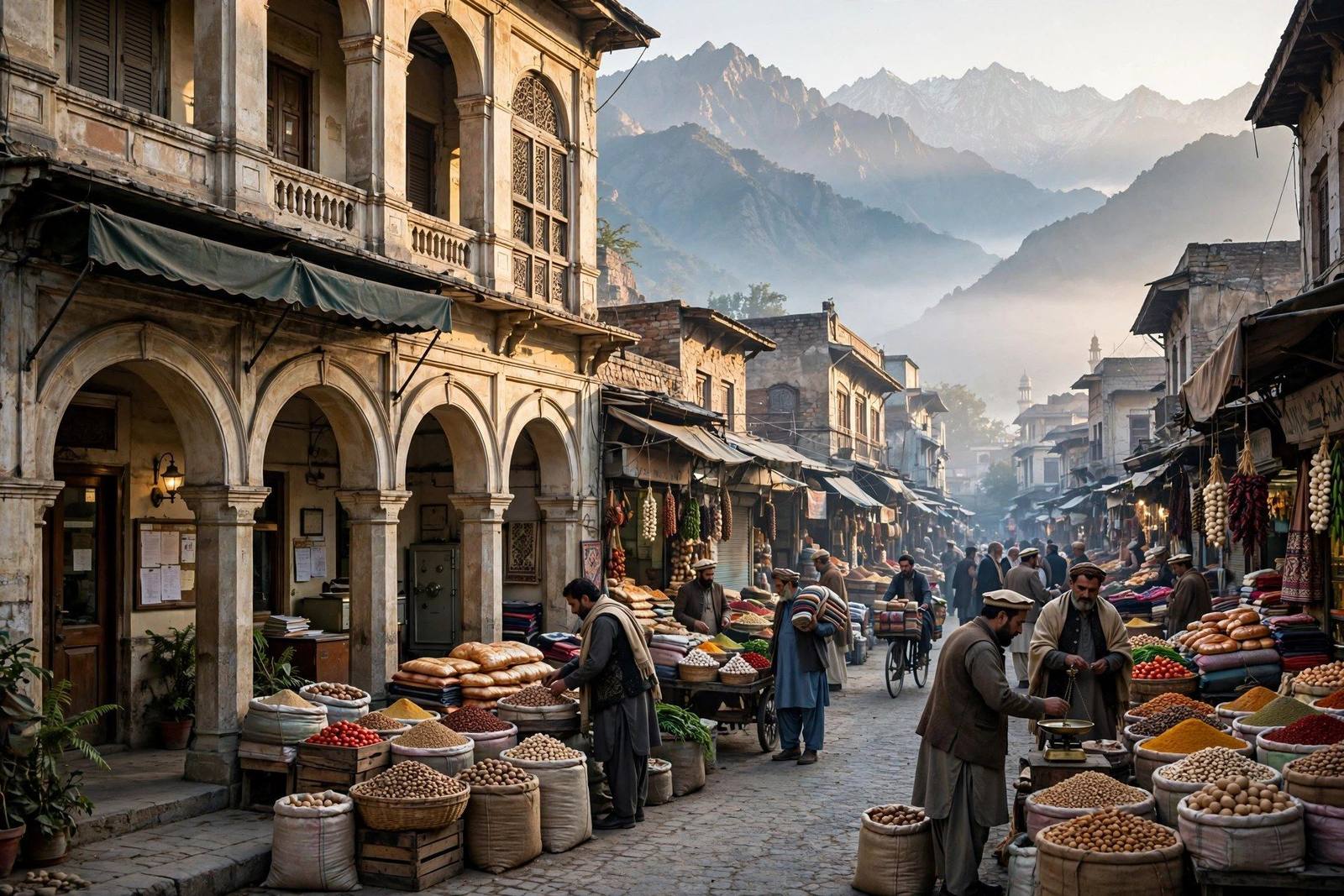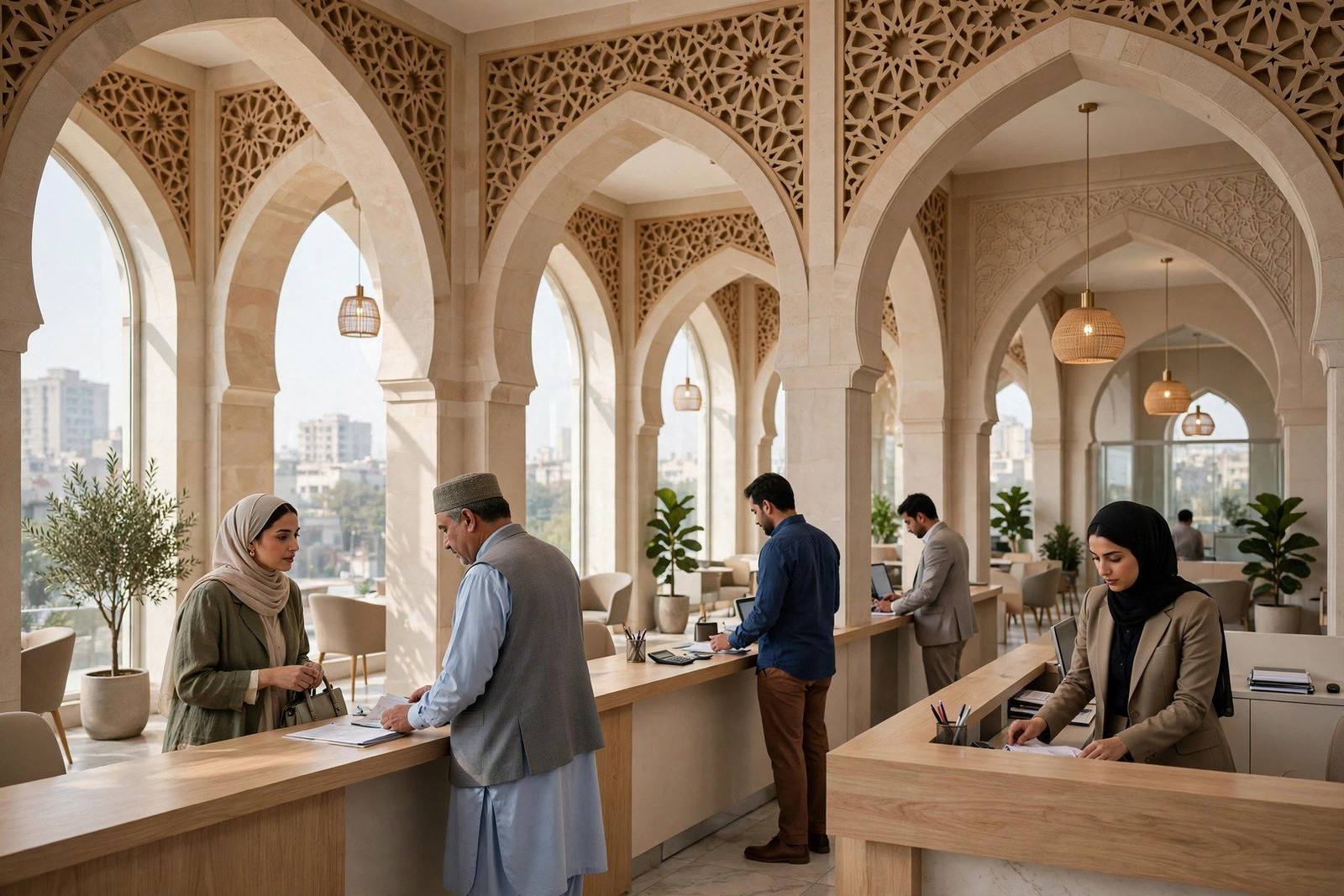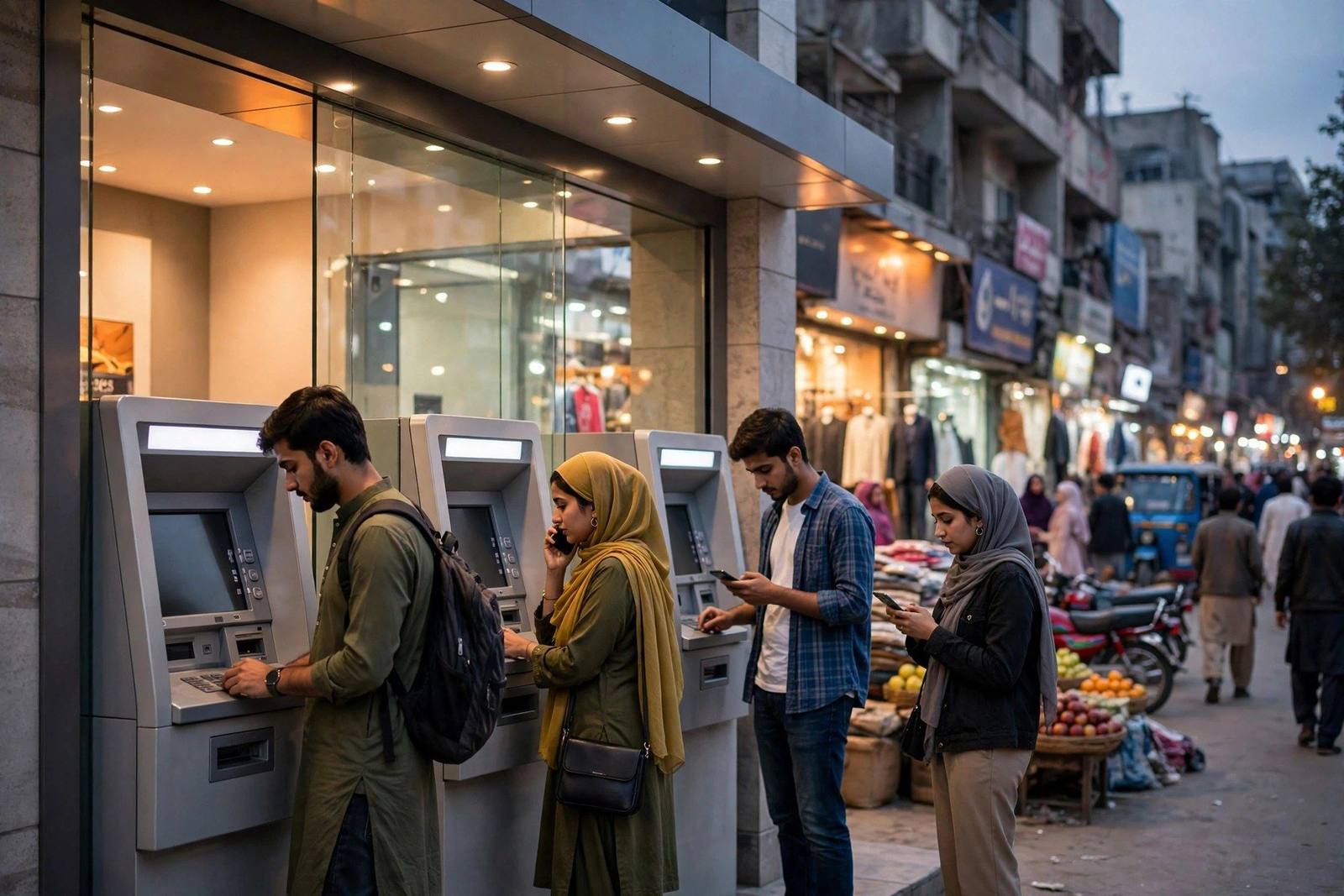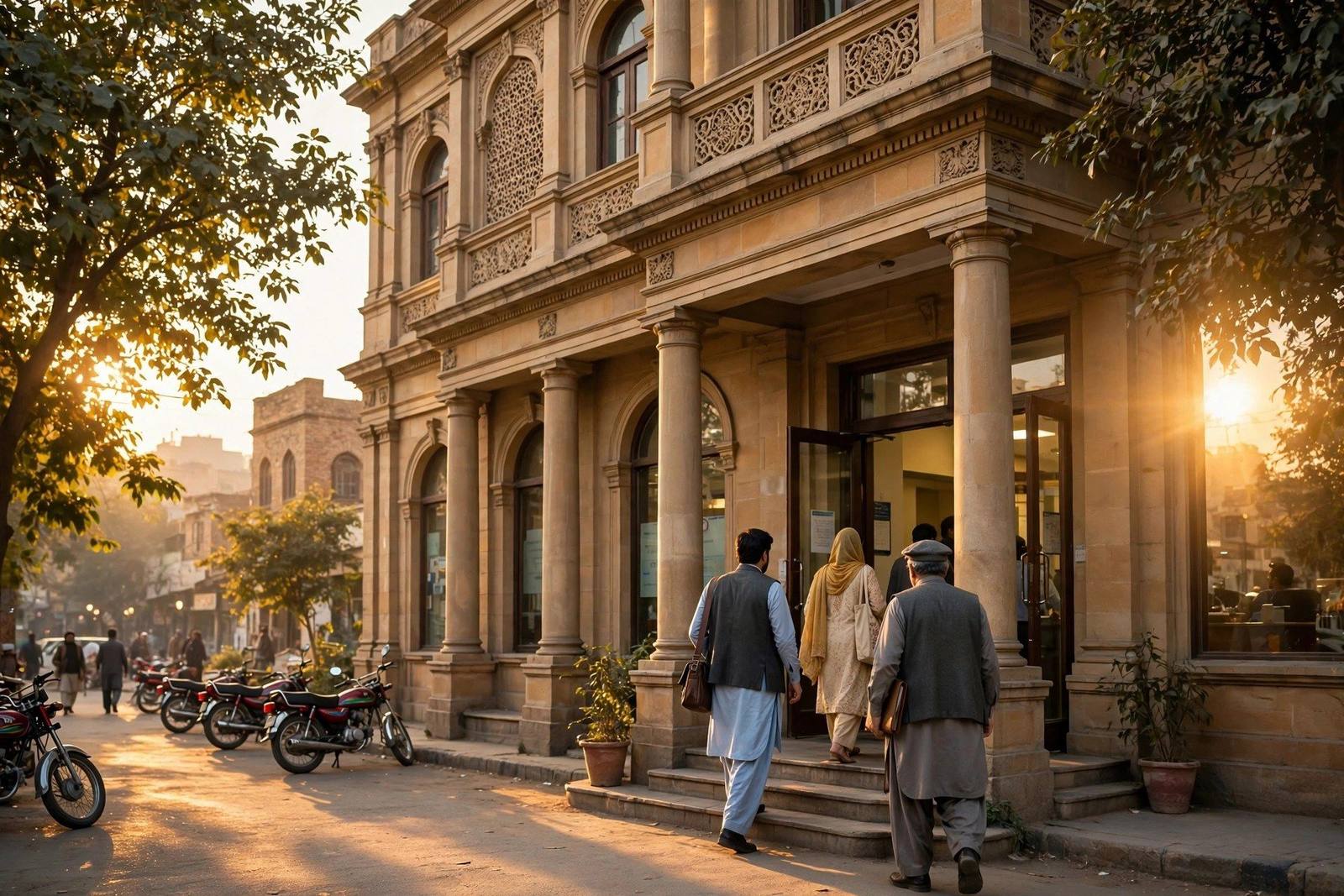
KARACHI: Soneri Bank is the sort of institution a beginner meets quietly. It is not the largest bank in Pakistan, and it does not try to sound like it. Instead it occupies the busy middle of the system: a full-service commercial bank with a national branch network, a central office in Karachi, a registered office in Lahore, a conventional business and a growing Islamic operation, and a shareholder register shaped for decades by one sponsor family and the industrial interests around it. Its shares trade on the Pakistan Stock Exchange under the symbol SNBL, in the commercial banks sector, and its results are read each quarter alongside the other mid-tier lenders in Pakistan's listed banking sector. To understand Soneri is to understand how a bank created at the start of the 1990s, when private banking was newly permitted again, grew branch by branch into a durable, unspectacular and closely watched part of the financial system — and why the middle of Pakistani banking, neither giant nor niche, is where much of the country's everyday credit is actually made.
A bank born in the liberalisation of 1991
Soneri Bank Limited was incorporated in Pakistan on 28 September 1991 as a public limited company. The date matters. Pakistan had nationalised its banks in the 1970s, and only at the turn of the 1990s did policy swing back towards private ownership and new private licences. A small cohort of new banks was authorised in that opening, and Soneri was among the institutions created in the first wave. Its banking licence followed in February 1992, and the bank began operations that year, building from a standing start in a market still dominated by the big state-owned names and the newly privatised giants.
The bank's registered office has long been Rupali House, on Upper Mall in Lahore — an address that tells you where its roots lie. Rupali is the name associated with the sponsor family's wider industrial interests, in polyester and related businesses, and the bank's Lahore anchor reflects a sponsor base outside Karachi's traditional banking families. Its central office, by contrast, sits in the PNSC Building on M. T. Khan Road in Karachi, close to the State Bank, the stock exchange and the treasury desks of its peers. That two-city geography — Lahore for ownership and registration, Karachi for markets and operations — is common among Pakistani banks of its generation, and Soneri has kept both ends of it throughout its life.
From the beginning, the bank presented itself around a simple promise of personal, relationship-led service — its name and its sun symbol were chosen to suggest warmth and growth — aimed at traders, small and medium businesses, salaried customers and the commercial clients of the towns and cities where it opened branches. That positioning, neither a wholesale-only bank nor a mass-market giant, defined the niche it would spend three decades filling. It also determined its economics: relationship banking earns through loyalty and local knowledge, and it is built slowly, one market at a time.
Three decades of branch-by-branch growth
Soneri's history contains no single dramatic merger and no privatisation saga. Its story is instead one of accumulation. Through the 1990s it added branches in the commercial centres of Punjab and Sindh, financed trade and working capital, and learned the credit cycles of a difficult decade for Pakistani banking, when weak loans from earlier eras still weighed on the system and several smaller institutions failed or were absorbed. Through the 2000s banking boom, when deposits and consumer finance expanded across the industry, Soneri expanded with the market, widening its network and adding the ATMs, debit cards and electronic channels that customers had begun to expect as standard.
Annual reports trace the network's steady climb: from well under a hundred branches in its earlier years to around 240 branches by the early 2010s, roughly 285 branches in the middle of that decade, and more than 340 branches by the end of 2020, including a growing number of dedicated Islamic branches and a sub-branch or two. Growth of that kind is unglamorous, but it is how mid-tier banks are actually built in Pakistan — a branch at a time, a deposit base at a time, with each new location needing years to mature into profitability. Behind each year's number sits the same patient arithmetic: deposits gathered locally, lent locally, with head-office treasury managing what is left.
The bank also lived through the system's harder passages: the 2008 financial crisis and the sharp tightening that followed, repeated cycles of high inflation and high interest rates, the long era of heavy government borrowing that crowded bank balance sheets towards treasury bills and Pakistan Investment Bonds, and the pandemic years, when the State Bank pushed banks to restructure loans and support borrowers. Soneri came through each of those episodes as a going concern with its sponsor support intact — a record that, for a mid-sized bank, is itself a meaningful part of the story an investor is buying.
Mustaqeem: the Islamic banking chapter
Like most conventional Pakistani banks, Soneri eventually built a second business inside itself. Its Islamic banking operation, branded Soneri Mustaqeem, offers Shariah-compliant accounts and financing through dedicated Islamic branches and through Islamic banking windows. The word Mustaqeem — the straight path — signals the brand's intent, and the operation has grown from a handful of branches in the early 2010s to several dozen dedicated branches, supplemented by Islamic services offered more widely across the network.
The strategic logic is national as much as it is institutional. Pakistan's regulators have for years encouraged the conversion of the banking system towards Islamic finance, the Federal Shariat Court's judgement on riba gave that direction fresh force, and customer demand for Shariah-compliant products has grown steadily across every province. For a mid-tier bank, a credible Islamic franchise is a way to compete for deposits that a purely conventional offering cannot reach. Readers who want the wider context can compare Soneri's window model with the full-fledged Islamic banks described in how Meezan Bank makes money.
Running both models side by side is operationally demanding: separate Shariah governance, separate product structures, and profit-pool accounting for Islamic deposits all have to sit inside one balance sheet and one branch culture. Soneri's reports consolidate the Islamic branches into its results while disclosing their performance separately, which gives careful readers a way to watch how much of the bank's growth the Mustaqeem side is contributing — and how the conversion of Pakistan's banking system is proceeding inside one representative institution.
What Soneri actually does
At its core Soneri is a conventional full-service bank. For individuals it offers current and savings accounts, term deposits, debit and ATM cards, consumer financing, home-related products at various points in its history, lockers, remittance services and digital banking through mobile and internet channels. For businesses it provides working-capital finance, trade finance — letters of credit, guarantees and import and export handling — term loans for plant and machinery, and cash-management services. Its corporate and investment banking activity serves larger clients, while its treasury desk manages the bank's liquidity, government securities portfolio and foreign-exchange flows.
Small and medium enterprises have always been a natural constituency: the trading and light-manufacturing firms of Lahore, Faisalabad, Gujranwala, Sialkot, Karachi and the smaller cities in between are exactly the customers a branch network of Soneri's shape is built to serve. Agriculture and micro-scale borrowers appear at the edges of the book, as they do for most Pakistani banks under State Bank financial-inclusion programmes, but the centre of gravity remains commercial and retail banking in urban and semi-urban Pakistan.
The bank's own summaries describe key areas of operation as branch banking, corporate and investment banking, treasury, SMEs, and Islamic banking. That list is a useful map of where its income is made: net interest income from loans and securities, fees and commissions from trade, cards, remittances and account services, and gains or foreign-exchange income from treasury activity. A reader who can follow those five labels through an annual report can follow the whole bank.
Ownership: the Feerasta and Rupali connection
Soneri's sponsor identity is inseparable from the Feerasta family and the Rupali group of interests. The family's industrial flagship historically centred on polyester fibre and related companies — Rupali Polyester among them — and the bank was promoted in that orbit, with its registered office at Rupali House as a lasting symbol of the connection. Family members have chaired the bank across much of its life, and the chairmanship has remained within the sponsor circle in recent years, passing between senior members of the family.
For minority shareholders, sponsor continuity cuts both ways, a theme explored more generally in Pakistan's conglomerates explained. A committed sponsor can support a bank through capital raises and difficult credit cycles, and can give management a long horizon free from the quarterly anxiety of a dispersed register. At the same time, a concentrated register means the free float is smaller than the headline share count suggests, board independence matters greatly, and related-party exposure to group companies is something analysts rightly watch in the notes to the accounts. None of that is unique to Soneri — it is the standard governance lens for family-sponsored Pakistani banks — but it is the right lens here.
The bank is audited by a major firm, rated by the Pakistan Credit Rating Agency, and subject to the State Bank's full prudential regime for scheduled banks: minimum capital, capital-adequacy ratios, liquidity requirements and inspection. Its shares have been quoted since its early years, first on the country's then-separate stock exchanges and now on the unified PSX — a listing history that makes its older annual reports a small archive of how Pakistani banking disclosure itself has improved.
How a mid-tier bank makes money
Soneri earns the way banks generally do, and the mechanics repay study because they explain almost everything in its results. It gathers deposits — cheap current and savings deposits are the prize — and deploys them into advances to businesses and consumers and into government securities. The spread between what it earns on those assets and what it pays depositors, after operating costs and loan-loss provisions, is the heart of the business. When the State Bank's policy rate is high, as readers of the policy rate explained will know, banks holding large government-securities books can report strong interest income even while private credit is quiet; when rates fall, margins and bond gains move the other way.
Fee income is the second engine: trade commissions, guarantees, card fees, remittance charges and distribution income. Provisions are the swing factor. A mid-tier lender with concentrated commercial exposures can have several quiet years and then one heavy year if a few large borrowers fail. Soneri's history, like that of its peers, includes periods when provisioning absorbed a large share of operating profit, followed by recoveries when the credit cycle turned and old loans were settled or written back.
Costs matter more at this scale than at the largest banks. A network of several hundred branches carries rent, staff and technology expense that must be spread over a deposit base smaller than that of the top five banks, so Soneri's cost-to-income efficiency will structurally look different from a giant's. That is not a failing; it is the arithmetic of the middle tier, and it is why deposit growth and low-cost current accounts feature so prominently in its strategy discussions, its branch-opening choices and its digital investment.
Strengths, risks and honest caveats
The strengths are continuity and focus. Soneri has operated for more than three decades without a rescue, a forced merger or a change of identity — no small achievement in a system that has seen all three, repeatedly, among its smaller members. It has a recognisable brand in its core markets, a functioning Islamic franchise, a sponsor that has stayed, and a branch footprint large enough to gather stable retail deposits yet small enough to manage closely.
The risks are the mirror image. Mid-tier banks compete for deposits against far larger rivals with bigger technology budgets and stronger brands, and against Islamic banks for the fastest-growing slice of the market. Credit concentration is a standing concern for any lender of this size, as is exposure to the sovereign: like all Pakistani banks, Soneri holds substantial government securities, linking its fortunes to the state's finances and to the circular relationship between the treasury and the banking system. Profitability across the sector also depends heavily on the interest-rate cycle, and a rapid fall in rates can compress the easy treasury income banks enjoyed in high-rate years.
Governance questions that apply across family-influenced banks — succession, board depth, related-party lending discipline — apply here too, and Soneri's disclosures, related-party notes and rating reports are the places a careful investor checks them. The bank has also, in common with the sector, faced the operational risks of a digital transition: customers expect app-based banking of a quality set by the largest players, and mid-tier institutions must invest accordingly or slowly lose the young.
The name on the PSX
On the exchange, SNBL sits in the commercial banks sector, outside the very largest index heavyweights but regularly traded and widely held by local retail and institutional accounts that follow the mid-tier banks. Its dividend record over the years has been episodic rather than metronomic — cash dividends and bonus issues in stronger years, leaner distributions when capital conservation or provisioning took priority — which is typical for a bank of its size and is best read through the framework in how PSX dividends work. Its earnings tend to move with the sector's drivers: policy rates, deposit growth, credit costs and treasury gains.
For the kind of investor who studies it, Soneri is a way to own the economics of Pakistan's banking middle: not the cheapest franchise in the market, not the largest, but a long-lived, sponsor-backed lender whose reports tell a clear story about deposits, spreads and credit discipline outside the top five. This article is educational content, not financial advice. Whether SNBL belongs in any portfolio is a judgement each reader must make from the bank's own filings, its rating reports and their own circumstances.
Key takeaway: Soneri Bank (SNBL), incorporated in 1991 and rooted at Lahore's Rupali House, grew branch by branch into a mid-tier national lender whose conventional network and Mustaqeem Islamic branches make it a clear window on Pakistan's banking middle.