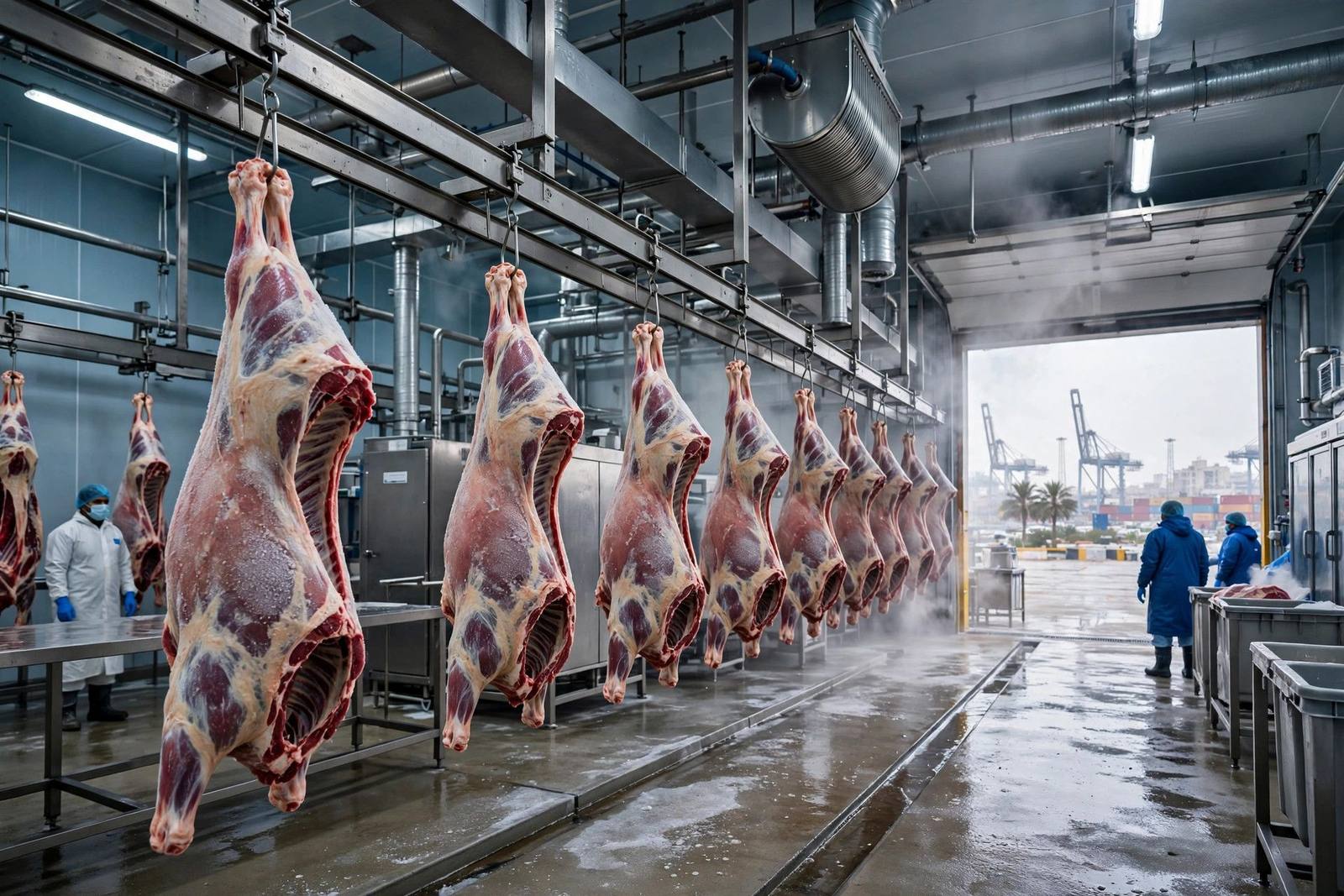
KARACHI: Pakistan has one of the world's great livestock herds and, for most of its history, exported remarkably little of it as branded, processed meat. The trade that did exist ran through informal channels — live animals and carcasses moving on relationships rather than certifications. The Organic Meat Company Limited, TOMCL, is the listed attempt to industrialise that trade: a Karachi company, incorporated in 2010, that buys livestock, slaughters halal at its plant at Gadap on Karachi's northern edge, processes, chills, freezes and packs the meat, and sells it overwhelmingly abroad — to the Gulf, to China, to Central Asia and beyond. It converted to a public company in November 2018 and listed on the Pakistan Stock Exchange in 2020, becoming the most direct way for an investor to own the proposition that Pakistan's meat belongs in the world's supermarkets, certified and labelled, rather than only in its own bazaars. This profile explains what the company actually does inside the cold rooms at Gadap, how a meat exporter earns, and what can go wrong between a Punjab cattle mandi and a container bound for Shanghai.
The trade TOMCL set out to formalise
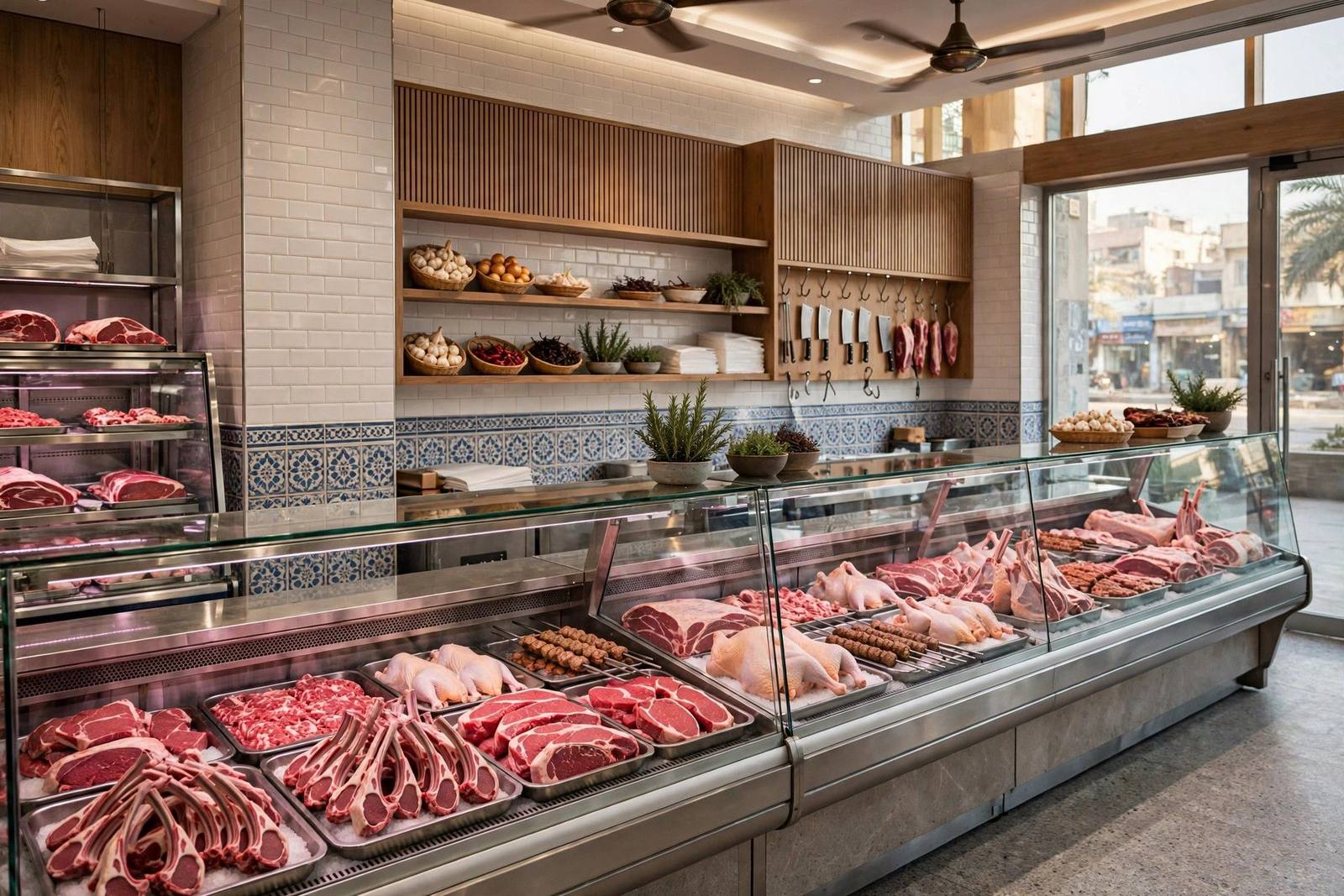
Meat is Pakistan's paradox. The country keeps tens of millions of cattle, buffalo, sheep and goats; meat is central to its cuisine and its festivals; and its per-animal productivity and formal processing rates are low by the standards of the exporting nations it competes with. The traditional chain — farmer to middleman to mandi to butcher — is superb at supplying the neighbourhood and structurally unable to supply a foreign supermarket, which demands inspected slaughter, veterinary certification, unbroken cold chains, traceability and consistent specification, audited by the importing country's own authorities. The gap between those two worlds is where export meat companies live. Their capital buys the compliance: a modern abattoir, chilling and freezing capacity, laboratories, documented halal process, and the country-by-country approvals without which a container is just expensive refuse at a foreign port. Pakistan's meat exports have grown through exactly this channel, earning foreign exchange from Gulf demand first and, increasingly, from the much larger prize of the Chinese market — the national context our analysis of Pakistan's exports sets out.
TOMCL — the name is worth a sentence, since "organic" here is a company name rather than a certification claim about every product — positioned itself in that formal channel from the start. Its plant and principal place of business stand at Survey 310, Deh Shah Mureed, Gadap, Malir, Karachi, with its registered office in the Korangi Industrial Area: slaughter and processing at the livestock-facing edge of the city, administration in its industrial belt. Its chairperson in recent filings is Nihal Cassim and its chief executive Faisal Hussain, names attached to a business that, unusually for the PSX, can be understood by walking one production line from lairage to loading bay.
2010–2020: incorporation, conversion, listing
The company was incorporated in Pakistan on 14 July 2010 as a private limited company under the Companies Ordinance then in force. Its stated principal activities, consistent from its early filings onward, are the processing and sale of halal meat and allied products — a description its fuller business summaries expand into the purchase and sale of livestock, halal slaughter, and the processing and packaging of meat and related products. The private decade was spent building the unglamorous foundations of an exporter: the Gadap facility, the veterinary and inspection relationships, and the market approvals in the Gulf states that formed the first destination set for Pakistani chilled and frozen meat.
On 8 November 2018 the company converted from private to public limited status, the preparatory step for a listing, and in 2020 its shares came to the Pakistan Stock Exchange — a flotation that made it the market's pure-play meat exporter at a moment when food-sector listings were scarce. The listing's logic ran both ways: public equity for the working capital and capacity an exporter consumes — livestock must be bought for cash long before a foreign buyer pays — and, for investors, a rare consumer-adjacent growth story denominated in export dollars. A first dividend record followed within the year of listing, as the exchange's corporate-action history shows, an early statement of intent toward the new public register; the durability of payouts since is a matter for the announcements file, read with the help of our guide to how PSX dividends work.
What comes out of Gadap
The product range begins with the animal and ends with the by-product, because in meat processing everything is sold or everything is loss. The core lines are beef and mutton — fresh, chilled and frozen, in carcass, primal and portioned forms — together with the offals, red and white, that many Western processors discount and Asian and Middle Eastern buyers prize. Camel meat appears in the company's range, a niche line reflecting regional tastes. Around the food lines sit the allied products that turn a slaughterhouse into a rendering economy: hides and skins for the leather chain, and casings and other by-products for further processing. The company has also offered private labelling — packing meat under customers' own brands — and pet food lines, using the parts of the animal the human market values least. Company disclosures over the years trace a steadily widening destination map: the United Arab Emirates, Saudi Arabia, Oman, Qatar and the wider Gulf as the foundation; then Hong Kong and Vietnam; then the markets that changed the scale of the ambition — China, for cooked and heat-treated beef products in particular, the United States and Canada, and the Commonwealth of Independent States, including an announced entry into Tajikistan.
Two milestones from the company's own exchange filings mark the direction of travel. One is its position among the pioneering Pakistani exporters of value-added, heat-treated beef to China — a market whose sanitary and phytosanitary protocols are among the most demanding in world food trade, and whose approval is therefore a credential as much as a contract. The other came with its announcement that it had become the first Pakistani company to export beef casings to Europe, a by-product line that would be invisible to a casual reader and is anything but invisible in the plant's economics: casings are what sausage is stuffed into, Europe is the historic centre of that trade, and selling a former waste stream into its most regulated market is the whole TOMCL thesis in miniature. Its Karachi neighbour and rival in branded meat, Al Shaheer Corporation, took the opposite strategic road — retail first, exports second — and the comparison between the two is the fastest education in Pakistan's formal meat economy that the PSX offers.
Alongside the export engine, the company also sells into the domestic market, where its processed and packaged offer meets the same consumers who buy their meat fresh from the bazaar — a harder, slower contest against habit and price that no Pakistani processor has yet won at scale. The balance matters to a reader of the accounts: exports bring dollars, protocol risk and thin commodity margins, while domestic sales bring rupees, brand-building costs and the prospect — still largely a prospect across the industry — of a packaged-meat habit forming in Pakistani cities as refrigeration and supermarket shopping spread. TOMCL's filings, weighted as they are toward the export story, should be read with that domestic option in mind rather than as a business with only one door.
How a meat exporter makes money
The economics are a chain of conversions, each with its own margin and its own way of failing. Livestock is bought in mandis and from aggregators at prices set by season, fodder costs and festival demand — Eid-ul-Adha moves the entire country's animal market — and slaughtered under inspection. The carcass then divides: prime cuts and whole-muscle products for the best-paying export specifications; manufacturing meat and offal for volume buyers; hides, casings, fat and bone streams for industrial customers. Revenue per animal is the sum of all of those prices, and the processor's craft is yield — the percentage of the animal sold at each tier — because the purchase price was fixed at the gate. Against revenue stand the exporter's characteristic costs: energy for chilling and freezing, refrigerated freight, certification and testing, finance for the gap between paying the farmer and being paid by the foreign buyer, and the currency translation of dollar sales into rupee costs. A weakening rupee generally flatters the exporter's ledger; a disease scare or an import ban in a destination market empties it at a stroke.
That last asymmetry is the business's defining feature. Meat trade is permission trade: every destination is a protocol, every protocol can be suspended, and foot-and-mouth disease — endemic in the region in a way it is not in rival exporting nations — hangs over market access as a permanent structural negotiation. The strategic answers available to a company like TOMCL are the ones its announcements display: move up the processing ladder, because cooked and heat-treated products face different, often more attainable, sanitary rules than raw meat; widen the destination map, so no single capital's decision can halt the plant; and monetise more of the animal, because casings and by-products carry margins the commodity cuts cannot. Each answer costs capital before it earns, which is the recurring rhythm of the company's investment story.
Strengths, risks and the honest ledger
The strengths are position and timing. TOMCL is an established, certified, listed exporter in a trade where certification is the scarce asset; it sells a product Pakistan produces abundantly into world markets that are structurally short of halal protein; and its documented firsts — value-added beef into China, casings into Europe — suggest a management that works the regulatory frontier rather than waiting for it. The export mix also gives it a natural dollar hedge rare among PSX food names, whose revenues are otherwise rupee-bound; our guide to food and personal care stocks shows how unusual that makes it in its sector.
The risks deserve equal plainness. Livestock procurement is exposed to animal disease, feed inflation and the festival cycle at home. Destination concentration in the Gulf and China means SPS decisions abroad are earnings events. Cold-chain energy costs in Karachi are a standing tax on every kilogram frozen. The business is working-capital hungry and its margins on commodity cuts are thin, so growth consumes cash even when it succeeds. And a company whose story is export approvals must be read through its exchange filings — order announcements, market entries, capacity additions — rather than its name, since the distance between an approved protocol and a shipped container is measured in inspections, not intentions. None of this is unusual for a protein exporter anywhere in the world; it is simply the honest price list of the trade TOMCL chose.
The name on the PSX
TOMCL trades in the food and personal care products sector as one of its smaller, more specialised constituents, and its share register includes the substantial free float typical of a 2020-vintage listing. Its market temperament is announcement-driven: export orders, new market approvals and result seasons move it more than index drift does, and its Shariah-compliant status in the KMI universe, noted by market data providers, brings it onto the screens of Islamic funds as well. For a beginner, it is an unusually legible small cap — one plant, one product family, one direction of travel — provided the beginner learns the habit its filings demand: distinguish approvals from orders, orders from shipments, and shipments from cash, because in export meat those are four different events in four different quarters.
The investor who studies The Organic Meat Company is making a judgement about formalisation: that the world's halal meat demand will keep migrating toward certified, processed, traceable supply, and that a Karachi plant which has already crossed the Chinese and European regulatory thresholds owns something a new entrant cannot quickly copy. The herd, after all, was always there. The paperwork is the moat. This profile is educational content, not financial advice.
Key takeaway: The Organic Meat Company, incorporated in 2010 and listed in 2020, processes halal beef and mutton at Gadap, Karachi for export markets from the Gulf to China — a bet that certification and by-product value, not the herd, are Pakistan meat's scarce assets.