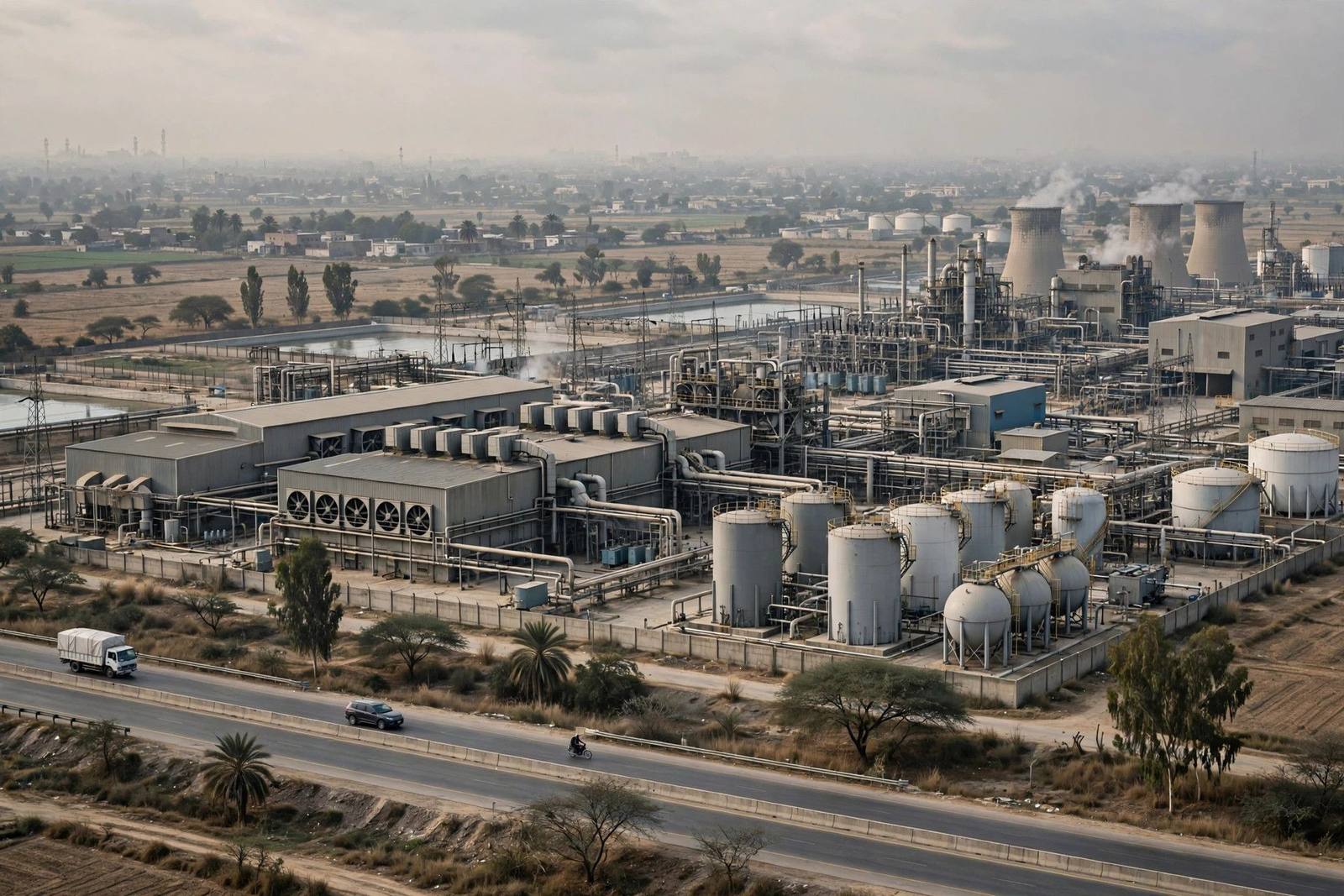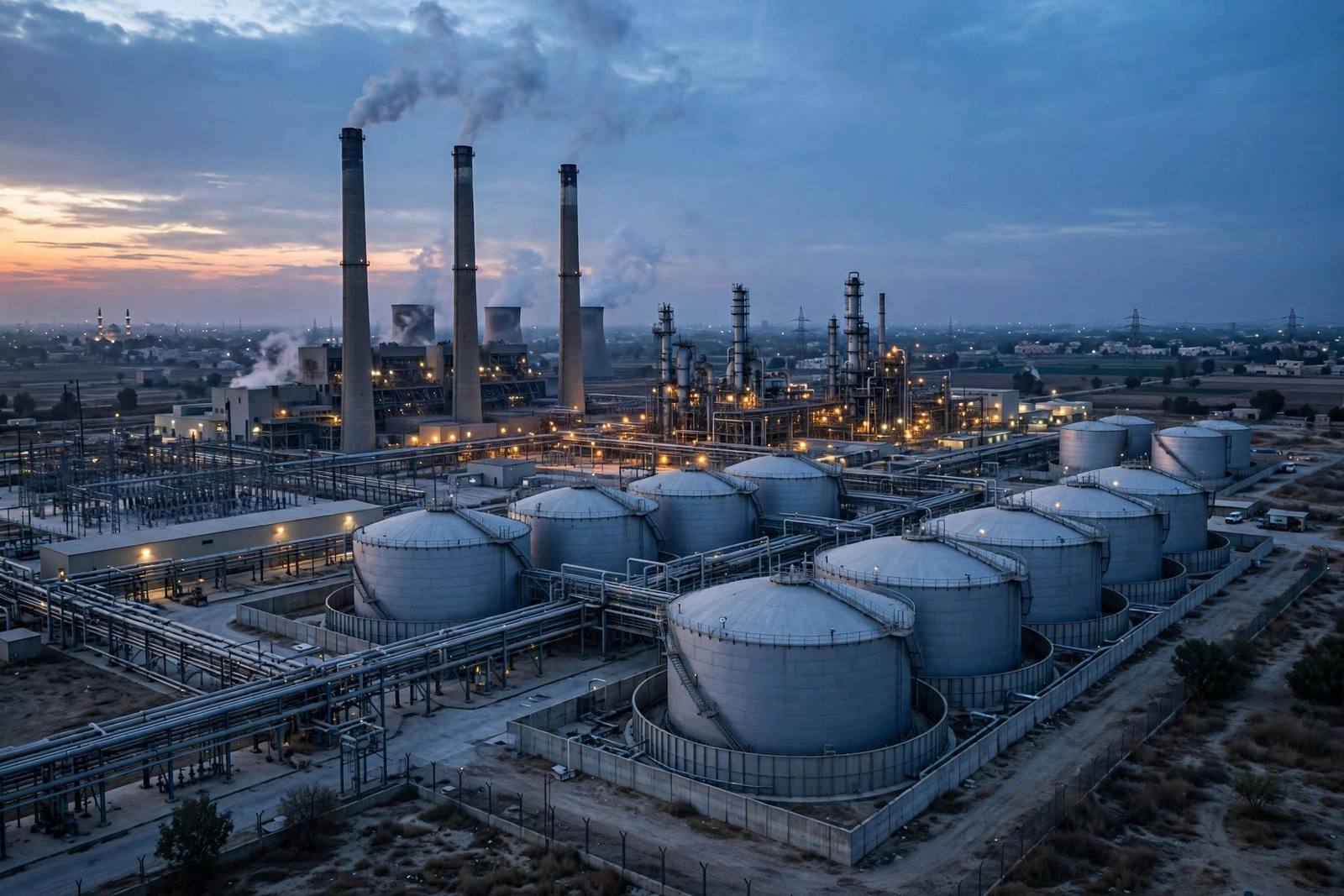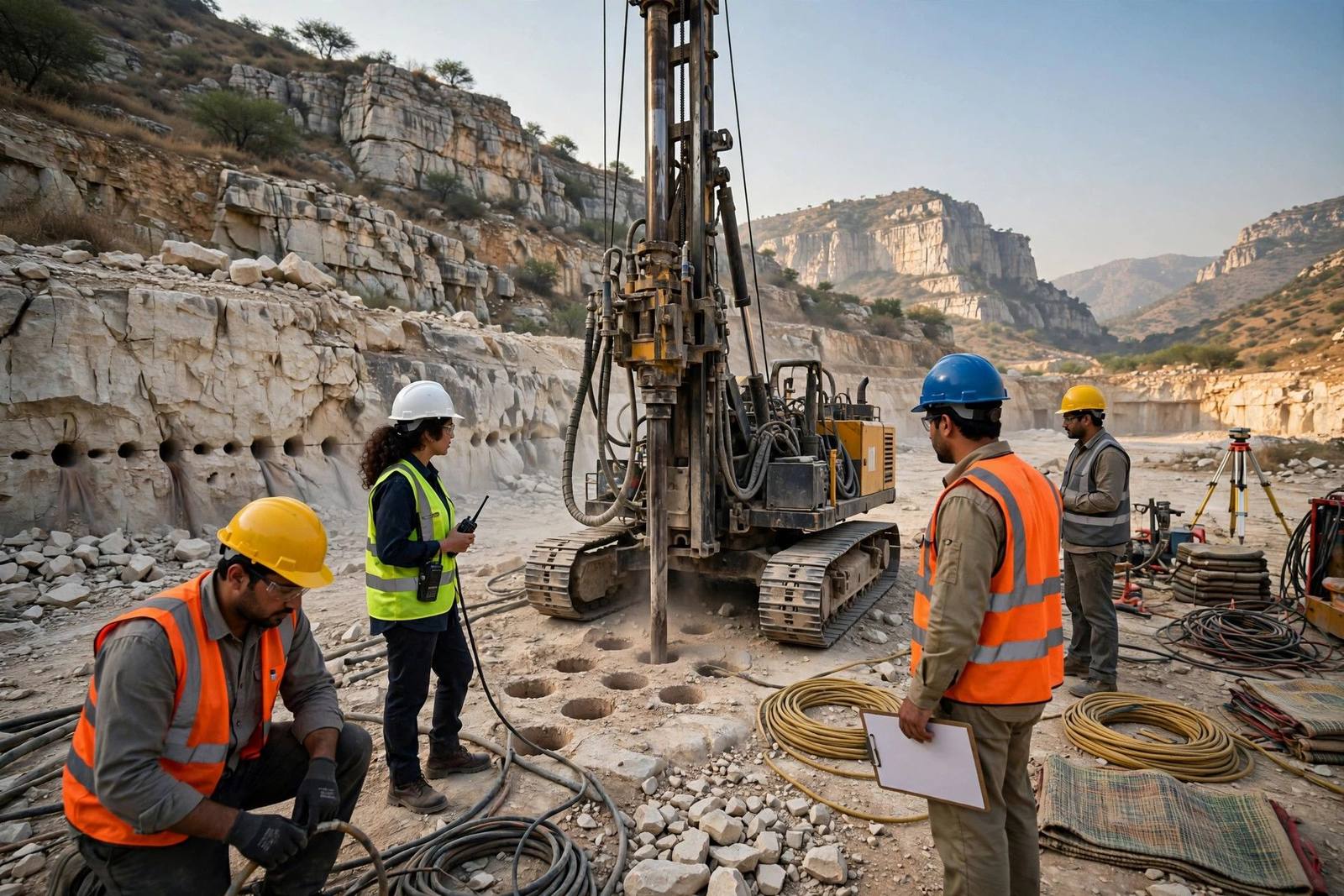
KARACHI: A hill is cleared for a new motorway cutting, a quarry is deepened in limestone, a mine in Balochistan advances its face — and before the first charge is placed, someone has to supply what makes the rock move. Wah Nobel Chemicals, WAHN on the Pakistan Stock Exchange, is one of the names Pakistan's mining, quarrying and construction industries have called on for that purpose for decades. It makes commercial explosives and accessories — dynamites, emulsion explosives, detonators — and, from a second chemical line built in the 1980s, formaldehyde resins and industrial chemicals that bond the country's plywood and chipboard. Few Pakistani companies combine heavy industry, defence-adjacent manufacturing and wood-panel glue in one listed vehicle.
The Wah Nobel venture: founded 1962
The name belongs to a larger story than the listed company alone. Wah Nobel is a joint venture founded in 1962 between Pakistan Ordnance Factories — the state's arms and ammunition establishment at Wah Cantt — and Saab of Sweden, which supplied the explosives technology. That origin explains the name, the location and the character: a venture set up to give Pakistan a domestic source of commercial blasting materials, built at the ordnance complex in Punjab where precision manufacturing was already a way of life.
Commercial explosives and their accessories were the main business for two decades. The 1990s-era company literature describes the later additions that completed the range for customers: safety fuse, detonating cord and emulsion explosives joined the original dynamite lines, giving the venture a full offering for mining, quarrying and construction blasting.
Wah Nobel Chemicals: the 1982 diversification
In 1982, during the diversification push of the early eighties, the venture incorporated a public limited company under the title of Wah Nobel Chemicals Limited, installing plants to make formaldehyde — produced from methanol — and formaldehyde-based resins. The technology came from European licensors, including Perstorp of Sweden for formaldehyde and Foresa of Spain for resins, and the venture described capacity being raised as the resins found their market.
The products read like a catalogue of industrial adhesives: urea-formaldehyde and phenol-formaldehyde liquid resins and glues used as bonding agents in chipboard, plywood and flush-door manufacture, lamp-capping cement, foundry resins for cold-setting moulds, glazing powders and urea-formaldehyde concentrates and compounds. Acetates — ethyl acetate, butyl acetate and related solvents — and trading in other industrial chemicals later joined the range, as did emulsion explosives and modern initiation systems on the blasting side, including shock-tube systems.
What it does today: blasting and bonding
Put plainly, WAHN's two businesses are: things that explode, controlled, for industry; and the resins that hold engineered wood together. Its explosives — nitroglycerine-based dynamites, powder and emulsion explosives, seismic grades for exploration work, plus detonators and accessories — are consumed by mines, quarries, road and dam projects: any civil work that moves earth faster than machines alone can. Its chemicals serve an entirely different customer base: plywood and chipboard manufacturers, foundries, textiles, leather, paint, printing and food industries, where formaldehyde resins, acetates and specialty products go into other companies' production lines.
The company also undertakes plant erection, civil construction and trading activities — services that flow naturally from a firm that builds and runs chemical plants — and its products reach customers across Pakistan from the Wah base. That map sits within the wider industry covered in our guide to chemical stocks on the PSX, where WAHN stands apart as the only name built on blasting.
Ownership: inside the Wah Nobel group
Wah Nobel Chemicals Limited is a subsidiary of Wah Nobel (Private) Limited, the group company arising from the defence-industrial joint venture, so the listed company's controlling shareholder is the state-linked venture structure itself rather than a trading family. Saab's name, meanwhile, has remained part of the venture's identity long after its founding generation — the "old partner" of the joint-venture era, linking Swedish explosives technology with Pakistan's ordnance establishment.
That parentage has practical consequences. A business handling military-adjacent technology and explosives lives under layers of regulation and security that ordinary chemicals do not, with licensing and controls shaping who it can sell to and how product moves. It also means the listed company is a small civilian window into a strategically minded group: what appears in WAHN's accounts is the commercial chemicals and explosives business, presented to public shareholders in the ordinary way, while the group's wider affairs stay private.
How the money is made
Explosives revenue follows the capital expenditure of others: mining output, quarry activity for the cement and construction industries, road and infrastructure building, and tunnelling and dam works. These customers buy on specification and reliability rather than price alone — a failed blast or inconsistent product costs more than the powder it saves — which gives an established maker a durable, qualification-based position. Resin revenue follows the wood-panel and board industry, which in turn follows housing fit-out, furniture production and construction, and depends on formaldehyde supply: since formaldehyde is made from imported methanol, its margins ride the methanol price and the exchange rate.
Across the two arms, the ledger has a useful diversity: blasting demand and board demand crumble under different weather, and the smaller product lines — acetates, specialty resins, trading — fill around them. Against that stand the costs of making hazardous products safely: specialised plant, storage, transport under permit, insurance and skilled staff, none of which a start-up rival can replicate cheaply. Barriers to entry in explosives are built from regulation and track record as much as from capital.
Strengths, risks and the realities of explosives
The strengths are obvious and durable: a founding import-substitution role since the 1960s venture, a recognised name in a safety-critical trade, technology licences from reputable European licensors, and a second business in resins that no pure explosives maker has. The board and panel industries add recurring, everyday demand to the project-driven explosives line.
The risks require plain words. Explosives manufacture is inherently hazardous work, and safety is not a section of the annual report but the business itself; any serious incident would carry human, legal and commercial consequences beyond ordinary industrial risk. Demand for blasting is cyclical and project-based — a slow decade for mining and infrastructure is a slow decade for WAHN. Formaldehyde prices key off imported methanol and hence off the dollar. And, as a smaller listed industrial with a concentrated register, the share can be illiquid for stretches, with prices moving on modest turnover.
The name on the PSX and the investor who studies it
WAHN trades in the chemical sector, well away from the index heavyweights, and is best approached as a small, specialist industrial whose filings repay close reading precisely because broking research coverage is thin. Its dividend history has had its respectable years — the company's own early literature boasted of strong market appreciation — but the honest characterisation is that of a cyclical small company: payouts follow profits, not a published income policy. Newcomers should read our guide to how PSX dividends work before building any expectation on historical cash returns.
The investor who studies WAHN is tracking Pakistan's extractive and infrastructure pulse: mining concessions, quarrying behind the cement industry, road building and the board mills that consume its resins. This article is educational content, not financial advice. Read the explosives order book as a leading indicator of heavy construction, and the resins line as a follower of housing — few listed companies let you watch both signals from one small annual report.
Two trades, one small balance sheet
The pairing inside WAHN deserves a second look, because it is not a conglomerate's accident but an industrial logic. Explosives and resins share a customer temperament: industrial buyers who purchase on specification, test what arrives, and change suppliers slowly and reluctantly. They share a regulatory temperament too — plants that store energetic or hazardous materials live under inspection regimes that reward long, clean track records. And they share a sales temperament: technical service sells. The company that advises a quarry on its blast pattern, or a board mill on its resin cure, is selling expertise with product attached, which is why small share in such trades can be more durable than large share in commodity ones. Pakistan's other formaldehyde and resin makers, and the chlor-alkali majors such as Ittehad Chemicals and Engro Polymer, compete with WAHN only at the edges of its range; in explosives, its competitive set is a handful of licensed makers and the ever-present informal alternative that regulation exists to suppress.
The demand outlook, read structurally rather than as a forecast, hangs on named national programmes rather than consumer mood: mineral development in Balochistan and the northern areas, the cement industry's quarrying behind it, road and hydropower construction, and the engineered-wood industry that converts plantation and imported timber into the boards of Pakistani furniture and fit-out. Each is a multi-year consumer of what WAHN sells. Each is also funded, directly or indirectly, out of the same strained public and credit conditions — which is why the company's results tend to move with the national capital-expenditure pulse rather than with the consumer economy, and why its quiet years and busy years arrive in long runs rather than single quarters.
For the accounts reader, the disclosures that matter are segment behaviour between the explosives and chemicals lines, inventory discipline in a business whose raw materials include imported methanol, and the safety and compliance record management chooses to report. In hazardous industries, what a company says about the accidents it did not have is data, not decoration.
Place WAHN, finally, in its landscape. Wah Cantt is a company town built around ordnance — orderly, technical, security-minded — and a chemicals-and-explosives business headquartered there inherits that culture in its bones. The listed company's plants make products that must be right every time: a detonator that fails in a quarry face, a resin that fails in a board press, becomes a story told across an industry that talks to itself. That reputational physics explains the company's longevity better than any single contract does, and it is why the founding dates matter to the investment case: in trades where buyers qualify suppliers over years and forgive slowly, having been qualified since the era of the founding venture is an asset no balance sheet itemises and no rival can buy quickly.
Nor should the resins side be treated as a quiet annex. Pakistan's panel-board industry — the chipboard and plywood mills of Punjab and the north — expanded with the country's furniture and construction-fitout trades, and formaldehyde resin is its indispensable input, bought continuously rather than project by project. That gives WAHN a base-load of chemical demand running beneath the explosives cycle, invoiced to dozens of mid-sized factories rather than a handful of mega-projects. When infrastructure spending stalls, the boards still move with housing completion and furniture replacement; when mining booms, the explosives line accelerates on top of a chemical base that never stopped. Few companies of this size on the PSX contain two such differently-textured revenue streams, and valuing the whole off either one alone understates what the combination is for.
For the new reader, a closing practical note: in a company this specialised, the annual general meeting and the directors' report carry more signal than any headline result. The questions that matter — order visibility in blasting, resin demand from the board mills, the state of the safety record — are answered there in management's own words, and the shareholder who reads them owns an informational advantage that no screen of ratios can replicate.
It is that continuity — same town, same trades, same insistence on qualified product — that separates WAHN from the market's many renamed and repurposed shells. The company a shareholder buys today is recognisably the company the venture built, doing recognisably the same two jobs, for recognisably the same reasons.
Key takeaway: Wah Nobel Chemicals is the listed arm of the 1962 state–Saab venture at Wah — making commercial explosives since that era and, through the 1982 company, formaldehyde resins and acetates — a small, specialised industrial whose fortunes track mining, quarrying and the wood-panel trade.