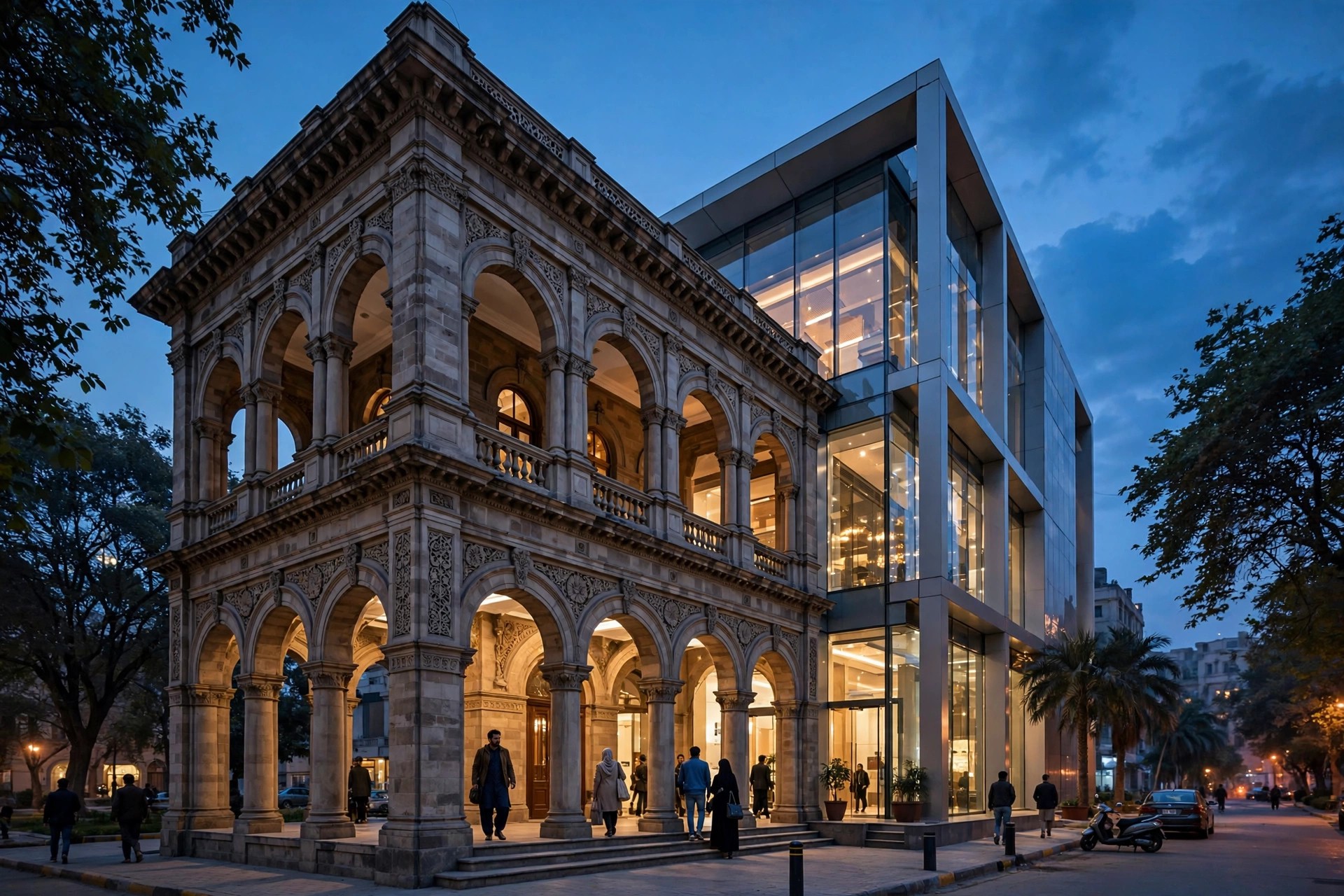
KARACHI: Pakistan's textile industry is the country's industrial backbone — its largest manufacturing employer and its biggest export earner — yet most of its thousands of mills are names nobody outside the trade has heard. Yousaf Weaving Mills Limited, ticker YOUW, is one of those names: a small public company incorporated in January 1988, headquartered in Lahore, which spins yarn and weaves and sells processed fabric, employing a few hundred people. It owns no famous consumer brand and operates no retail chain. What it does hold, under the index's rules, is a seat in the KSE-100 as a representative of the textile weaving sector — a fact that makes it a useful lens on two subjects at once: how the middle of Pakistan's cotton chain actually works, and how a benchmark index comes to contain companies far smaller than its giants.
What Yousaf Weaving Mills does
The company's own descriptions, repeated consistently across its reports and exchange profiles, define the business in one sentence: textile weaving, spinning, and the sale of processed fabric. It operates through weaving and spinning segments, producing cotton yarns and fabrics including synthetic-fibre blends, from its registered base at Main Boulevard, Gulberg, Lahore. Three activities inside that sentence deserve unpacking, because each is a distinct trade.
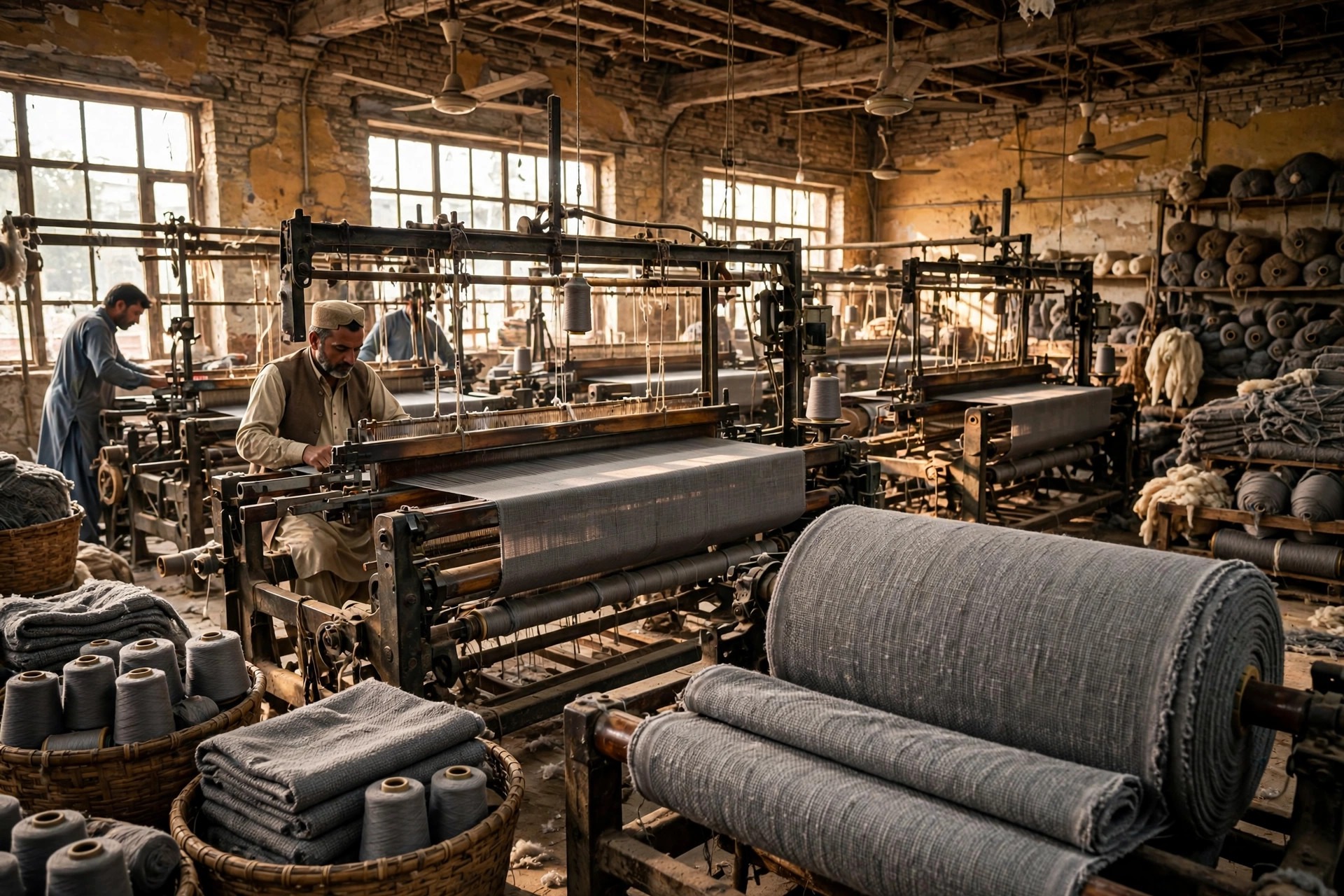
Spinning turns raw cotton fibre into yarn. Ginned cotton arrives in bales, is cleaned, carded, drawn and spun into yarn of varying counts — the thickness and quality grades the rest of the chain specifies. A spinning unit's economics turn on the cotton price, power costs, and the yarn count mix it can sell. Weaving takes yarn — its own and bought-in — and interlaces warp and weft on looms into grey fabric, the unfinished cloth that is the weaving sector's standard product. Processing and sale of processed fabric moves a step closer to the customer: dyeing, finishing and preparing fabric so that garment makers, home-textile exporters and domestic converters can use it directly. Each step adds value and margin over the last, and each step also adds cost, working capital and exposure to a different buyer's bargaining power.
A child of the 1980s textile expansion
Yousaf Weaving Mills was incorporated on 17 January 1988 as a public limited company under the Companies Ordinance, 1984 — the statute its filings still cite in the lineage now carried under the Companies Act, 2017. Commercial listings record its shares reaching the market in the mid-1990s (an IPO date of May 1994 appears in market data compilations). Beyond those anchors, the public record of its early decades is, frankly, thin, and this profile will not manufacture a founding saga the sources do not contain. There is no widely documented founding-family epic, no acquisition trail, no famous turning point. What can be said from the record is the context every mill of its generation shared.
The late 1980s were a formative moment in Pakistani textiles. Cotton was the country's great agricultural asset, spinning capacity was expanding, and weaving — long dominated by a vast informal power-loom sector in and around Faisalabad, the textile city whose name this profile's title carries — was gradually being joined by organised, incorporated mills serving export-oriented buyers who demanded consistency the informal sector struggled to guarantee. A company named for weaving, incorporated in Lahore in 1988 and combining spinning with weaving under one roof, is a characteristic artefact of that moment: an attempt to capture more of the chain — fibre to yarn to cloth — inside one balance sheet, in the decades when Pakistan's garment and home-textile exports were about to become the economy's main engine. Its survival, nearly four decades on, through cotton crises, energy shortages and repeated macroeconomic storms, is itself the most concrete fact its history offers.
The middle of the chain: where YOUW sits
To see the company's role, picture the cotton chain whole. Farmers grow cotton; ginners separate fibre from seed; spinners make yarn; weavers make grey fabric; processors dye and finish; garment and home-textile makers cut and sew; exporters ship to the world's clothing and linen shelves. The famous names of Pakistani textiles — the great composite groups with their own brands and global buyers — integrate most of that chain. A company of YOUW's scale occupies its middle links, selling yarn and fabric to the links beyond. Its customers' fortunes are therefore its fortunes: when Faisalabad's garment exporters are full of orders, fabric demand firms; when European and American retail slows, the order books thin all the way back to the loom.
That position explains the sector's personality, described in our guide to PSX textile stocks: weaving and spinning are commodity conversion businesses. The mill buys a globally priced input (cotton, and increasingly imported fibre and yarn inputs when local crops fail) and sells a globally priced output, keeping the conversion margin between. Skill shows up as efficiency — modern looms, low waste, reliable quality — and as buying judgement in the cotton season. There is little pricing power to hide behind when the spread turns, which is why the sector's profits, YOUW's included, have always swung with cotton prices, energy tariffs and the exchange rate.
How the mill makes money
The revenue chain is short to state and hard to run. Sell yarn by the pound or kilogram at prices referenced to cotton and international yarn markets. Sell grey and processed fabric by the metre at prices set by order books at home and abroad. Against those receipts, charge the mill's real costs: raw cotton — the dominant line, bought in a harvest season and held as stock; power and gas, the sector's perennial grievance, because spinning frames and looms run long hours and Pakistan's industrial energy has grown expensive and, at times, interrupted; labour for a workforce the data providers put in the mid-hundreds; maintenance and spares for machinery; and finance costs on the working capital that cotton stock and customer receivables demand.
Recent years, as chronicled in the business press's coverage of its results, show the squeeze in textbook form: sharp increases in production costs, high interest rates and inflation compressing sales and pushing the company into losses in the early 2020s, after profitable years immediately before. That whipsaw — a good year or two, then a loss year when cotton, energy and rates move together — is not a YOUW peculiarity but the weaving sector's signature, and the company's directors' commentary, like its peers', points to the same external list: energy shortages and outages disrupting schedules, currency devaluation lifting input costs, tax and monetary conditions squeezing margins. A reader of such a company's accounts learns to start with the gross margin's direction, the cotton stock it carries into the new season, and its borrowing — the three dials that predict the year better than any narrative.
A small weaver in a big index
YOUW's KSE-100 seat follows the same logic this batch has met repeatedly. The index is assembled by rules centred on market capitalisation and liquidity, with sector representation part of the design explained in how the KSE-100 is calculated, so that the benchmark mirrors the whole listed market — giant banks and all — rather than only its largest tribe. The textile weaving sector has few listed members of any scale; within it, a long-listed, regularly traded mill can qualify where, in a deeper sector, it would not come close. Membership then feeds on itself modestly through index-following portfolios, until a future rebalancing redraws the line. None of this says the company is large, safe or growing. It says the index is doing its statistical job — and that investors who buy "the index" own, among much else, a few hundred looms'-worth of Punjab's cotton chain.
What investors typically watch
The observation list for a weaving company is written by its inputs. The domestic cotton crop — flood, pest and acreage news from Sindh and Punjab — and international cotton prices. Energy tariffs and supply for industry, and any regional subsidy or its withdrawal. The rupee, which cuts both ways: it lifts the local-currency value of export-linked fabric prices while raising imported input costs. Order flow from the garment and home-textile exporters downstream. And, at company level, utilisation, the yarn-versus-fabric mix, stock levels and debt. The Aktzien learning library treats exactly these conversion-margin businesses — buy a commodity, sell a commodity, live on efficiency — as a core lesson, because so much of Pakistan's listed industry works this way.
Yousaf Weaving Mills will never be the story of Pakistani textiles; the giant exporters own that narrative. It is, instead, the industry's median — an incorporated mill of 1988 vintage, spinning and weaving through every cycle the sector has known, and visible to the wider public mainly because an index rulebook gives its sector a seat. This article is educational content, not financial advice. Sometimes the most instructive company in a benchmark is the one that explains the benchmark itself.
The loom's-eye view: Faisalabad, power looms and the organised sector
Any honest profile of a Pakistani weaving company must make room for the sector's other half: the decentralised power-loom industry, concentrated in Faisalabad and spread through Punjab's towns, where tens of thousands of small loom owners weave grey fabric in workshops rather than factories. This informal sector is the organised mills' competitor, supplier and shadow at once. It weaves cheaply, flexibly and largely outside the tax and labour documentation the formal economy requires; it also struggles to guarantee the consistent quality, volume and delivery schedules that export buyers and large converters demand. An incorporated mill like Yousaf Weaving Mills sells, in part, exactly that guarantee — inspected fabric, invoiced properly, produced at a scale a buyer can plan around — and pays for the privilege in energy tariffs, taxes and compliance costs its informal rivals partly escape. The tension between the documented and undocumented halves of the same industry runs through every Pakistani textile policy debate, from energy pricing to sales-tax regimes, and it lands directly on the cost lines of companies like YOUW.
Cotton itself supplies the second permanent drama. Pakistan's crop has swung violently in recent decades — squeezed by water stress, pest pressure, competing crops and, catastrophically in some years, flood — and a short domestic crop forces mills toward imported cotton and fibre at dollar prices, precisely when the rupee is usually weakest. A weaving mill's year is often decided in the cotton-buying season, months before its looms produce the fabric whose margins the annual report will record. Add the sector's dependence on textile export demand from the United States and Europe — and on the trade preferences and energy pricing that decide whether Pakistani fabric can compete with Bangladeshi, Vietnamese and Indian rivals — and the full picture of a small mill's exposure is complete: almost every decisive variable is set somewhere else. What management controls is efficiency, quality, buying discipline and balance-sheet survival. In a sector that has buried many larger names, lasting from 1988 to the present index is evidence that those controllable things have, on balance, been done well enough, often enough.
That is the right note on which to place YOUW in this series: not as a curiosity, but as the representative firm of Pakistan's real textile economy — mid-chain, commodity-exposed, family-scale by the standards of the giants, and still standing.
The company's reporting calendar offers one more quiet lesson in reading small Pakistani industrials. Results arrive in the standard quarterly rhythm, directors' reports narrate the same external weather the whole sector reports — cotton, energy, rates, demand — and the differences between a survivable year and a loss-making one are visible first in the gross margin line, long before any narrative explains them. For a learner, a company like YOUW is in this sense an ideal training set: small enough that the accounts can be read in an evening, exposed enough that every major force in Pakistan's industrial economy — harvests, tariffs, the rupee, export demand — leaves a fingerprint somewhere in them.
Key takeaway: Yousaf Weaving Mills, incorporated in Lahore in 1988, spins yarn and weaves and sells processed fabric in the middle of Pakistan's cotton chain — a small, cyclical conversion business whose KSE-100 seat reflects the index's sector-representation rules rather than scale.