KARACHI: Most Pakistanis meet the Askari name long before they meet the stock market. It is on bank branches, housing schemes, cement bags and the businesses run for the welfare of retired soldiers and their families. Askari General Insurance Company Limited — AGIC on the Pakistan Stock Exchange — is the insurance piece of that world: a non-life insurer owned by the Army Welfare Trust, writing the fire, marine, motor, health and miscellaneous cover that sits quietly behind factories, vehicles, cargo and construction sites across the country. It is not one of Pakistan's giant insurers, and it does not try to sound like one. Its story is steadier than that: a mid-1990s foundation-era start-up that has grown, branch by branch, into a permanent fixture of the general insurance market.
A child of the Army Welfare Trust
To understand AGIC, start with its parent. The Army Welfare Trust (AWT) was set up in 1971 by the Pakistan Army, under the Societies Registration Act, with a mandate that is written into everything the group does: promote the welfare of retired army personnel and their families by creating income and employment. Over the decades AWT built a sprawling commercial group — sugar, textiles, real estate, banking, leasing, cement, travel and more — whose profits ultimately serve that welfare purpose. Insurance was a natural addition. A group with factories, fleets, property and thousands of employees generates insurance needs of its own, and a trust thinking about long-term income could see that Pakistan's under-insured economy would need more risk cover with every passing decade.
Askari General Insurance was incorporated as a public limited company on 12 April 1995 and commenced commercial operations on 15 October 1995, with its registered office at AWT Plaza on The Mall in Rawalpindi — the cantonment city that is home to the army's headquarters and to much of the Askari world. The company remains a subsidiary of the Army Welfare Trust, which holds the controlling stake, and that single fact shapes its character more than any product line: the sponsor is an institution, not a trading family, and its horizon is measured in welfare obligations that do not expire.
What a general insurer actually sells
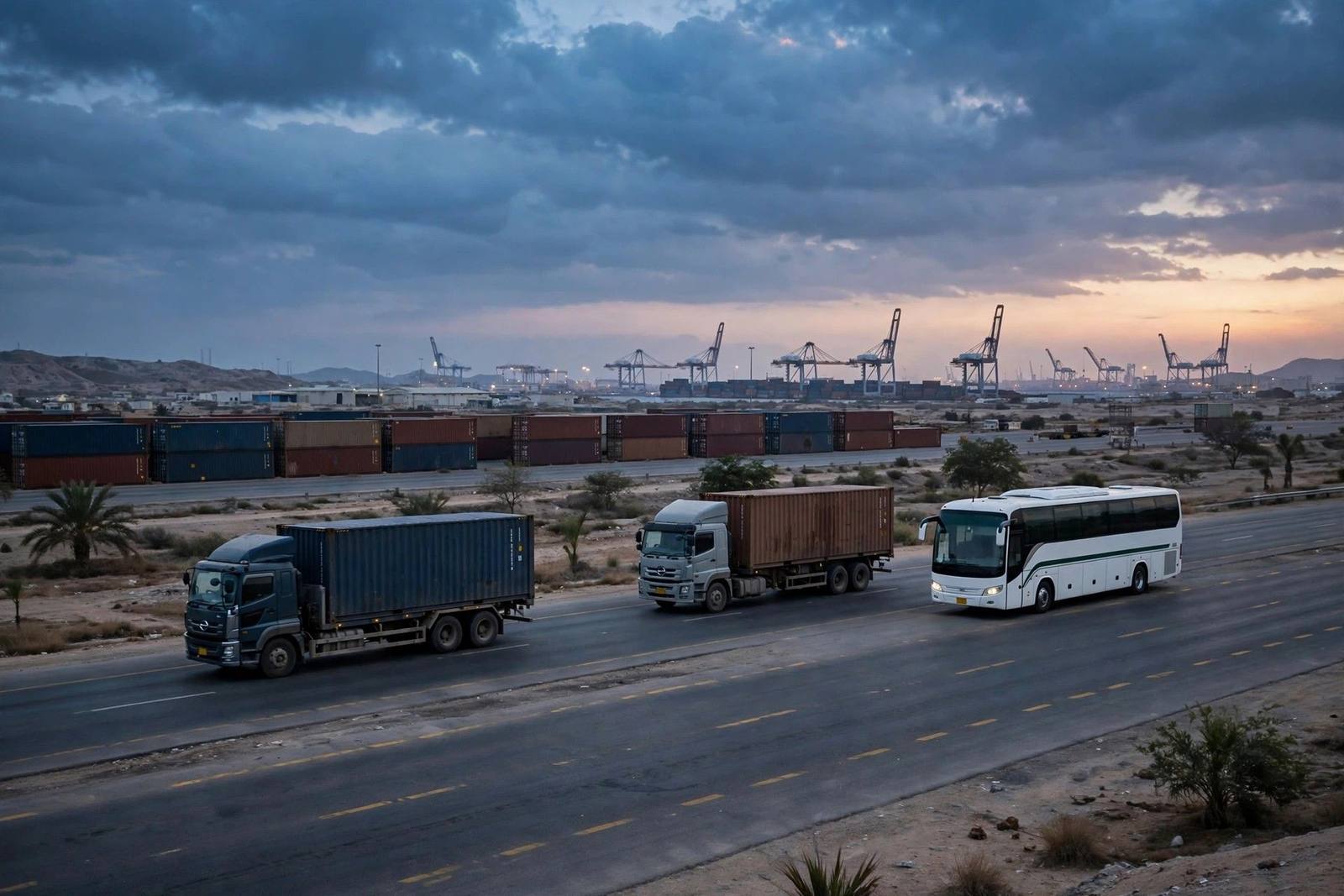
General — or non-life — insurance is everything that is not a life policy. AGIC's own description of its business lists five broad families. Fire insurance covers buildings, plant, stock and machinery against fire and allied perils such as explosion, riot and strike, flood and earthquake extensions. Marine cover protects cargo in transit — imports and exports moving by sea, air and land — and the hulls that carry them. Motor insurance covers the cars, trucks and fleets on Pakistan's roads, from third-party liability to comprehensive cover. Health business, a growing line across the industry, pays medical costs for corporate groups and individuals. And miscellaneous is the honest industry label for everything else: engineering and contractor risks, burglary, cash in transit, personal accident, travel, terrorism extensions and the long tail of specialised covers a modern economy keeps inventing.
From Rawalpindi, the company built a nationwide branch network — around twenty branches in recent annual reports — because general insurance is still, in Pakistan, a relationship business sold city by city. A factory owner in Faisalabad, a fleet operator in Karachi and a trader in Peshawar each need an insurer whose people can survey a risk, issue a policy and, crucially, show up when there is a claim. Our overview of insurance stocks on the PSX explains how AGIC sits alongside the life insurers, the old composite houses and the state reinsurer in one of the exchange's smallest but oldest sectors.
The takaful window and a small technology detour
Pakistan's insurance market has a second, Shariah-compliant track, and AGIC joined it in the middle of the last decade. On 10 August 2015 the Securities and Exchange Commission of Pakistan granted the company a licence to work as a Window Takaful Operator under the Takaful Rules, 2012, allowing it to offer general takaful — the Islamic, pool-based form of insurance — through a window of its conventional operation rather than as a separate company. Window operations like AGIC's are how much of Pakistan's takaful growth actually happened: established insurers adding a compliant product shelf without rebuilding the house. Readers new to the model can compare it with the wider market through our guide to PSX insurance stocks, where takaful windows recur across the sector.
The group's one unusual detour came in 2019, when AGIC acquired AskTech (Private) Limited, a small Rawalpindi company specialising in information-technology services and GPS and GSM-based vehicle tracking, as a wholly owned subsidiary. It is a modest business beside the insurance book, but it explains why AGIC's accounts are presented on a consolidated basis, and it hints at where motor insurance is heading: insurers everywhere increasingly want data on the vehicles they cover, and a tracking subsidiary is one way to learn that trade from the inside.
How an insurer like AGIC makes money
An insurer earns in two distinct ways, and beginners often see only the first. The obvious engine is underwriting: collect premiums today, pay claims tomorrow, and keep the difference if the risks were priced well. Premiums are not revenue the moment they are collected — they are earned over the policy period, while claims arrive on their own unpredictable schedule. A good year — few floods, no major factory fires, disciplined motor pricing — produces an underwriting profit. A bad year can erase several good ones in a single event, which is why insurers buy reinsurance: they pass a slice of premium, and a slice of the risk, to reinsurers such as Pakistan Reinsurance Company, the state reinsurer profiled elsewhere in this series.
The second engine is the float. Between the day premiums arrive and the day claims are paid, the money sits with the insurer, invested mainly in government securities, bank deposits and, to a smaller extent, equities. In a high-interest-rate economy this investment income can rival or exceed underwriting profit, and it smooths results when claims spike. It also means AGIC's earnings, like every Pakistani insurer's, move with the State Bank's policy rate and with the health of the bond market — a connection new investors often miss when they read an insurance result as a pure verdict on insurance.
The cost side deserves equal attention. Commissions to agents and brokers, branch and staff costs, and the expenses of surveying risks and settling claims all eat into premium. The industry's favourite summary is the combined ratio — claims plus expenses divided by premium — where below 100 per cent means the underwriting itself is profitable before investment income. AGIC does not need to beat the market's giants on that measure every year; it needs to stay on the right side of it over a cycle, while the float compounds quietly in the background.
Two lines deserve a final word, because they are where the industry's future is being written. Motor insurance in Pakistan has historically been thinner than the law's third-party requirement would suggest, which makes it simultaneously the most contested and the most under-penetrated shelf in the shop — every point of enforcement or financing-led growth lands directly on insurers like AGIC. Health, meanwhile, grows with corporate formalisation: as employers compete for staff with medical cover, group health books expand, and with them the claims-management skills — hospital networks, pre-authorisation, fraud control — that separate professional health underwriters from premium collectors. A mid-sized insurer that builds those two competencies patiently is building the right century's book.
Strengths, risks and honest caveats
The strengths begin with the sponsor. Army Welfare Trust backing brings institutional patience, a recognisable name in every cantonment and industrial estate in the country, and a natural first customer base across the wider Askari and Fauji worlds. Trust matters unusually in insurance, because the product is a promise: a policyholder is buying the belief that a claim will be paid years from now. An insurer visibly attached to a welfare institution starts that conversation ahead of an unknown name.
The risks are the sector's risks, and they are real. Pakistan is catastrophe-exposed — the floods that periodically devastate Sindh and the south are insurance events as much as humanitarian ones — and a mid-sized insurer's book can be hit hard by a single season. Motor insurance, the volume line, is fiercely price-competitive and exposed to vehicle prices, spare-part inflation and fraud. Health inflation pushes medical claims upward relentlessly. Reinsurance costs, priced globally and often in dollars, rise when world markets harden, squeezing margins for every local insurer at once. And like its peers, AGIC operates in a market where insurance penetration remains very low by regional standards: that is opportunity in the long run and thin, price-sensitive demand in the short run.
There is also a governance point worth stating plainly. Institution-owned insurers can be steadier than sponsor-driven ones, but their strategies tend to be conservative — growth is pursued, yet rarely at the pace a venture-backed challenger might attempt. Investors who study AGIC should expect evolution, not drama, and read its results accordingly.
The name on the PSX
AGIC's shares are quoted on the Pakistan Stock Exchange under the ticker AGIC, with a December financial year-end and results reported on a consolidated basis since the AskTech acquisition. It sits in the insurance sector alongside older and larger names — and alongside two other profiles in this batch, Pakistan Reinsurance (PAKRI) above it in the risk chain and Asia Insurance (ASIC) beside it in the general market. Liquidity in smaller insurance names can be modest, with trading concentrated around results and dividend announcements, so the mechanics in our guide to how PSX dividends work are worth understanding before following any payout.
Dividend character, described in evergreen terms, follows the sector pattern: general insurers with profitable underwriting and healthy investment income have tended to share cash with shareholders, but payouts flex with claims years and with the capital the regulator expects insurers to hold against their books. The honest summary is that AGIC is a dividend-capable, sponsor-anchored small insurer — not a guaranteed income machine.
Reading AGIC's results like an underwriter
Insurance accounts reward a different reading order from industrial ones. Start with gross written premium and its growth by class: is motor — the most competitive line — growing faster than the fire and engineering book, and if so, at what price? Then move to the claims line, where the year's weather, road accidents and large losses announce themselves, and to the reinsurance programme: how much premium the company cedes away, and to whom, tells you how much risk it truly keeps. A company that cedes heavily buys safety at the price of margin; one that retains aggressively keeps the premium and the danger together.
Then examine the reserves. An insurer's liabilities are estimates — claims reported but not yet settled, and claims incurred but not yet reported — and the honesty of those estimates decides whether this year's profit is real or borrowed from next year's. Conservative reserving looks dull in good years and vindicated in bad ones. Finally, read the investment portfolio's composition: the proportions in government securities, deposits and equities explain how much of the result was underwriting and how much was the State Bank's interest rate arriving through the back door. AGIC, as a mid-sized insurer inside an institutional group, tends to present these dials in conservative positions — which is precisely the characteristic a student should verify, year by year, rather than assume.
What kind of investor studies AGIC
The investor who lingers on AGIC is usually learning how insurance economics work in Pakistan: premium growth versus claims discipline, the quiet power of the float, and the difference a permanent institutional sponsor makes to a financial company's temperament. It is a study in steadiness — a company whose parent exists to fund retirees' welfare, whose product is other people's peace of mind, and whose results tell you as much about Pakistan's roads, weather and hospitals as about the company itself. This profile is educational content, not financial advice. If you are building the basics first, the Aktzien learning library is the place to start, and Aktzien — being built as a simpler way to follow and eventually buy PSX shares — plans to offer these company stories alongside the market itself.
Key takeaway: AGIC is the Army Welfare Trust's general insurer: incorporated in 1995, writing fire, marine, motor, health and miscellaneous cover nationwide, earning from underwriting discipline and from the investment float that premiums create.