KARACHI: For most of Pakistan's history, buying meat meant the neighbourhood butcher: a carcass on a hook, a wooden block, and trust placed in a man rather than a brand. Al Shaheer Corporation set out to replace that scene with a shop — bright, chilled, uniformed, weighed and labelled — and for a while it looked like the future. Its Meat One stores, launched in 2010, were Pakistan's first serious attempt at branded fresh-meat retail, and its Gadap abattoir, described in its own reporting as the country's largest private slaughtering facility, supplied both those stores and an export trade to the Gulf that predated them. The company listed on the stock exchange in 2015, expanded into poultry and processed foods, won institutional contracts, and then ran into the arithmetic that has humbled fresh-food retailers everywhere: thin margins, expensive cold chains, and debt. Its recent filings carry auditor language about accumulated losses and going-concern uncertainty, alongside management's revival and loan-restructuring plans. This profile tells both halves of that story — the genuine retail innovation, and the long, documented struggle to make it pay.
2008–2012: an exporter learns retail
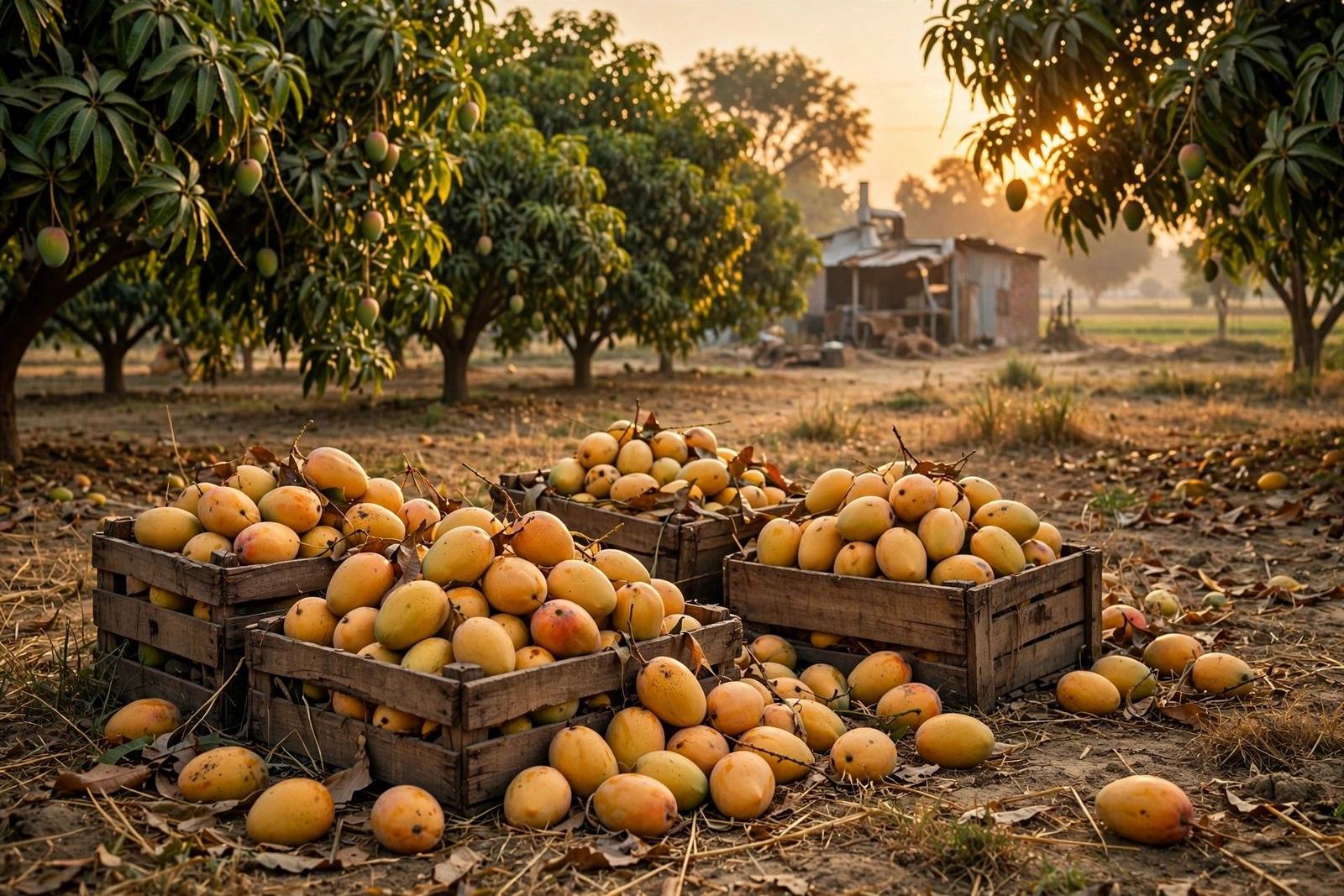
Al Shaheer's own telling starts in 2008, when the business entered the meat trade from modest beginnings. The first business was export: by 2009 the firm was shipping halal meat into Middle Eastern markets — Saudi Arabia, the Emirates, Kuwait, Oman, Bahrain and Qatar in its own account — an apprenticeship that forced early discipline, because Gulf buyers demanded inspected slaughter and refrigerated logistics that the domestic bazaar never asked for. The physical foundation was the abattoir at Gadap Town, Karachi, built around imported chilling and cold-storage equipment, with veterinary selection of animals, halal slaughter, and sectioning into large cuts for refrigerated transport; the company has described its capacity at forty head an hour, and the plant's certifications by Gulf health and food authorities underwrote the export book.
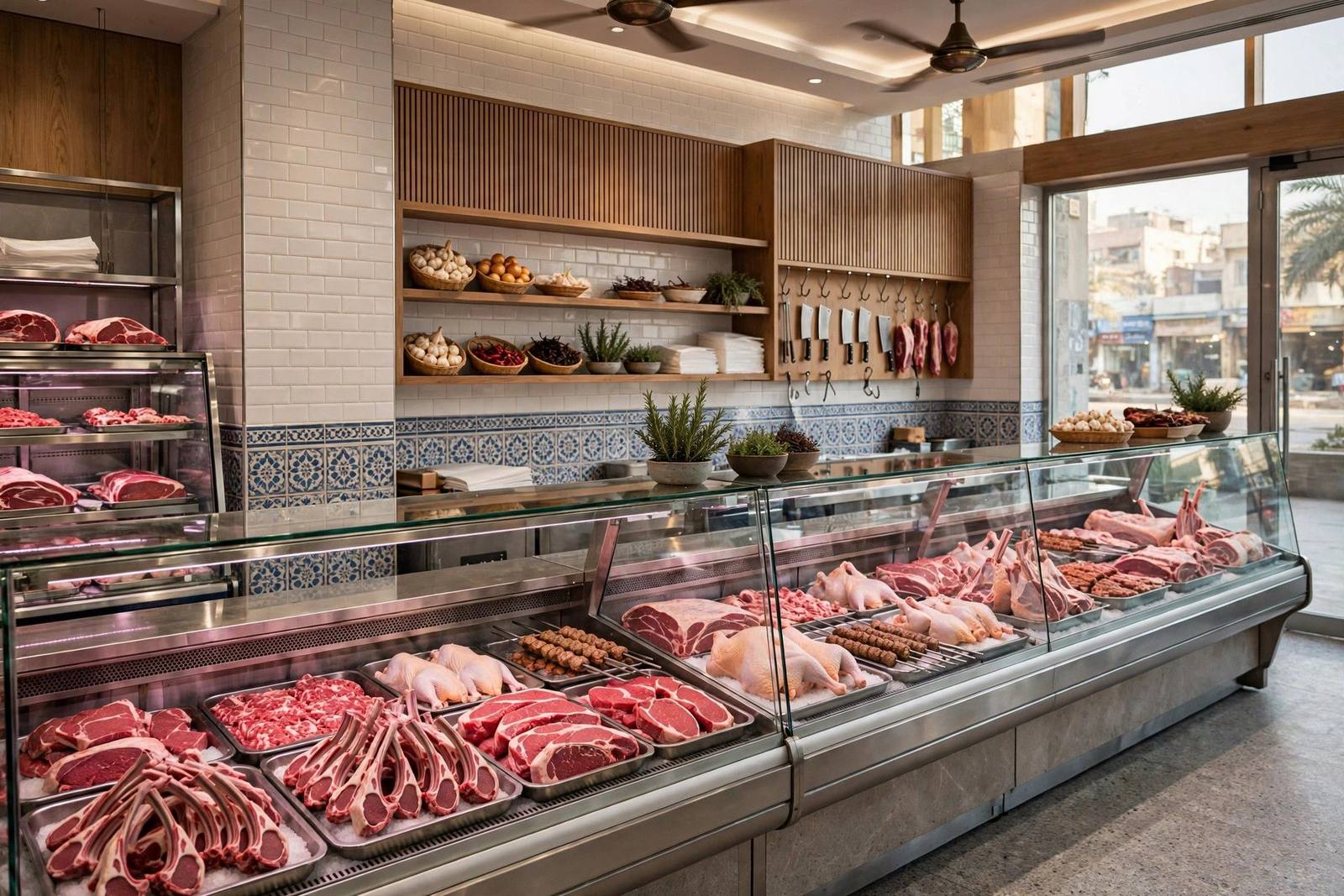
The leap came in 2010 with Meat One, presented by the company as the first red-meat brand of its kind in Pakistan: dedicated outlets, and later shop-in-shop counters inside busy supermarkets, selling fresh beef and mutton under one brand, one standard and one price list. The proposition was not cheaper meat — branded retail rarely is — but legible meat: a known source, a hygienic chain, consistent cuts, and a shop that looked the same in every neighbourhood. In 2014 a second brand, Khaas Meat, followed, aimed at the value end — quality and hygiene with affordability in front — and Khaas counters spread through shop-in-shop formats in the major cities from 2015. The corporate form caught up with the growth in stages: the company was incorporated as a private limited company on 30 June 2012, formed from the amalgamation of two firms with common partners, Al Shaheer Corporation and MeatOne, and it commenced operations in that form on 1 July 2012. In the year to June 2015 it converted to a public limited company, taking the name Al Shaheer Corporation Limited.
2015: the listing, and the shape of the group
On 24 August 2015 the company was listed on the stock exchange — the institution that has since become the Pakistan Stock Exchange — through an issue of twenty-five million ordinary shares, the larger part placed through book building with institutional and high-net-worth investors and the remainder offered to the general public. The listing made ASC the market's branded-meat story, and the group it funded had three engines. Exports shipped fresh meat to distributors across the Middle East and, in later segment descriptions, a wider map including Egypt, Iraq and China. Retail ran the Meat One and Khaas networks — dozens of outlets served from the Gadap plant in the company's descriptions, concentrated in Karachi with a presence in Lahore and Islamabad, and including a Qurbani service through which customers in those cities delegate the festival sacrifice to the company end to end. Institutional sales supplied meat and, increasingly, processed products to hotels, restaurants, caterers and chains; the company's reporting records contracts to supply beef patties to international fast-food chains operating in Pakistan, the kind of specification business a retail abattoir is well placed to win. A poultry plant on Manga Road at Raiwind, near Lahore, and a farms subsidiary — Al Shaheer Farms, in which the company held a majority stake from its early years — rounded out the attempt to control the chain from animal to counter.
Set that shape beside its listed neighbour and the strategic fork in Pakistan's meat economy is complete. The Organic Meat Company chose export processing and largely skipped domestic retail; Al Shaheer chose the consumer — the shop, the brand, the festival order — with exports as its foundation rather than its destination. Retail promised the thicker margin and the household name. It also promised rent, chillers, shrinkage and wages in every neighbourhood, payable in good months and bad. The sector context for both is drawn in our guide to food and personal care stocks on the PSX.
Inside the shops: what Meat One actually changed
It is easy, from the filings' hard years, to forget what an interruption Meat One represented in ordinary shopping. The traditional meat purchase in Pakistan is an act of personal trust conducted in the open air: the customer inspects a hanging carcass, points, watches the cut made on a wooden block, and pays a price that reflects that morning's negotiation as much as any list. Meat One replaced every element of that ritual with a system — animals selected and checked by veterinarians, slaughtered at a certified plant rather than behind the shop, transported refrigerated, displayed chilled behind glass, cut to standardised specifications, weighed on a calibrated scale and sold at a printed price by staff in uniform. For a generation of urban shoppers — and particularly for the women who do much of Pakistan's food buying and were never the bazaar butcher's natural customers — the branded shop converted meat from a negotiation into a grocery item, purchasable alongside everything else in a supermarket aisle through the shop-in-shop format.
That conversion is the company's durable contribution, whatever becomes of its balance sheet. Once a category has been branded, it does not fully un-brand: rivals, supermarkets' own meat counters and a newer generation of online fresh-food sellers all operate in the expectation Meat One created — that urban Pakistanis will pay something for hygiene they can see and a source they can name. The Qurbani service made the same point at the year's sharpest peak, productising the most trust-sensitive purchase in the Muslim calendar into a booked service with a brand accountable for it. Students of retail formalisation in emerging markets could ask for no cleaner Pakistani case: the demand was real, the innovation was genuine, and the difficulty was never the idea — it was carrying the idea's fixed costs through Pakistan's cost weather. The sections below trace where that weather struck.
How branded butchery was supposed to make money
The model, on paper, is vertical integration with a retail face. At the back, the abattoir buys livestock and converts it at industrial yield, selling everything the animal offers: prime cuts to its own counters at retail prices, volume meat to exporters and institutions, and the by-product streams to their own markets. In the middle, refrigerated logistics — the cost centre the traditional trade does not carry — moves large cuts from Gadap to outlets for final sectioning. At the front, the brands do the economic work: Meat One monetises trust among affluent shoppers, Khaas defends volume against the unbranded butcher, shop-in-shop counters borrow the supermarkets' footfall instead of paying full high-street rent, and the Qurbani service converts a seasonal religious peak into booked, prepaid orders. Institutional contracts smooth the week between retail peaks, and processed lines — patties and ready-to-cook products — raise the value taken from each carcass. When it works, the integrated chain captures margins at three levels that three separate businesses would split. When it does not, the same integration means the company owns every level's costs at once.
The vulnerabilities are written into the product. Fresh meat cannot wait: unsold stock is not inventory in any useful sense but tomorrow's discount or today's loss, which makes demand forecasting a daily wager against weather, paydays and festivals. Livestock prices are set in mandis the retailer does not control, while its own shelf prices face a ceiling called the shop on the corner, whose costs — no chiller cabinets, no brand, no listed-company overhead — are structurally lower. Electricity for refrigeration is a tariff decision away from a margin event. And a retail network is a fixed-cost promise: leases, staff and vans are signed in the expansion years and invoiced in the lean ones. Pakistan's inflationary years pressed every one of those points at once.
The hard years: losses, provisions and restructuring
The company's published results tell the turn plainly. By the financial year ended June 2023, Al Shaheer was reporting a heavy annual loss, and its directors' discussion attributed the damage to a familiar combination — gross margins squeezed by inflation in livestock, utilities and logistics costs, a sharp rise in finance costs, and a very large expected-credit-loss provision against trade receivables, which alone accounted for a substantial part of the year's loss. The retail segment, the report noted, suffered as inflation thinned footfall. Exports, the founding business, declined significantly in the same period on the macroeconomic pressures the report describes. A business built to capture three margins discovered it could also record three kinds of disappointment simultaneously.
What followed is documented with unusual starkness in the company's interim reporting for the period ended December 2025. The auditors' review of those accounts drew attention to accumulated losses of a scale that had overtaken the company's equity story, to current liabilities exceeding current assets by a wide margin, and to material uncertainty about the company's ability to continue as a going concern; they recorded breaches of loan covenants, bank suits whose outcomes are uncertain, and limits on the evidence available to them in several areas. Management's side of the same filings is a revival plan pursued in the open: loan agreements restructured with named banks during the September 2025 quarter, engagement with other lenders to restructure the remaining facilities, overdue annual general meetings for 2024 and 2025 duly held, and test runs completed at its plants to prepare for full-scale operations. In September 2026, market reporting added that the company faced disciplinary action from the exchange for regulatory non-compliance. None of this is rumour; it is the company's own disclosure trail, and it is exactly the trail readers are trained to follow in our guide to reading PSX announcements. The honest summary is that ASC, at the time of writing, is a company fighting for its continuity, with real assets, real brands and real creditors, in an order the revival plan must somehow rearrange.
The name on the PSX
ASC's exchange record mirrors that arc: a well-received 2015 listing as a growth and consumer story, years of expansion coverage, and a recent history dominated by results losses, rights and restructuring headlines, and compliance notices. Its dividend story belongs to its healthier years; a company in loan restructuring does not distribute cash, and the reader's attention belongs on solvency rather than yield. Even the sector classification tells the tale of a hybrid — filed among food and personal care products, it is part retailer, part processor, part exporter, and must be analysed as all three at once, with the retailer's cost base and the commodity processor's input exposure combined.
Who, then, studies Al Shaheer now? Two kinds of reader. The first is the student of Pakistani consumer formalisation, for whom Meat One remains a landmark: proof that branded fresh meat could be sold at scale in Pakistan, and a case study in why proving demand and profiting from it are different achievements. The second is the student of distress — of how leverage, inflation and receivables can corner a real business, and of what revival plans, restructurings and going-concern language actually look like in filings rather than in textbooks. Both readers are studying the same shops. That a single small company can teach both lessons is precisely why this profile exists, and why our wider look at Unity Foods — another food challenger whose second act turned difficult — makes a fitting companion read. This profile is educational content, not financial advice.
Key takeaway: Al Shaheer Corporation built from a 2008 export start into Meat One, Pakistan's pioneering branded butchery chain, listing in 2015 — and its recent filings, with heavy losses, going-concern uncertainty and loan restructurings, make it a case study in the cost of formalising fresh meat.