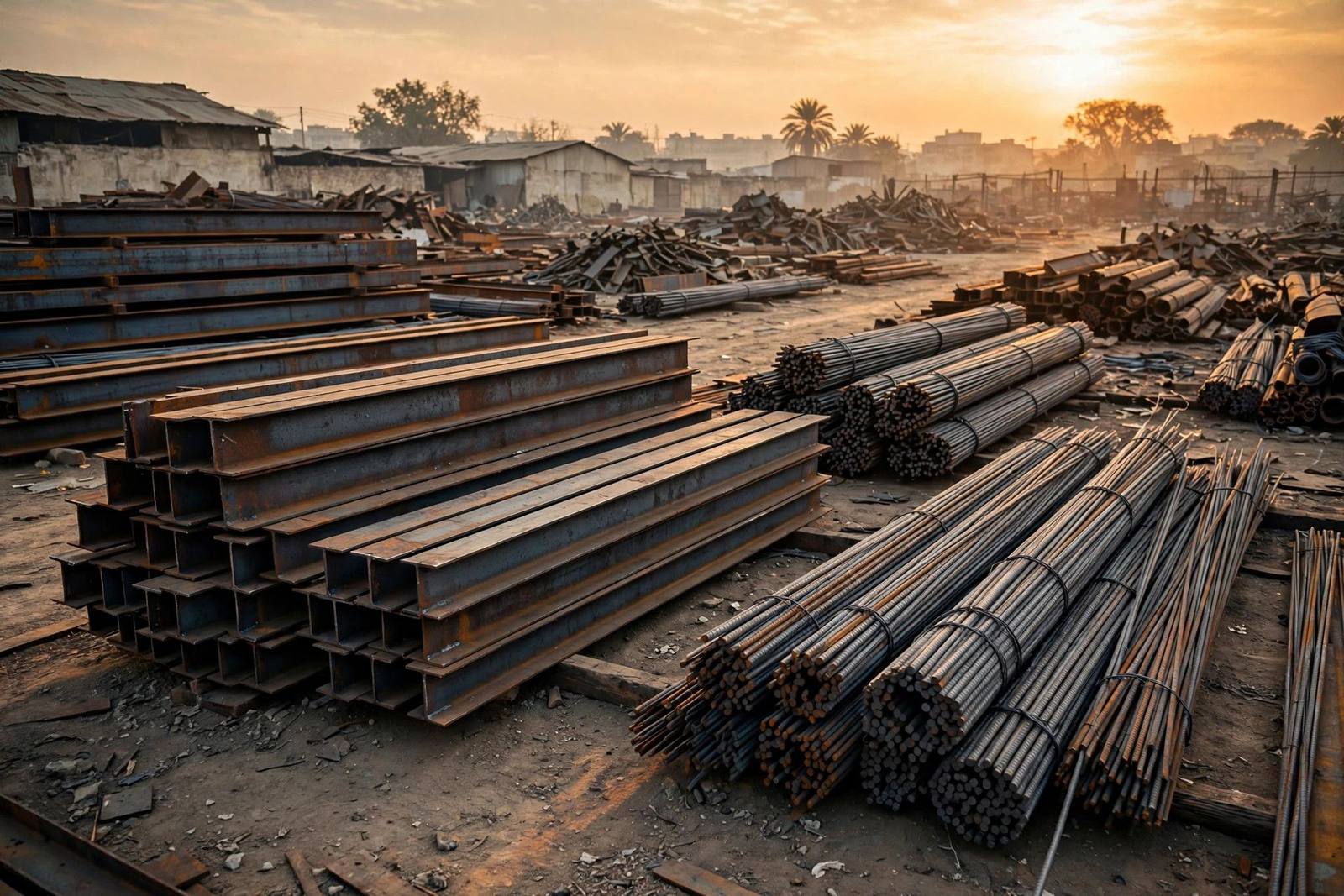
KARACHI: Steel rebar used to be a commodity a contractor bought by weight and forgot. Amreli Steels is the company that taught Pakistan to buy it by brand. Walk onto a construction site in Karachi and the bundles of ribbed steel bars stacked by the gate carry names — Amreli's Maxima, Ultima and Xtreme grades among them — because this Karachi family business spent decades arguing, in advertisements and on site hoardings, that the steel inside a column is a promise you should be able to read. Amreli Steels Limited, ASTL on the Pakistan Stock Exchange, is one of the country's largest makers of steel reinforcement bars, vertically integrated from its own melt shop at Dhabeji to rebar mills in Karachi, and listed since December 2015. Its profile is the steel chapter of a familiar Pakistani story: a trading family that became manufacturers, then brands, then a public company.
Fifty years of family steel
The Akberali family's involvement in long steel products stretches back more than fifty years, and the company dates its own inception to 1972. The modern corporate vehicle came later: Amreli Steels Limited was incorporated in 1984 as a private limited company, converted into a public unquoted company in 2009, and enlisted on the Pakistan Stock Exchange in December 2015. That sequence — family business first, formal company second, listing last — is the standard biography of Pakistan's industrial families, and Amreli is a clean example of it.
Leadership has stayed in the family across the transition. Credit assessments and company materials describe the business as guided by Mr Abbas Akberali, with his sons providing the next generation of management — Mr Shayan Akberali as chief executive and Mr Hadi Akberali in a senior strategy role — and note a wider regional steel connection: Abbas Akberali's brother is associated with the BSRM group in Chittagong, one of Bangladesh's large steel rolling businesses. For a reader of the share register, the point is not genealogy; it is that Amreli's strategy — capacity, branding, vertical integration — has been set by owners whose wealth and reputation are concentrated in this one trade, which cuts both ways, as the risks section below discusses.
Building the integrated mill: SITE and Dhabeji
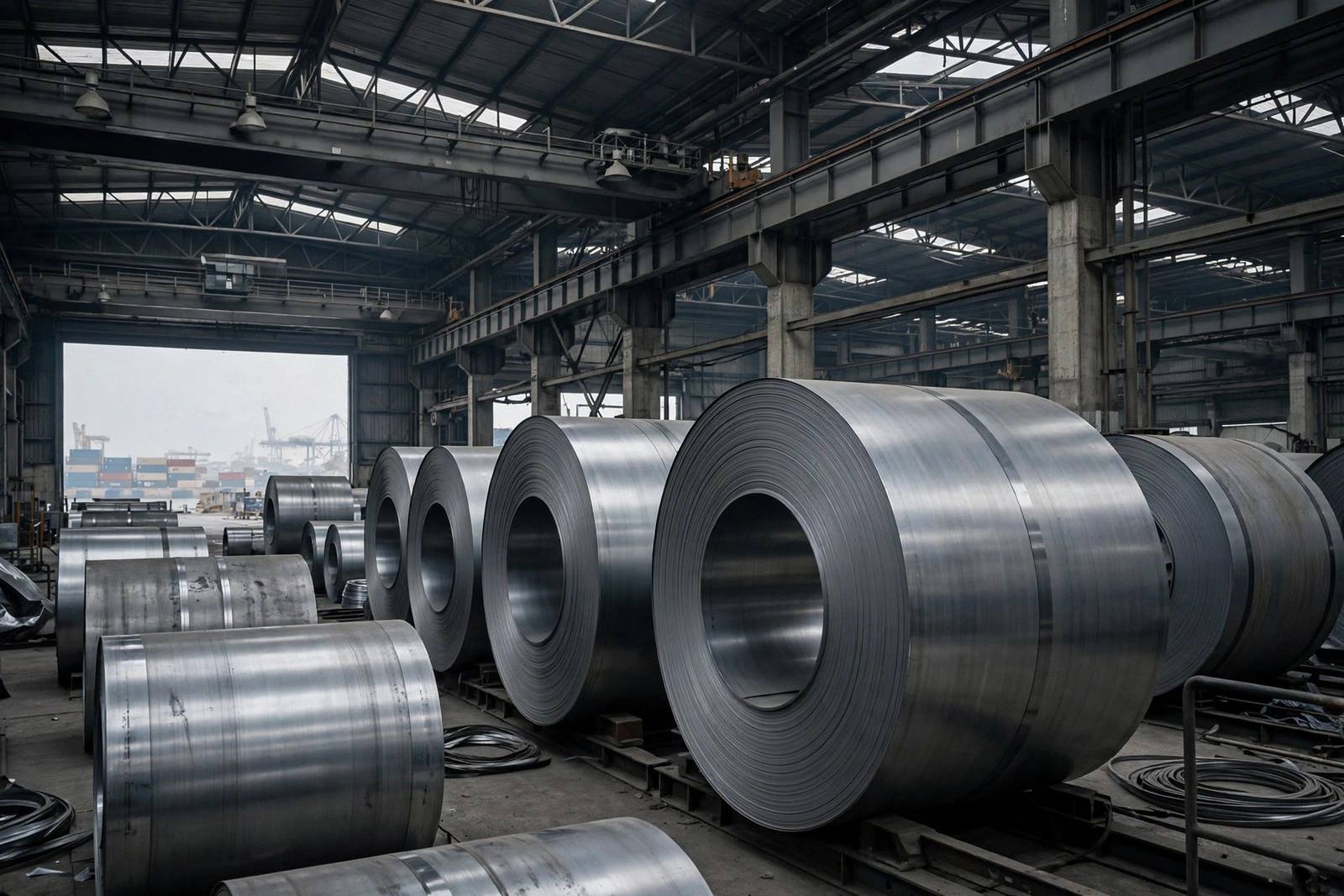
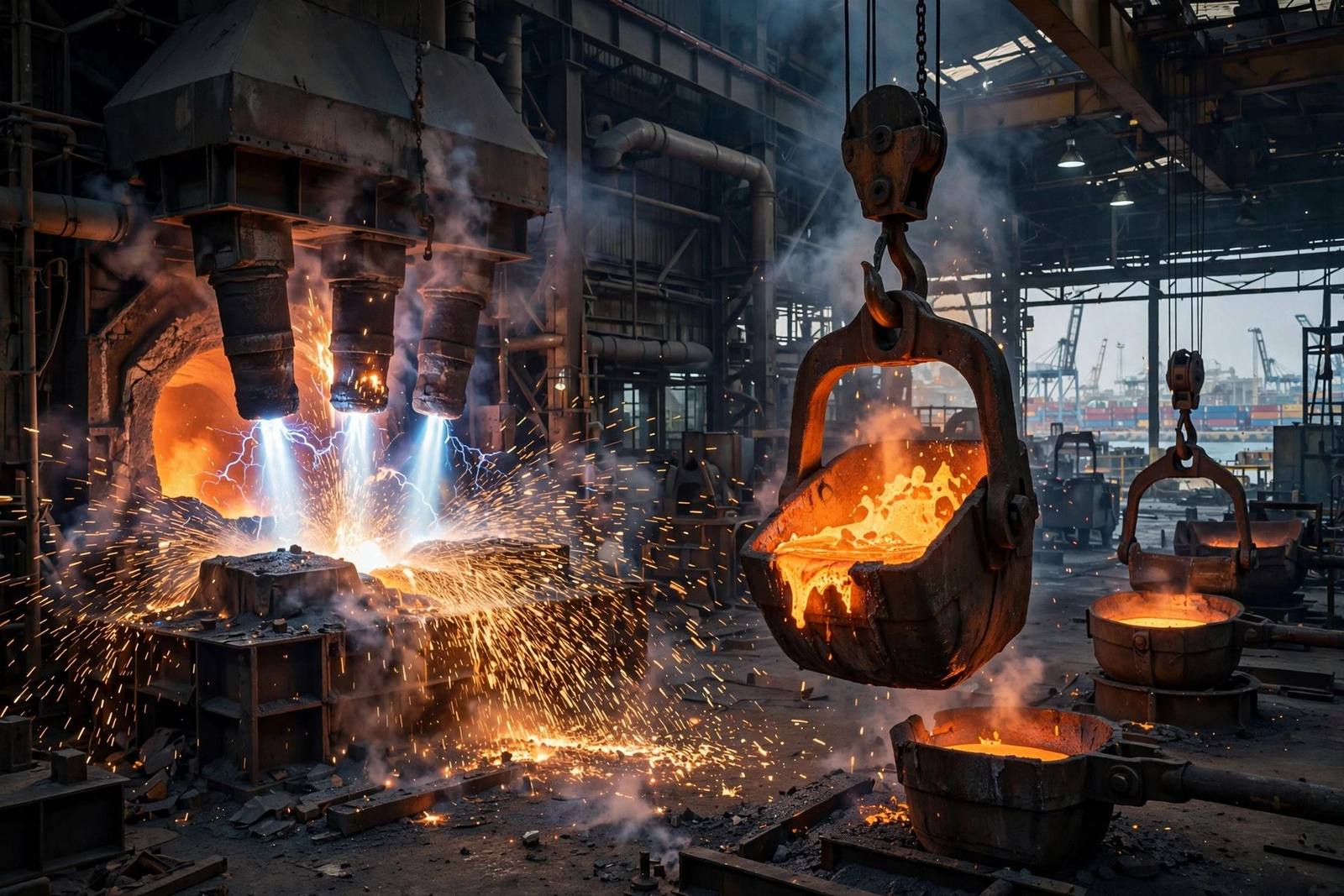
Amreli's original base is its rerolling plant at SITE, Karachi's oldest industrial estate, which used modern hot rerolling technology to produce, in the company's earlier reporting, about 180,000 metric tons of rebars a year. Rerolling, however, depends on buying billets — the semi-finished steel blocks from which bars are rolled — and a reroller is hostage to billet supply and price. Amreli's answer was to build backwards. At Dhabeji, in Sindh, it constructed a steel melt shop that the company describes as the largest billet manufacturing plant in Pakistan, with capacity of 600,000 metric tons a year, melting scrap into its own billets.
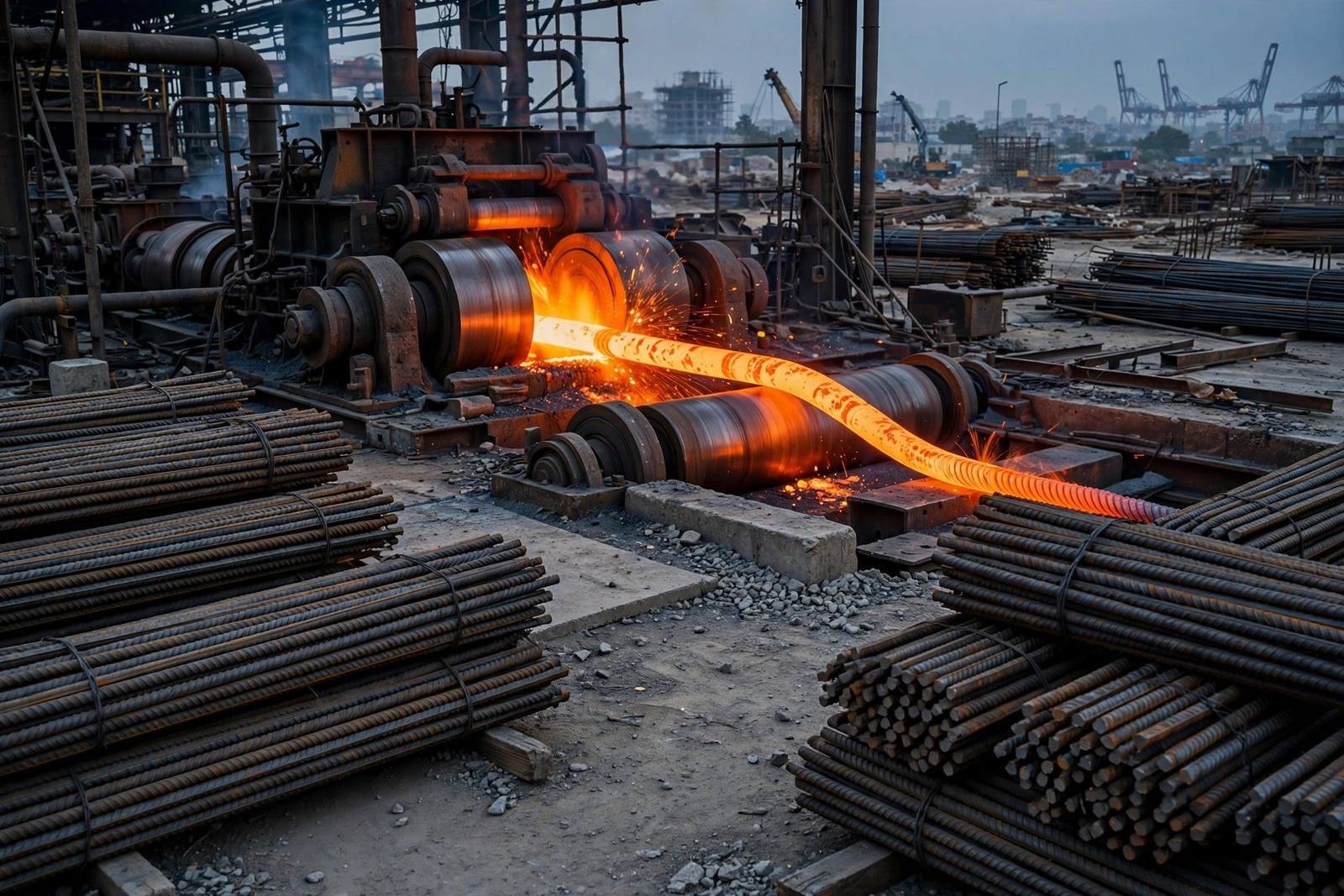
The second Dhabeji step completed the integration. A new rolling mill at Dhabeji began commercial operations on 30 April 2018, lifting the company's rebar production capacity to 605,000 tons a year from the earlier 180,000. Management spoke publicly of a longer-term ambition to become the country's first million-tonne quality rebar manufacturer, and later phases discussed modernising and expanding the SITE plant as well. Whether or not every phase lands on its original schedule, the direction is unmistakable: Amreli chose scale and self-supply in a market historically made up of small rerollers buying whatever billet the market offered. It is the opposite end of the industry from the flat-steel specialists profiled in Aisha Steel Mills, and the two together show how differently "steel" can be organised inside one country.
What Amreli actually sells
The product list is short to describe and hard to make well. Amreli manufactures and sells steel reinforcement bars — rebar — and the billets behind them. Its branded grades include Amreli Steels Maxima, Ultima and Xtreme, the last a high-strength deformed bar in the 500 MPa class produced to international specifications. Rebar's job is invisible and absolute: embedded in concrete, it carries the tension that concrete cannot, and the difference between certified high-strength bar and substandard bar is the difference between a structure that meets its design life and one that quietly does not. That is why Amreli's branding effort — unusual in a bulk commodity — is commercially rational: engineers, consultants and quality-conscious builders specify brands precisely because the product cannot be inspected once the concrete is poured.
The company points to the structures built with its steel as its reference list, naming projects including Jinnah International Airport and the Aga Khan University and Hospital in Karachi, the MCB Tower, Allama Iqbal International Airport in Lahore, the Ghazi Barotha hydropower project and Karachi's Northern Bypass. It has also been described in broker research as an approved supplier for major dam construction. Distribution runs countrywide through dealers as well as direct project sales, giving Amreli exposure to both the retail building trade — houses and small commercial work — and the mega-project cycle of dams, airports and infrastructure.
How a rebar maker makes money
The arithmetic of integrated steelmaking is a spread: the price of a ton of rebar, minus the cost of the scrap melted to make it, the electricity and gas burned in melting and rolling, the alloys, freight and financing. Amreli's integration moves the billet margin in-house — instead of paying a billet supplier's profit, it pays its own melt shop's costs — but it does not abolish the cycle; it concentrates it. When construction booms, volumes and prices rise together and an integrated plant prints money. When building slows and scrap stays expensive, the same fixed plant must be fed or idled at a loss.
Two external prices dominate the story. The first is scrap, imported in large part, priced in dollars and therefore hostage to the rupee. The second is energy: melting steel is one of the most electricity-hungry activities in manufacturing, and Pakistani industrial power tariffs are a standing argument between the steel industry and the state. Add interest rates — steelmakers carry heavy working capital and project debt — and you have the three dials that followers of every Pakistani long-steel name, including Mughal Iron & Steels and Agha Steel Industries, watch before they look at anything else.
Strengths, risks and controversies
Amreli's strengths start with position: among the largest rebar makers in the country, strongest in the southern market around its Karachi base, integrated into its own billets, and carrying a brand that engineers actually specify. In an industry where much capacity is informal and quality is variable, certification and consistency are a genuine commercial moat, and the company's long project reference list is the proof it shows for it.
The risks are the sector's, written large. Steel is brutally cyclical, and Amreli expanded capacity into a market that has since seen interest-rate shocks, currency depreciation, flood-related disruption and stop-start public development spending — conditions under which large fixed plants and expansion debt become heavy. Scrap and energy costs can squeeze the spread from both sides at once. The southern market is also contested: new and expanding rivals in the same region chase the same project and dealer demand, so brand strength is constantly retested on price. And family control, while it brings commitment and speed, asks minority shareholders to trust sponsor judgement on capital allocation through the cycle — the standing governance question for most PSX industrials. None of these points decides the investment case by itself; together they explain why ASTL's results swing so much more than its brand recognition does.
The name on the PSX
ASTL listed in December 2015, in the middle of the last big Pakistani construction upswing, and its share has lived the cycle since — a liquid, closely followed mid-cap steel name whose price tends to move with cement and construction sentiment as much as with its own announcements. Its dividend record should be read in cyclical terms: trading databases note periods without dividends, which is normal for a company that has prioritised capacity and debt service over payouts, and anyone studying ASTL for income should read the full history rather than a single year. In index conversations Amreli appears as part of the market's cyclical core — the group of stocks that express, in share prices, whether Pakistan is building or waiting.
What kind of investor studies Amreli
Amreli is a stock for cycle-watchers: investors who track construction activity, cement dispatches, scrap prices, power tariffs and interest rates, and who are comfortable with earnings that can halve or double between phases of the building cycle. The practical observation points are capacity utilisation at Dhabeji and SITE, the rebar-scrap spread, debt levels after each expansion phase, and management's discipline about adding capacity only when the balance sheet allows. New investors often meet the name first through the broader guides in the Aktzien learning library on cyclical businesses, which Amreli illustrates almost perfectly. This article is educational content, not financial advice.
Why the branding mattered
There is a broader lesson in Amreli's history that goes beyond steel. Pakistan's construction materials were long sold as anonymous commodities, with quality failures paid for by building owners years later. By putting graded brand names on rebar, advertising them, and tying the family name to public projects, Amreli helped turn an invisible input into an accountable product — a shift that raised the floor for the whole southern market and forced rivals to certify, brand and integrate in reply. Whether the next decade rewards that position depends on dams, housing policy, energy prices and the family's next capacity decision. But the bundle of bars by the site gate will still carry a name, and that, in large part, is Amreli's doing.
Steel, housing and the southern market.
Amreli's fate is tied to a question Pakistan argues about constantly: how much housing and infrastructure the country builds, and who pays for it. The southern market the company leads from Karachi contains some of the country's largest unmet building demand — a megacity still growing, port and industrial projects along the coast, and the reconstruction needs that follow every flood season in Sindh. Against that need stand the brakes the whole industry complains of: expensive plot and construction finance, interest rates that price ordinary families out of mortgages, and public development budgets that expand and contract with the state's own finances. An integrated producer like Amreli sits in the middle of that argument in physical form. Its Dhabeji melt shop and rolling mills are a standing bet that, over any full decade, Pakistan builds more than it did in the decade before — a bet that has been right over the long sweep of the company's life since the 1970s, however uncomfortable individual years inside the cycle have felt. The branded grades are how it defends the bet's margins: when volumes are scarce, specified, certified bar is the last product a serious contractor substitutes away from, and the first the dealer recommends when the customer asks what the engineer wrote on the drawing.
Finally, Amreli rewards readers who watch physical things. Its results are foreshadowed, months in advance, by the visible world: tower cranes over Karachi, cement trucks on the highway to Dhabeji, scrap ships at the port, the power tariff in the morning's newspaper and the interest rate in the central bank's last announcement. Few listed companies connect the macroeconomic headlines to a single income statement so directly, which is why steel profiles like this one are a practical training ground for the whole market. The family's task in the next phase is the one it set itself in public — to turn a 605,000-ton integrated platform into the million-ton quality rebar business it announced, without letting the debt taken on along the way dictate terms to the owners. The market's task is simpler: to remember, in the exciting years and the frightening ones alike, exactly which spread it is pricing.
Key takeaway: Amreli Steels is the Akberali family's Karachi steel business — incorporated in 1984, integrated from its Dhabeji melt shop to branded Xtreme, Ultima and Maxima rebar, and listed in 2015 — whose profits are a leveraged play on Pakistan's construction cycle, scrap prices and power costs.