KARACHI: Most Pakistani steel companies listed after decades of family trading. Agha Steel Industries did it the other way round: it was incorporated in 2013, built its plant at Port Qasim, and came to the Pakistan Stock Exchange in November 2020 with what the exchange itself described as the largest initial public offering in the country's steel sector — raising about Rs3.84 billion to fund the expansion that would complete its integrated melt shop. AGHA, its ticker, is therefore a profile of the modern, capital-markets route into a very old industry: no inherited trading house, no multinational parent, but a sponsor family, a greenfield plant in Karachi's port industrial zone, a listed sukuk before the shares, and a public shareholder base that funded the second phase of the mill. Understanding Agha means understanding what an IPO prospectus promises, and how steel cycles treat promises.
A young company at Port Qasim
Agha Steel Industries Limited was incorporated in Pakistan on 19 November 2013 as a private limited company, and converted into a public limited company on 7 April 2015. Its registered office and production plant sit together at Port Qasim Authority in Karachi, in the North Western Industrial Zone — the same port-industrial belt that hosts Aisha Steel's flat-steel complex, chosen for the same reasons: imported scrap and raw materials arrive by sea, finished steel leaves by road for Karachi and the upcountry markets, and heavy industry has land, power connections and neighbours of its own kind.
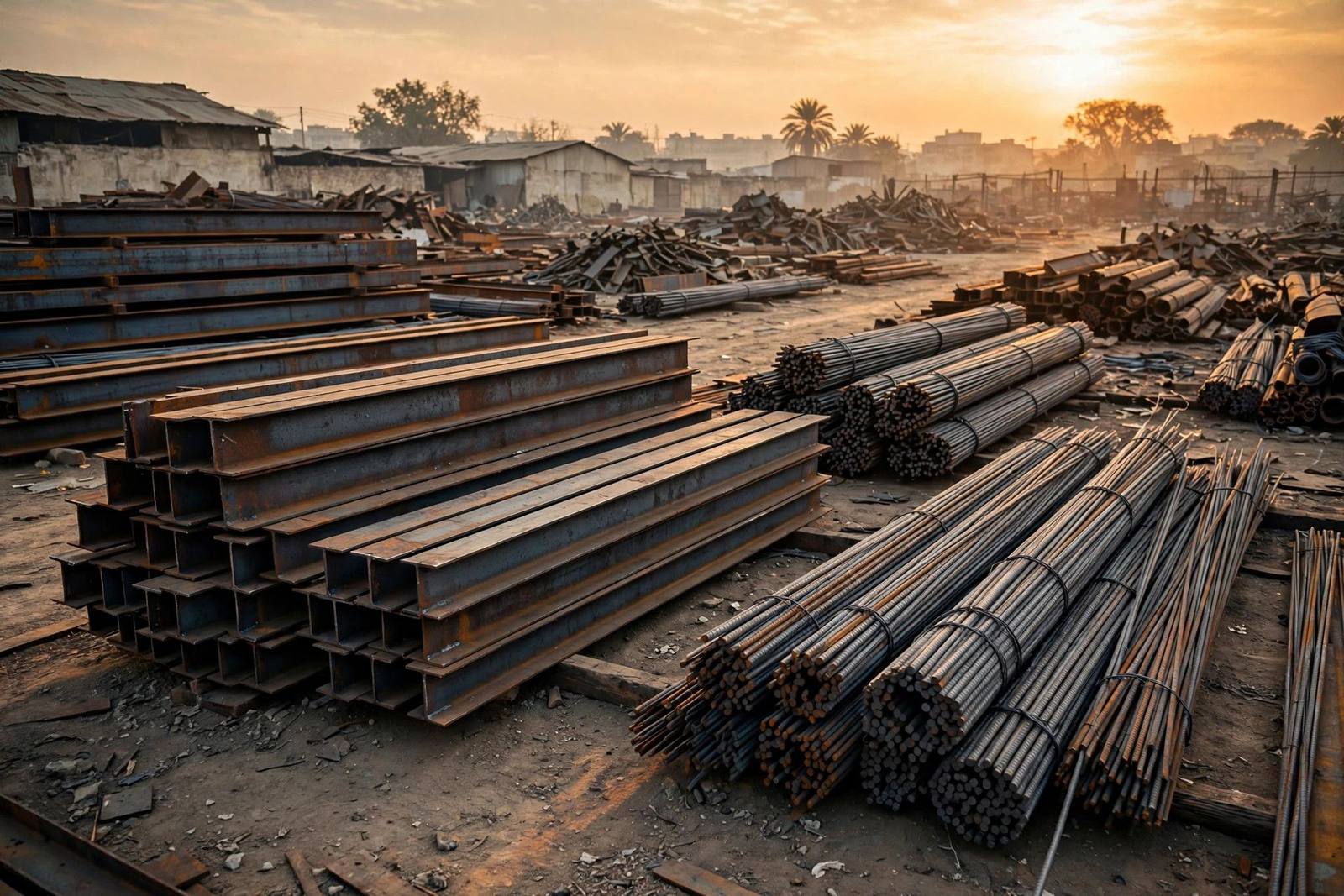
The company's stated business is the manufacture and sale of steel bars, wire rods and billets. Bars are the familiar rebar of construction. Wire rods are the coiled intermediate from which wire, nails, mesh, fasteners and many small steel goods are drawn — a product that pulls a steelmaker beyond construction into light manufacturing. Billets are the semi-finished blocks that feed rolling mills, including other people's. That trio defines a mid-sized long-steel producer: not a reroller dependent on bought billets, once its melting capacity is complete, and not only a rebar brand, but a maker of the feedstock and the finished long products of the Karachi market.
First the sukuk, then the shares
Agha's path to the exchange had two steps, and the first is unusual enough to teach from. During the 2019 financial year, before any share listing, the company listed privately placed sukuk certificates with the Pakistan Stock Exchange — an Islamic debt instrument, through which it borrowed from investors in a tradable, Shariah-compliant form. Only after that did the equity arrive. The share IPO took place in October 2020: 120 million ordinary shares, representing 20.83 per cent of the post-IPO paid-up capital, were offered — three quarters by book building to institutions and high-net-worth investors, one quarter to the general public. The floor price was Rs30 a share; book building closed oversubscribed at about 1.63 times with a strike price of Rs32, the retail portion was oversubscribed about 1.28 times, and the issue raised about Rs3.84 billion against a target of Rs3.60 billion. The PSX marked the listing with a gong ceremony on 2 November 2020, describing it as the third listing of that fiscal year and the largest IPO in Pakistan's steel sector to that date.
At the ceremony, chief executive Hussain Agha described what the money was for: expansion, centred on advanced continuous steelmaking technology — he spoke of bringing an endless steel plant using direct rolling technology to Pakistan, described in the company's telling as a first for Asia. The detailed use-of-proceeds reporting that followed the IPO broke the spending down in the way prospectuses require: civil works, electrical and mechanical packages, duties, an air-separation unit, financing charges, contingency — and a substantial block of working capital. That quarterly paper trail, filed to the exchange as the phase-II project progressed, is one of the underappreciated features of a recent IPO: for its first years, a newly listed company's expansion can be followed almost line by line. Readers who want the mechanics behind such offers will find them in our guide to book building on the PSX.
What the plant makes, and how the pieces fit
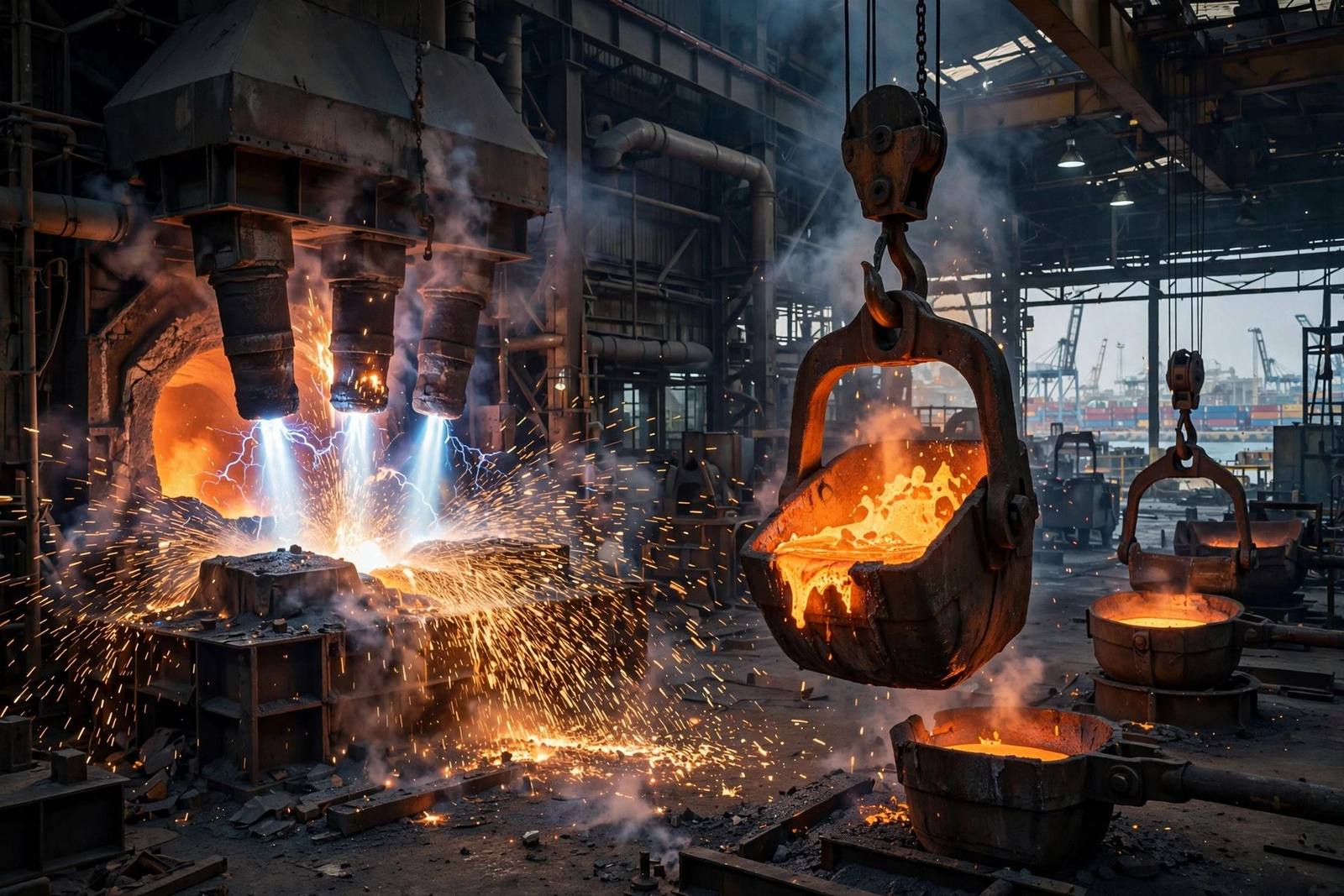
Agha's production logic runs in the classic long-steel sequence. Scrap and other metallic inputs are melted — the melt shop whose completion the IPO funded — and cast into billets. Billets are then rolled, in Agha's case into deformed steel bars for construction and into wire rods for the drawing and manufacturing trade, with surplus billets saleable to rerollers. The air-separation unit in the expansion budget is a tell about the process: oxygen is consumed in steelmaking and cutting, and larger integrated plants commonly secure their own supply rather than buying every cylinder and tanker-load — the same industrial-gases world occupied by Pakistan Oxygen and the Ghani gases businesses.
Geography shapes the customer list. A Karachi melt shop sells first into Sindh and Balochistan — Karachi's housing and infrastructure, the port and industrial projects of the coast — and competes there with the southern incumbents, above all Amreli Steels, whose branded rebar and Dhabeji integration set the regional benchmark, and on price with the national output of Mughal in the north. Wire rods give Agha a second, less purely construction-driven market, but there is no escaping the core exposure: this is a building-materials business, and its volumes breathe with Pakistani construction.
How Agha makes money
The economics are the long-steel spread in its rawest form: rebar and wire-rod prices, minus scrap, minus the heavy electricity and fuel bill of melting and rolling, minus freight, finance costs and the wages of a plant that must run hot to earn. A young integrated plant has a particular version of this arithmetic. Before the melt shop expansion is complete and utilised, the company carries the fixed costs and the debt of capacity that is not yet producing at full rate; afterwards, if construction demand cooperates, the same fixed costs are spread over many more tons and the spread can widen quickly. IPOs in cyclical industries are therefore timing instruments as much as funding ones: Agha raised growth capital in the post-lockdown reopening of 2020, when construction incentives were in the air, and its subsequent results have been read ever since against the interest-rate and currency shocks that followed.
Financing structure matters here more than at older rivals. A company that has issued both listed sukuk and IPO equity in its first decade wears its cost of capital on its sleeve: profit-sharing and rental-style obligations on the debt side, dividend expectations on the equity side, and expansion creditors watching utilisation in between. Followers of AGHA learn to read the liabilities page before the sales page — a habit that transfers well to the rest of the steel sector.
Strengths, risks and controversies
Agha's strengths are its newness in the literal sense: a modern plant at the port, an integrated design completed with public money and modern continuous-rolling technology, a product set that includes wire rods alongside rebar, and a listed track record of project reporting that older, family-grown rivals never had to publish. The IPO itself demonstrated genuine market appetite — oversubscription in both portions, at a premium to the floor price — which is a form of validation a private mill never receives.
The risks are the mirror image. Youth means no lived memory of a full steel cycle inside the company's own accounts; the listing is barely one cycle old, and it has already contained a currency crisis, record interest rates and a construction slump — a baptism by fire that tested exactly the expansion-funded model the IPO sold. Expansion execution is the standing risk of every phase-two story: delays, cost overruns or a demand trough on completion all land on the same leveraged balance sheet. Competition in the southern market is structural, against integrated incumbents with stronger brands and dealer networks built over decades. And as the smallest and youngest of Karachi's listed steelmakers, Agha's share can be volatile and thinly traded, moving on sentiment about the sector as readily as on its own results. A balanced reader holds the genuine achievement — a working integrated plant, publicly financed — and the genuine fragility in the same hand.
The name on the PSX
AGHA listed on 2 November 2020 and trades among the exchange's steel names, a small-cap cyclical whose announcements are followed disproportionately by retail investors who participated in, or remember, its IPO. Its dividend character should be described the way its history demands: a young, expanding, leveraged steelmaker is not a natural income stock, and payouts, when they come, should be read against the expansion and debt position rather than extrapolated. For market students, AGHA's chief value is documentary — a full modern IPO file, from book building through quarterly proceeds-utilisation reports, attached to a business simple enough to hold in your head. It is the cleanest available answer to the question of how a Pakistani company actually lists, a process our market guides also cover from the index side.
What kind of investor studies Agha
Agha is studied by growth-and-cycle investors: people willing to underwrite execution — melt-shop completion, utilisation ramp, debt paydown — in exchange for the operating leverage of a young plant, and by IPO specialists who track how Pakistan's post-2020 listings have seasoned. Their checklist is concrete: expansion milestones against the prospectus timetable, melt and rolling utilisation, the rebar-scrap spread in the south, sukuk and loan obligations coming due, and sponsor behaviour — the Agha family's stewardship of a company it now shares with thousands of public holders. The background reading in the Aktzien learning library on reading prospectuses and cyclical accounts is the natural companion. This article is educational content, not financial advice.
What the IPO model asks of shareholders
There is a wider significance to Agha's route to market that makes the profile worth reading even for investors who never buy a steel share. Pakistan's older industries were built privately and listed late, if at all, so public shareholders historically arrived after the risky construction years were over. Agha inverted the sequence: the public was invited in during the building, handed a prospectus describing the melt-shop expansion in engineering and financial detail, and then given quarterly reports on how each rupee of their money was spent — civil works here, an air-separation unit there, working capital alongside. That is the capital market performing its textbook function, moving household and institutional savings into a furnace in Karachi, and it carries textbook obligations in return: the expansion has to be completed, utilised and sweated, in public, through whatever the steel cycle does next. Whether Agha's version of the experiment ultimately rewards its IPO subscribers is a question its results will answer over a full cycle. That it can be followed so completely, document by document, is already a change in how Pakistani industry gets built — and a large part of why this young company's file is one of the most instructive on the exchange.
There is also a human timescale to keep in view. A steel plant at Port Qasim employs, directly and through its contractors and dealers, a small town's worth of people whose skills — furnace work, rolling, quality testing, heavy maintenance — take years to build and cannot be mothballed and recalled like inventory. Companies of Agha's age feel that responsibility early: the expansion decision taken in an IPO prospectus becomes, within a few years, a workforce, a supplier network and a place in Karachi's industrial geography. That is part of what public shareholders actually funded in 2020, beyond the tonnage figures, and part of what is at stake in the utilisation and debt numbers they now follow each quarter. Young listed industrials are sometimes dismissed as speculative counters; Agha's file suggests the opposite reading — a real plant, real jobs and real obligations, financed in the open and judged in the open, which is precisely the kind of company a developing stock market exists to create.
Key takeaway: Agha Steel Industries, incorporated in 2013 and built at Port Qasim, financed its integrated future in public — a listed sukuk in 2019, then Pakistan's largest steel IPO in 2020 — and its story since is the test of whether IPO-funded expansion can outrun the steel cycle.