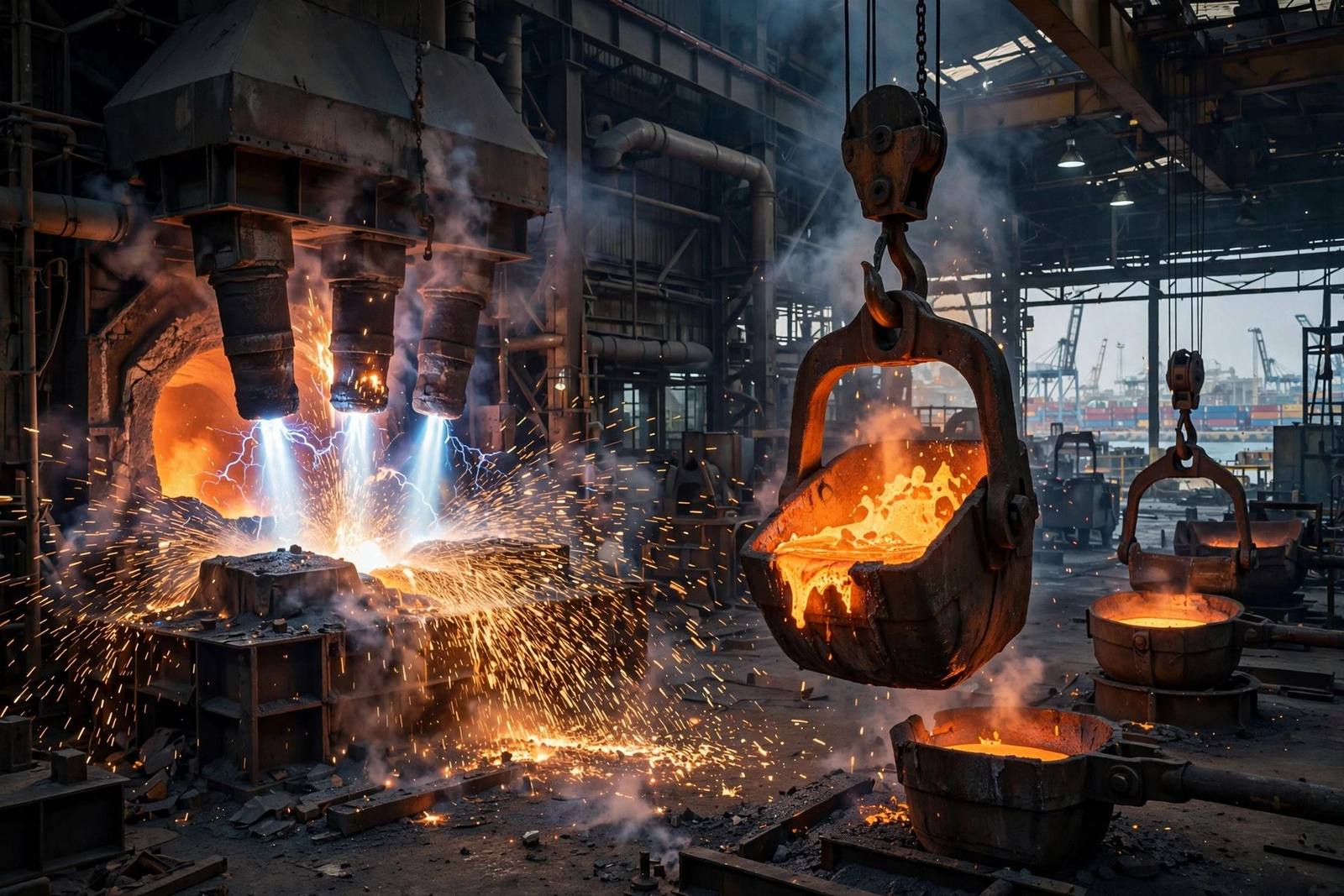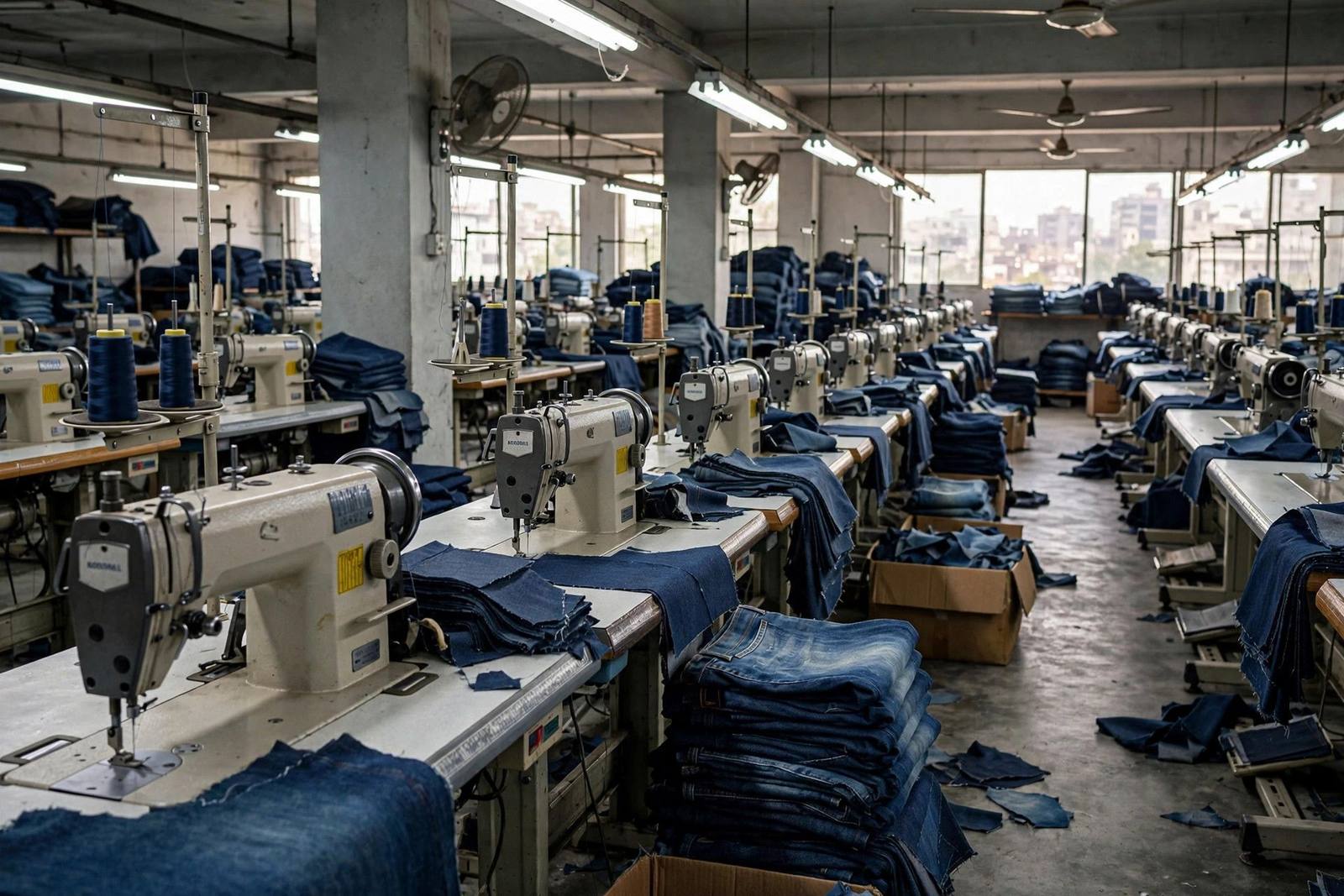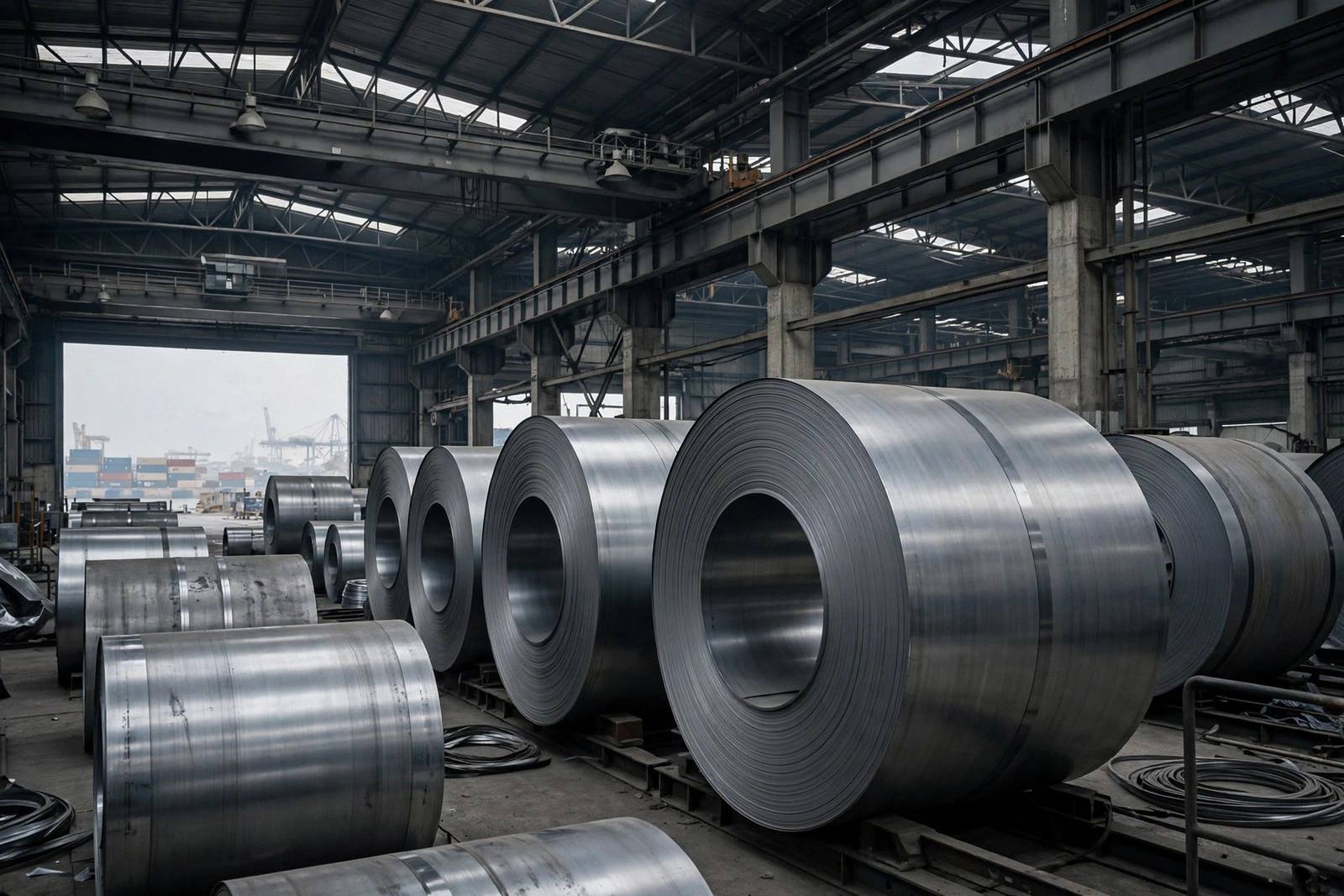
KARACHI: Long steel builds Pakistan's frame; flat steel gives it a skin. The cars, motorcycles, refrigerators, drums and roofing sheets of Pakistani life are made from flat steel — wide coils of sheet that are pressed, folded, welded and painted — and for decades almost all of the cold-rolled part of that sheet was imported. Aisha Steel Mills Limited, ASL on the Pakistan Stock Exchange, was built to change that: a cold-rolling and galvanising complex in the downstream industrial estate of Pakistan Steel at Bin Qasim, Port Qasim, created in 2005 as a joint venture between Pakistan's Arif Habib Group and Japanese partners, listed in 2012, and grown into one of the country's principal suppliers of cold-rolled coil. Its story is about precision manufacturing — steel finished to fractions of a millimetre — in a market more famous for melting scrap.
A joint venture is incorporated, 2005
Aisha Steel Mills was incorporated in Pakistan on 30 May 2005 as a public limited company. Its founding shareholding tells you the intended recipe. On one side stood the Arif Habib Group, one of Karachi's largest business groups, with interests across finance, fertiliser, cement and steel. On the other stood Japanese steel-trading expertise: Metal One Corporation, a subsidiary within the Mitsubishi orbit and one of the world's large steel trading companies, together with Universal Metal Corporation of Japan. Company profiles of the period describe Aisha as a business venture between these Pakistani and Japanese groups, and the logic is easy to see — local capital and market knowledge on one side, Japanese plant, quality systems and steel-trading reach on the other.
The site was chosen with the same logic. Cold rolling starts from hot-rolled coil, which Pakistan imports, so a coastal plant inside the Pakistan Steel downstream estate at Bin Qasim could receive imported coil by sea, roll it, and ship finished product to the engineering industries of Karachi and upcountry with minimal handling. The registered office sits at Arif Habib Centre on M.T. Khan Road in Karachi; the industrial heart is out at the port, among the flat-steel users the estate was designed to serve.
IPO, first coils and the road to scale, 2012 onwards
Aisha came to public investors before it had fully proved itself, which makes its listing a useful case study in project finance through the equity market. Its initial public offering in 2012 was oversubscribed by about 2.7 times, its shares were listed on the Karachi Stock Exchange in August 2012, trial production began in July 2012, and the company declared 1 October 2012 as its commercial operations date. In other words, public shareholders funded a plant that started earning its keep in the same season they bought in.
The original cold-rolling complex carried a nameplate capacity of 220,000 metric tons a year, and company profiles described Aisha at the time as one of the largest private-sector investments in value-added flat-rolled steel in Pakistan, and the only cold-rolled coil manufacturer using brand-new Japanese and Austrian machinery across its main processes. Scale ambitions did not stop there. A galvanising line — coating cold-rolled sheet with zinc to make hot-dipped galvanised coil, the rust-resistant sheet used in roofing, ducting and appliances — was added alongside cold rolling, and the company pursued a major expansion of the complex in the later 2010s, aiming at a substantially larger flat-steel footprint at Port Qasim and at grades fine enough for exposed automotive body panels, which management discussed publicly as the expansion's goal. The commercial operations also matured: a marketing tie-up with Mitsubishi Corporation's local arm, which had supported sales and distribution, was discontinued in the 2016 financial year as the company moved marketing in-house — a small announcement that marked Aisha's graduation from sponsored newcomer to independent seller of its own steel.
What cold-rolled steel is, and who buys it
Cold rolling deserves a plain explanation, because it is the whole company. Hot-rolled coil arrives thick, scaled and dimensionally rough. Cold rolling passes it, at room temperature, through a series of rolling stands that squeeze it thinner, flatter and smoother, after which annealing restores the softness that pressing and forming require. The output — cold-rolled coil, or CRC — is the feedstock for car and motorcycle bodies and parts, bicycle and fan manufacture, steel furniture, drums, pipes, electrical panels, and the inner and outer skins of refrigerators, air conditioners and other appliances. Galvanised coil adds corrosion protection for products that live outdoors or in damp service.
Aisha sells through dealers as well as directly to industrial users, and its historical profiles noted a network of exclusive dealers supplying CRC across Pakistan. The customer mix gives the company a different economic pulse from the rebar makers: where Amreli Steels and the other long-steel names rise and fall with construction, Aisha's volumes track consumer durables and vehicles — motorcycle production, car assembly, home appliances — which follow interest rates, incomes and auto financing rather than cement dispatches. Company executives have in the past pointed to the very high share of locally made motorcycles whose parts depend on domestic CRC as evidence of how deep that import substitution runs.
How Aisha makes money
The business is a conversion spread. Aisha buys hot-rolled coil, substantially imported and dollar-priced, and sells cold-rolled and galvanised coil at a premium reflecting the rolling, annealing, coating and finishing it adds. Profit lives in the gap between the imported input price and the domestic selling price, minus energy, rolls and consumables, freight, financing and the cost of holding large coil inventories through price swings. Two protections shape that gap in Pakistan. The first is logistics: imported finished CRC pays freight, handling and duties that a local roller partly avoids. The second is trade policy: the tariff and regulatory-duty structure on imported flat steel has historically sheltered domestic rollers, and commentary on Aisha — including a widely read Profit magazine analysis that framed the company as a business case built substantially on protection — has debated how much of its margin is manufacturing skill and how much is the tariff wall. Both readings can be true at once, and the honest way to study Aisha is to keep the question open and watch what happens to its margins whenever the trade regime is reviewed.
Currency is the other standing variable. A falling rupee raises the replacement cost of imported coil inventories and can flatter margins on stock bought cheaper — or squeeze them when selling prices lag. Followers of the flat-steel trade therefore watch the same dials as followers of Agha Steel and Mughal — scrap and coil prices, the exchange rate, energy tariffs — but read them through a consumer-manufacturing lens rather than a construction one.
Ownership and the Arif Habib connection
Aisha's anchor has always been the Arif Habib Group, whose listed parent and affiliates have historically held the largest single block of shares — profiles from the mid-2010s put the Arif Habib Corporation holding at just under 30 per cent, with Metal One Corporation holding roughly a quarter and Universal Metal Corporation just under a tenth, the balance spread among institutions and the public. The precise percentages move over time and should always be checked against the latest pattern of shareholding in the annual report, but the shape endures: a Pakistani sponsor group in front, Japanese trading houses beside it, and a meaningful free float from the 2012 listing. For minority shareholders the arrangement offers a sponsor with a reputation to protect across many listed companies — and the standing question, common to all group subsidiaries, of whose interests lead when group and company priorities differ.
Strengths, risks and controversies
Aisha's strengths are position and plant. It entered a market supplied by imports, built modern equipment rather than second-hand lines, and became a reference supplier to the automotive and appliance chains whose quality audits are the hardest in Pakistani manufacturing. Port Qasim logistics, sponsor depth and an installed dealer network compound the advantage, and the addition of galvanising widened the product range over the same coil base.
The risks are concentrated and well documented in commentary on the company. Dependence on imported hot-rolled coil exposes it to world steel prices, shipping costs and the rupee. The tariff-dependence debate cuts the other way from most risks: it is the company's success that is questioned — whether margins would survive a liberalised flat-steel regime — rather than its operations. Demand is cyclical in the consumer direction, so car and appliance slumps, such as those that follow interest-rate spikes, hit volumes directly. Expansion has also carried debt, and flat-steel projects are unforgiving of delays: capacity that arrives after its market window still has to be paid for. Finally, as with most mid-cap PSX industrials, trading in the share can be thin relative to the size of the underlying business.
The name on the PSX
ASL is one of the exchange's potentially confusing tickers — it reads like the initials of several companies, and Amreli Steels' own documents have occasionally used the same letters informally — so beginners should always check the full name, Aisha Steel Mills Limited, before assuming which steel company a price belongs to. Listed since August 2012, ASL has paid dividends only in its stronger periods, in the pattern of a growth-phase manufacturer retaining cash for capacity and working capital, and it sits outside the KSE-100's centre of gravity while remaining a standard holding in steel-sector portfolios. Read alongside the long-steel profiles, it completes the map: long products for construction, flat products for manufacturing, and very different cycles driving each.
What kind of investor studies Aisha
Aisha tends to be studied by investors who follow Pakistan's manufacturing chain rather than its building sites: people tracking auto and motorcycle production, appliance demand, steel trade policy and the economics of import substitution. Their questions are specific — utilisation of the rolling and galvanising lines, the CRC-HRC price spread at home and abroad, duty changes in each budget, inventory gains or losses as coil prices move, and the balance between dealer and direct industrial sales. It is also a favourite teaching case for the protection debate in Pakistani industry, which the explainers in the Aktzien learning library approach from first principles. This article is educational content, not financial advice.
Flat steel in everyday life.
Because Aisha sells an intermediate product, its presence in daily life is easy to miss and hard to overstate. The motorcycle that carries a family through Karachi traffic, the refrigerator in the kitchen, the steel almirah, the drum, the fan, the ducting overhead in a workshop — the formed sheet inside a large share of these began as coil on a rolling line like Aisha's. That is the quiet significance of the Port Qasim complex: each ton of cold-rolled or galvanised coil it ships is a ton of manufacturing value kept inside Pakistan, around which local pressers, welders, painters and assemblers build their own small industries. The quality question runs the other way as well. A car or appliance maker staking its name on a finished product needs sheet that behaves identically in every press stroke, which is why the Japanese machinery, the annealing discipline and the surface standards the company emphasises are commercial assets rather than engineering vanity — and why the step up to automotive outer-panel grades, discussed at the time of its expansion, mattered as a test of whether Pakistani flat steel could meet the most visible standard in the industry.
Aisha also offers the PSX a useful counterweight in sector debates. When steel is discussed in Pakistan the conversation usually means rebar, dams and housing; Aisha's coil lines remind the market that the country also makes things — vehicles, appliances, machinery — and that those things need a domestic materials base if they are ever to compete beyond the home market. Each improvement in local flat-steel quality quietly raises the ceiling for every manufacturer downstream, from motorcycle assemblers to exporters of fans and refrigerators, in the same way that a reliable port or power supply does. That is why industrial-policy arguments about Aisha's tariffs matter beyond its own shareholders: the protection that fattens a roller's margin is a cost carried by every maker who buys its coil, and the balance between the two is a live question in each budget. Studying ASL means studying that balance in one company's accounts — input duties, selling prices, utilisation and all.
Key takeaway: Aisha Steel Mills, founded in 2005 by the Arif Habib Group with Metal One and Universal Metal of Japan, turned imported hot-rolled coil into Pakistan-made cold-rolled and galvanised steel at Port Qasim from 2012 — a conversion business whose margins live between world coil prices, the rupee and Pakistan's steel tariff wall.