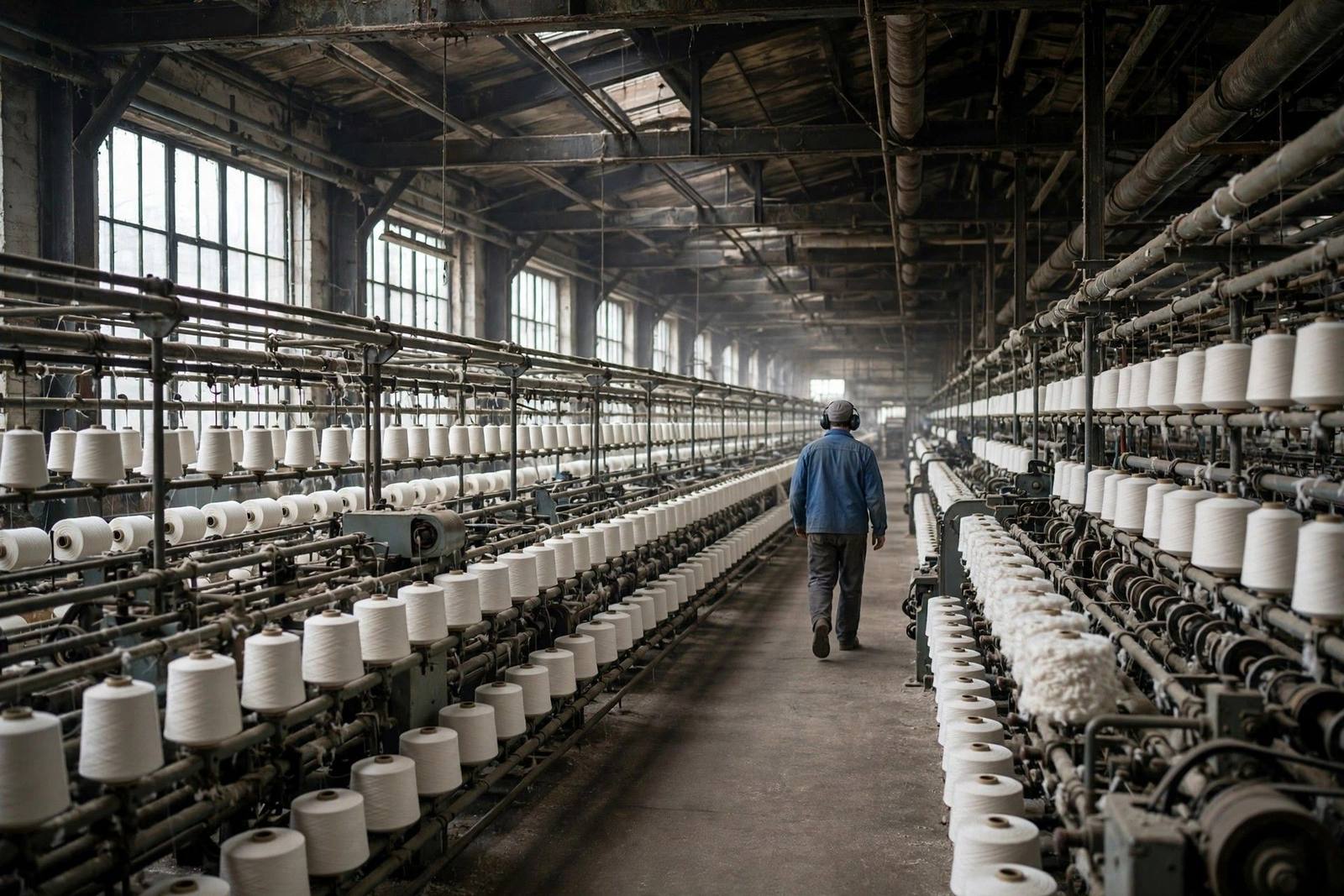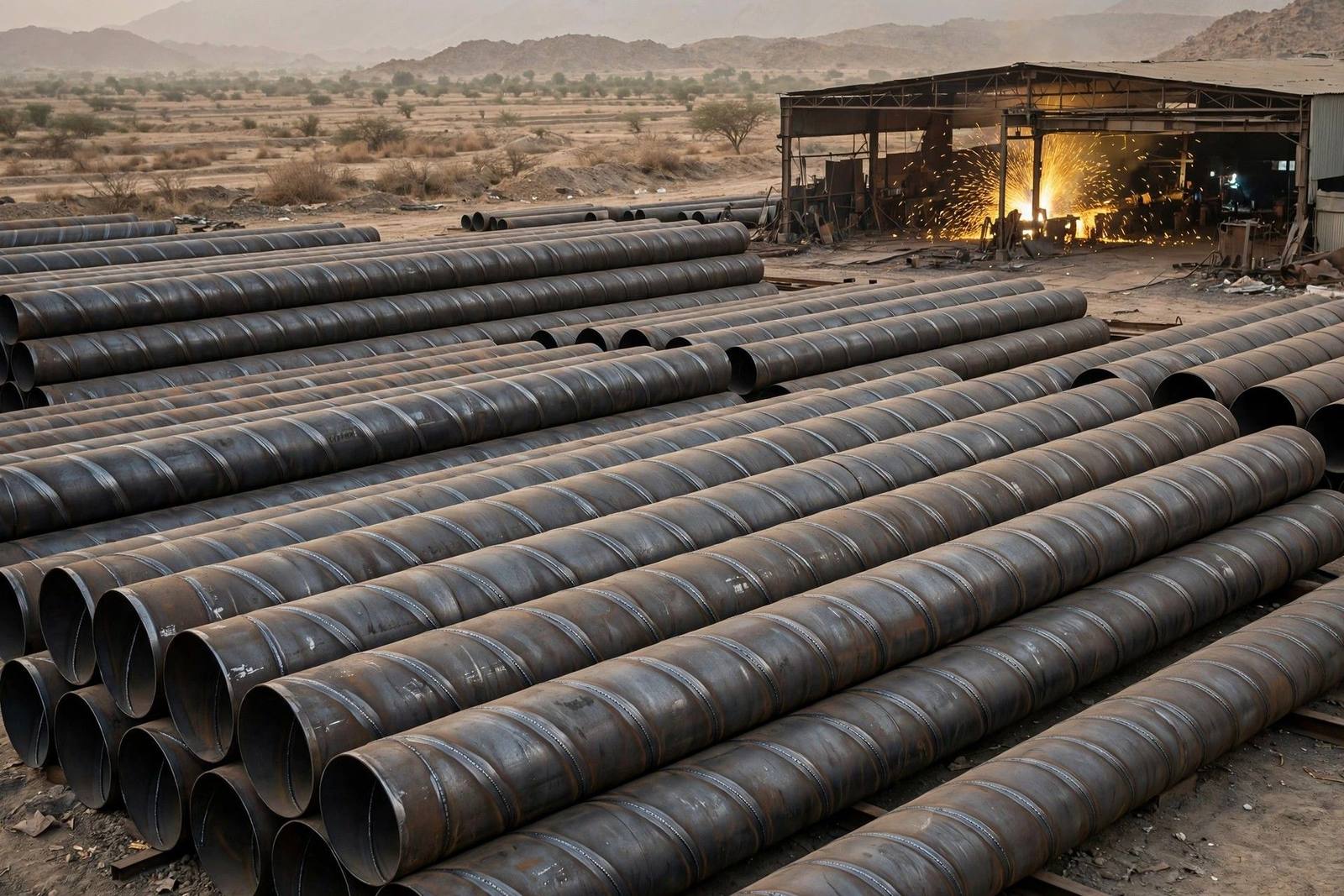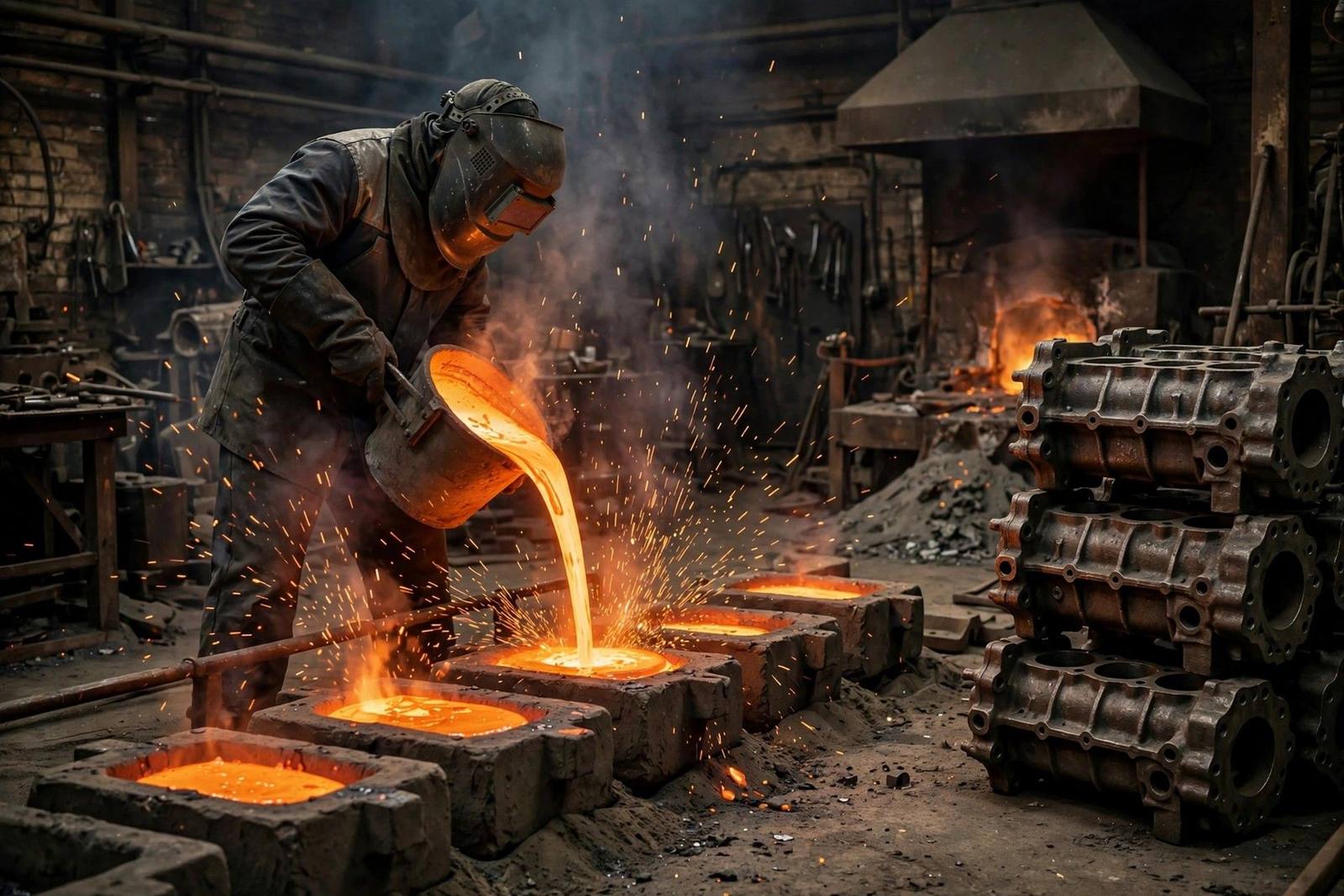
KARACHI: A tractor looks simple from the road — engine, wheels, a seat in the sun. Under the paint, though, its heaviest and most unforgiving parts begin life as molten iron: the cylinder block and head around the engine, the transmission case, the hydraulic housings that lift the implements. In Pakistan, a large share of that iron has historically been poured at one address — Main RCD Highway, Hub Chowki, in Balochistan's Lasbela district — by Bolan Castings Limited, BCL on the Pakistan Stock Exchange. Bolan is the foundry inside the Millat Tractors group: a specialist most farmers have never heard of, attached to a machine almost every farming family knows. This profile explains what a casting company does, how Bolan grew up with Pakistan's tractor industry, how it earns, and why its fortunes rise and fall with the harvest economy.
What a foundry sells
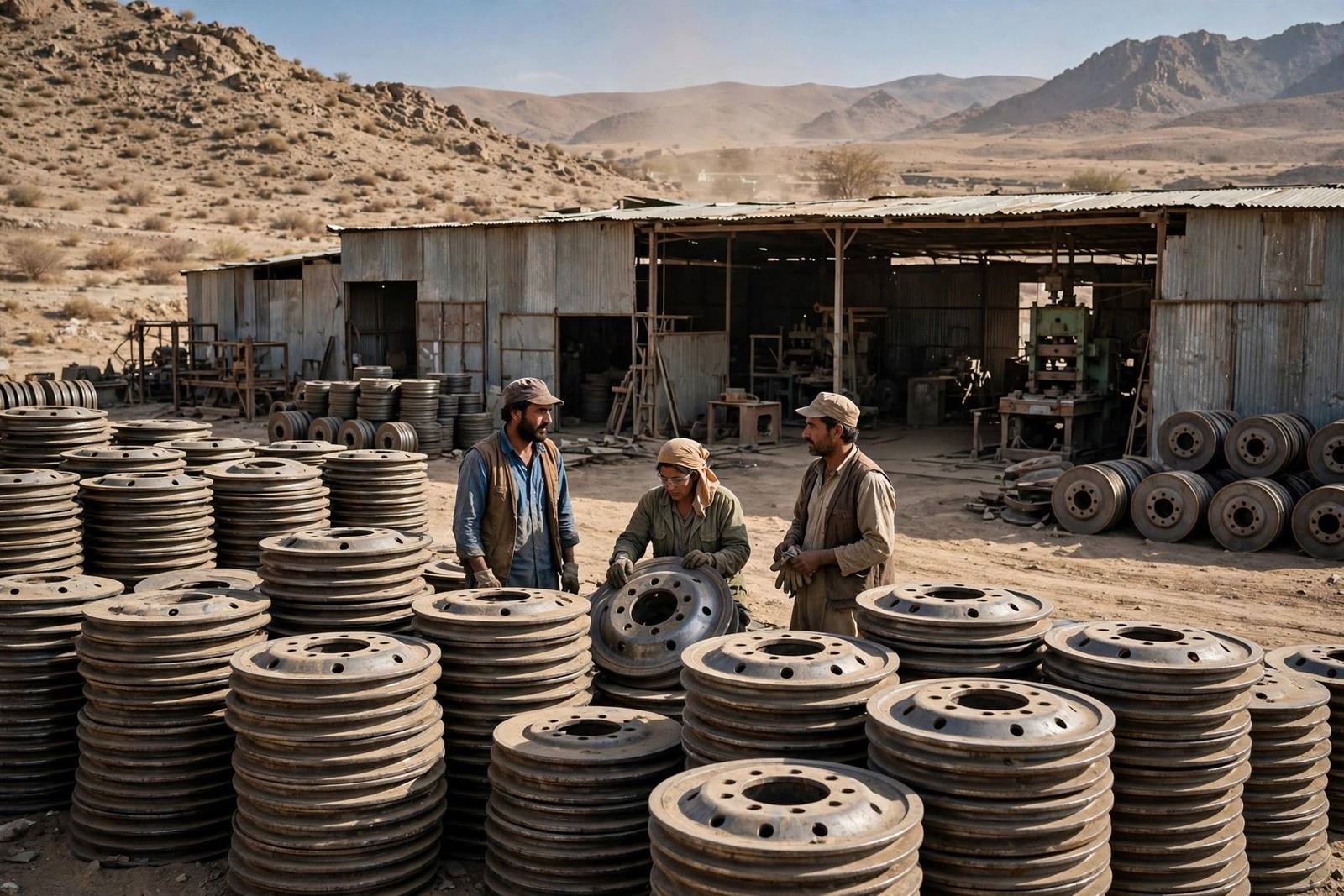
Casting is among the oldest of industrial crafts: iron is melted, poured into a mould shaped like the part, allowed to solidify, then cleaned and machined to final dimensions. The parts Bolan makes are the structural ironwork of tractors and vehicles — cylinder blocks and cylinder heads, crankcase and transmission cases, centre and axle housings, differential carriers and cases, hydraulic lift covers and boxes, brake drums, flywheels, hubs, oil sumps, steering-box covers, pump castings and a long tail of brackets, pulleys and housings. Company and industry descriptions put its output in the range of roughly eighteen to twenty thousand tonnes of castings a year, in individual pieces running from about a kilogram to well over a hundred — the profile of a high-volume grey- and ductile-iron foundry rather than a jobbing workshop.
The customers explain the business. A casting supplier sells almost entirely to original-equipment manufacturers — the tractor and vehicle assemblers whose production lines consume its parts — plus a smaller trade in engineering castings for pumps and general industry. That makes Bolan a second-tier supplier: invisible at the point of sale, but with volumes geared directly to how many tractors and trucks Pakistan builds in a year. Its product lists, organised by tractor, automobile and engineering lines, read like a cross-section of the local vehicle industry itself.
Incorporated in 1982, in the Millat orbit
Bolan Castings was incorporated in Pakistan on 15 July 1982, in the era when Pakistan's tractor industry was being deliberately localised. The government's deletion programmes of those years pressed vehicle assemblers to source an ever-rising share of parts at home rather than import them, and heavy iron castings — expensive to ship, feasible to make — were natural candidates for local manufacture. Hub, just across the provincial line from Karachi with its port, its industrial estates and its power supply, was a practical place to pour iron for the Karachi-centred vehicle industry.
The defining relationship of Bolan's life is with Millat Tractors, Pakistan's maker of Massey Ferguson tractors and the anchor customer of the local tractor-components chain. Bolan is a subsidiary of Millat Tractors Limited, and the chairmanship and board reflect that parentage; the foundry sits within the wider Millat group of industries alongside the group's other engineering ventures. The logic is vertical integration: the assembler secures its most critical castings from a plant it controls, and the foundry gains a cornerstone customer whose tractor volumes underwrite its furnaces. Shares in Bolan came to the market in the 1990s — market records date its listing to 1994, in the pre-merger era of Pakistan's separate Karachi, Lahore and Islamabad exchanges — leaving the parent in control and a public minority holding the balance, with a free float of a little over half the shares in recent PSX data.
A state foundry, British drawings, and an employees' buyout
The company's founding documents add three chapters the summary version skips. Bolan was not a private venture that drifted into the Millat orbit; it was created by the state. Its promoter was the Pakistan Automobile Corporation — PACO, the government holding company that then ran the national vehicle industry — under the Ministry of Production, and the foundry was a deliberate act of localisation policy: heavy tractor castings were among the most valuable imported components a domestic plant could replace. The technology came from Britain: the plant was commissioned in June 1986 with the assistance of Foundry Management & Design Company of the United Kingdom, and commercial production started the following month. The young foundry collected the era's official honours, including the Ministry of Production's excellence-in-management recognition in the late 1980s, alongside later stock-exchange top-companies awards.
The second chapter is the one that makes Bolan genuinely unusual in Pakistani corporate history. When the privatisation programme reached the foundry, it was not sold to an outside investor. On 13 June 1993 the plant was handed over to a management group formed under a joint collaboration of Millat Tractors Limited and the employees of Bolan Castings themselves — the anchor customer and the workforce buying their own factory from the state. Millat's corporate timeline records the year briskly as the Bolan Castings buyout. The structure answered the two questions that sink privatised component plants: Millat guaranteed an order pipeline and the quality discipline of the Massey Ferguson system, while the employees' stake bound the melt shop's skills to the company's survival. Three decades on, the arrangement's descendant is simply the modern share register — Millat in control, a public float of a little over half the shares beside it — but the foundry's culture of being owned by the people who pour its iron began in that 1993 handover, and old hands in Hub still describe the company in those terms.
Inside the tractor cycle
To understand Bolan's results in any year, start not in Balochistan but in the wheat and cotton belts of Punjab and Sindh. Pakistani tractor demand is farm income translated into machinery: it swells after good harvests and when crop prices, water availability and agricultural credit are kind, and it collapses when farm economics sour — squeezed between expensive diesel, fertiliser and seed on one side and weak produce prices on the other. Layered over the farm cycle are policy cycles: sales-tax treatment of tractors, import rules, and periodic support schemes have each, at different times, pulled demand forward or pushed it off a cliff. Tractor production in Pakistan has accordingly swung violently between boom years, when assemblers ran flat out and suppliers could not keep up, and drought years for the industry, when volumes fell to a fraction of capacity.
Bolan rides every one of those swings at one remove. When Millat and its fellow assemblers build tractors, the foundry pours; when the lines slow, castings demand evaporates even faster, because assemblers first run down the component inventories they already hold. Diversification into automobile and truck castings and general engineering work softens the ride without changing its character — commercial-vehicle demand is itself cyclical, driven by freight, construction and credit conditions of the same economy. The honest summary is that BCL is a levered play on Pakistan's agricultural and industrial cycle wearing the clothes of a small engineering stock.
Two further features of the trade shape Bolan's working life. The first is machining: a raw casting is a near-shape, not a finished part, and the value — and the rejection risk — concentrates in the boring, turning and finishing that bring a block or housing to the tolerances an engine demands, measured in fractions of millimetres across parts that weigh as much as a man. Assemblers audit that capability as carefully as the metallurgy itself, which is why an approved casting supplier is so hard to displace — and why losing approval would be so serious. The second is the replacement and spares trade. Pakistan's tractor parc — the accumulated fleet working the farms — is enormous and long-lived, and worn blocks, heads and housings generate a replacement demand that continues, at lower intensity, even when new-tractor production slumps. Spares cannot rescue a bad year, but they put a floor under the foundry's order book that pure new-build suppliers lack, and they keep patterns and skills in use between booms.
Localisation policy wrote the foundry's first chapter and still influences its economics. The deletion programmes that forced assemblers to buy Pakistani have faded into general industrial policy, but the logic they created persists: heavy castings are among the parts where local manufacture beats imports most decisively, because freight on iron is punishing and lead times from foreign foundries clash with assemblers' production schedules. When the rupee weakens, that protection strengthens — imported components grow dearer in local currency while Bolan's costs, scrap markets aside, are substantially domestic. When the rupee strengthens or steel and scrap prices spike worldwide, the squeeze runs the other way. The foundry thus sits at an interesting crossroads of the currency and the commodity cycle, on top of the farm cycle that drives its volumes.
How Bolan makes money
Revenue is, in essence, tonnage times price: castings sold by the piece or by weight to assemblers at prices negotiated against the foundry's own cost stack. That stack is dominated by the melt. Scrap iron and pig iron — much of the raw material linked to import and steel-market prices — go into the furnaces with coke or electricity to melt them, and energy is therefore the second great cost, followed by the labour of moulding, fettling and machining, and the yield question that haunts every foundry: the share of poured iron that emerges as saleable castings rather than rejects and returns. A well-run foundry earns its money in percentage points of yield and in the discipline of its melt shop; a poorly run one melts its margins along with its scrap.
Two features of the model deserve a beginner's attention. First, pricing power is limited: Bolan sells to a concentrated set of large, sophisticated buyers, its own parent prominent among them, and assemblers resist price increases even when scrap and energy costs jump — so cost inflation can sit in the foundry's margins for quarters before it is recovered. Second, the fixed-cost base is heavy. Furnaces, moulding lines and machining capacity cost much the same in a bad year as a good one, which is why Bolan's profits have historically swung from respectable in tractor booms to thin or negative in slumps, and why its dividend record is best described as opportunistic rather than regular. Students of the wider chain should read this profile beside the parent's — Millat Tractors (MTL) — and beside the other Hub engineering names, such as the wheel maker Baluchistan Wheels, whose results move to the same vehicle-production drum.
Strengths, risks and constraints
Bolan's strengths are the moat of incumbency in a heavy, dirty, skill-based trade. Serious tractor castings cannot be improvised: patterns, metallurgy, machining tolerances and an assembler's quality approval take years to establish, transport costs protect local suppliers of such weighty parts, and the Millat relationship gives the company a base load that independent foundries lack. Its Hub plant is among the country's significant iron foundries by capacity, and its catalogue spans tractors, commercial vehicles and engineering work rather than a single part.
The risks are the cycle, concentration and cost. The cycle, because tractor demand in Pakistan is among the most volatile series in the entire industrial economy. Concentration, because a supplier whose anchor customer is its parent lives with both the comfort and the constraint of that embrace — group strategy, group pricing and group volumes are set above its head, a standard feature of the listed-subsidiary pattern explored in our guide to subsidiaries on the PSX. Cost, because scrap, pig iron and energy inflation arrive faster than price recovery. Add the ordinary hazards of heavy industry in Balochistan — logistics, utilities, and the cost of keeping skilled foundry labour — and the picture is of a genuinely useful industrial asset whose earnings quality varies enormously with the season of the wider economy.
The name on the PSX and who studies it
BCL trades in the engineering and automobile-parts space with a June financial year. It is a small-capitalisation share; trading is typically light, the shareholder base is anchored by Millat's majority, and the price can sit quiet for long stretches before a tractor-industry headline wakes it. It has not been a KSE-100 name, and beginners should calibrate expectations accordingly: this is a stock studied from the industry's data — monthly tractor production figures — more than from its own chart.
The investor who studies Bolan is generally a cycle reader: someone who follows farm incomes, crop prices and assembler production schedules and uses small suppliers like BCL to express a view on the tractor economy with more torque than the assemblers themselves provide. Others arrive through the group, valuing Millat's listed satellites to understand the whole. Either way, the discipline is the same — read the foundry through its customers, and remember that this profile is educational content, not financial advice. Bolan Castings is a reminder that behind every famous machine on Pakistan's roads and farms sits an obscure company pouring iron in the heat, and that on the stock exchange, obscurity and importance are not opposites.
Key takeaway: Bolan Castings (BCL), incorporated in 1982 at Hub and listed in 1994, is the Millat Tractors group's foundry — maker of the cylinder blocks, heads and housings inside Pakistan's tractors — whose earnings swing with farm incomes, tractor volumes, and the cost of scrap and energy.