KARACHI: Drive west out of Karachi on the RCD Highway, past the point where Sindh gives way to Balochistan, and at Hub Chowki you pass one of the Pakistan Stock Exchange's more quietly remarkable factories. Baluchistan Wheels Limited — BWHL — makes the steel disc wheels and wheel rims that sit underneath a large share of the vehicles Pakistan assembles: its trucks and buses, its tractors, its cars and pickups and 4x4s. The company rarely makes headlines, because wheels rarely do. But every assembler in the country is a potential customer, every farm and freight route is its end market, and its export list reaches from Europe to South America — a reminder that some of Pakistan's most durable manufacturers are the ones making components nobody notices until they fail.
Founded in 1980 with a British partner
Baluchistan Wheels was incorporated in Pakistan on 16 June 1980. It was established to manufacture steel wheels for automobiles in collaboration with GKN Sankey Limited of the United Kingdom — one of the British engineering names of that era — bringing established wheel-making technology into a country whose own vehicle industry was then taking shape. The choice of location was deliberate and has defined the company ever since: a plant at Hub, in the Lasbela district of Balochistan, roughly 35 kilometres from Karachi, with the head office in Karachi itself, in State Life Building No. 3 on Dr Ziauddin Ahmed Road. Hub was then a frontier of Pakistani industry — close enough to Karachi's port and assemblers to serve them, far enough out to build a substantial factory — and the company became one of the anchor industrial employers of the Hub area.
The timing mattered. Pakistan's auto industry in the early 1980s was entering its localisation era: Pak Suzuki was being formed, tractor production was expanding, and government deletion programmes pushed assemblers to source more components at home. A wheel is an ideal localisation candidate — heavy, bulky, expensive to ship, and needed in exact sizes for every model — so a domestic wheel plant with proper technology had a structural market from the day it opened. The company listed on the stock exchange in the 1990s (the market that is now the unified PSX), taking its place among the small tier of listed auto-parts makers that supply the assemblers profiled in our overview of automobile stocks on the PSX.
What it actually makes
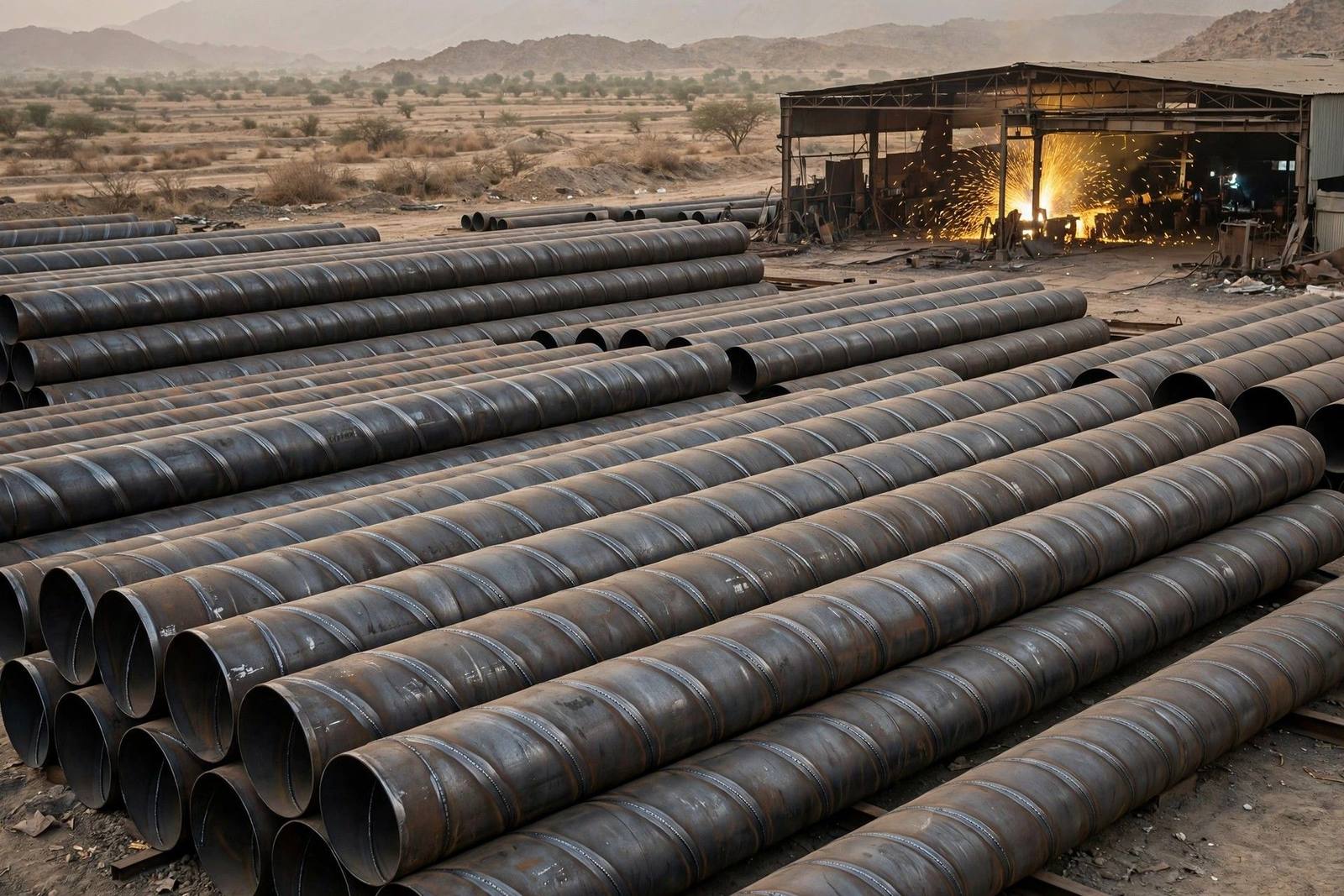
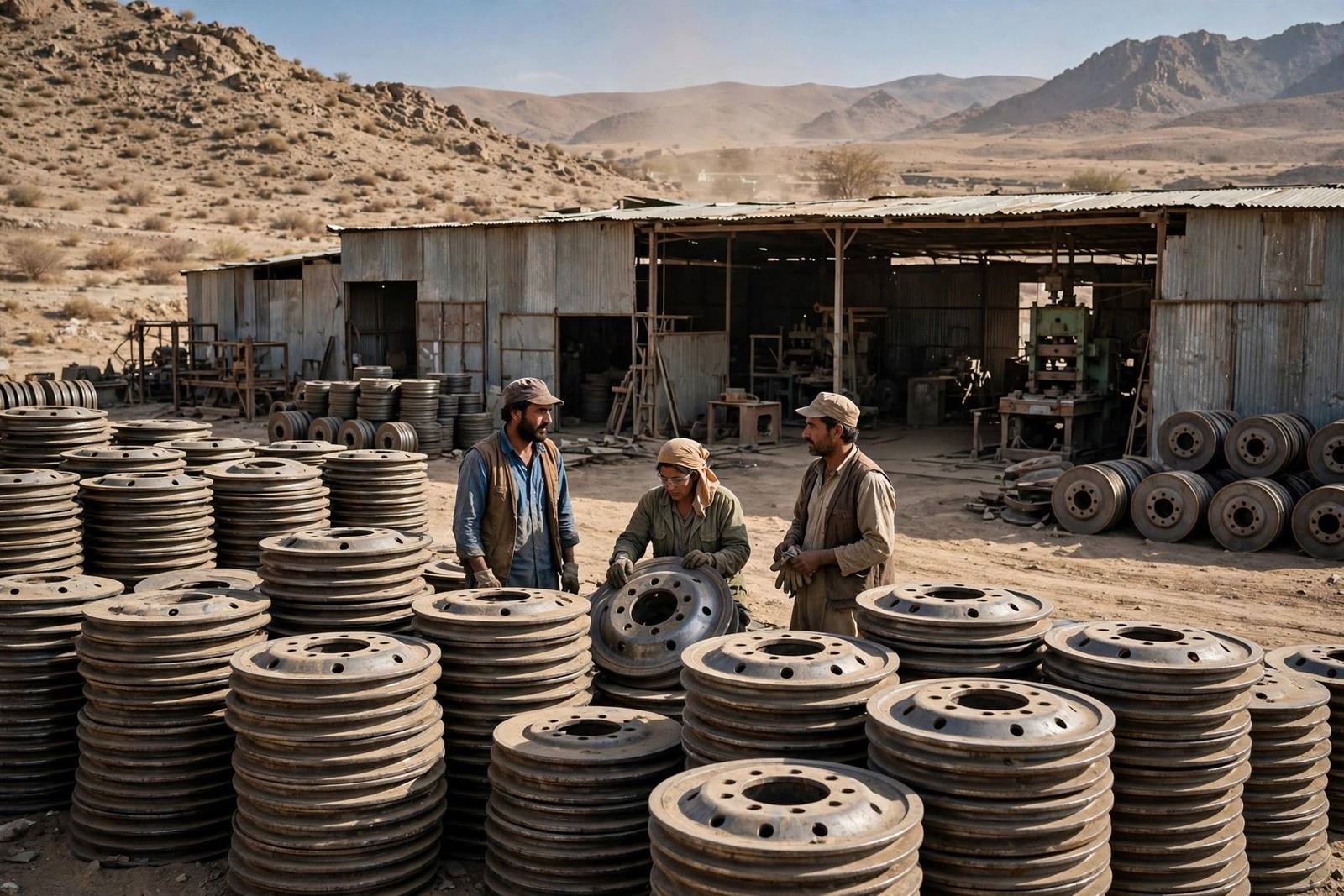
The product list is short to say and deep to make. Baluchistan Wheels manufactures and markets automotive wheel rims and disc wheels for trucks, buses, tractors, cars and mini commercial vehicles, including wheels for vans, pickups and four-wheel-drive vehicles. Behind that sentence sits serious metalwork: steel coil is cut, rolled, welded, formed and finished into wheels that must meet dimensional standards, balance requirements and punishing load and fatigue tests — a truck wheel that fails at highway speed, or a tractor wheel that cracks in a field, is not a cosmetic defect but a safety event. The company has long been associated with the European Tyre and Rim Technical Organisation (ETRTO), whose standards govern how wheels and tyres fit and perform together, and it has carried international quality certification for its processes.
It helps to picture the range concretely. A car wheel is a styled, precisely balanced component expected to survive potholes at speed for the life of the vehicle. A tractor wheel is a working tool — heavy-gauge, built to carry ballast and torque in mud, and repaired in the field if it must be. A truck or bus wheel carries lives and cargo at highway speed and is specified accordingly. Making all three families on shared steel-forming competence, to ETRTO dimensional standards, with finishes that survive Pakistani summers and coastal salt air, is a broader engineering task than the single word "wheels" suggests — and it explains why assemblers treat a proven wheel supplier as part of their own quality system rather than as a commodity vendor to be swapped on price.
Its customers are the original-equipment manufacturers — the assemblers whose vehicles leave the factory on BWHL wheels — and the replacement market beyond them. In practice that means the Hub plant's order book is a shadow of the whole vehicle industry: when tractor sales rise on a good harvest, when truck fleets renew, when car production runs hot, wheel demand follows within the same planning cycle. The company's June financial year-end means its results are reported on the same harvest-linked calendar as the tractor makers it supplies, such as Al-Ghazi Tractors and Millat.
An exporter hiding in Balochistan
The part of BWHL's story that surprises most readers is its export book. Company-profile sources list its wheels shipping to markets including Germany, England, Ireland, Italy and Turkey in and around Europe; Thailand, Malaysia, Sri Lanka and Bangladesh in Asia; Morocco, Mexico, Dubai and South America further afield. For a mid-sized component maker in Lasbela, that is a serious footprint, and it is earned the hard way: export wheel orders are won on specification, consistency and price against suppliers from much larger industrial economies, and they are lost just as objectively. Exports also change the company's financial character. A purely domestic parts maker is a pure play on Pakistani vehicle production, with all its booms and shutdowns; an exporter has a second, dollar-earning demand stream that can cushion a domestic downturn and a management team forced to stay internationally competitive on cost and quality whether it wants to or not.
How it makes money — and what it spends it on
The revenue mechanics are those of any honest component manufacturer. Wheels are sold per unit, in sizes and specifications agreed with each assembler, at prices negotiated against the dominant input: steel. When steel prices rise — globally, or in rupee terms when the currency weakens — the spread between wheel prices and material costs is squeezed until prices can be renegotiated, which is why parts makers' margins tend to lag commodity cycles rather than move with them. Energy and labour at a single plant, freight from Hub to the assemblers clustered in Karachi and upcountry, and the cost of maintaining dies, presses and finishing lines make up most of the rest of the cost stack.
Two structural features soften that exposure for BWHL. The first is breadth: it sells into five vehicle families at once — cars, tractors, trucks, buses and light commercials — whose cycles do not peak and trough together. A year of weak car sales can coincide with a strong tractor year; the freight cycle runs on different fuel than the consumer cycle. The second is the replacement and export demand that continues even when assembly lines pause. Against that, investors should set the company's working-capital reality: assemblers are powerful customers who set payment terms, and a small supplier finances the gap between paying for steel and being paid for wheels. Reading its accounts means reading receivables and inventory as carefully as profit — the same discipline our guides to reading a cash-flow statement recommend for any manufacturer.
Steel deserves a paragraph of its own, because it is effectively the company's second business. Wheel production consumes steel in coil and sheet in grades that must form without cracking and weld without weakness, sourced from domestic mills and imports in proportions that shift with price and availability. A disciplined parts maker manages that book like a trader — forward cover when prices threaten, careful scrap recovery (the punched-out centres and trim of wheel production return value as scrap), and inventory sized to the assemblers' schedules rather than to speculation. Read BWHL's inventory and raw-material lines across a steel cycle and you can watch that discipline, or its absence, in numbers. Energy is the other quiet cost: presses and paint shops at Hub run on the same constrained Balochistan industrial infrastructure as every plant there, and reliability of supply is an operational fact the annual report's boilerplate only hints at.
Ownership and character
BWHL is a sponsor-led Pakistani industrial company of the classic kind: a founding business family and associated holders at the centre — the Bengali family name runs through its chief executive's office — with a meaningful free float in public hands for a company of its size. It has no foreign parent and no sprawling group above it; the Hub plant essentially is the company. That simplicity is part of its teaching value. There are no cross-holdings to untangle and no financial subsidiaries to consolidate away — what you see in the accounts is a wheel factory, its export customers and its cash, and the judgement call is correspondingly clean: is the factory competitive, and is the vehicle cycle turning for or against it?
Strengths, risks and honest caveats
The strengths are longevity, specialisation and reach. Four and a half decades in one product line builds process knowledge and assembler relationships that a new entrant cannot buy quickly; wheels are safety-critical and qualification with an assembler is earned over years of defect-free supply. The export record proves the plant can meet foreign specifications. And the product itself is unglamorous but indispensable — electrification changes what spins a wheel, not whether a vehicle needs one, so BWHL is less exposed to the powertrain transition than engine-parts makers.
The risks are equally plain. The company is a price-taker on steel and a supplicant to powerful customers; a prolonged auto-industry downturn — of the kind Pakistan has seen when import restrictions and high interest rates choke vehicle financing — flows straight into its volumes. A single-plant company carries single-plant risk, from machinery breakdowns to the industrial conditions of one district. Its size means modest market liquidity for the shares, and its customer concentration means the loss or localisation change of one major assembler programme would matter. None of this is hidden; it is the standard risk shape of a good small supplier, and it is why the stock tends to be studied by patient readers of annual reports rather than by momentum traders.
There is also a place-based dimension worth recording. Hub was one of Balochistan's first industrial stories — an industrial estate and a cluster of plants, cement among them, planted on the province's edge with Karachi — and a four-decade-old factory there is part of the district's economic furniture: direct jobs, a supplier and transport ecosystem, and skills carried home to Lasbela's towns. Companies like BWHL are rarely weighed in such terms on the exchange, but for the province with Pakistan's thinnest industrial base, a listed manufacturer that has stayed, exported and paid dividends from Hub is a fact of some weight — and a reason its stability matters beyond its register.
The name on the PSX
BWHL trades under its own initials, with a June year-end, in the automobile parts corner of the market alongside names such as Loads Limited, the exhaust and radiator maker. Historically, the company has shared cash with shareholders in profitable years — its financial statements show regular dividend payments across recent cycles — but, as with every cyclical supplier, the payout follows the vehicle market rather than a promise. The mechanics of receiving any dividend are the market-standard ones set out in how PSX dividends work.
What kind of investor studies BWHL
BWHL suits the investor who wants to understand Pakistan's vehicle industry from the component side — where volumes are the assemblers', margins are negotiated, and survival belongs to specialists who meet specification after specification, year after year. It is a small, clear window onto big questions: how localisation really works, what exports demand of a Pakistani factory, and why a plant at Hub Chowki can sell into Germany. This profile is educational content, not financial advice. For readers building their foundations first, the Aktzien learning library covers the market basics behind every profile in this series.
Key takeaway: Baluchistan Wheels, founded in 1980 with GKN Sankey technology, makes steel disc wheels at Hub for Pakistan's assemblers across cars, tractors, trucks and buses — and exports them worldwide, making it a small, pure study in component manufacturing.