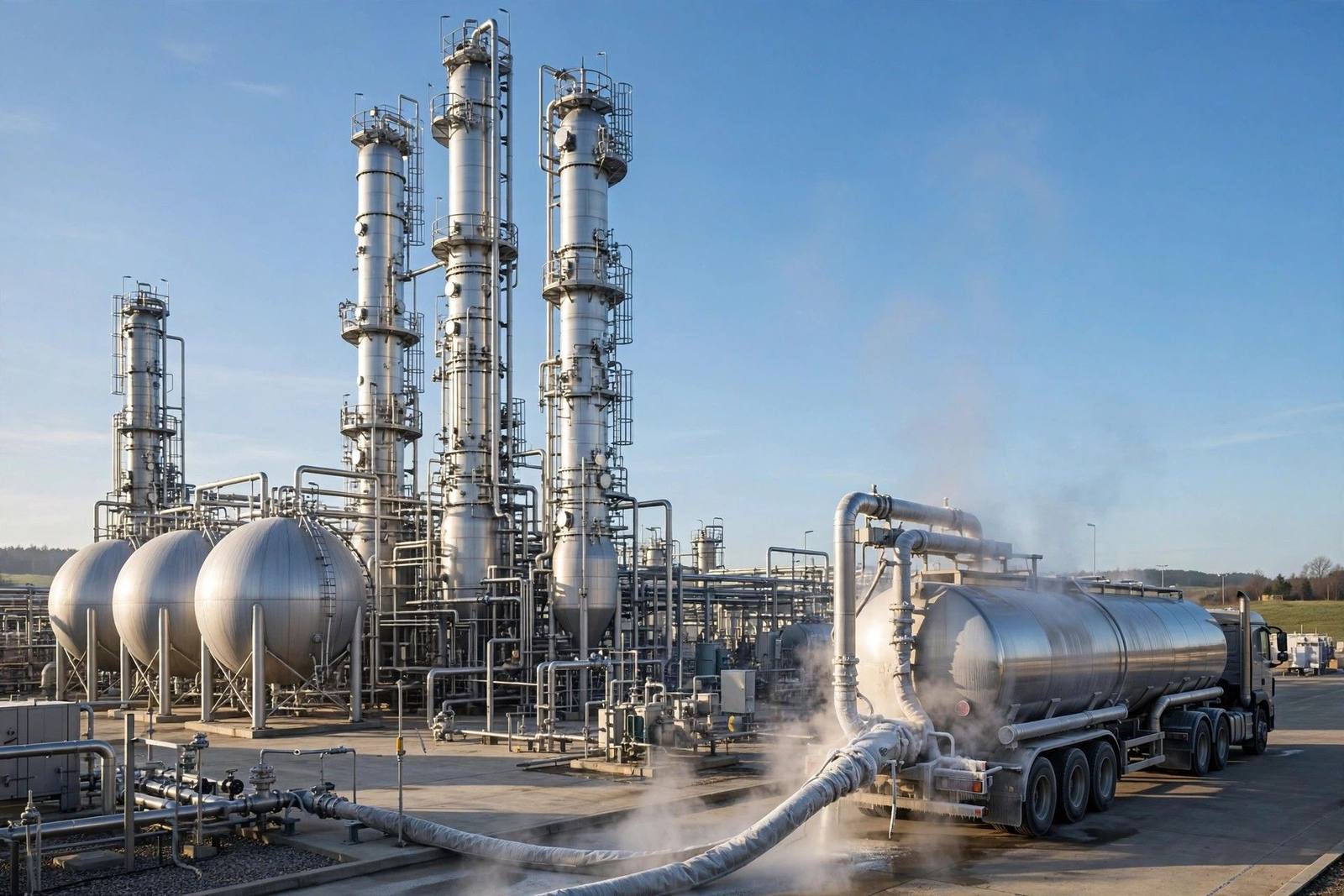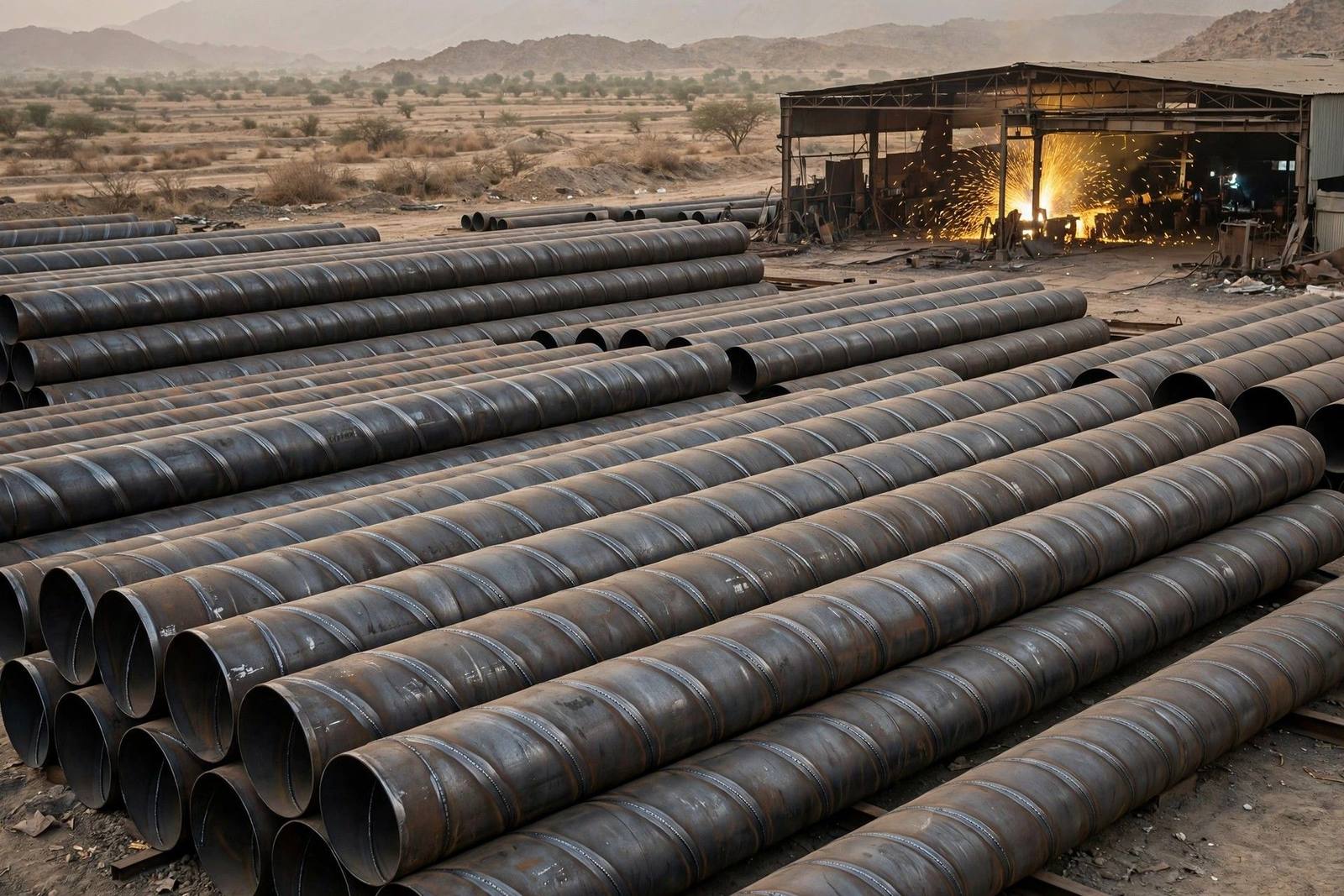
KARACHI: When Pakistan lays a great pipeline — gas from a Sindh field to a Punjab city, water to a thirsty metropolis — the steel that makes the line is wide, heavy and, more often than not, rolled into a spiral and welded at Nooriabad. Crescent Steel and Allied Products Limited, CSAP on the Pakistan Stock Exchange, is the company behind much of that pipe: a manufacturer of large-diameter spiral arc welded steel line pipes, a coater of pipelines against corrosion, and — in its other lives — a cotton spinner, an investor in shares and property, and the holder of a small power business. Founded in 1983, in the first decade of Pakistan's private heavy industry, Crescent is one of those conglomerate-in-miniature names that teach a beginner how business groups here actually work. This profile follows its pipes, its divisions and its dividends from Nooriabad to the balance sheet.
Built downstream of Pakistan Steel Mills
Crescent Steel was incorporated on 1 August 1983 as a public limited company, and was quoted on the Karachi, Lahore and Islamabad exchanges of the day. Its founding logic belonged to its era. The state was completing Pakistan Steel Mills near Karachi — the country's great integrated steelworks — and policy encouraged private downstream industries that would convert that steel into higher-value products. Large-diameter line pipe was an obvious candidate: Pakistan's gas transmission network was expanding from the Sui fields, its cities needed water lines, and every kilometre of both meant imported pipe or pipe made at home from domestic steel.
The plant was built at Nooriabad, in Sindh's Jamshoro district on the Superhighway between Karachi and Hyderabad, close to its raw-material source and its port. There, flat steel — hot-rolled coil — is formed into a continuous helix and submerged-arc welded along the spiral seam, the technique that lets a mill produce very wide pipe economically: the wider the coil's angle, the wider the pipe. Alongside the pipe mill, Crescent built the second half of the offer — coating. Bare steel buried in Pakistani soil corrodes; pipelines therefore need armour, and in November 1992 the company's coating plant began commercial production, applying three-layer high-density polyethylene coating over fusion-bonded epoxy to give buried pipe its working life. A fabrication unit at Dalowal, in Punjab's Faisalabad district, later added machinery fabrication and erection work. Pipe plus coating, made beside the steel source and the port, was the proposition, and it remains the core of the company four decades on.
A company of divisions
Crescent's own reporting divides it into segments, and the segment list is the quickest tour of the place. The Steel division — pipe manufacture, coating and fabrication — is the industrial heart and, historically, the largest contributor to revenue, selling to the oil and gas companies, the gas utilities, water authorities and the contractors who build for them. In 2000 the company stepped sideways into textiles, acquiring a running spinning unit of 14,400 spindles at Jaranwala from Crescent Jute Products, which it ran as Crescent Cotton Products, its Cotton division making yarn. A Hadeed (Billet) division added steel billet making. The Energy division covers power generation interests. And the Investment and Infrastructure Development (IID) division holds the company's portfolio of listed shares and real estate, managing strategic equity positions whose dividends and gains have, in some years, mattered as much to the bottom line as the pipe mill.
Honesty about the present shape matters: rating-agency reviews of the company in recent years describe the Hadeed and Cotton divisions as non-operational, leaving steel as the operating engine and IID as the income diversifier. Crescent today is therefore best pictured as a pipe company with an investment portfolio attached — not the five-engine conglomerate the segment list suggests. That distinction is exactly the kind of thing a profile exists to make clear.
The customers behind those tenders are a short list of heavyweight buyers. The two gas utilities that move Pakistan's gas from field to city are the classic line-pipe purchasers when transmission and main distribution projects are sanctioned; the exploration and production companies buy flow lines and gathering pipe; and water and sewerage authorities in the big cities buy large-diameter water pipe when municipal schemes — chronically underfunded, periodically revived — move from paper to procurement. Crescent's fabrication unit extends the same customer set into plant and machinery work. The technical gate to all of it is specification: line pipe is made and tested to international standards for the oil and gas industry, welds are inspected, coatings are holiday-tested for pinholes, and a mill's qualification history with the utilities is a commercial asset accumulated over decades of delivered projects. A new entrant can buy a pipe mill; it cannot buy the forty years of approvals standing behind Crescent's bids.
The portfolio side has its own history worth a paragraph. The IID division's holdings have spanned listed equities — including positions in financial and industrial names — and real estate, and the division's income has at times been the difference between a reported profit and a reported loss for the whole company. That cuts both ways in interpretation. In a year when a rising stock market lifts the portfolio, Crescent can report handsome earnings while its pipe mill stands half-idle, and an unwary reader mistakes investment weather for industrial health; in a falling market the mirror image appears. The company's segment reporting exists precisely to prevent that mistake, and it is why analysts who cover CSAP habitually quote the steel division's result separately before they discuss the headline number. Long-term holders, for their part, have generally been content to own both engines — an industrial option on Pakistan's pipeline build-out, carried by a portfolio that pays part of the rent while it waits.
Ownership: the Crescent family and the market
Crescent Steel belongs to the wider Crescent group of Faisalabad-Lahore industrial families — the constellation around names such as The Crescent Textile Mills — and its shareholding shows the pattern typical of such houses: associated companies and the founding family's interests hold a substantial block, institutional and public shareholders hold a large minority, and the register has over the years included provident-fund trustees and development-finance holders alongside the general public, who have held roughly two-fifths of the company in published patterns of shareholding. The registered office is in Lahore, the principal office in Karachi, and the works in Sindh and Punjab — a geographic spread that itself tells the group's story of Punjab capital, Karachi finance and Sindh industry.
How Crescent makes money
Pipe-making is project business, and project business is lumpy. Revenue arrives when the gas utilities, oil and gas companies and water boards sanction transmission and distribution projects and tender for pipe and coating — tenders Crescent bids for against a small field of domestic rivals and, at the border, import competition. A single large order for a gas pipeline can fill the Nooriabad order book for seasons; between projects, the same mill can stand under-used. The margin on that revenue depends on the spread between the tender price of finished pipe and the cost of hot-rolled coil — a steel price set in world markets and translated through the rupee — plus the efficiency of the coating line and the discipline of working capital, since project customers pay on milestones and retention terms rather than on delivery.
Over this industrial base sits the investment income. The IID portfolio's dividends, realised gains and revaluations flow into reported profit and have repeatedly cushioned years when pipe volumes were poor; the company's results therefore need to be read in two columns — what the mill earned, and what the portfolio earned — and the quality of earnings differs sharply between them. Beginners learning to pull such hybrids apart will find the method in our guide to reading analyst reports and company results. The comparison with purer steel plays in this series — the rebar maker Amreli Steels or the cold-roller Aisha Steel Mills — shows the trade: Crescent is less geared to the steel cycle, but also less simple to value.
Water deserves a mention of its own among the demand drivers, because it is the market most likely to outlive the gas cycle. Pakistan's cities lose and lack water on a scale that guarantees decades of transmission and distribution work whenever municipal finance allows it, and large-diameter steel pipe is the standard material for the trunk mains of those schemes. Crescent's water-sector order flow has historically been the bridesmaid of its gas business — smaller, slower-paying, but steadier in intent — and any period in which provincial governments fund urban water seriously shows up at Nooriabad. The energy division, by contrast, has mattered mainly as an option: captive and small-scale generation interests that support the group's own operations and can be built out if policy and prices align. Options, portfolios and a qualified mill — the Crescent package is easier to describe than to value, which is rather the point of the next section.
Strengths, risks and the pipeline cycle
The strengths are position and longevity. Crescent is one of the few Pakistani mills qualified to make and coat large-diameter line pipe to the oil and gas industry's specifications — a qualification, in both the technical and commercial senses, that takes years to earn and keeps import-only competition at bay for landed, bulky product. Its coating plant, running since 1992, makes it a one-stop supplier for buried pipelines. The balance-sheet ballast of the investment portfolio and property has helped it survive the industry's droughts — decades of them — in a way a pure project manufacturer might not.
The risks are those of any project-fed manufacturer. Pakistan's big pipeline programmes come in political and economic waves: gas-field development, the long story of transnational pipelines, city water schemes — each has been announced, delayed and re-announced over the decades, and Crescent's order book inherits that rhythm wholesale. Steel coil prices and the exchange rate can move between tender and delivery and squeeze a fixed-price contract. The gas sector's own troubles — depleting fields, circular debt, tariff disputes — slow the very customers who buy pipe. And the dormant divisions are a standing reminder that diversification attempts can quietly die inside a group company while the segment list still advertises them. Credit-rating reviews by VIS have walked through exactly this mixture over the years: a real industrial franchise, a supportive portfolio, and results hostage to project flow.
The name on the PSX and who studies it
CSAP has been quoted since its 1983 incorporation era and reports on a June financial year. It is a modest, moderately liquid counter whose price tends to wake on pipeline news — a gas-utility tender, a water-project award, a sector headline — and sleep between them, while the investment portfolio gives its book value a second engine that pure industrials lack. Its dividend behaviour follows the same two-column logic: payouts have been supported in portfolio-good years even when pipe was quiet, and trimmed when both engines idled — a pattern income readers should test in the actual distribution history rather than assume, using the calendar in our guide to book closures and ex-dates.
The investor who studies Crescent Steel is typically one of two readers: the infrastructure-cycle watcher, timing exposure to Pakistan's pipeline build-out through its most direct listed beneficiary; or the asset-value reader, adding up mill, portfolio and property against the share price and accepting lumpy earnings as the cost of the discount. Both need the same skill — separating the pipe from the portfolio in every result — and the reminder that this profile is educational content, not financial advice. Crescent's forty years make one clean point: on the PSX, some companies are best understood not as a single business but as a small portfolio with a factory attached, and they reward readers who notice which half is paying.
Key takeaway: Crescent Steel & Allied Products (CSAP), founded in 1983, makes and coats large-diameter spiral-welded line pipe at Nooriabad for Pakistan's oil, gas and water projects, with an investment and property portfolio beside the mill — a project-cycle industrial whose results must be read in two columns: pipes, and portfolio.