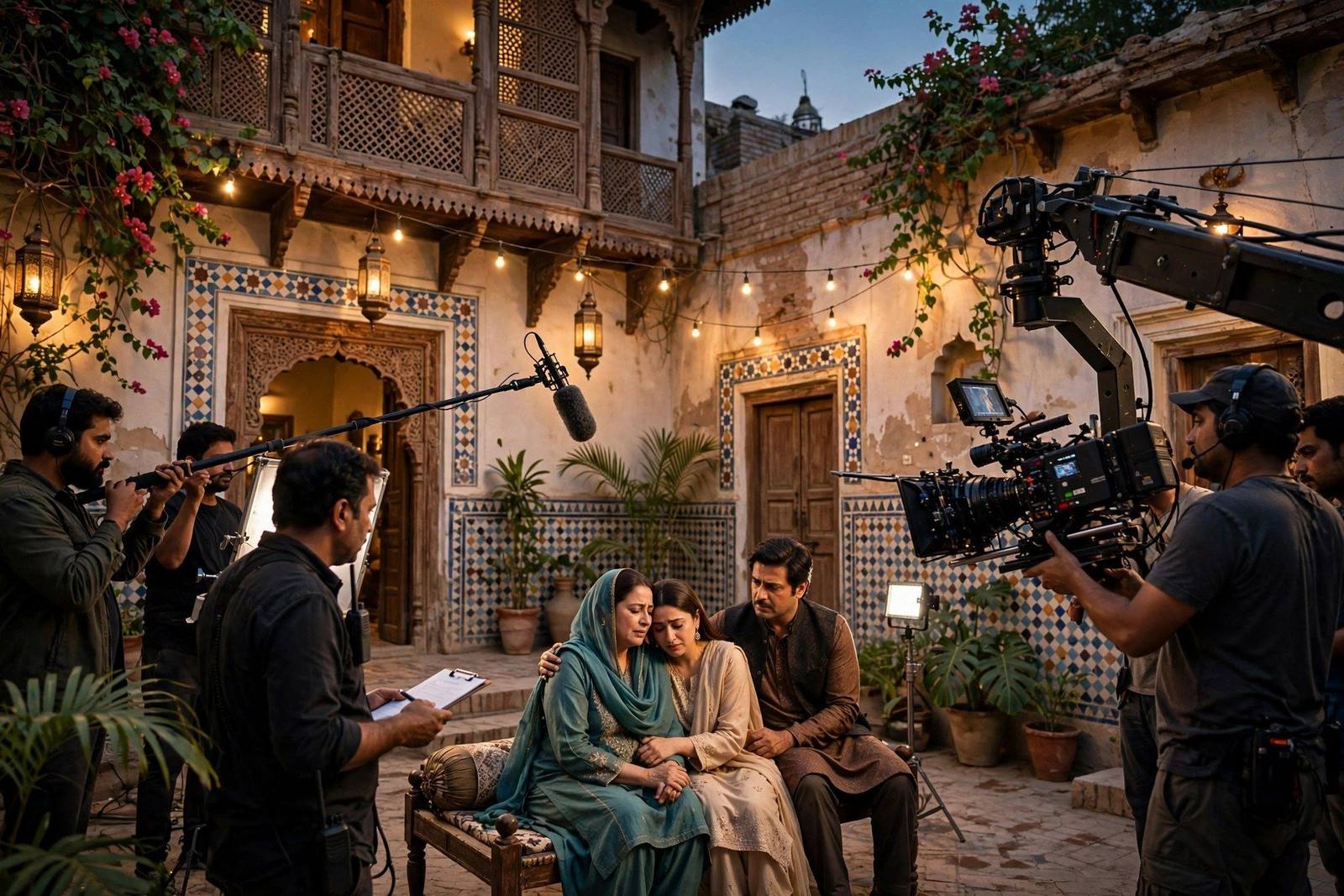
KARACHI: In January 2005 a new satellite channel appeared on Pakistani screens with a simple, unfashionable proposition: instead of filling the schedule with imported soaps, it would make Pakistani dramas, in Urdu, about Pakistani lives, and trust that the audience — at home and in the diaspora — would come. Hum TV's bet paid off so completely that the Pakistani serial is now a global cultural export, streamed and discussed from the Gulf to Canada, and the network behind it has grown into a small media group of entertainment, lifestyle, news and film businesses. Hum Network Limited, founded by television producer Sultana Siddiqui as Eye Television in 2004 and listed on the Karachi exchange in 2005, remains the Pakistan Stock Exchange's principal listed window into that creative economy. HUMNL's story is therefore two stories at once: how a producer built a channel, and how the channel changed what Pakistani television is for.
Origins: a PTV producer builds her own channel
Sultana Siddiqui's route to founding a network ran through the state broadcaster. She joined Pakistan Television as a producer in Karachi in 1974, working first in Sindhi programming and then in Urdu, and built a reputation over three decades for serials with strong social themes — her production of the Sindhi play Marvi, later adapted in Urdu, is the work profiles of her career return to most often. When she took early retirement around 2000 she formalised her own production house, Moomal Productions, selling programmes to PTV; her son Duraid Qureshi, who returned with a business degree and later became the network's chief executive, pressed the argument that the family should own a channel rather than supply other people's.
The moment was propitious: the early 2000s licensing of private satellite channels was breaking PTV's monopoly, but almost every new channel mixed news, entertainment and everything else in one hybrid schedule. Siddiqui's conviction, formed by watching television markets abroad, was that genre channels were the future — a channel that was only entertainment, all day. Hum Network's own records date the company to February 2004, established as Eye TV Limited, renamed Eye Television Network within the year and registered with the media regulator that October. Its first channel, Hum TV, went live in January 2005 as a round-the-clock entertainment channel at a moment when Indian soaps dominated local viewing — precisely the gap Siddiqui, with three decades of drama production behind her, believed Pakistani stories could reclaim. Her brother Jahangir Siddiqui, founder of one of Pakistan's best-known financial groups, provided the financial-world backing behind the venture — a family connection that links the network, unusually, to the heart of the Karachi capital market it would soon join.
Listing early, and the road to a network
Hum listed quickly: in June 2005, months after its first channel launched, the company completed an initial public offering at ten rupees a share and joined the Karachi Stock Exchange — making it, as the company has often noted, a rarity among Pakistani media businesses in submitting to public-company disclosure at all, and giving it a distinction its founder liked to repeat: a woman-founded, woman-led listed television network in a male-dominated industry. The present name, Hum Network Limited, was adopted on 21 January 2011 as the single channel became a portfolio.
The portfolio logic was Siddiqui's original genre idea executed patiently. Hum TV remained the flagship for drama and entertainment. Hum Masala built a dedicated food audience around cooking programming. Hum Sitaray followed as a second entertainment channel. International feeds carried the flagship to the diaspora — Hum Europe, Hum World for North America and a Middle East and North Africa service — monetising the same content library in markets where Pakistani and South Asian audiences pay more for it. News, the genre the founder had deliberately excluded at the start, arrived later as Hum News. Around the channels grew the brand extensions: the Hum Awards, launched in 2013 and staged in Pakistan and abroad as the industry's glossier showcase; Hum Films, launched in September 2014, whose first release, Na Maloom Afraad, became one of the successes of Pakistani cinema's revival decade; and publishing and digital ventures that carried the brands onto new platforms. In 2018 the group even experimented with e-commerce through Hum Mart — a reminder that listed media groups everywhere were hunting for second engines beyond advertising.
The drama that travelled
No account of Hum is complete without the serials, because the serials are the asset. The network's defining early global moment was Humsafar, the 2011–12 drama whose popularity reached far beyond Pakistan — it was dubbed into Arabic for regional broadcast and became a reference point in discussions of Pakistani soft power. Siddiqui herself returned to the director's chair after a decade for Zindagi Gulzar Hai, the 2012–13 serial whose cross-border reception in India — where it aired to unusual acclaim for a Pakistani production — demonstrated that the traffic in television drama between the two countries could run in Pakistan's favour. A catalogue of subsequent hits kept Hum serials at the centre of the region's popular culture, and the arrival of global streaming platforms, which licensed Pakistani dramas including Hum's, converted the diaspora audience from a satellite niche into a worldwide, on-demand one.
For an investor this cultural story is not decoration; it is the business model's foundation. A drama library is a durable, re-sellable asset: it can be re-run, dubbed, licensed to platforms and fed to the network's own international channels and video services at near-zero marginal cost. The network that owns the region's most-wanted catalogue holds pricing power with advertisers at home and licensing partners abroad that a news or music channel cannot replicate.
How Hum makes money
Like almost all free-to-air television, Hum is primarily an advertising business. Channels assemble audiences; advertisers pay for access to them, priced by ratings and by the demographics a channel delivers. Drama-led entertainment delivers the female and family audiences consumer brands pay premiums to reach, which is why the flagship channel's prime-time performance drives the group's income statement. Around the advertising core sit the secondary streams: international channel revenues from carriage and advertising in diaspora markets; content licensing and syndication, where the library earns again from platforms and foreign broadcasters; film production and distribution, a hit-driven business whose successes, beginning with the first Hum Films releases, arrive irregularly; events, above all the awards franchise; and digital income as viewing migrates to the group's online platforms and social channels, where its serials accumulate audiences measured in the hundreds of millions of views.
Costs are creative costs. Original drama is expensive and getting more so: writers, directors, stars whose fees have risen with the genre's success, production values the audience now expects, and the marketing to launch each serial into a crowded schedule. News is a different cost animal again — a standing newsroom whose expense does not pause between stories. The result is a business with real operating leverage to the advertising cycle and to ratings: a hit season fills prime time with premium-priced audiences on largely fixed production budgets, while a weak slate, a ratings dip or an advertising downturn — consumer companies cut media spending early in every Pakistani economic squeeze — falls quickly to the bottom line.
Ownership, strengths and risks
Hum remains a founder-and-family-led listed company: Sultana Siddiqui as its founding president and creative north, her son Duraid Qureshi in executive leadership, and the sponsor family as the anchor shareholders, with the Jahangir Siddiqui connection situating the group inside Karachi's wider financial establishment. That leadership stability is a genuine strength in a creative industry, where the founder's taste is effectively the product strategy. The group's other strengths are its catalogue, its first-mover genre strategy, its diaspora distribution, and a brand — the three letters are instantly recognised by Urdu-speaking audiences worldwide — that new entrants cannot buy.
The risks are the media industry's standard set, sharpened locally. Advertising dependence concentrates the revenue base in one cyclical stream set by other companies' marketing budgets. Audience migration is relentless: younger viewers live on phones and global platforms, and while Hum's digital reach is vast, digital advertising rates are thinner than television's. Competition for drama talent and ratings — from rival entertainment channels owned by larger media groups, and from the streaming platforms themselves commissioning originals — bids up the cost of the group's core product. Regulation and content politics are perennial exposures for any Pakistani broadcaster, and the news business adds editorial risk to commercial risk. Currency weakness cuts both ways: it raises the local value of international earnings while lifting imported equipment and production costs. Finally, a listed media group in a market with few media analysts receives episodic research attention, so its shares can be priced on sentiment around the latest hit or the awards-season headlines rather than on the library's steady economics — a pattern beginners will recognise from other story-driven names in the technology and communication sector.
The production house inside the network
One structural feature explains much of Hum's consistency: the network and the production house grew up together. Moomal Productions, Sultana Siddiqui's own studio, supplied flagship serials to the channel from its earliest years, aligning the incentives of maker and broadcaster in a way Pakistan's market — where channels commission independent producers and fight over the results — rarely achieves. The arrangement gave Hum first call on its founder's creative judgement, kept a larger share of each hit's economics inside the founding family's wider business, and built the library under related ownership from the start. It also creates the governance texture minority shareholders should expect in a family creative group: related-party production arrangements are the business model, not an aberration, and the right question for a reader of the accounts is not whether they exist but whether their terms, disclosed in the filings, look like the market's. The same realism applies across the sector's economics: Hum sells the audiences that agencies such as Symmetry Group buy on behalf of brands, and reading the two listings together — the attention factory and the attention broker — gives a beginner the whole advertising circuit of Pakistan in two annual reports.
The name on the PSX
HUMNL is quoted in the technology and communication sector — an administrative home it shares with telecom operators and software firms, and a reminder that the exchange's sector labels lag the economy's real categories. It has been listed since 2005, giving it one of the longer public track records in Pakistani media, through the satellite boom, the advertising crises that accompanied Pakistan's economic squeezes, and the streaming transition. Its dividend behaviour over the years has been that of a growth-and-content business: payouts have come, but content budgets and expansion have generally had first claim on cash, and followers treat the stock primarily as an exposure to the drama economy and the advertising cycle rather than as an income instrument. Liquidity is adequate in active periods and sentiment-driven around results and high-profile launches.
What kind of investor studies Hum
Hum suits the investor who understands that media is a hits business sitting on a library business: the watchlist is ratings and the flagship's prime-time share, advertising market conditions among Pakistan's big consumer spenders, the pace and performance of new drama launches, growth in international and digital licensing, the film slate's results, and the cost trajectory of star talent and production. It also rewards reading management's creative strategy as seriously as its financial one — in this company, the two are the same document. Compared with the telecom survivors elsewhere in its sector, such as WorldCall, Hum's asset walks out of the studio every night and its moat is taste, catalogue and brand; judging whether that moat is widening is the real analytical work. This article is educational content, not financial advice, and nothing in it is a recommendation to buy or sell any security.
Key takeaway: Hum Network turned a 2005 single-genre gamble into Pakistan's defining drama factory: founded by PTV veteran Sultana Siddiqui, listed within months of launch, and grown into a multi-channel, film and digital group whose serials — and the library they keep enlarging — are watched, licensed and argued about across the world.