KARACHI: There is a jar in millions of Pakistani kitchens that has barely changed in living memory: Mitchell's jam, with its orchard name and its promise that the fruit inside came from a real farm rather than a flavour laboratory. Mitchell's Fruit Farms Limited — MFFL on the Pakistan Stock Exchange — describes itself as Pakistan's oldest food company, and unusually for such claims, the paperwork agrees. The company was registered in 1933, before Pakistan existed, and it still processes fruit at Renala Khurd in Punjab's Okara district, on land its founder leased in the canal-colony era. For a beginner scanning the PSX food and personal-care stocks, Mitchell's is the heritage name: small beside the multinationals, but woven into the country's breakfasts for more than ninety years.
The name on the breakfast table
Mitchell's is first a brand, and only second a factory. Generations of Pakistanis have met it as squashes and syrups diluted on summer afternoons, as jams, jellies and marmalades at breakfast, as tomato ketchup and sauces, pickles, canned fruits and vegetables, and as candies and chocolates from its confectionery lines. That breadth matters to understanding the company. It is not a single-product business riding one harvest; it is a pantry label stretched across categories that share the same orchards, the same factory and the same distribution vans.
The brand's power is also its complication. A name this familiar sets an expectation of quality and continuity that a small company must keep funding — through orchards that take years to mature, through sugar and fruit bought at seasonal prices, and through packaging and distribution costs that rise with inflation whether or not shoppers will pay more for a jar of jam. Much of Mitchell's modern story is the tension between an unusually strong brand and an unusually small balance sheet.
A Scotsman's orchard: grapes, failure and citrus
The founder, Francis J. Mitchell, arrived in Bombay from Scotland at the end of the First World War, drawn by family connections to the railway-building trade in north-western India. Already in his sixties, he took a lease on about 720 acres of agricultural land in what was then the Montgomery district of Punjab, in the canal colonies being laid out along the Lower Bari Doab Canal. The strip of land ran for miles between the canal and the Lahore–Karachi railway, from Renala Khurd towards a station he is said to have helped name Kissan — a word that later became one of the company's familiar brand names.
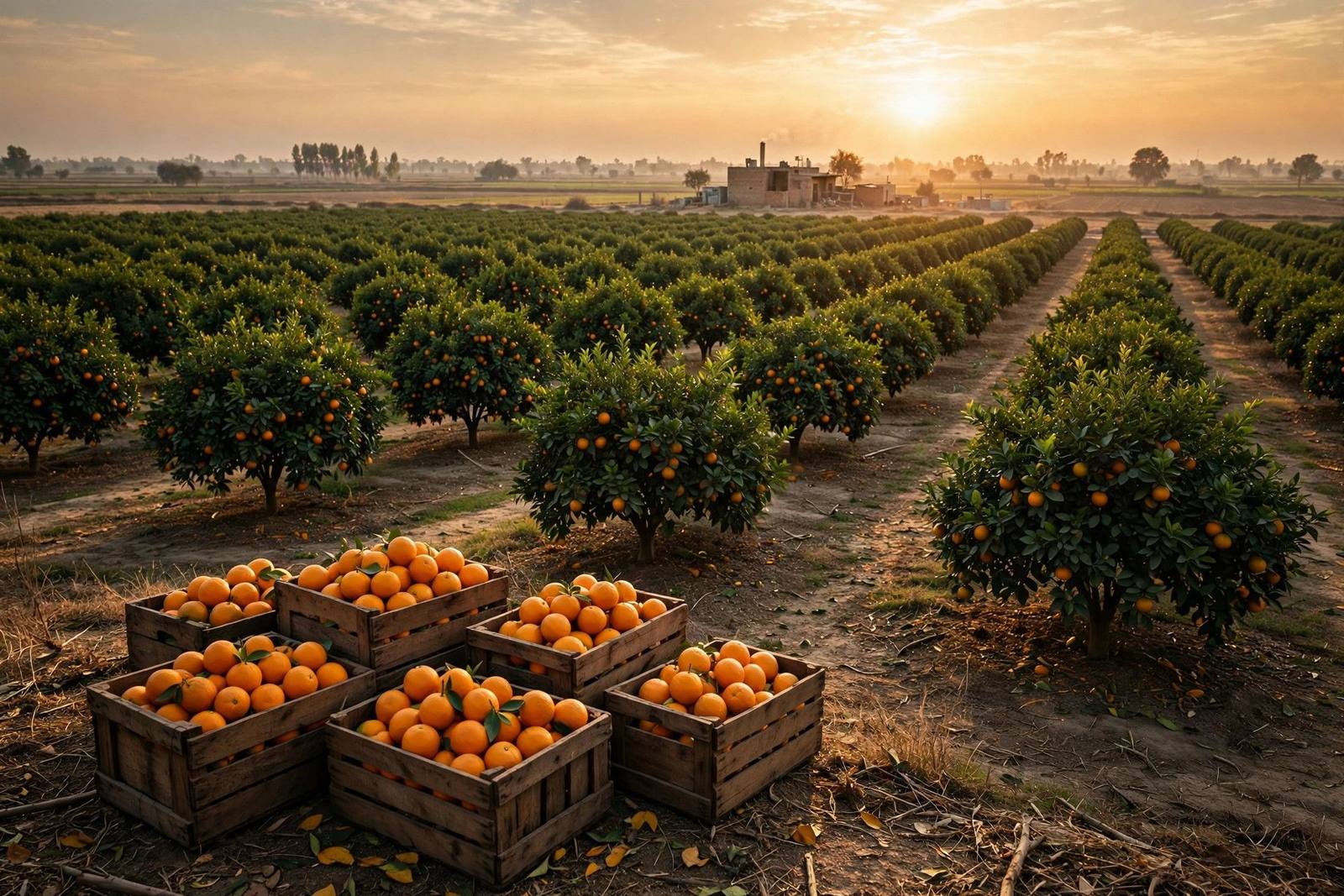
The first idea failed. Mitchell planted grapes, intending to sell them as dried raisins, and sent his younger son Richard to Mildura in Australia — then a centre of horticultural expertise — to learn the trade. But Punjab's monsoon humidity ruined the ripening grapes, and between 1921 and 1924 the vineyard experiment was abandoned. The family pivoted to citrus, sending the elder son, Leonard, to South Africa in search of good rootstock. Citrus suited the canal-irrigated land, and the orchards that replaced the vines became the foundation of everything that followed.
In April 1933 the business was formally registered in Lahore as Indian Mildura Fruit Farms Limited — Mildura honouring the Australian town where the family had learned its fruit craft. Francis Mitchell was governing director, with Leonard and Richard as directors. The logic of the company was set in that decade and has never really changed: grow fruit on your own land, process it close to where it grows, and sell the result under a name shoppers trust.
After Partition: a Pakistani company
Independence in 1947 turned an Indian-registered colonial enterprise into a Pakistani one. The company was renamed Mitchell's Fruit Farms Limited, and the orchards and factory at Renala Khurd found themselves in the new country's agricultural heartland. In 1958 Francis Mitchell sold a majority of his shares to Syed Maratib Ali, beginning a long association between Mitchell's and one of Pakistan's best-known business families — the family whose name the company's Lahore head-office road, Syed Maratib Ali Road, still carries.
For decades afterwards Mitchell's lived the quiet life of a family-held food company with a famous label: orchards maturing, the Renala Khurd plant packing the harvest, and the brand travelling wherever Pakistani distribution reached. The decisive step towards public ownership came in 1993, when Mitchell's was listed on the Karachi Stock Exchange, the predecessor market to today's PSX. Listing gave the old orchard company public shareholders and public obligations, but control remained concentrated, and the free float — the shares actually available to trade — stayed modest, a fact that still shapes how the stock behaves.
The family's era ended only recently. In 2025 the principal family shareholders agreed to sell their entire holding — a stake of about two-fifths of the company — to CCL Holding (Private) Limited, part of the group behind CCL Pharmaceuticals, in a transaction completed that October after the required public offer to remaining shareholders. New leadership followed, with a new chairman and chief executive appointed from December 2025, and the company described the following year in its own reporting as a reset: fresh capital raised through a rights issue, investment in organisation and marketing, and a refreshed brand identity. A business founded in 1933 was, in its tenth decade, being handed to new owners to run.
What Mitchell's actually makes
The product list reads like a tour of a well-stocked Pakistani pantry. At its heart are the fruit products the orchards were planted for: jams, jellies and marmalades, and canned fruits and vegetables that preserve a short harvest for year-round sale. Around them sit the squashes and syrups that have refreshed Pakistani summers for generations, fruit drinks, and a savoury wing of tomato ketchup, sauces and pickles. A separate confectionery tradition adds candies and chocolate products, extending the brand from the breakfast table to the sweet shop.
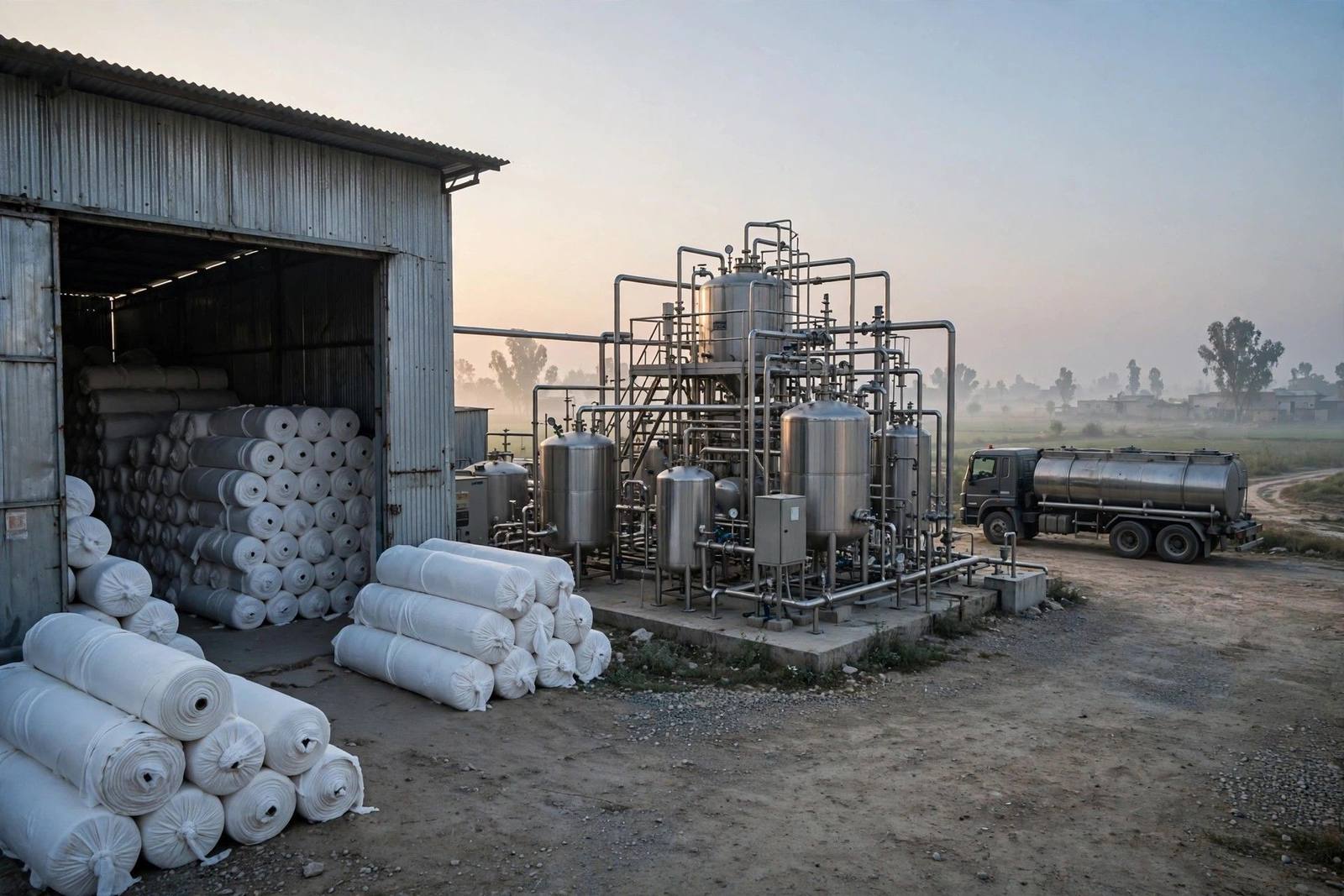
Geography explains the range. The factory sits at Renala Khurd, in the middle of the orchards, because fruit is perishable and heavy: every kilometre between tree and processing line costs money and quality. The head office sits in Lahore, close to the distributors, advertisers and retailers who decide how much shelf space a heritage brand receives against multinational rivals. Compare that shape with Karachi's listed confectioner in our profile of Ismail Industries, or with Lahore's juice maker in Shezan International, and a pattern emerges: Pakistan's food listings are mostly regional champions whose brands travelled further than their factories ever did.
How an orchard company makes money
The revenue logic is agricultural before it is industrial. Mitchell's earns when harvests are good and fruit is plentiful and cheap, and when shoppers keep choosing its jars over cheaper or flashier alternatives. Its costs begin in the orchard — land, water, labour, fertiliser and the years of patience a citrus grove demands before it fruits — and continue through sugar, a commodity whose price swings can squeeze a jam maker hard, glass and plastic packaging, energy for the processing lines, and the distribution network that puts small jars into small shops across a large country.
Seasonality runs through everything. Fruit arrives in gluts; demand for squashes peaks with the heat; sugar and packaging are bought in markets the company does not control. Working capital — the cash tied up in fruit, sugar and finished stock between harvest and payment from distributors — is therefore a permanent preoccupation, and it is no accident that the company's recent reporting links its capital raising to working-capital needs. When harvests fail or input prices spike, a company of Mitchell's size has limited room to absorb the blow; when they cooperate, the same fixed orchard-and-factory base can produce comfortable margins, because the brand lets it charge more than an unbranded processor could.
Strengths, strains and the honest risks
The strengths are easy to list because they are old. Few Pakistani brands of any kind can claim continuous recognition since the 1930s, and Mitchell's owns its orchards and its story in a way no importer can copy. Its products sit in everyday, repeat-purchase categories; nobody needs to be persuaded that households buy jam and ketchup. The arrival of CCL Holding as controlling shareholder adds a sponsor with pharmaceutical-grade experience of regulated manufacturing, distribution and capital raising, and the rights issue that followed the takeover directly addressed the thin capital base.
The strains are equally documented. The company's own recent annual reporting records accumulated losses, thin profits and a decision to pass the dividend to conserve cash for working capital and improvements — the classic position of a strong brand inside a weak balance sheet. Competition is relentless, from multinational food groups with vast advertising budgets to local juice, jam and sauce makers fighting on price. Climate is a real exposure: orchards cannot be moved when heat, water stress or unseasonal rain damage a harvest, and Punjab's agriculture faces all three. Finally, a small listed company with a concentrated register can see its share price move sharply on little volume, which says more about liquidity than about jam.
There is also a quieter commercial story underneath the heritage: distribution. A Mitchell's jar competes, shelf by shelf, with multinational labels and aggressive local brands in everything from Lahore's supermarkets to small-town general stores, and winning that shelf space is a weekly negotiation conducted through distributors, retailers and price promotions. The company's product breadth helps here — a distributor carrying squashes, jams, ketchup and confectionery from one supplier is a more useful partner than a single-line maker — and the brand's familiarity lowers the cost of every conversation. Export sales to Pakistani diaspora markets have long been a natural extension for heritage food brands of this kind, because emigrant shoppers buy the tastes of home with unusual loyalty, though for a company of Mitchell's size exports remain a supporting line rather than the main engine.
Reading Mitchell's accounts well means thinking like an orchardist as much as an accountant. The harvest calendar governs the year: fruit bought and processed in season becomes stock that is sold across the following months, so inventory and receivables deserve as much attention as the profit line. Sugar, glass and energy costs should be tracked against the prices the company has been able to take on its finished lines, because that gap — between a commodity cost base and a branded price list — is where the margin is decided. And since the change of control, the sponsor's actions matter as much as the orchard's weather: capital injected, leadership appointed and distribution rebuilt are the early chapters of the reset story, and only later chapters will show whether they convert into the sustained profits the brand's fame has always promised.
The name on the PSX
Mitchell's trades as MFFL in the food sector of the PSX, a listing inherited from its 1993 Karachi Stock Exchange debut. It is a small-capitalisation share with a limited free float, and its dividend character in recent years has been one of restraint: payouts passed while losses are absorbed and cash is rebuilt. That makes the register's story — who owns the company, and what the new controlling shareholder intends — unusually important to the investment case, more so than for a widely held giant. Readers new to how any dividend, when declared, would reach them can follow the mechanics in our guide to how PSX dividends work.
What kind of investor studies Mitchell's
Mitchell's tends to attract the patient, story-driven end of the market: investors who study heritage brands, sponsor change and turnarounds, and who are willing to read several years of annual reports to judge whether a famous label can be matched with a stronger balance sheet. It rewards attention to unglamorous details — harvest commentary, sugar and packaging costs, distribution expansion, and whether the new owners' reset produces sustained profits rather than one better year. This article is educational content, not financial advice, and nothing in Mitchell's long history guarantees its next decade. The Aktzien learning library sets out the basics for readers building that kind of judgement for themselves.
Key takeaway: Mitchell's Fruit Farms is a 1933 orchard company whose jams, squashes and sauces made it a household name long before its 1993 listing — and whose modern story is whether new owners can give a famous brand the capital it has always lacked.