KARACHI: Hydrogen peroxide is one of those chemicals civilisation quietly runs on. It bleaches cotton cloth white, disinfects hospitals, treats water and wounds, and brightens paper pulp — an oxidiser so useful that textile mills buy it by the tanker. In Pakistan, one listed company exists essentially to make it: Sitara Peroxide Limited, SPL on the Pakistan Stock Exchange, whose plant stands at 26 kilometres on Sheikhupura Road outside Faisalabad, the textile capital of the country. SPL is a spin-out of the Sitara group, the Faisalabad industrial family whose name runs across chemicals, energy and textiles. This profile explains what hydrogen peroxide is used for, how the company came to be carved out and listed, how a single-product chemical plant earns, and why SPL is studied as much for its difficult chapters as for its chemistry.
One product, many industries
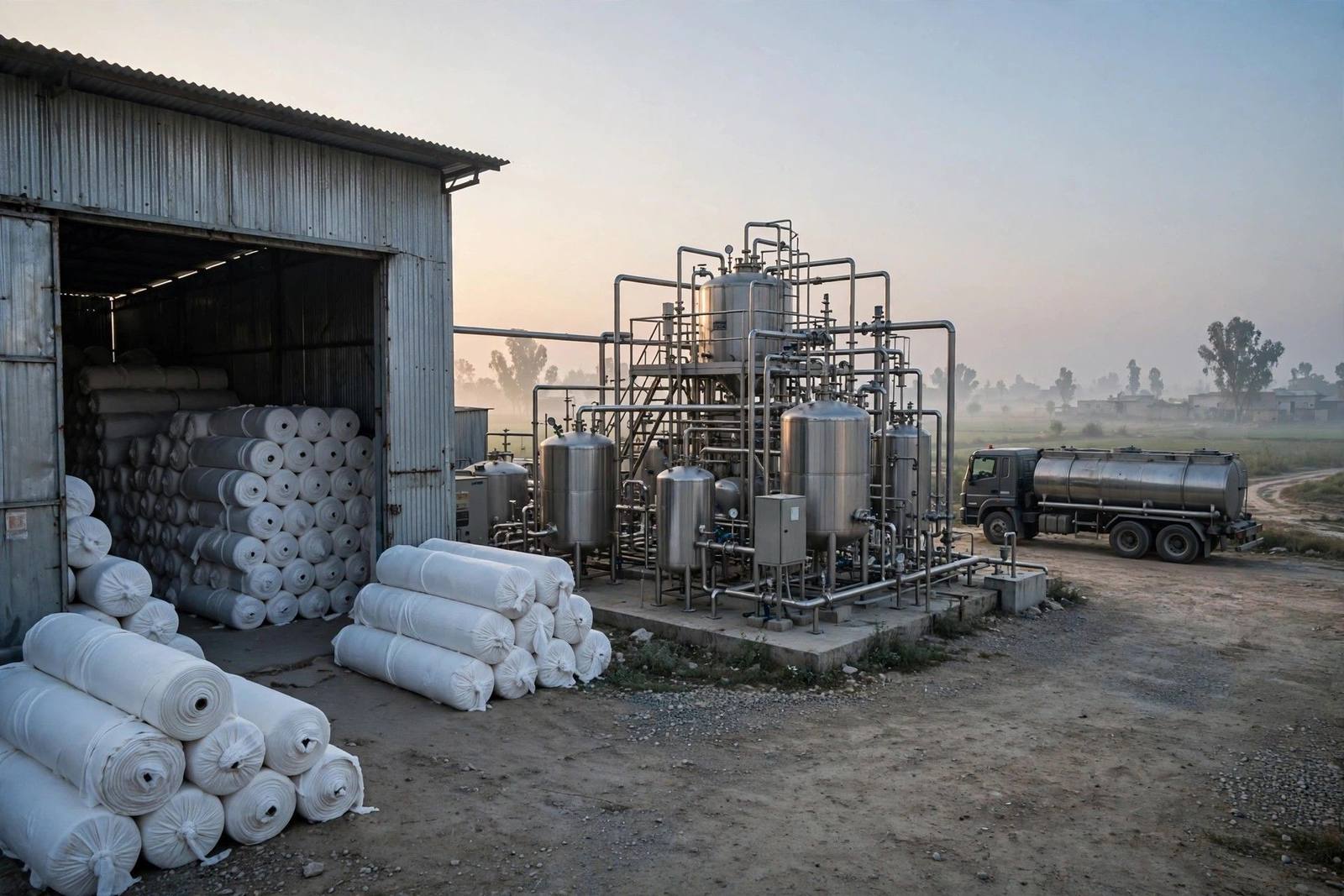
Start with the molecule. Hydrogen peroxide — H₂O₂ — is water with an extra oxygen atom, and that extra atom is restless: it breaks away to attack colour, microbes and organic matter, which is why peroxide bleaches and disinfects. Industry buys it in bulk solution, commonly at concentrations such as 35 and 50 per cent, delivered in drums, jerry cans and intermediate bulk containers, and increasingly by tanker to large users. The dominant global production route is the anthraquinone auto-oxidation process, a clever loop in which a working chemical is alternately hydrogenated and oxidised to yield peroxide continuously — the standard technology SPL's plant was built around.
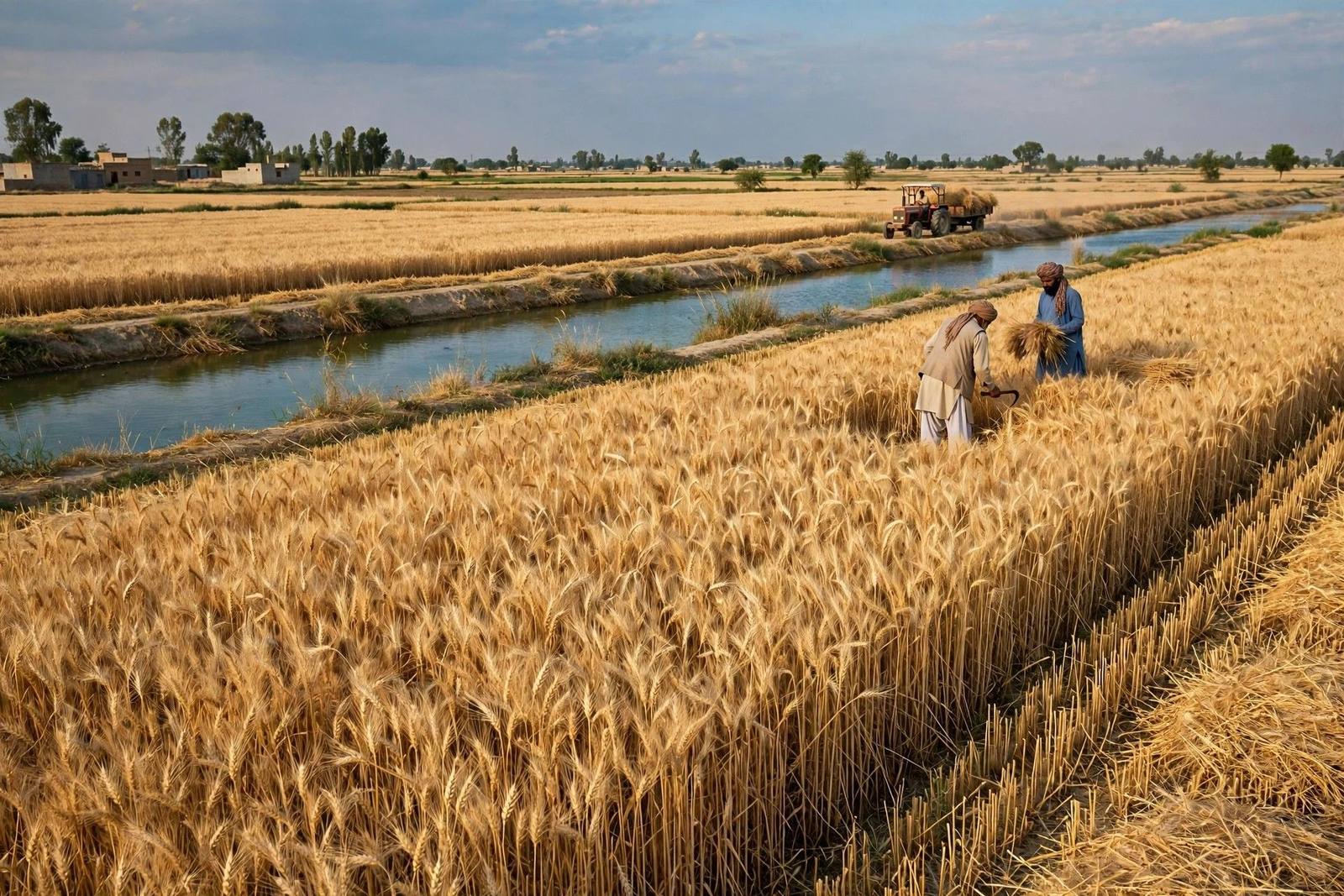
The demand map explains the Faisalabad address. Pakistan's textile industry — the country's largest exporter — uses hydrogen peroxide in enormous quantity to bleach cotton fabric before dyeing, and Faisalabad's mills are the densest cluster of that demand in the country. Beyond textiles, peroxide flows into paper and board, water treatment, food and aseptic packaging, cosmetics and pharmaceuticals, and household and hospital disinfectants; SPL has also marketed a disinfectant line under its Sitara Safe name. A peroxide maker is therefore best understood as a supplier to the bleach-hungry industries around it — above all, to the same textile economy that drives the fortunes of the Faisalabad groups profiled elsewhere in this series, from Sitara Chemical Industries itself to the spinning and weaving mills of the region.
Spun out of the Sitara group
The Sitara name — "star" — was built in Faisalabad by the Ghafoor family interests behind the Sitara group, whose flagship, Sitara Chemical Industries, grew from chlor-alkali chemicals into one of the country's larger private industrial groups, with ventures spanning chemicals, textiles, energy and food. Peroxide was a natural adjacency for a group already deep in textile chemicals: the mills Sitara served with caustic soda and allied products were the same mills bleaching cloth with peroxide, much of it historically imported.
Sitara Peroxide was incorporated in Pakistan on 8 March 2004 as a public limited company under the Companies Ordinance, 1984, to manufacture and sell hydrogen peroxide as a dedicated, separately financed venture — the classic group pattern of hiving a distinct plant into its own company so that its assets, borrowings and results stand on their own feet. Its registered office sits in Karachi's Business Centre on Mumtaz Hassan Road, in the financial district, while the factory — the entire industrial substance of the company — stands on Sheikhupura Road outside Faisalabad. The shares came to the market in 2007, when the company was listed on the stock exchange, giving the public a single-product chemical exposure of a purity the PSX rarely offers: one molecule, one plant, one customer industry above all.
How a peroxide plant makes money
The economics of commodity chemicals are stark, and peroxide is no exception. Revenue is volume times a price that the market, not the maker, largely decides: textile mills buy on specification and price, imported peroxide sets a ceiling on what local producers can charge, and the product's low value-to-weight ratio — customers are mostly buying water, chemically speaking — means it cannot travel far profitably. The plant's catchment is therefore regional by physics: a Faisalabad plant serves Punjab's mills best, and long hauls eat the margin.
On the cost side, the auto-oxidation process consumes hydrogen — typically derived from natural gas — energy, and the working chemicals of the loop, and it demands rigorous safety management, because concentrated peroxide is a hazardous oxidiser. Gas supply and price are thus existential inputs: an industrial plant of this kind lives on Pakistan's administered gas and power tariffs and on the reliability of supply to industry, and interruptions or tariff jumps pass straight into the cost of every tonne. Utilisation is the third variable. A chemical plant's fixed costs run whether it produces or not, so a mill-sector downturn that trims bleaching volumes lands with leverage on a single-plant company's results. Put together, SPL's profit in any period is mostly a function of three things it does not control — textile demand, gas economics and the import-parity price — minus the efficiency with which it runs the loop.
Grades, customers and the discipline of a hazardous product
Peroxide is sold by strength and by trust. Industrial customers buy standard concentrations for bleaching and process use, where the specification is chemical and the relationship is price-driven; food, pharmaceutical and cosmetic users buy tighter grades with documentation to match; and the disinfectant trade sells branded assurance to institutions and households. SPL's plant was equipped to serve that range from its Faisalabad base, with the product moving in jerry cans and intermediate bulk containers for smaller users and in bulk for the mills. Each format carries its own economics — packaged product earns more per litre but costs more to pack and distribute, while bulk mill supply is a volume game on thin spreads.
Running the plant is a discipline in itself. Concentrated hydrogen peroxide decomposes on contact with contaminants and generates oxygen as it does, so storage, materials of construction, venting and handling are engineered around that instability, and the anthraquinone process involves hydrogen and organic working solutions that demand the safety culture of a proper chemical works. This is the part of the business where the Sitara group's chemical heritage genuinely counts: the flagship's decades in chlor-alkali and allied chemicals represent exactly the process-safety tradition a peroxide plant needs. It is also why restart and reliability questions dominate SPL's disclosures when the plant has stood idle — a hazardous-process facility cannot simply be switched back on like a warehouse, and returning to steady, certified production after a long stoppage is an industrial project in its own right, with regulators, insurers and customers all requiring evidence rather than assurances.
Demand, when the plant runs, is not the mystery. Pakistan's textile exports require bleaching at scale in all but the worst years; paper, board and water-treatment uses grow with the cities; and the pandemic demonstrated a third engine, hygiene, that can multiply disinfectant demand within weeks. The recurring question for SPL has never been whether Pakistan needs peroxide — it plainly does, and imports prove the size of the appetite — but whether this particular company can keep its plant supplied with gas, capital and working funds continuously enough to claim its share of that demand. That is the gap between a good industrial idea and a good listed company, and SPL's history sits squarely inside it.
Imports are the shadow competitor in every conversation about this plant. Hydrogen peroxide is made at vast scale in China and elsewhere in Asia, and when international prices fall or freight cheapens, imported material tests the local producer's ceiling; when the rupee weakens or shipping snarls, the local plant's doorstep advantage widens. Trade-remedy instruments exist in Pakistan's system for cases of injurious dumping, and commodity chemical makers across the sector have used them at times, but a one-plant company cannot litigate its way to health — the durable defences are delivered cost, reliability of supply to mills that cannot afford a bleach-line stoppage, and the service relationship with the Faisalabad trade. SPL's founding premise was that a local plant would hold those advantages naturally; its subsequent history is the record of how often outside shocks — gas, capital, demand — overwhelmed them.
The group around it
SPL's ownership anchors it in the Sitara group, whose listed flagship is Sitara Chemical Industries (SITC), the Faisalabad caustic-soda and chemicals complex founded decades earlier. The relationship is the standard Pakistani group pattern: sponsor family control, shared name and reputation, adjacent product lines, and a small listed satellite whose strategic weight inside the group is modest compared with the flagship. For minority shareholders, the group connection is both comfort and question — comfort that an experienced chemicals house stands behind the plant, question in that a single-plant company's fate can be subordinated to wider group priorities. Readers learning to weigh that trade-off will find the general framework in our guide to family businesses on the PSX.
Strengths, risks and difficult stretches
The company's genuine strengths are positional. It makes, in Pakistan, a product the textile industry must have, at the doorstep of that industry's capital, with technology standard to the world's peroxide industry; import substitution is its founding logic, and every tonne it sells is a tonne Pakistan does not ship in. The disinfectant sideline showed, during the pandemic years, how quickly hygiene demand can multiply for a peroxide maker, and the broader chemical literacy of the Sitara group is a real asset in running a hazardous process safely.
The risks, however, are the story of the stock. A one-product, one-plant, one-region company has no shock absorbers: gas curtailment, a plant stoppage, a textile slump or a flood of cheap imports each strike the whole business at once. SPL's operating history has included difficult stretches in which production and sales were severely disrupted and the company reported losses and periods of little or no operating revenue — readers of recent filings will find quarters where the plant's economics simply did not run. Its workforce in recent reporting has been strikingly small for a listed manufacturer, the residue of those hard years, and the share's trading has been correspondingly thin and speculative, prone to sharp moves on rumours of revival. Anyone studying SPL should read its recent financial statements directly — the notes to the accounts, not the price chart, are where this company's real condition is written. The contrast with diversified chemical names, such as the chlor-alkali and PVC makers covered in Ittehad Chemicals and the Engro polymer business, is instructive: breadth is itself a form of insurance that SPL does not carry.
The name on the PSX
SPL has been listed since 2007 in the chemical sector, reporting on a June financial year. It is a small-capitalisation, low-liquidity counter whose free float trades in bursts; long quiet stretches are normal, and the price can move violently when speculative interest arrives, untethered for a time from anything happening at the plant. It is not an index heavyweight, and its corporate disclosures — quarterly accounts, material-information notices about plant operations — matter more to its price over time than any market-wide trend. Beginners who meet SPL on a "top gainers" list should treat that as an invitation to read, not to act.
What kind of investor studies it
The honest answer is: the specialist. SPL attracts deep-value and turnaround readers who enjoy single-asset puzzles — what is a mothballed or under-running peroxide plant worth if textile demand, gas supply and import prices align? — and group-watchers tracking the Sitara family's listed assets as a set. It also serves students of the market as a cautionary exhibit on concentration risk: the same purity that makes the story easy to tell makes the business easy to break. Both kinds of reader need the same habit — filings first, price second — and the reminder that this profile is educational content, not financial advice. Sitara Peroxide is Pakistan's hydrogen-peroxide maker in listed form; whether the molecule's everyday usefulness can be converted into durable shareholder value has been, for two decades, the open question attached to the ticker.
Key takeaway: Sitara Peroxide (SPL), incorporated in 2004 as a Sitara group spin-out and listed in 2007, runs a single hydrogen-peroxide plant near Faisalabad serving mainly the textile trade — a pure, concentrated exposure whose fortunes hinge on gas economics, mill demand, import prices and keeping one hazardous plant running.