KARACHI: Hang an intravenous drip in almost any hospital in Pakistan and there is a fair chance the bag came from one factory in the Hub industrial estate in Balochistan. Otsuka Pakistan Limited — OTSU on the Pakistan Stock Exchange — is the local arm of Japan's Otsuka group, and its business is unusually focused for a listed drugmaker: it makes intravenous infusions, the sterile fluids on which surgery, emergency care and hospital medicine literally run. Around that core sit clinical-nutrition products, a small range of imported therapeutic medicines and a medical-devices distribution business. For a beginner working through the PSX pharmaceutical stocks, Otsuka is the single-plant specialist — a company whose fortunes turn on one essential product category made exceptionally well.
The drip in every hospital
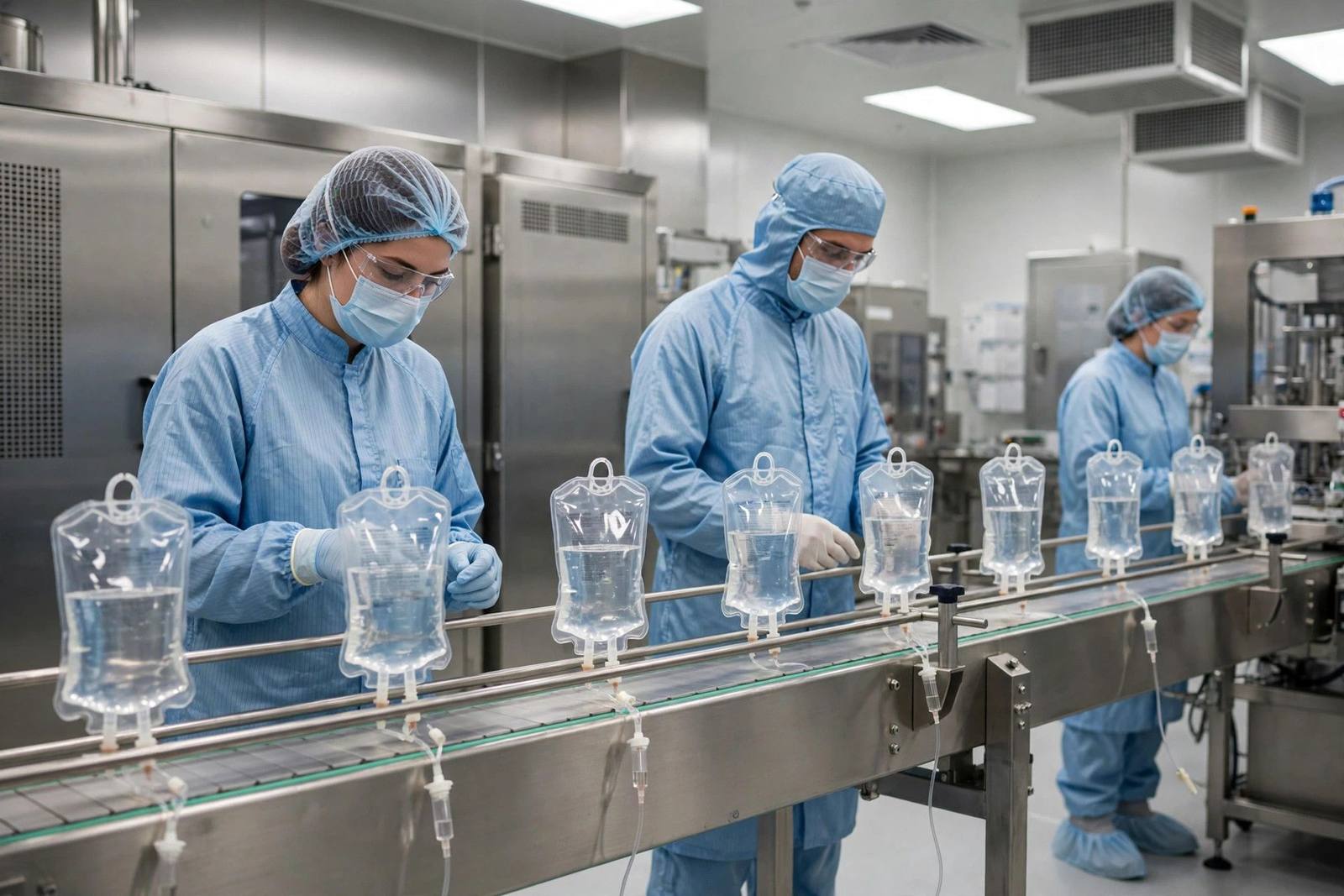
IV solutions are the least glamorous products in medicine and among the most indispensable. A patient who cannot swallow, a surgical case under anaesthesia, a dehydrated child in an emergency ward — all are sustained by sterile bags of saline, dextrose and electrolyte solutions that must be manufactured to exacting standards, because anything infused directly into a vein bypasses the body's usual defences. Contamination is not a quality complaint; it is a catastrophe. That is why the IV business rewards scale, sterile discipline and reputation, and why a Japanese parent with a century of infusion expertise matters to this small Pakistani listing.
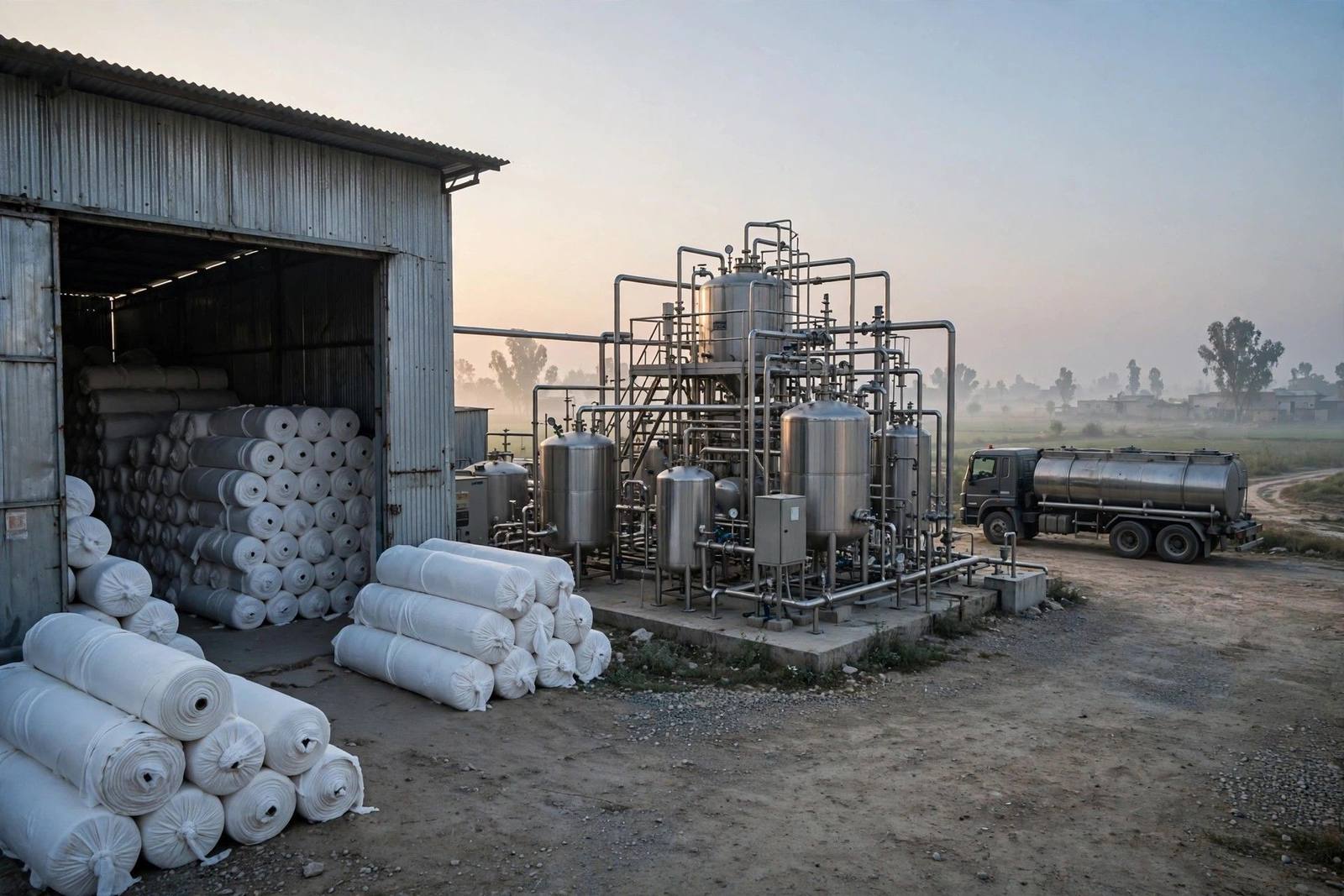
Otsuka Pakistan's own description of its trade is plain: the manufacture, marketing and distribution of intravenous infusions, together with trading in pharmaceutical products, nutritional foods and medical equipment. Its registered office is in Karachi's Sindhi Muslim Cooperative Housing Society, but its productive heart is the plant at Hub, in Balochistan's Lasbela district, a short drive west of Karachi — close enough to serve the country's largest hospital market, on industrial land suited to a water- and energy-hungry sterile plant.
A Japanese century behind a small listing
The parent group's story begins in 1921 in Naruto, Tokushima Prefecture, where the business that became Otsuka started as a maker of chemical raw materials and grew into intravenous solutions and clinical nutrition before expanding into pharmaceuticals proper. A century later the Otsuka group spans pharmaceuticals and nutraceuticals across dozens of countries, working to the philosophy its people summarise as creating new products for better health worldwide. IV solutions are not a legacy sideline for this group; they are close to its founding craft, and the Pakistani subsidiary inherits that specialisation directly.
Otsuka products had reached Pakistani prescribers for decades before the local company existed in its present form — the company itself notes a half-century of its products being prescribed in Pakistan. The listed vehicle is younger: Otsuka Pakistan Limited was incorporated in Pakistan as a public limited company in February 1988, and it commenced commercial production of intravenous solutions in September 1989 at the Hub factory. It is an indirect subsidiary of Otsuka Pharmaceutical Company Limited of Japan, which places it in the familiar PSX category of the multinational subsidiary: local listing, local minority shareholders, and a foreign parent whose technology, brands and standards define the business.
What Otsuka Pakistan actually makes and sells
The core, made at Hub, is the infusion range: electrolyte solutions and carbohydrate solutions in the various strengths and bag sizes hospitals consume by the thousands, together with clinical-nutrition products — the specialised feeds and amino-acid preparations used for patients who cannot eat normally, of which its Aminoleban line for liver patients is a long-standing example. Sterility, consistency and uninterrupted supply are the product, as much as the fluid itself; hospitals qualify suppliers slowly and switch reluctantly, which is why the company's decades-long education campaigns for healthcare workers — including its well-known drive against unsafe practices such as pricking IV bottles, a route for infection — double as both public-health work and brand building.
The second line of business is therapeutic drugs imported in finished form, sourced within the Otsuka world — its cited examples include Pletaal, a circulation medicine, and Mucosta, a gastric medicine, imported from Korea. The third line reaches beyond medicines altogether: Otsuka Pakistan has for years been the sole distributor in Pakistan for MicroPort, the Chinese medical-devices group, selling its stents and orthopaedic products, and it has added a diagnostics arm built around a urea breath test system for detecting the stomach bacterium behind many ulcers. Each extension follows the same logic — sell specialised, trust-sensitive hospital products through the relationships the infusion business created.
Clinical nutrition deserves a closer look, because it shows where a focused infusion maker can grow without abandoning its craft. Patients who are fed intravenously or through specialised nutritional preparations — after major surgery, in intensive care, or with liver and kidney disease — need products made to the same sterile standards as IV fluids themselves, and Otsuka's group expertise in this field is long-standing. Preparations such as its amino-acid line for liver patients sit naturally beside the infusion bags in the same hospital pharmacies, sold by the same representatives to the same institutions. For the Pakistani company, nutrition is therefore not diversification into a foreign business; it is the same hospital channel carrying a higher-value product, and its progress is one of the more informative lines to follow in the company's segment reporting.
There is also a public-health dimension to the company's history that investors sometimes miss. Safe infusion practice — sterile manufacture, correct handling, and not breaching the sealed system of an IV bottle — is a front-line defence against the hospital-acquired infections and blood-borne viruses, including hepatitis, that have scarred Pakistan's healthcare system. Otsuka Pakistan has campaigned on exactly this ground for years, educating doctors, nurses and paramedics about needle-stick injuries and the dangers of pricking IV bottles, work recognised publicly by senior clinicians in Karachi. A cynic might call it marketing, and it is certainly good for the brand; but it is also the kind of category leadership that only the company most identified with infusions could plausibly claim, and it reinforces the prescriber trust on which the whole franchise rests.
One plant, and what that means
Concentration defines Otsuka Pakistan's economics. A single factory at Hub — its quality system certified for the manufacture of IV solutions — must run continuously and cleanly, because the order book is the country's hospital system. The strengths are real: one site means one quality culture, deep process knowledge and capital spent where it counts. The vulnerability is equally real: a maintenance shutdown, a utility failure or a regulatory finding at Hub is not a partial problem but a company-wide one, and the company's occasional notices about temporary production pauses attract attention precisely because there is no second plant to hide behind. Investors in sprawling groups diversify factory risk away; investors in OTSU own it, in exchange for focus.
Scale, by pharmaceutical standards, is modest, and the share register reflects the multinational-subsidiary pattern: the parent's control is exercised through the group holding chain, while the free float available to local investors is small. That float shapes the trading character discussed below, and it is a useful comparison with the far broader catalogues of Ferozsons Laboratories or Hoechst Pakistan, where no single product category carries the whole company.
How Otsuka Pakistan makes money
The infusion business earns on volume, reliability and price realisation within Pakistan's regulated drug-pricing framework. Demand is about as defensive as demand gets: hospitals need IV fluids in recessions and booms alike, and volumes track admissions, surgeries and the slow expansion of Pakistan's hospital capacity rather than consumer mood. Against that dependable top line sit costs with their own logic — pharmaceutical-grade inputs and packaging films, large volumes of purified water, energy to sterilise and run clean production, and the logistics of shipping heavy, low-value-per-kilo bags from Hub to hospitals nationwide. Transport is a genuine economic factor in this business: a bag of saline is mostly water, and water is expensive to truck.
The imported lines earn differently. Finished therapeutic drugs sourced from group companies in Korea and elsewhere carry transfer prices set within the group, and the devices and diagnostics businesses earn distribution margins on other companies' products. Those margins are lighter than manufacturing margins but need little factory capital. Across the whole company, the rupee matters twice: it raises the cost of everything imported, while regulated prices for the core infusion range adjust only through the official pricing process — the classic margin squeeze of the Pakistani drugmaker, felt with particular sharpness by a company whose main inputs and packaging are bought in a weak currency.
Strengths, risks and the honest caveats
Strengths begin with the parent: a century of infusion science, global quality systems and a brand that hospital pharmacists associate with the category itself — the company notes its products have long been a first choice of prescribers in Pakistan. Demand defensiveness is the second strength; few listed businesses sell something an emergency ward cannot postpone. The third is focus: management has one craft to perfect, and decades to perfect it in.
The risks match the structure. Single-plant concentration has already been described. Price regulation versus imported costs is permanent. The portfolio beyond infusions is thin and largely imported, so growth options are narrower than at diversified rivals. The small free float means the share can be illiquid, with prices moving on modest orders, and minority shareholders in any multinational subsidiary must accept that group strategy is set abroad — including decisions about which products the Pakistani arm is given to sell. None of these are secrets; they are the terms on which a defensive, focused business is offered to the market.
Reading the company's results with that structure in mind becomes straightforward. The first question is always the plant: was Hub running for the full period, and did volumes of the core infusion range hold their hospital share? The second is the price-cost gap — whether regulated price adjustments kept pace with the imported cost of films, resins and ingredients. The third is the mix: how much of the year came from manufactured infusions, how much from imported therapies, devices and diagnostics, because each carries a different margin and a different dependence on the parent group. A reader who tracks those three questions, period by period, will understand OTSU better than one who follows the share price of a thinly traded counter from week to week.
The name on the PSX
Otsuka Pakistan trades as OTSU in the pharmaceutical sector. It is a small-capitalisation counter with a limited float, and its dividend record has been intermittent rather than metronomic — payouts depend on the year's cash generation and the board's judgement, as the mechanics in our guide to how PSX dividends work explain. Long stretches of quiet trading punctuated by sharp moves are the normal texture of such a share, and beginners should read that texture as a liquidity fact, not as information about the underlying drip bags, which sell at the same steady pace whatever the chart does.
Set against its sector, the company is a study in deliberate narrowness. Where rivals assemble catalogues of hundreds of products across every therapy area, Otsuka Pakistan has spent more than three decades deepening one position — the hospital infusion and the products that travel with it — and accepting the ceiling that narrowness imposes in exchange for the floor it provides.
What kind of investor studies Otsuka
OTSU tends to draw investors who prize defensiveness and parentage over excitement: students of hospital demand, of regulated pricing, and of the multinational-subsidiary model on the PSX. Following it well means reading the plant and pricing disclosures in the annual report, watching for capacity and product additions, and keeping expectations anchored to a business that grows with Pakistan's hospital system rather than with fashions in prescribing. This article is educational content, not financial advice; a steady product can still sit inside a share that is anything but steady.
Key takeaway: Otsuka Pakistan, making IV infusions at Hub since 1989 for Japan's century-old Otsuka group, is the PSX's focused hospital-supplies specialist — defensive demand and deep expertise, balanced against single-plant and small-float risks.