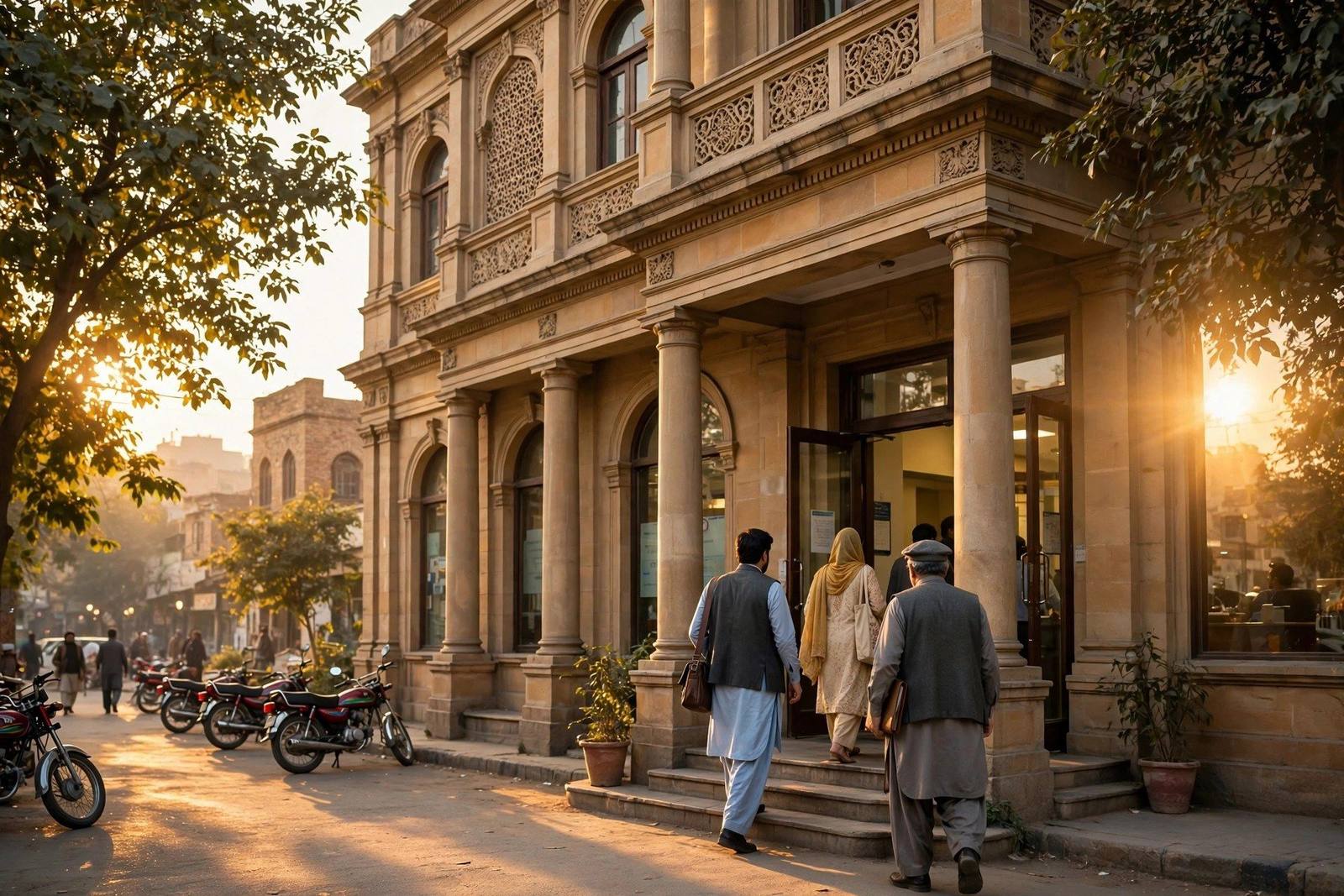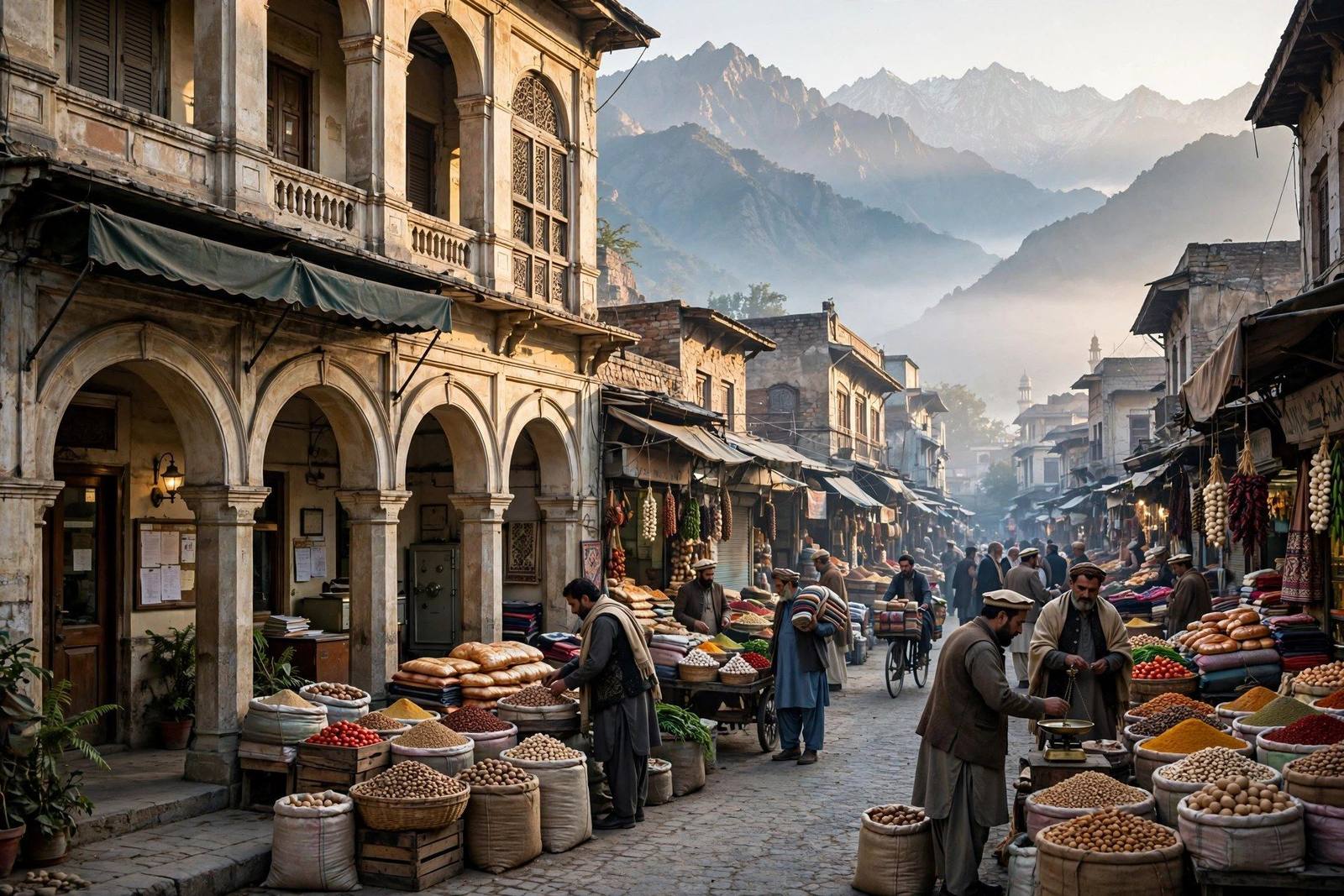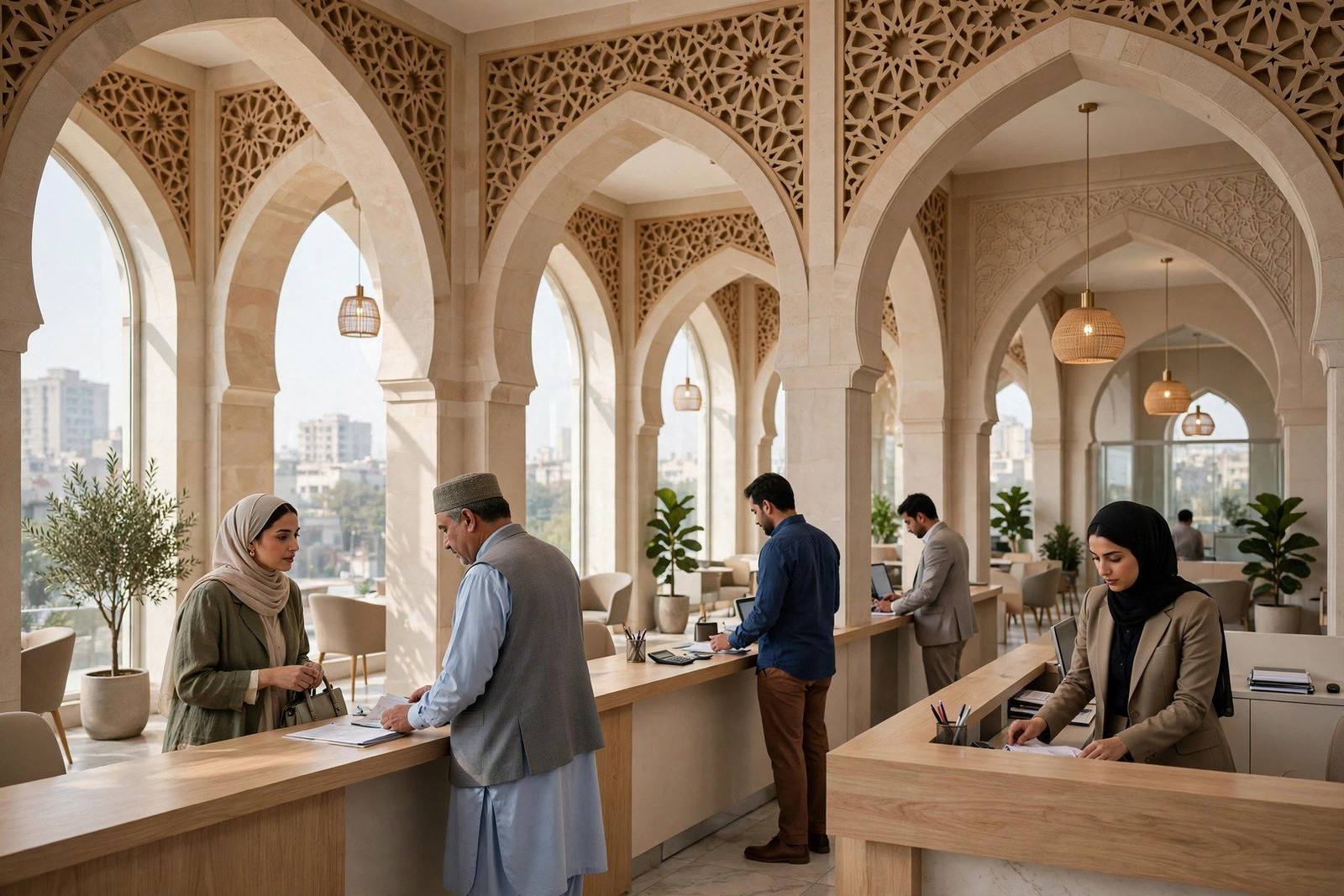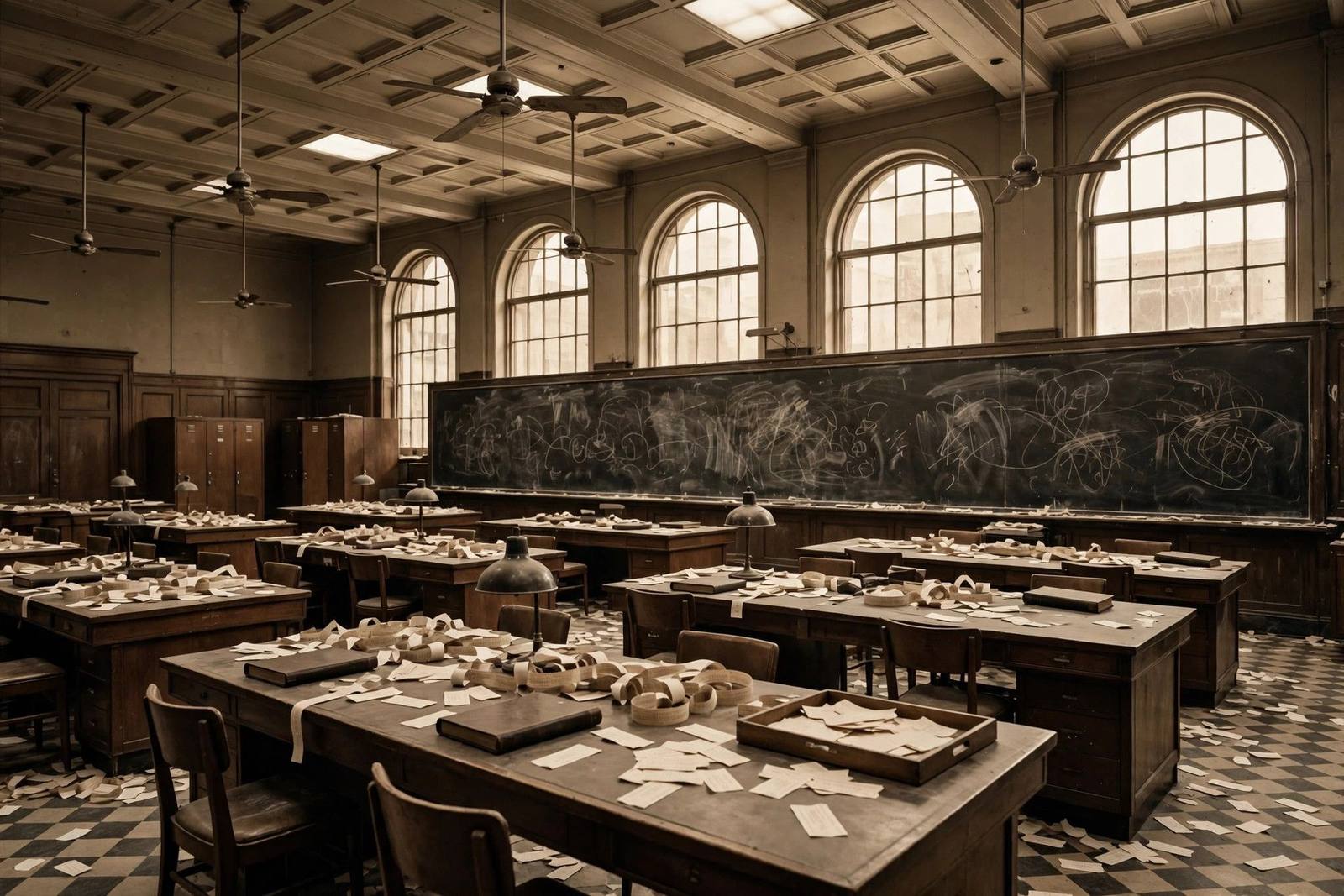
KARACHI: Every institution on this site — the brokers, the depository, the clearing house — exists to serve an exchange, and the exchange has a biography of its own. The Pakistan Stock Exchange was born weeks after the country, in a Karachi hall where a handful of brokers traded a handful of companies for a city of refugees and new beginnings. It survived nationalisation, booms that made rickshaw-drivers into speculators, a crash that emptied the floor and froze the market for months, and the abolition of the floor itself. It spent most of its life as three rival exchanges in three cities, owned by the brokers who traded on them — until, in a single decade, it was demutualised, merged into one national market, sold in part to a Chinese consortium, and listed on itself, so that today you can buy shares in the stock exchange on the stock exchange. This is that story, and it explains more about how the modern PSX behaves than any rule book.
1947: a stock exchange for a new country
The Karachi Stock Exchange was founded in September 1947, within weeks of Partition, by brokers who had built their craft in the markets of undivided India and now found themselves citizens of a state that had a trading port, a merchant class and almost no financial infrastructure. The exchange began with five listed companies and a paid-up capital contemporary accounts measure in the hundreds of thousands of rupees — a market on paper before it was a market in fact. Its early decades tracked Pakistan's first economy: jute, cotton textiles, tea and the trading houses of Karachi, in a city swollen with migrant enterprise. The exchange's rituals were those of its era — an open-outcry floor, chalked prices, settlement in physical paper — and its membership, organised as a company limited by guarantee owned by its broker-members, set a governance pattern that would last, remarkably, for sixty-five years.
Two more cities built floors of their own as the economy's geography spread: the Lahore Stock Exchange in 1970, serving Punjab's industrialists, and the Islamabad Stock Exchange in 1992, in the capital. For the rest of the century Pakistan would have three stock exchanges — three boards, three indices, three sets of listings and members — an arrangement that made sense when trading required a physical floor in each city and steadily less sense with every kilometre of fibre the 1990s laid down. Companies commonly listed in Karachi and added Lahore or Islamabad for form; arbitrage between floors was a broker's living; and "the market" in any headline meant Karachi, where the depth, the companies and the drama were concentrated.
Booms, nationalisation's shadow and the paper age
The young market's history is a tour of the national economy's moods. The industrial expansion of the 1960s broadened listings; the nationalisations of the 1970s, which took banks, insurance and swathes of industry into state hands, froze the market's imagination for a generation — why list, why buy, in a state that might take the company? The revival came with the liberalisation of the late 1980s and 1990s: privatisation issues brought banks and industrial giants to the board, foreign portfolio investors discovered Karachi, and the market modernised in a rush — the Central Depository Company in 1997 ending the paper-delivery era for new trades (the stranded certificates of the period are the subject of our guide to paper shares), electronic trading replacing the chalkboard, and a new regulator, the SECP, created in the late 1990s to police a market that had outgrown its self-regulation. The KSE-100 index — its construction explained in our guide to how the KSE-100 is calculated — became the nation's economic thermometer, quoted in drawing rooms far from Karachi.
2008: the floor that was locked shut
No history of the exchange is honest without its darkest episode. In 2008, as the global financial crisis hit a market already swollen by leveraged speculation, the KSE-100 plunged — and the exchange's management, fearing collapse, took the extraordinary step of imposing a floor on prices: for over three months, the index could not fall below its August level, which in practice meant it could not trade. Sellers could not sell; the market's core promise — an exit — was suspended to prevent panic, and the panic arrived anyway in the form of a confidence collapse that took years to repair. Foreign investors fled, volumes withered, and the episode became the founding argument for everything that followed: the clearing and margin reforms, the strengthening of the NCCPL as central counterparty, and the conviction in Islamabad that a broker-owned exchange regulating itself was a structure whose time had ended. Our guide to PSX crashes and their lessons works through the episode and its predecessors in the detail they deserve; here it is enough to mark 2008 as the year the old exchange, morally, ceased to exist.
Demutualisation and the great merger
The legal demolition began with the Stock Exchanges (Corporatization, Demutualization and Integration) Act, 2012. Demutualisation separated what the old model fused: the exchange became a company owned by shareholders, while the right to trade became a licence — a TRE certificate — that brokers hold without owning the venue. Broker-members received shares in the new company and trading rights in exchange for their old membership, and a large block of the exchange's shares was reserved for sale to a strategic investor, with a further portion earmarked for the public. Integration followed: in January 2016 the Karachi, Lahore and Islamabad exchanges merged into a single Pakistan Stock Exchange, ending sixty-nine years of three floors with one national market, one rule book and one index family. The plumbing investors now use — central clearing, a single depository, nationwide remote trading — finally had an institutional shape that matched the technology.
The strategic sale concluded at the end of 2016, when a Chinese consortium — the China Financial Futures Exchange, the Shanghai Stock Exchange and the Shenzhen Stock Exchange, alongside Pakistani financial institutions — acquired the anchor stake in the PSX. The purchase was read, correctly, as both commercial and symbolic: Pakistan's market plugged into the region's largest financial centre at the height of CPEC-era cooperation, and its governance imported the practices of exchanges operating at a hundred times its scale. Then, in 2017, came the biography's neatest turn: the Pakistan Stock Exchange listed itself, its shares trading on its own board under its own rules — the venue become an issuer, filing announcements to itself, its price set by the order book it operates.
The screen age: technology rewrites the floor's geography
Running underneath the institutional drama is a quieter revolution that changed who an investor could be. Trading screens reached broker offices in the 1990s, remote terminals followed, and by the smartphone era a retail investor in Multan or Mardan could watch the same book and hit the same keys as a Karachi dealing room. The exchange's systems — its automated trading engine, the nationwide branch networks brokers built on top of it, the CDC's account access and the clearing house's netting — collapsed the old geography in which the floor's physical members were the market. Membership's demutualised successor, the TRE certificate, turned trading rights into a regulated licence held by brokerage companies rather than a hereditary-feeling seat; the broker scandals and defaults that periodically scarred the paper-and-floor era became, in the screen age, failures inside a system with client-asset segregation and a settlement guarantee standing behind them.
The screen age also internationalised the register in both directions. Foreign portfolio investors, admitted in the liberalisation of the early 1990s, became the marginal price-setters of the large-cap market for long stretches — their entries and exits driving the cycles our market-history guides describe — while overseas Pakistanis gained first the SCRA accounts and later the Roshan Digital Account route into the same order book. An exchange founded for the merchants of one port city now intermediates, on an ordinary day, the savings of a diaspora spread across the Gulf, Britain and North America, none of whom will ever see Karachi. The floor's last physical rituals survive mainly as ceremony and nostalgia; the institution's real premises are its data centres and its rule book.
The intervening decades between floor and merger were not a smooth ascent, and the exchange's own memory of them is institutional rather than triumphant. The 1990s brought a payments-and-settlement crisis mentality after episodes in which broker defaults threatened the chain of trades; the badla system — the indigenous carry-over financing that had greased speculation since the market's youth — was wound down in the 2000s and replaced, after argument and false starts, by regulated margin and futures products under the clearing house's discipline. The 2005 mini-crash, when a crowded, leveraged market unwound in weeks, rehearsed every weakness that 2008 would expose at full scale. Read as a sequence, the reforms that look bureaucratic in a rule book — a central counterparty, segregated client assets, position limits, a demutualised venue — are each a scar with a date on it, and the modern investor trades inside the accumulated lessons whether they know the dates or not.
The people of the floor deserve their paragraph before the floor vanishes from the story entirely. Open outcry Karachi produced a recognisable human type — the jobber with a photographic memory for prices, the broker whose family had held its seat for three generations, the small investor who spent his mornings in the gallery the way other men spent them at the races. The culture had genuine virtues: reputation was capital, a word given across the ring was a contract, and the market's memory lived in its elders. It also had the vices the reforms targeted: opacity, insider rings, and settlement chains held together by personal trust that snapped precisely when it was most needed. The electronic market that replaced it is fairer, duller and open to anyone with a phone — a trade most historians of the exchange, and nearly all of its defrauded small investors, would accept again without hesitation.
The modern exchange: smaller than its dreams, sturdier than its past
Today's PSX lists several hundred companies across every sector of the formal economy — the explorers, banks, cement makers and textile mills whose profiles fill this site — and trades entirely electronically, with remote access that makes the word "floor" a courtesy title. Its index family has grown beyond the KSE-100 to all-share, Islamic (the KMI indices whose screening is explained in our guide to Shariah screening ratios), sector and dividend benchmarks; its product shelf has added exchange-traded funds, a GEM board for growth companies, government debt and sukuk trading, and the derivatives segments cleared through the national clearing house. Market capitalisation remains small against the economy — Pakistan's chronic condition, with its causes in the informal economy, low savings documentation and decades of macro instability chronicled across our economy guides — and the exchange's strategic documents read, to a historian, like every predecessor's: broaden the base, list the state enterprises, deepen the debt market.
What has genuinely changed is the skeleton. The institution that locked its floor in 2008 is gone: ownership is dispersed and partly foreign, regulation sits with the SECP rather than the members' club, settlement is guaranteed by a central counterparty, and a crash today would be a price event, not an institutional one. The exchange that began with five companies in a refugee-swollen port city now clears the savings of pension funds and the trades of a student in Gilgit on the same screen. A market, like a country, is the sum of what it has survived; the PSX's survival record — Partition, nationalisation, its own worst instincts — is, in the end, the most useful fact a new investor can know about it. This article is educational content, not financial advice.
Key takeaway: The PSX grew from a five-company Karachi floor founded in 1947 through three rival broker-owned exchanges, the 2008 floor crisis, demutualisation, the 2016 merger into one national market, a Chinese consortium's anchor stake, and its own listing in 2017.