KARACHI: In the Chagai district of Balochistan, close to the borders with Iran and Afghanistan, lies one of the world's largest undeveloped copper-gold deposits — a buried porphyry system called Reko Diq, named for the sandy country around it. For three decades the deposit has been, by turns, a geological sensation, a courtroom battle, an international arbitration that Pakistan lost on a scale that threatened its reserves, and finally a negotiated comeback in which the project was rebuilt with the state and the province inside the ownership tent. Reko Diq matters far beyond mining: it is a test of whether Pakistan can host a multi-decade, multi-billion-dollar foreign investment, share its benefits visibly with Balochistan, and convert underground rock into exports without repeating the disputes that froze the project for a generation.
The rock: what a porphyry deposit is
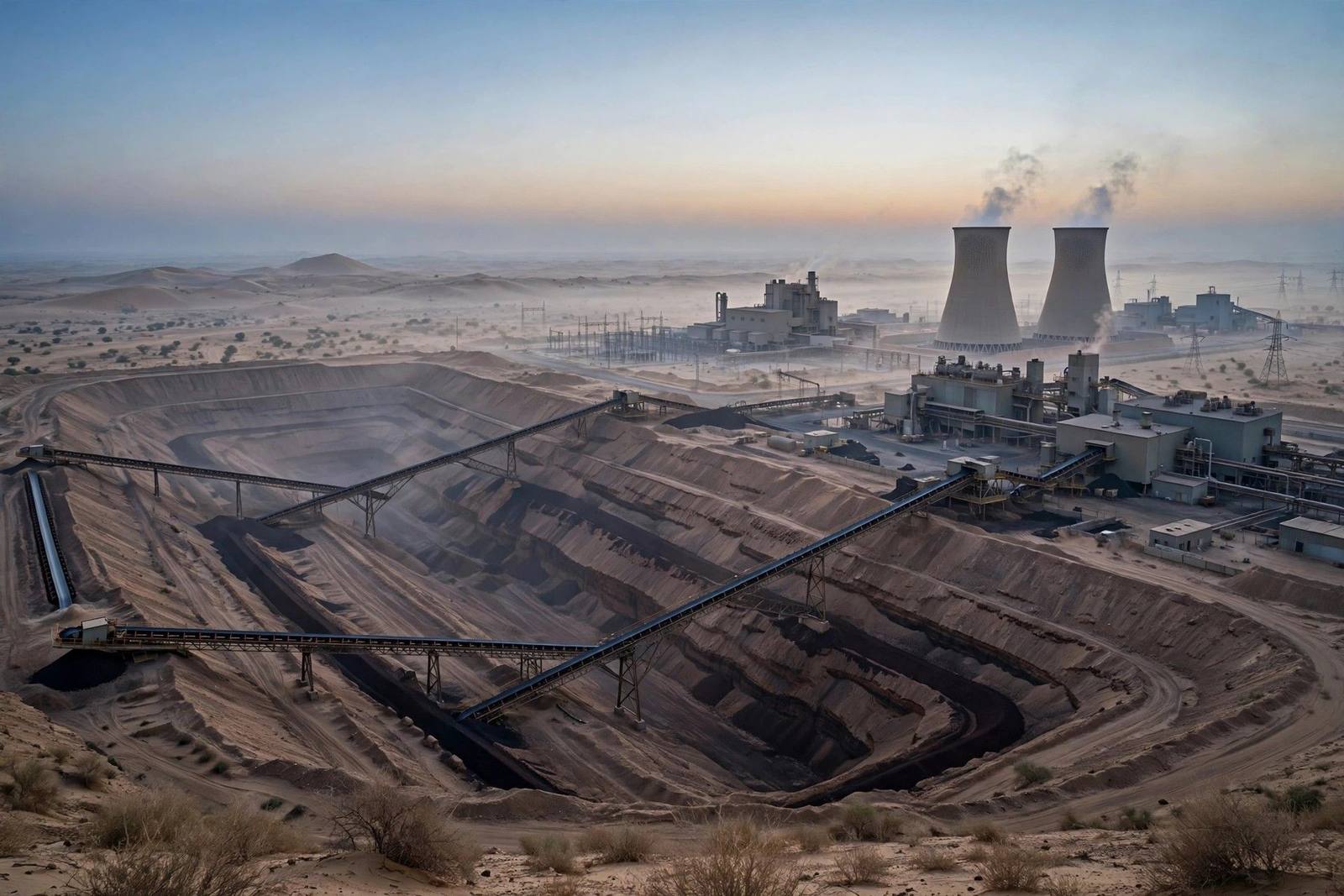
Reko Diq is a porphyry copper-gold deposit — a very large, relatively low-grade body of mineralised rock formed by ancient volcanic activity, of the same family as the great mines of Chile and Peru. Porphyries are the opposite of a gold rush: no nuggets, no rich veins a small team can work, but enormous tonnages of rock carrying fractions of a per cent of copper and small amounts of gold, economic only when mined at vast scale with giant pits, crushers, and concentrator plants that separate the valuable minerals into a concentrate for shipment to smelters abroad. Everything about the project follows from that geology — the capital cost, the need for rail or heavy transport to a port, the demand for water and power in a desert, and the mine life measured in decades once production begins.
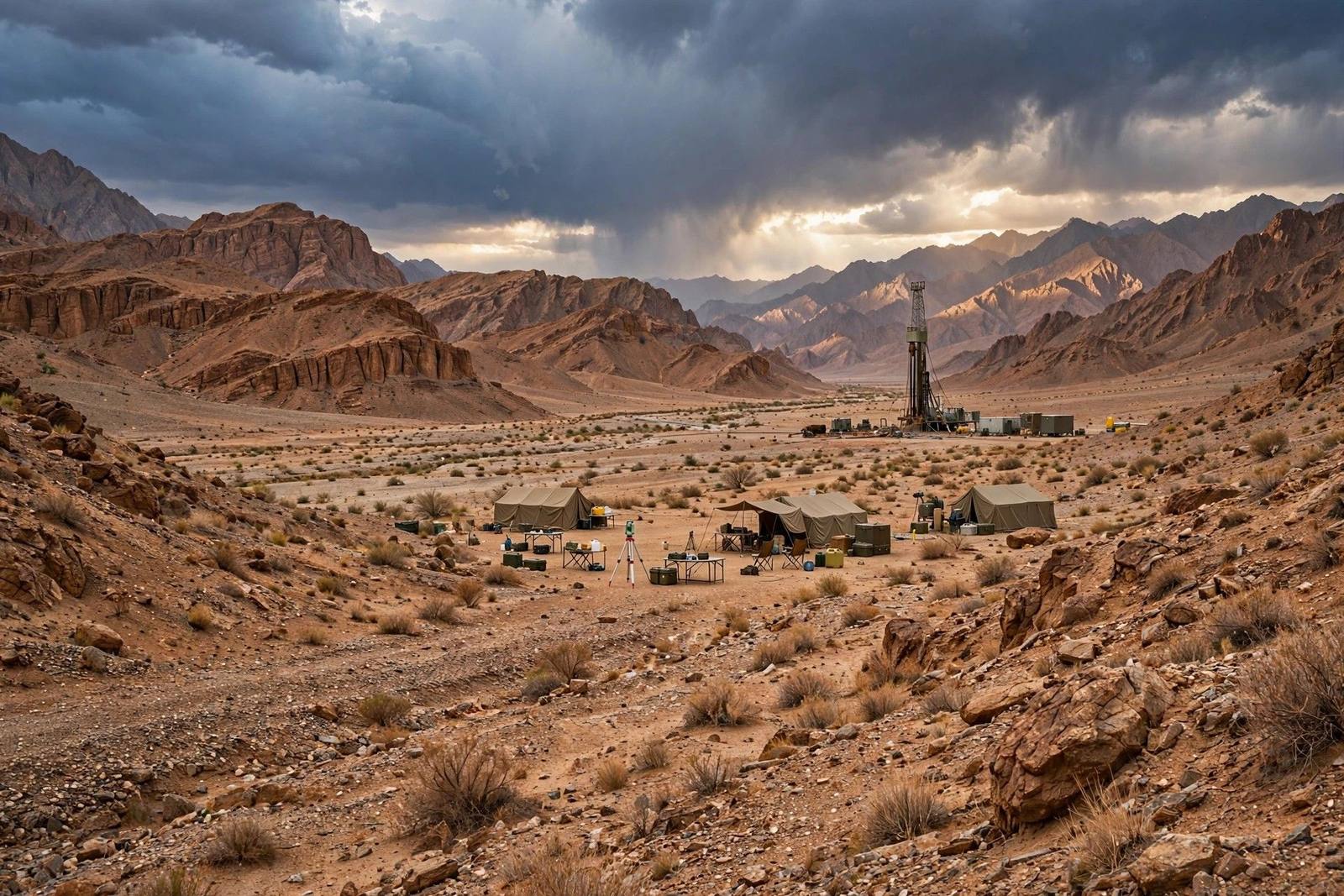
The deposit sits in the Tethyan belt, the mineralised arc running from the Balkans through Turkey and Iran into Pakistan, and it was identified and progressively explored from the 1990s onwards, first in the orbit of the Australian major BHP and then by Tethyan Copper Company, a joint venture between Chile's Antofagasta and Canada's Barrick Gold. Exploration confirmed what the geology hinted: a district, not a single pit, with multiple mineralised centres of which the western porphyries became the focus of the development plan. Understanding that scale is essential to the politics that followed — this was never a mine a local contractor could dig; whoever developed it would need the balance sheet and technology of a global major, which made the terms on which such a major was welcomed a question of national policy.
The dispute: how the project froze
The project's first life ended in a refusal. After years of exploration under agreements with the Balochistan government, Tethyan applied for a mining lease; the provincial government declined it, litigation followed in Pakistani courts, and the foreign investors turned to international arbitration. The tribunal's eventual award against Pakistan — reported at the time at roughly six billion dollars including interest, one of the largest awards of its kind — transformed a provincial licensing dispute into a sovereign emergency, arriving in a period when Pakistan's foreign reserves could not have absorbed it. The episode is now the standard case study in Pakistan's mining sector of how policy risk is priced: the rock had not changed, the paperwork had, and the difference was worth billions.
What saved the situation was negotiation rather than payment. In 2022, Pakistan, Balochistan and Barrick reached an out-of-court settlement that waived the award, revived the project on new terms and restructured its ownership — a deal that required legislation, provincial consent and the unwinding of the old agreements. The settlement's architecture is the most instructive part of the whole saga, because it was designed to answer the grievance at the heart of the original dispute: that the host province saw too little of the value under its own soil.
The deal: who owns Reko Diq now
Under the restructured project, Barrick Gold holds 50 per cent and operates the mine, bringing the capital-raising capacity and the technical record of a company that runs porphyries on several continents. The Pakistani side holds the other 50 per cent in two blocks: a group of federal state-owned enterprises — including the listed exploration companies OGDC and Pakistan Petroleum, alongside Government Holdings — holds a quarter of the project, and the Government of Balochistan holds the remaining quarter, part of it on a free-carried basis, meaning the province's stake is funded by the other partners rather than by cash calls on a poor provincial budget. That free carry, plus royalties, taxes and a board presence, is the mechanism meant to make Balochistan a beneficiary with a cheque it can see rather than a bystander promised trickle-down benefits.
For stock-market readers, the listed angle is indirect but real: OGDC and PPL carry their project stakes as long-term investments whose value depends on construction milestones and, eventually, dividends from concentrate sales — one reason the pair are followed as more than pure oil and gas plays in guides such as PSX exploration and production stocks. Neither company operates the mine, and neither's stake turns Reko Diq into a near-term earnings stream; the value case is measured in decades.
Building a mine in the Chagai desert
Development is planned in phases, with the partners having spoken publicly of first production towards the end of the decade and a second phase expanding throughput thereafter — timelines that readers should treat as company guidance, revisable with financing, procurement and construction realities, rather than as accomplished fact. The works list explains the caution. A porphyry concentrator is a small industrial city: open pits, waste dumps engineered for a century, a processing plant, a tailings facility whose design will be scrutinised by every environmental reviewer in the country, worker accommodation, an airstrip and workshops — plus the connective tissue of water supply, power, and a route for concentrate to reach a port, with rail from the Chagai region forming part of the long-term logistics picture.
Water deserves its own sentence in any honest account. Balochistan is Pakistan's driest province, groundwater is already stressed around Chagai, and the project's water studies and commitments — where process water comes from, what is recycled, what local communities receive — will decide the mine's social licence as surely as its royalty rate. The same applies to employment: the project's local hiring and training, and procurement from Baloch suppliers, are written into its public commitments because the political sustainability of a fifty-year mine in a deprived district depends on visible local benefit arriving before the first concentrate does.
What Reko Diq would mean for Pakistan's economy
At full build-out, project reporting has consistently described Reko Diq as capable of becoming one of Pakistan's largest export earners and a material source of federal and provincial revenue — the kind of long-life dollar stream that could soften the boom-bust cycle traced in Pakistan's current account. Copper also gives the project a second significance: it is the metal of electrification, demanded by grids, vehicles and renewables worldwide, so the mine ties Pakistan, unusually, to a commodity whose long-run demand story is driven by the energy transition rather than by the fuel economy it is leaving behind. Gold output, though secondary, adds a second revenue leg whose price behaves very differently from copper's.
Set against that promise is the timeline discipline this site applies to all mining stories: between a settlement ceremony and an export receipt lie feasibility updates, a financing package, years of construction, commissioning risk and the copper price on the day the plant starts. Each stage is publicly checkable — company disclosures, regulatory filings, provincial budget receipts — and each is a more reliable signal than the recurring headline that a boom has arrived.
Risks that survive the settlement
The 2022 deal removed the arbitration sword; it did not remove the ground risks. Security in Balochistan remains the project's permanent shadow, raising costs and complicating every movement of people and material. Commodity risk is structural: porphyries are high-fixed-cost operations, magnificent at strong copper prices and unforgiving at weak ones. Governance risk runs both ways — future governments in Islamabad or Quetta revisiting terms would reawaken exactly the arbitration history the settlement closed, while communities in Chagai judging the project's local benefits insufficient could withdraw the consent on which daily operations quietly depend. And execution risk, the ordinary killer of megaprojects, applies with full force to a phased build in one of the most remote industrial sites in Asia.
How to read Reko Diq news
Separate the milestones that move value — financing close, construction contracts, water and rail agreements, phase-two decisions — from ceremonies that merely restate intent. Track what the listed partners disclose about their stakes and any cash calls, and what Balochistan's budget documents show as receipts once payments begin. This article is educational content, not financial advice.
Financing a mine that will outlive its builders
Projects of this scale are not paid for out of a single company's cash flow. The expected route — described in the partners' public statements — is a financing package combining sponsor equity, debt from international lenders and export-credit sources, and the cash contributions of the Pakistani partners, whose own fund-raising for their stakes has itself been a subject of market attention. Lenders to a mine demand things a press release cannot substitute for: a bankable feasibility study with independently audited reserves, environmental and social impact assessments meeting international standards, offtake arrangements for the concentrate, political-risk structuring, and clarity on how profits will be repatriated over decades. Each completed item in that list quietly de-risks the project more than any ceremony. It is also why the project's listed Pakistani partners matter to the financing story: their participation aligns the state's balance sheet with the mine's success, a signal lenders read carefully in a country whose last encounter with this deposit ended in arbitration.
Once running — on the partners' phased plan — the operation would train and employ a workforce numbered in the thousands across mining, processing and logistics, with the multiplier effects that follow any large payroll in a poor district: transport contractors, caterers, workshops, housing. Barrick's public commitments have emphasised local and Baloch employment and social investment in health and education around Chagai, commitments that local representatives will measure against delivery rather than brochures. The precedent everyone in Balochistan knows is Saindak, the smaller copper-gold mine in the same district operated for two decades by a Chinese state contractor under lease from a federal company — a project that produced and exported for years while leaving a persistent local debate about how much of its value stayed in the district. Reko Diq's restructured ownership is, in large part, an attempt to answer that debate in advance, in equity rather than in promises.
Copper, gold and the world market the mine would enter.
A porphyry's economics rest on two prices with very different personalities. Copper is the industrial metal of electrification: demand follows grid investment, vehicle fleets and construction, supply follows a global project pipeline that has under-invested for years, and analysts across the industry describe a structural tightness that new mines — Reko Diq among them — are expected to relieve rather than flood. Gold is the monetary metal: its price answers fear, real interest rates and central-bank buying more than industrial need. A mine carrying both has a partial natural hedge — the two rarely collapse for the same reason at the same time — and by-product gold credits lower the effective cost of each tonne of copper, the arithmetic by which porphyries compete. None of this makes the project immune to a bad decade in metals; it explains why, at almost any point in the price cycle, a deposit of this grade and scale retains strategic buyers.
Key takeaway: Reko Diq is a world-scale copper-gold porphyry rebuilt by settlement after a lost arbitration — half Barrick, half Pakistani state and Balochistan — whose promise is measured in decades of exports, and whose risks are security, water and the patience to finish building it.