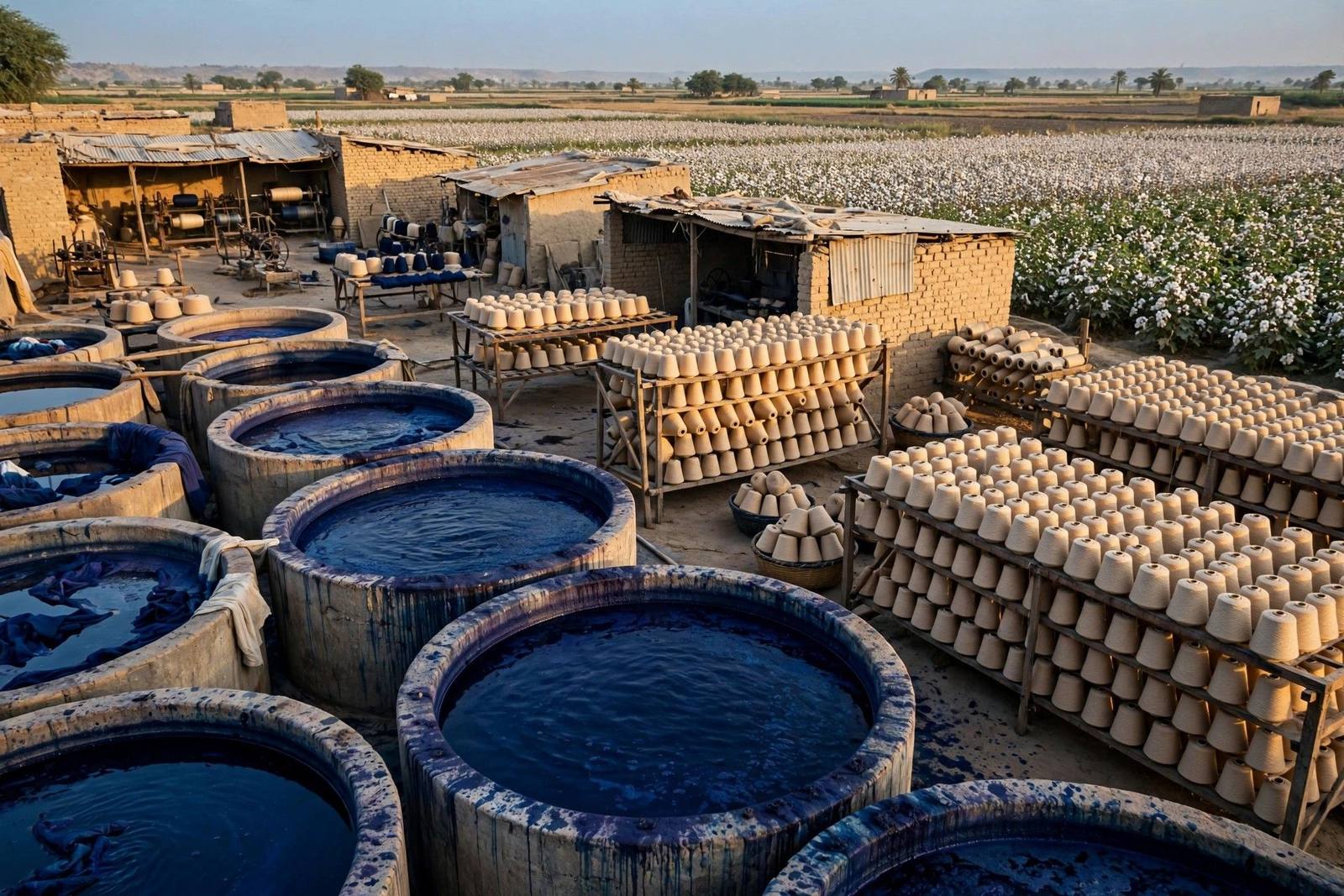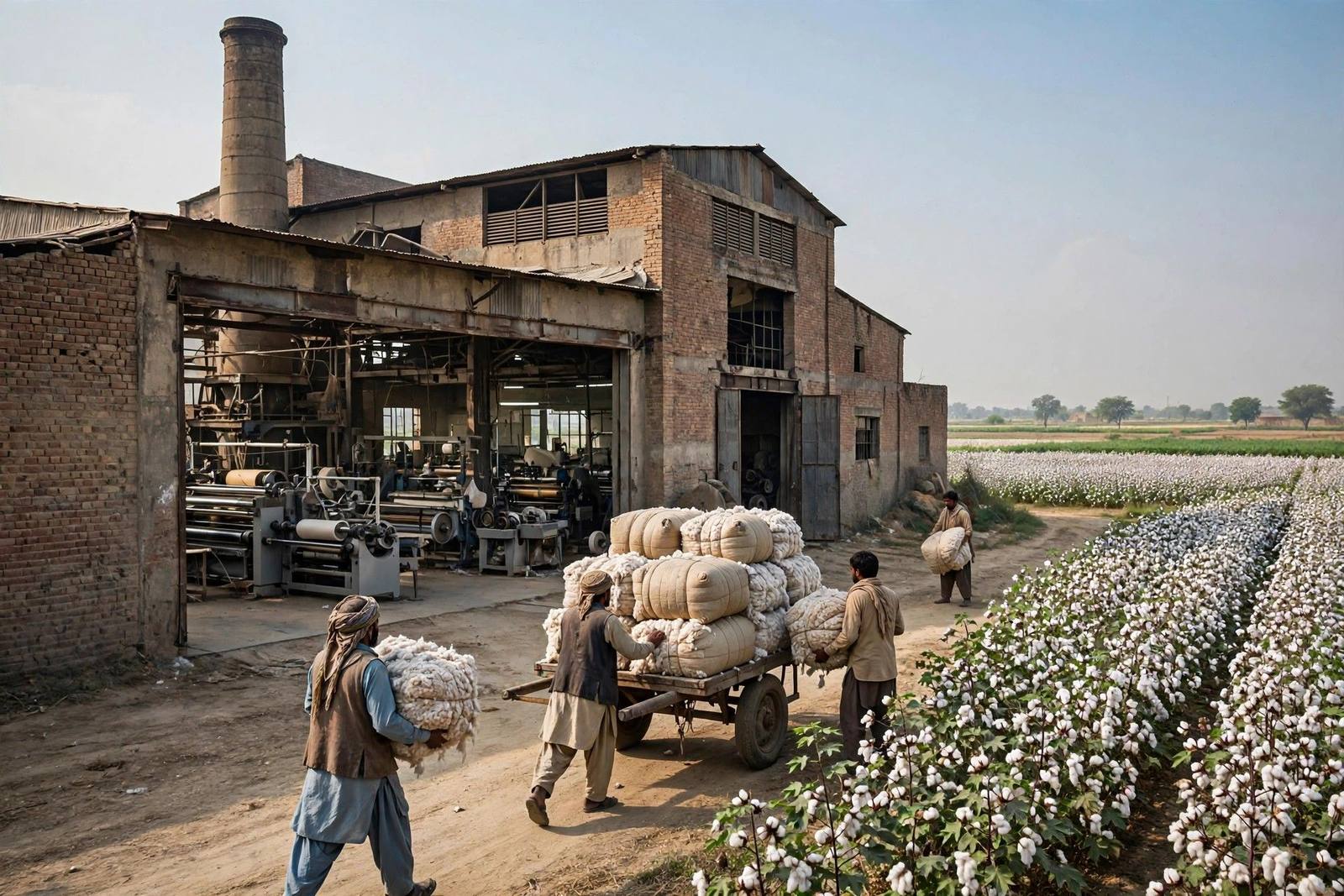
KARACHI: Suraj Cotton Mills Limited, traded on the Pakistan Stock Exchange as SURC, is the kind of company that rewards readers who like their industrial histories told in plants and dates rather than in slogans. Established in December 1984 and in commercial production from the mid-1980s, it has grown the slow, Pakistani way: a first spinning unit at Nooriabad in Sindh, a second and larger one at Shahkot in Punjab, a weaving unit beside it, an acquired mill at Raiwind, and steady modernisation in between. Today it is a Lahore-headquartered spinner and weaver whose speciality leans toward finer yarn counts, selling yarn and woven fabric at home and into markets from Europe to East Asia. It is neither the largest nor the loudest name in textiles — it is something arguably more instructive, a well-run mid-sized mill group whose annual reports read like a diary of the industry itself.
Built plant by plant: Nooriabad, Shahkot, Raiwind
The company's own history, set out in its annual report, begins with its establishment on 18 December 1984 as a public limited company, listed on the stock exchange. Its journey began in 1985 with a spinning project at Nooriabad — the industrial area on the highway between Karachi and Hyderabad — which commenced commercial production in 1986. That first unit still operates, with some 24,576 spindles producing yarns roughly from 10s to 30s counts, including combed yarns and spandex yarns for weaving, in the company's description. Nooriabad gave Suraj a Sindh base near Karachi's port and markets.
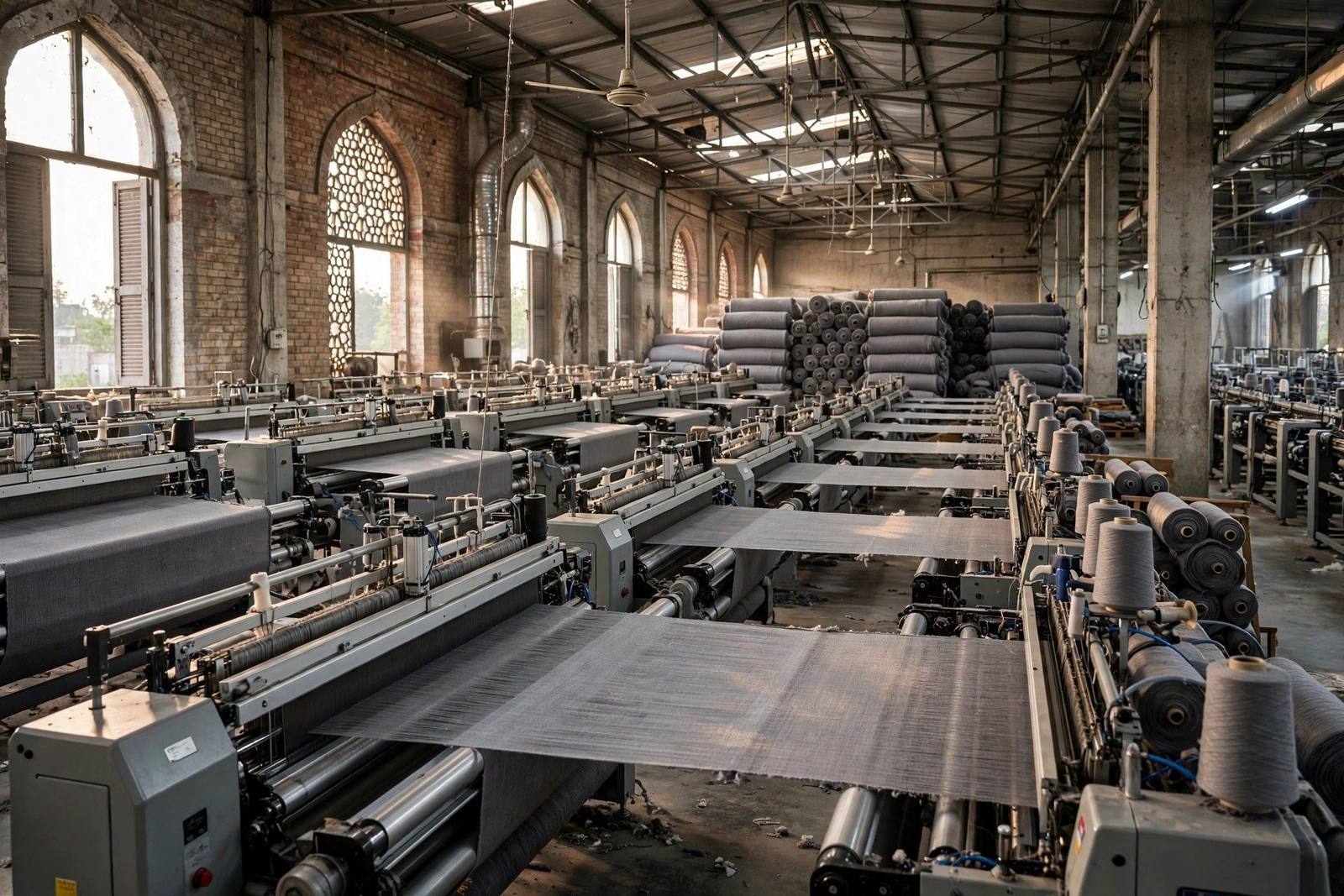
The defining expansion came in 1990, when Suraj established its second spinning unit at Shahkot, in Punjab's Faisalabad region — the heartland of Pakistani textiles. Under continuous modernisation and expansion, the Shahkot spinning capacity grew to around 43,000 spindles specialising in fine-count yarns, described by the company as ranging from 40s combed to an unusually fine 130s combed. Fine counts are the skilled end of spinning: the finer the yarn, the more demanding the cotton, the machinery settings and the quality control — and the better the price per kilogram when it is done well. In 1994 Suraj added a weaving unit at Shahkot with wide-width air-jet looms, initially producing over 12 million metres of grey cloth a year; by 2003, with a further 120 air-jet looms, weaving capacity had risen to around 28 million metres annually.
The third leg came by acquisition. In 2006 Suraj acquired a spinning unit at Raiwind, near Lahore, and expanded it in 2017 to some 55,000 spindles — making Raiwind, on the company's own numbers, its largest spinning site. The sequence is worth pausing on because it is so characteristic: greenfield in Sindh, greenfield in Punjab, acquisition near Lahore, each step financed and absorbed before the next was attempted. Where some groups in this batch expanded by leverage and paid for it in restructurings, Suraj's published history is one of increments.
The Suraj group and the Lahore head office
Suraj Cotton Mills is the listed centre of the Suraj group, a Lahore-based business family enterprise whose name the mills carry. Its registered office and management sit in Lahore — the company's headquarters are in the Tricon Corporate Center in Gulberg, in company directory listings — while its production is deliberately scattered across the cotton economy: Sindh for the port and the southern market, Shahkot for Punjab's textile cluster, Raiwind for the Lahore industrial belt. The company's chief executive in recent reporting is Nadeem Maqbool, and the pattern of management is the familiar Pakistani one of a sponsor family providing continuity while professional managers run plants.
For shareholders, the group dimension is milder here than in the great conglomerates: SURC is essentially the group's textile business in listed form, rather than a holding company stacked with unrelated ventures. That simplicity is itself information. The annual report can be read as a mill report — segments are spinning and weaving, and results rise and fall with those operations and the investment income the company holds on the side — rather than as a puzzle of cross-holdings. Our guide to family businesses on the PSX explains why that distinction matters when comparing one family stock with another.
What fine-count spinning actually involves
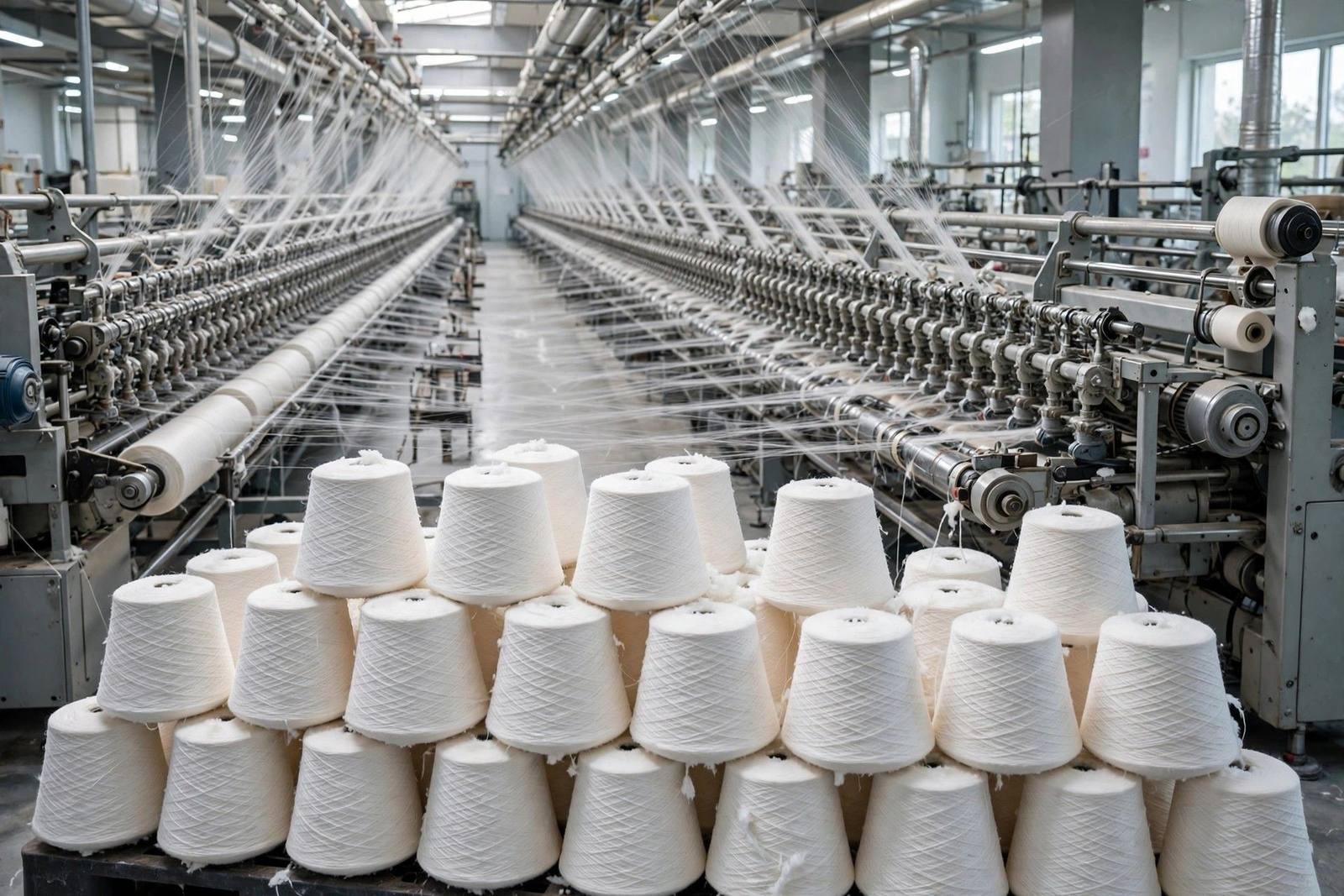
It helps to understand what SURC's speciality means. Spinning count measures fineness: the higher the number, the finer the yarn, and the finer the yarn, the more spindles are needed to produce a kilogram of it and the more exacting the demands on raw material. Coarse counts compete mainly on price; fine counts compete on consistency, cleanliness and strength — the qualities a quality shirt-maker or sheeting weaver pays a premium for. Suraj's positioning at the fine end, from 40s combed upward, is therefore a margin strategy: it sells fewer kilograms per spindle but earns more per kilogram, provided its quality justifies the premium and its buyers keep ordering.
The weaving side complements that logic. The Shahkot looms convert yarn into grey cloth — undyed, unfinished woven fabric sold to processors who dye, print and finish it for garments and home textiles. Grey cloth is one step closer to the end customer than yarn and carries one step more of the value, but it is still an intermediate product, priced against regional competition. Suraj reports two business segments — spinning and weaving — and its financial notes break out sales by yarn, fabric and waste, at home and abroad, to customers across Pakistan and in export markets including Italy, Portugal, Germany, China, Spain, Sri Lanka and others. Waste, the short fibre and combing noils a fine spinner produces in quantity, is itself a traded product — even the factory's floor sweepings have a market, one of the small realities of the trade.
How a fine spinner makes money
Suraj's revenue logic is the spinner's spread described in PSX textile stocks, with a fine-count twist. The input side is unusually demanding: fine yarn needs long-staple, clean cotton, and when Pakistan's domestic crop is short or of poor staple — the chronic condition of recent years, explained in Pakistan's cotton economy — a fine spinner must import more of its fibre than a coarse mill would, tying its cost to world prices and the exchange rate. The output side rewards quality: a consistent, clean 60s combed yarn earns a premium that a mediocre one does not, so the mill's reputation and its testing laboratory are part of the margin.
Energy and utilisation work as they do everywhere in spinning. Mills run continuously; grid interruptions and tariff increases go straight to conversion cost. Suraj's investment in its own energy arrangements, like much of the industry, is a response to that fact. Utilisation of the expensive spinning frames and looms decides how thinly fixed costs are spread. And the exchange rate runs through export pricing while much of the cost base sits in rupees — the standard exporter's geometry, with the qualification that imported cotton narrows the benefit, as it does for every quality spinner in the country.
Strengths, risks and the rating agency's view
The clearest external judgement on Suraj comes from the rating agencies rather than the press. In May 2025, VIS Credit Rating reaffirmed the company's entity ratings at A+ long-term and A1 short-term, with a stable outlook — a solid investment-grade standing in an industry where business risk is rated as high. The agency's commentary sketched the profile honestly: a business exposed to economic cyclicality and intense competition, rebounding orders lifting net sales, improved profitability and cash flows, comfortable current ratio, a portfolio of liquid assets and improved capitalisation. It also named what would matter going forward — sustaining volumetric offtake, stability in margins and debt coverage. A+ does not mean safe; it means the company has earned the benefit of the doubt within a difficult sector.
The risks remain the sector's. Domestic cotton's troubles, high and volatile energy costs, rupee and interest-rate swings, the apparel demand of faraway consumers, and competition from regional mills that sometimes enjoy cheaper power. There is no famous corporate controversy attached to Suraj in this batch's style — its honest caveat is the ordinary one of a sponsor-run mid-sized mill: governance is concentrated, disclosure is good but not expansive, and shareholders follow the mills through their own reading of the reports, segment notes and cash flows.
The geography of a three-plant mill
Suraj's map — Nooriabad in Sindh, Shahkot and Raiwind in Punjab — is a small lesson in textile logistics. Cotton is bulky and cheap relative to its weight in raw form, and costly to haul; yarn is compact and valuable. A group spinning in two provinces can buy where the crop is best in a given year, spin near the cotton or near the customer as economics dictate, and ship yarn rather than fibre on the long legs. Nooriabad, on the Karachi–Hyderabad corridor, serves the southern market and the port; Shahkot sits inside the Faisalabad cluster, where a spinner is surrounded by the weavers, processors and garment makers who buy its yarn and by the mechanics, spares dealers and skilled labour a mill town accumulates; Raiwind places capacity inside Lahore's industrial belt, close to head office and to another set of buyers.
Multi-plant operation also buys resilience of a practical kind. A fire, a flood, a local power fault or a labour stoppage that closes one unit dents group output rather than ending it, and maintenance shutdowns can be staggered so customers never face a silent supplier. Against that, three plants mean three managements to supervise and three energy contracts to optimise — the reason groups of Suraj's size professionalise plant leadership early. The pattern visible in its history, expansion by one absorbed plant at a time, is how a family mill earns the right to that complexity: each site was integrated, staffed and made profitable before the next was contemplated, rather than a map drawn first and justified later.
Suraj also offers a clean illustration of how quality spinning changes a company's customer geography. A coarse-yarn mill sells mostly at home, to whoever is weaving this month; a fine-count mill sells relationships — to European shirting weavers, to quality sheeting makers, to buyers in Italy, Portugal, Germany and Spain of the kind that appear in Suraj's own segment disclosures. Such customers order smaller lots, pay better, audit harder and leave more slowly. The commercial asset being built is therefore not only spindleage but a reputation ledger, accumulated delivery by delivery, which no single year's profit figure captures and which a bad quality year can spend quickly. That is why followers of companies like Suraj read customer and export notes with the same attention they give the margin line.
That reputation ledger is also why Suraj's history contains no dramatic rescue chapter: quality spinners rarely make headlines, because their crises are prevented in the testing laboratory and the cotton-buying office long before they could reach a courtroom or a creditor committee.
The name on the PSX and who studies it
SURC trades in the PSX's textile spinning sector and has the character of a quiet quality name: sponsor-held, thinly traded in places, with a dividend record that moves with the cycle and board discretion rather than a formula — for mechanics, see how PSX dividends work and free float. It rarely leads market conversation, which suits its audience: investors who read annual reports cover to cover, who know what a 60s combed yarn is for, and who judge textile companies by utilisation, mix and balance-sheet strength rather than by stories.
What they watch: cotton prices and the quality of the domestic crop; fine-count yarn demand and the Shahkot order book; weaving utilisation; energy tariffs and availability; progress on further modernisation of the three plants; and the maintenance of the margins and coverages the rating agencies want to see. This profile is educational content, not financial advice, and nothing in it recommends buying or selling SURC shares.
Key takeaway: Suraj Cotton Mills is a Lahore-run spinner and weaver built plant by plant since 1984 — Nooriabad, Shahkot and Raiwind — whose profits rest on fine-count yarn quality, the cotton crop, energy and the textile cycle.