KARACHI: There are two ways a Pakistani family meets Gul Ahmed. The first is at a cloth counter, unrolling lawn prints in the spring rush. The second is walking past — or into — an Ideas by Gul Ahmed store in a mall, all bedding, towels, kurtas and home fragrance under one sign. Behind both stands the same listed company: Gul Ahmed Textile Mills Limited, GATM on the Pakistan Stock Exchange, a composite textile house at Landhi, Karachi, that spins, weaves, dyes, prints, stitches and retails, whose group began trading textiles in the early 1900s and which was incorporated as a mill in 1953. Textiles are Pakistan's largest export industry and its oldest industrial story, and Gul Ahmed is one of the names that carries that story in public — a mill that refused to stay a mill, and walked downstream until it reached the customer's own wardrobe.
From cloth trading to a composite mill
The group's own histories begin in trade: the Gul Ahmed group began trading in textiles in the early 1900s, in the merchant world of undivided India's cloth business, and entered manufacturing with the establishment of Gul Ahmed Textile Mills. The company was incorporated on 1 April 1953 as a private limited company — the founding associated with Haji Bashir Ali Mohammad, whose family name the group still carries in its leadership — and it was converted into a public limited company on 7 January 1955. In 1970 it was listed on the Karachi Stock Exchange. Read those dates as a sequence: a trading family of the old India becomes, within a few years of Partition, a Karachi manufacturer; within two decades, a public company answerable to outside shareholders — a full generation before most Pakistani textile families took that step.
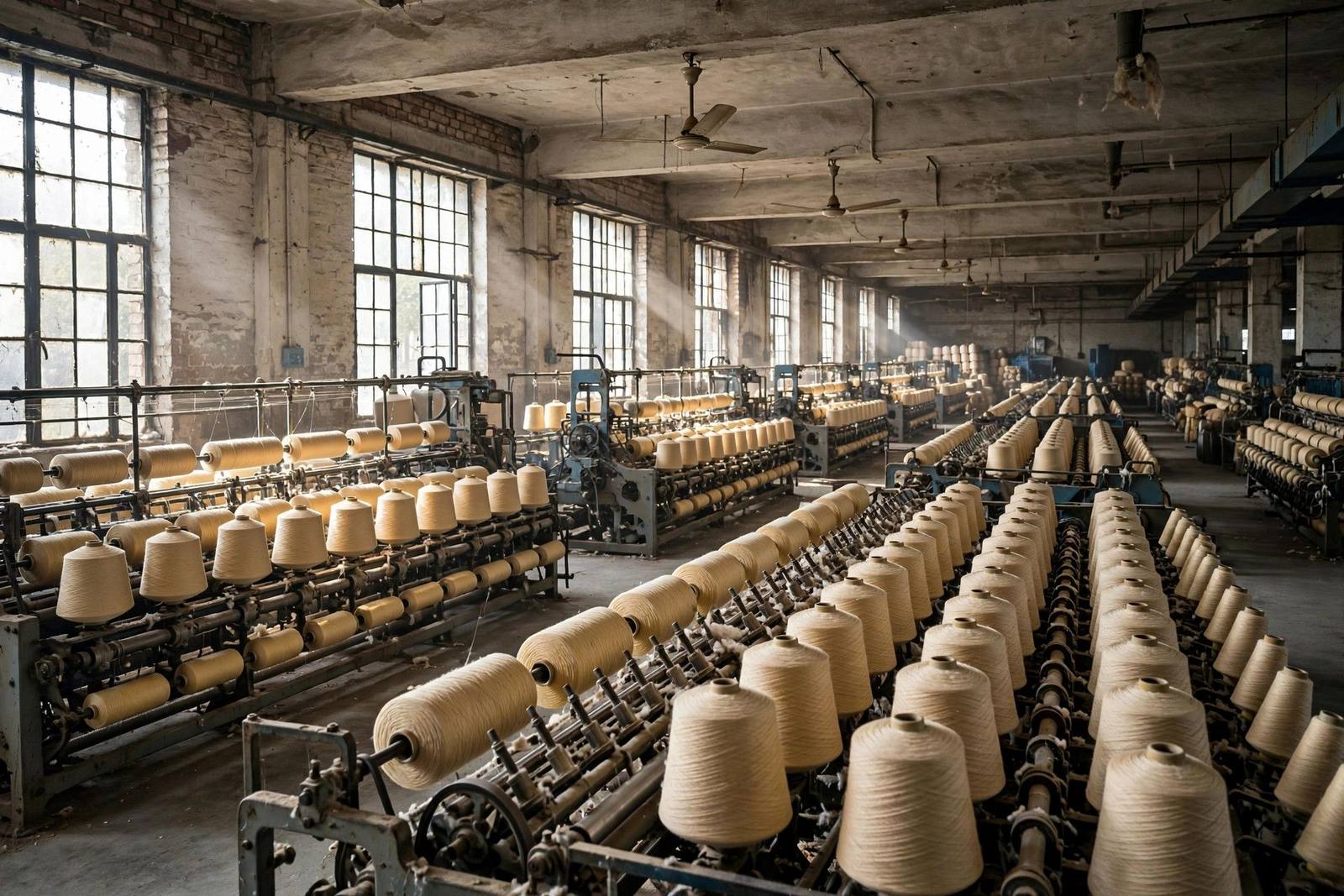
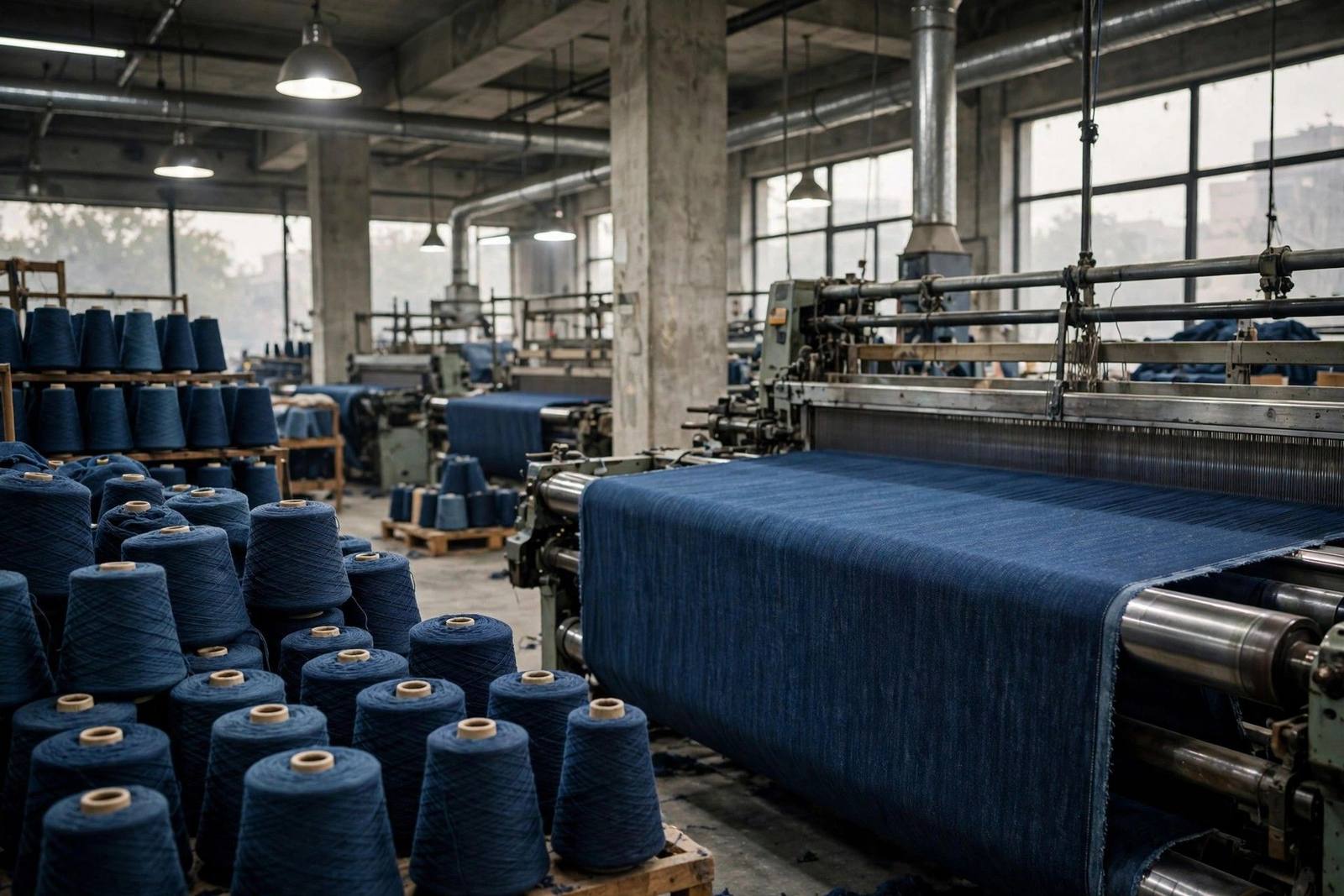
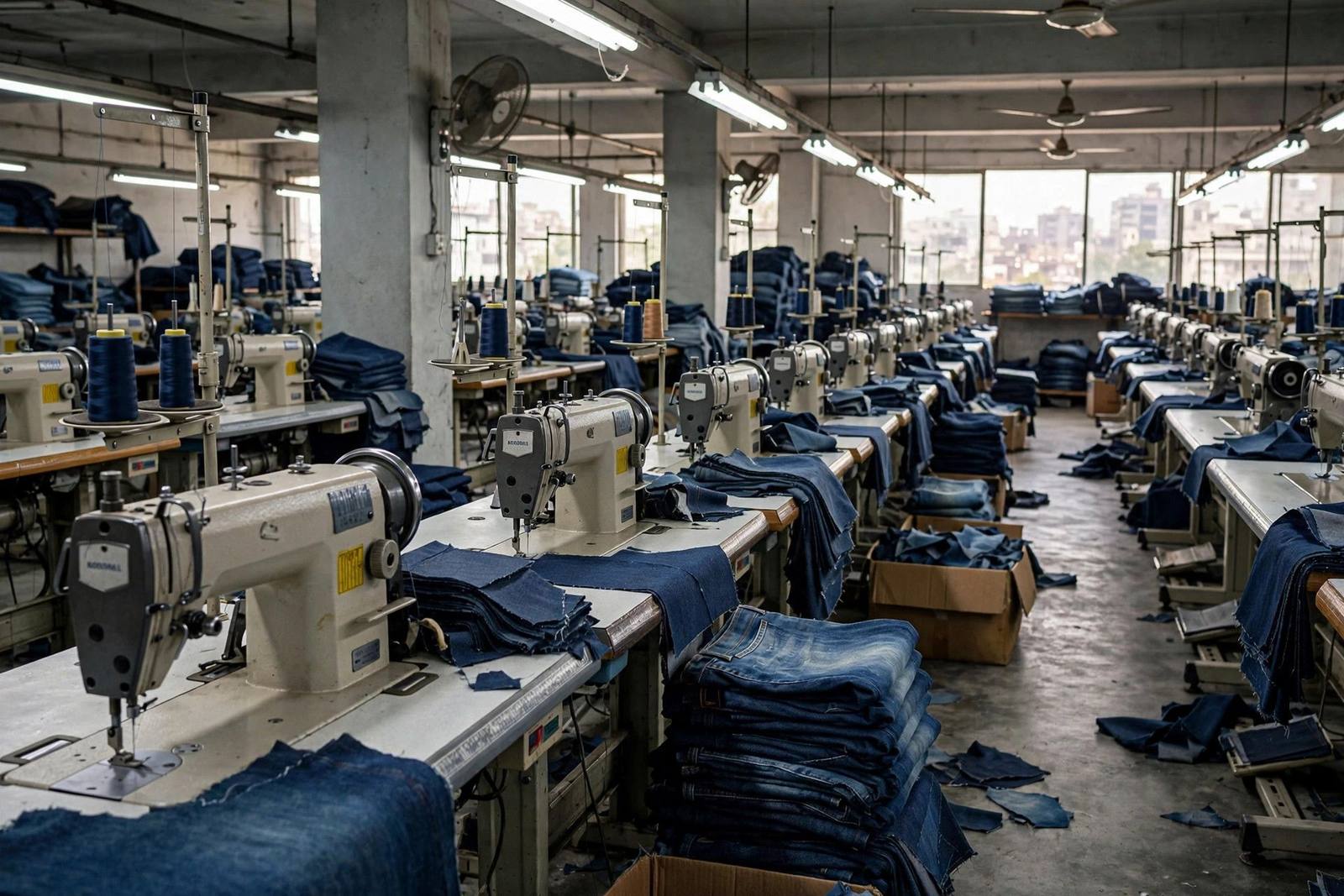
The mill that resulted was composite, the industry's word for a factory that does everything under one boundary: spinning cotton into yarn, weaving yarn into greige fabric, dyeing and printing it, and stitching it into finished goods. Company descriptions over the years have cited an installed base of more than 130,000 spindles and hundreds of modern weaving machines, together with yarn dyeing, processing and stitching units, its own captive power generation from gas engines and turbines with diesel backup, and a wastewater treatment plant bringing effluent to national environmental quality standards. The Landhi site in Karachi puts the whole chain inside one industrial estate, minutes from the port its exports leave through.
Lawn, home textiles and the export machine
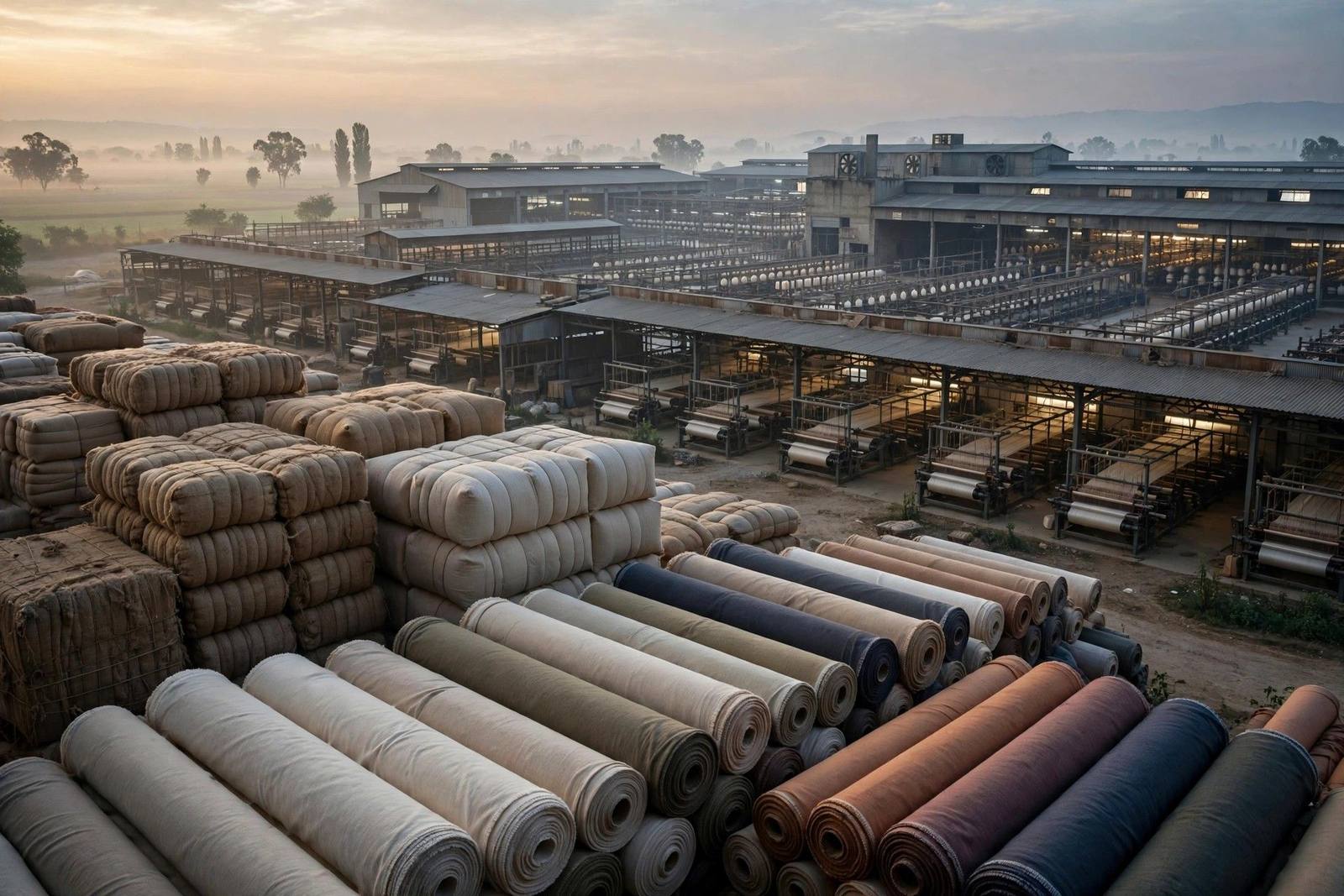
What a composite mill makes falls into families. There is yarn, sold to other weavers at home and abroad. There is fabric — the plain, sheeting, poplin, stretch, mélange and specialty weaves company materials enumerate — sold to garment makers and converters. There is the famous part: branded fabric for Pakistan's own market, above all lawn, the fine printed cotton of the summer wardrobe, where Gul Ahmed is one of the defining names of the annual lawn season, a retail phenomenon in which new prints are launched, advertised and fought over like fashion collections. And there are home textiles — bed linen, towels and furnishing fabrics — made substantially for export customers in Europe and North America, where the buyer is a foreign retail chain and the competition is every mill in India, Bangladesh, China and Turkey.
Ownership explains the company's long horizons. Gul Ahmed Textile Mills is a subsidiary of Gul Ahmed Holdings (Private) Limited, which company reporting has put at about two-thirds of the shares — 67.10 per cent in the pattern cited in recent years — with the rest held by institutions and the public. A controlling family holding of that size, held through a private holding company, is the classic PSX textile structure: patient about capacity, protective of the brand, and able to plan in decades — at the price, minorities would note, of decisions being taken where public shareholders cannot take them.
2003: Ideas takes the mill to the mall
The boldest chapter began in 2003, when Gul Ahmed expanded into retail and founded the chain now known as Ideas by Gul Ahmed. The logic deserves spelling out, because most Pakistani mills still sell to intermediaries. A mill that retails captures the final margin itself, learns what customers actually buy within weeks instead of seasons, and builds a consumer brand whose value no export buyer's sourcing office can squeeze. Ideas stores sell the group's home textiles and furnishings — bedding, kitchen and bath lines — alongside men's and women's apparel, with services such as in-house monogramming, embroidery and tailoring that turn a fabric shop into a lifestyle store. From Karachi the chain grew into an extensive national network, described in company materials of recent years as more than one hundred stores, and in 2025 the group launched its largest Ideas flagship, with an Ideas Cafe, inside Dolmen Mall Clifton in Karachi — the mill, a century after the trading years, selling coffee alongside curtains.
Retail also changed the company's risk shape. Export textiles earn dollars but live at the mercy of foreign buyers and freight; domestic retail earns rupees but builds a brand asset and a direct customer relationship. Gul Ahmed deliberately holds both, which is why followers of GATM read it differently from a pure spinning or weaving name such as Nishat Chunian — and why the pair, read together, show the two roads out of commodity yarn: downstream into brands, or deeper into quality and scale.
How a composite textile mill makes money
The chain earns at every stage, and can lose at every stage. Spinning converts cotton — Pakistan's own crop, supplemented by imports in short years — into yarn at a margin set by the cotton-yarn spread. Weaving and processing add value and cost in roughly equal drama: dyes, chemicals, energy and water are consumed in quantities that make textile processing one of industry's most utility-sensitive activities. Finished goods earn the design and brand margin, largest in domestic branded fabric and retail, steadier but thinner in export programmes for foreign chains. The consolidated result therefore blends commodity spreads, manufacturing efficiency, energy tariffs, the rupee's value against export earnings, and consumer sentiment in Pakistani malls — an unusually wide set of dials for one ticker. Our explainer on Pakistan's cotton economy covers the raw-material foundation on which all of it stands.
Strengths, risks and controversies
Gul Ahmed's strengths are integration and brand. A composite structure controls quality from yarn to finished bedsheet; seventy years of trading and milling relationships anchor cotton buying and export selling; and the Ideas chain gives it what few Pakistani exporters possess — a household consumer brand with its own stores, seasons and loyal lawn customers. Captive power and effluent treatment, built early, speak to an operator that plans for infrastructure failure and buyer compliance audits alike.
The risks are the textile sector's, plus retail's. Cotton crop failures raise raw-material costs for the whole chain; energy tariffs can erase processing margins in a single budget; export demand and prices are set in markets where Bangladesh and Vietnam compete with formidable scale; and advance taxes and policy churn are a standing complaint of the industry. The company gave the market a concrete example of these pressures in September 2025, when its board resolved to discontinue the export apparel segment after sustained losses, citing higher input costs, advance turnover taxes, rising energy tariffs, currency volatility and margin erosion against regional competitors, and saying the closure would cut borrowing and improve cash flow while the group focused on home textiles, spinning and weaving. A candid reader treats that decision as both warning and discipline: a segment that could not earn was closed, but the conditions that killed it press on the rest of the group too. Retail, meanwhile, carries rent, inventory and fashion risk that a mill's order book never did.
The name on the PSX
GATM has been listed since 1970, making it one of the exchange's veteran textile names — older than the unified PSX itself by decades, and a standard component of textile-sector portfolios rather than an index heavyweight. Its controlling holding, at roughly two-thirds, leaves a modest free float, so trading can be quieter than the fame of the brand would suggest. Dividends have followed the sector's pattern of paying in stronger years and conserving cash in hard ones; students should read the full record alongside results, not as a promise. In benchmark terms GATM matters less for its weight than for what it represents — the branded, integrated end of Pakistan's biggest export industry.
What kind of investor studies Gul Ahmed
GATM is followed by investors who think in value chains: people who track the cotton crop, yarn and fabric spreads, energy policy and export orders, and who also keep an eye on Pakistani consumer brands and mall retail. The observation points are segment results across spinning, weaving and retail, export order commentary, cotton procurement in each season, energy cost per unit, and the performance and expansion pace of the Ideas network — including experiments such as the flagship-and-cafe format. Comparison with the Sapphire group's listed mills, such as Sapphire Textile Mills, is the standard exercise for sorting brand-led from quietly export-led textile strategies. Background concepts are covered in the Aktzien learning library. This article is educational content, not financial advice.
The lawn season and the Pakistani consumer
No account of Gul Ahmed is complete without the lawn season, the annual retail ritual in which Pakistan's branded mills launch their spring and summer printed collections to a public that treats them as fashion events. Gul Ahmed is one of the ritual's founding names: its prints, catalogues and campaigns helped define what branded lawn means — designed fabric, sold by the collection, at prices a mill selling grey cloth could never command. The economics behind the theatre are serious. Branded domestic fabric converts the same cotton and processing that earn commodity margins abroad into a consumer product with design value, sold through the group's own stores and counters, paid for immediately by customers rather than on an export buyer's terms. It also binds the company's name to quality in the minds of millions of women who will never read an annual report — brand equity of a kind Pakistan's textile industry, for all its export billions, has produced in only a handful of houses. Ideas extends that equity from the wardrobe to the whole home, and the flagship stores and cafe experiments of recent years are the group testing how far a textile name can stretch into lifestyle retail before it stops meaning cloth. That experiment, watched by every mill family in the country, is the live strategic question inside GATM.
Seen whole, Gul Ahmed is a study in how long a textile advantage can be made to last. A trading family's knowledge of cloth, formed before Pakistan existed, was converted into mills in 1953, into a public company in 1970, into composite scale and captive infrastructure in the decades after, into a consumer brand in the lawn era and into a retail chain in 2003 — each generation spending the previous one's advantage on the next stage of the chain rather than merely harvesting it. The apparel closure of 2025 shows the same discipline running in reverse, cutting a stage that no longer earns. Whether the next stage is retail experience, technical textiles or something the group has not yet announced, the pattern suggests it will be chosen the way the earlier ones were: by a controlling family thinking in decades, with public shareholders invited to judge the results stage by stage, season by season, in one of the exchange's most familiar and most closely watched textile names.
Key takeaway: Gul Ahmed grew from early-1900s cloth trading into a 1953 Karachi composite mill — listed since 1970, controlled by Gul Ahmed Holdings, and extended in 2003 into the Ideas retail chain — so its fortunes blend cotton and energy costs, export demand and the health of Pakistan's own consumer.